





 Portuguese
  English
  Spanish
  4 min of reading
  0 comments


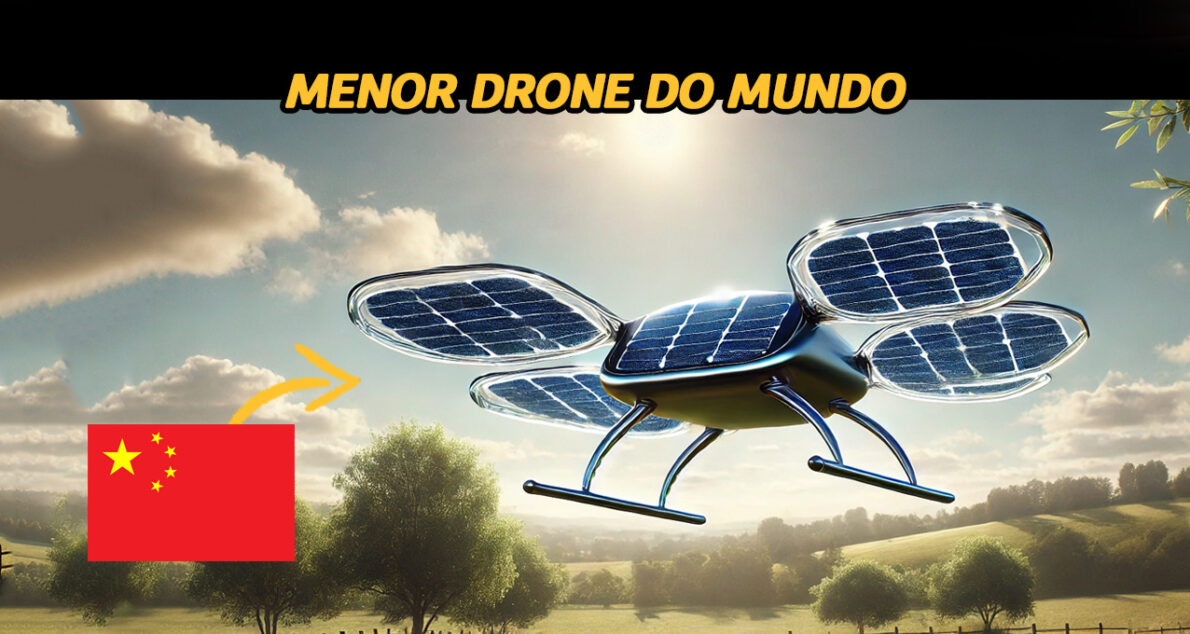
The Smallest Drone In The World, Weighing Only 4.2 Grams, Surprises With Solar Power. Created In China, This Innovation Could Revolutionize The Future Of Aviation And Robotics, Opening New Doors For Sectors Like Security, Monitoring, And Scientific Research.
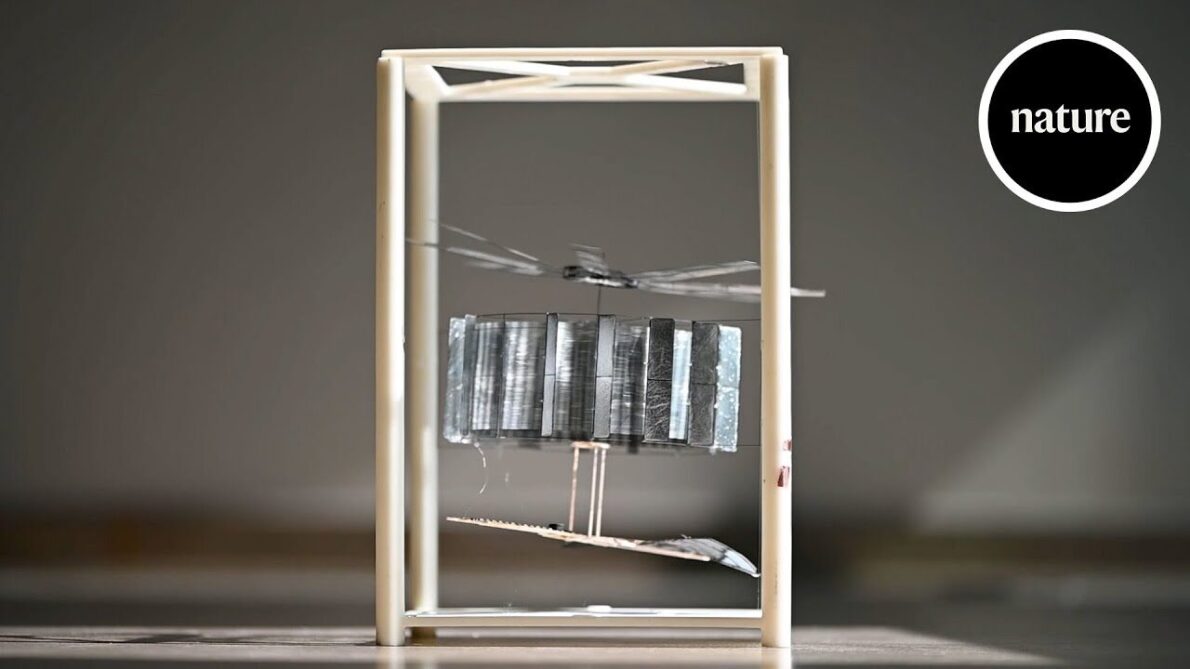
An advancement that few expected shook the technology landscape. Chinese researchers have developed the smallest drone in the world, weighing only 4.2 grams, powered by solar energy.
If it seems impressive, this innovation still holds surprises that could redefine the limits of robotics and aviation. So, what makes this creation so impactful? A secret hidden in the lines of science.
This drone, called CoulombFly, promises to pave new paths in various areas. But after all, how can such a lightweight invention carry so much relevance? That’s what we are about to reveal.
-
In a flooded well, archaeologists found a 1,700-year-old Roman egg that still contains clear and yolk intact inside the very thin shell.

-
Something is happening around the Earth: Inside the huge explosion of fireballs in 2026

-
A hot air bubble coming from Argentina expands over Brazil, causing thermometers to exceed 38 degrees with a thermal sensation of 40 degrees in late March, affecting 6 states at once.

-
The radish leaf that almost everyone throws away has more polyphenols, flavonoids, and fiber than the consumed root, and a 2025 study showed that the leaf contains compounds that protect the intestine, combat inflammation, and may inhibit the growth of cancer cells.


A Milestone In Technological Development
The invention emerged at Beihang University in Beijing and is gaining worldwide attention. Published in the prestigious journal Nature, this research positions China at the forefront of technological miniaturization.
According to Shen Wei, a doctoral student and the study’s lead author, the idea emerged as an attempt to solve a long-standing question: how to reduce the size of solar-powered drones without compromising their efficiency.
Shen began his journey with drones while still an undergraduate, but it was during his graduate studies that he faced greater challenges.
The idea of using electrostatic motors was innovative but required multiple failed attempts. Shen recounts that for a long time, he believed the concept wouldn’t work. However, persistence paid off.
How An Electrostatic Motor Can Revolutionize Drones?
The key to CoulombFly’s success was the use of electrostatic motors, a type of motor considered impractical for drones due to the difficulty of producing adequate lift.
Shen reveals that the inspiration to combine the motor with a propeller came one sleepless night. “For weeks, we tested the idea and, to our surprise, the small motor managed to generate impressive speeds, allowing the microdrone to fly,” said Shen.
With only three weeks of testing, the team was able to prove the project’s viability.
This achievement positions CoulombFly as the smallest solar-powered drone ever created, surpassing even previous inventions, such as the helicopter from the National University of Singapore, which was considered the smallest at its time.
The Evolution Of Drone Technology: What To Expect From The Future?
Solar drones have been studied for decades, but most previous versions were large and heavy.
The advancement led by Shen and his team at Beihang University proves that it is possible to drastically reduce the size of these devices without losing efficiency.
This novelty not only promises to be a milestone in aerial technology but could also transform sectors such as environmental monitoring, espionage, and transportation.
This development places China in a leading position in the race for innovation in miniaturization.
As Shen explained, the project’s goal is to find practical applications for small drones capable of operating in complex and hard-to-reach environments.
Challenges And Perspectives Of Miniaturization In Drones
Although CoulombFly has demonstrated its potential, researchers still face several challenges to improve the technology.
According to the team, the main hurdle now is to increase the drone’s autonomy, which relies entirely on solar energy to operate. However, the prospects are promising.
The team is already working on new versions that could function in low-light environments, making the drone even more versatile.
Moreover, the microdrone could open doors for the development of smaller and more efficient robots, capable of performing complex tasks with less energy and a lower environmental impact.
Global Impacts And Technological Competitiveness
The development of such small and efficient drones raises awareness of the Chinese technological advancement.
According to Nature, the results obtained by Shen’s team may trigger a new arms race in the field of robotic aviation, with technological powers such as the United States and Japan seeking to match or surpass this innovation.
The energy efficiency of CoulombFly could also contribute to making technology more sustainable, offering new solutions to global challenges such as monitoring deforestation and climate change.
With this surprising advancement, what can we expect from the evolution of drones in an increasingly technology-dependent world? Will we see these microdevices in our daily lives, performing tasks that today seem impossible?






-

-

2 pessoas reagiram a isso.