





 Portuguese
  English
  Spanish
  5 min of reading
  0 comments


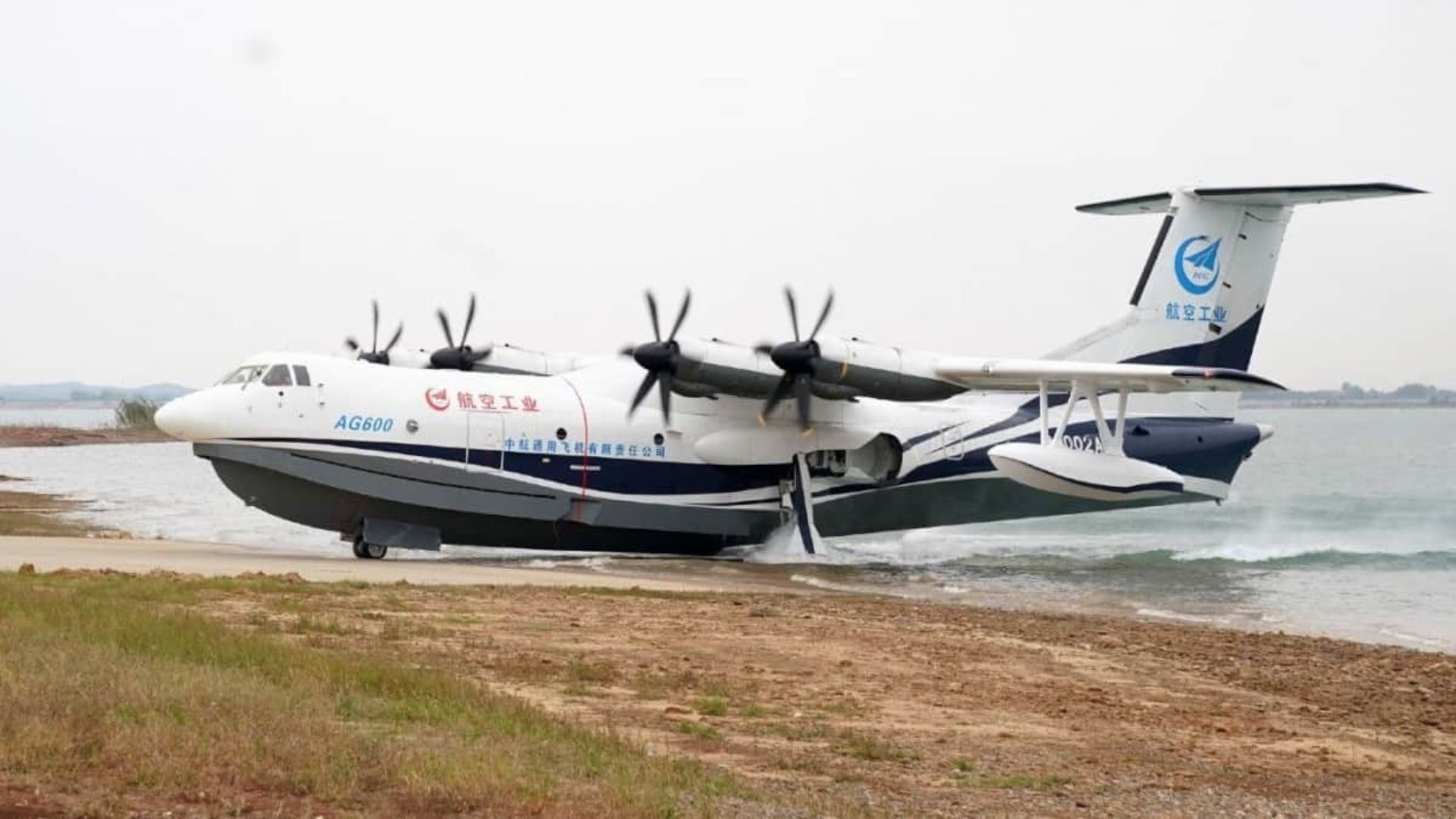
Certification of the Largest Civil Amphibian on the Planet Places China at the Center of a Rare Technology, Combining Takeoff on Land and Operation on Water for Firefighting and Rescue Missions. The AG600 “Kunlong” Project Has Passed Regulatory Validation and Reinforces Global Interest in Capacity, Range, and Rapid Water Collection.
China has officially put into operation one of the most unusual civil aircraft ever produced on a large scale in the world: the AG600 “Kunlong,” a large amphibious aircraft designed to take off from land runways and also operate over water, with a declared mission of fighting forest fires and maritime rescue.
The milestone that transforms the project into a market product is the granting of the type certificate by the Chinese civil aviation authority, a step that attests to compliance with design and safety requirements for the category.
The AG600 is presented by official Chinese agencies as the largest civil amphibious aircraft on the planet in terms of maximum takeoff weight, capable of performing missions that require range, autonomy, and operation in environments where helicopters and smaller aircraft face limitations.
-
While the world looks at oil, the war with Iran is already disrupting helium supply from Qatar, affecting car and iPhone chips, threatening AI expansion, and putting pressure on aluminum packaging at the highest value in four years.

-
Global warming will expose a treasure hidden under the ice of Antarctica and may spark an international dispute over gold and valuable minerals.

-
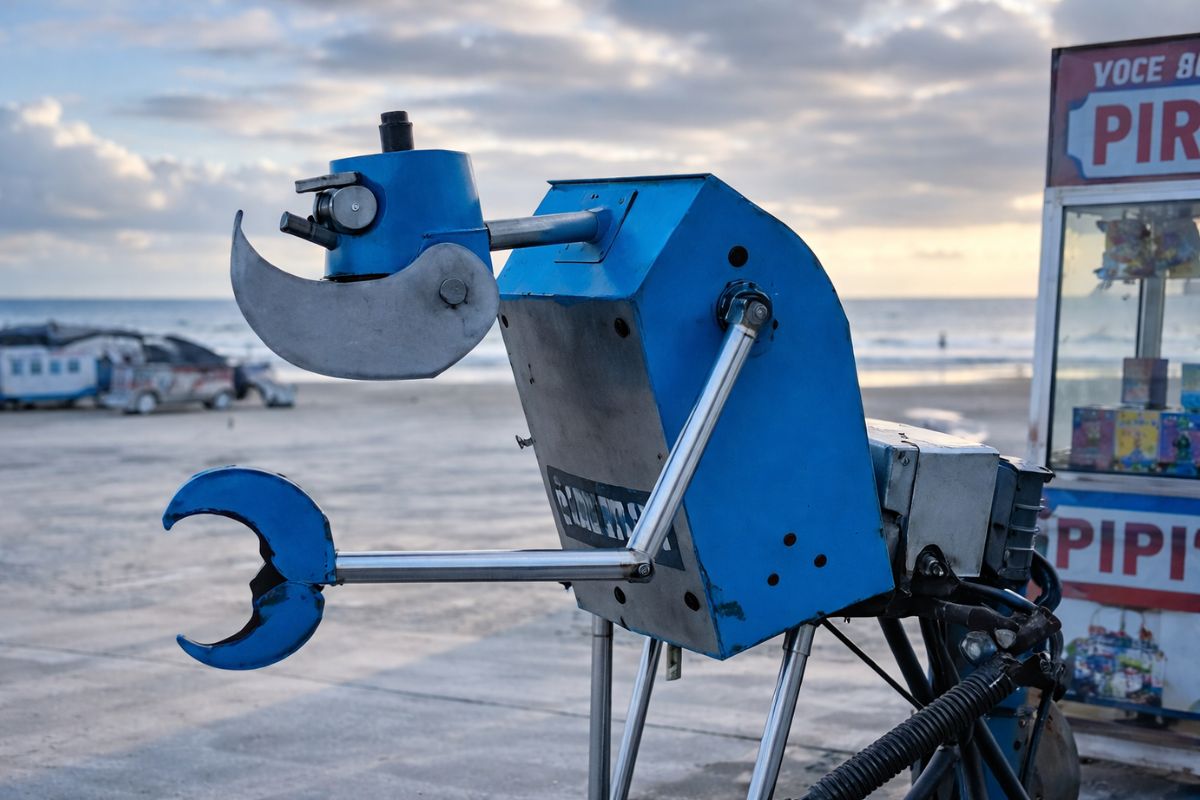
A street vendor from Praia Grande built a robot made of scrap from scooters and washing machines that pulls his popcorn cart on the beach, emits sounds, and interacts with customers, becoming an attraction on the coast of São Paulo.
-
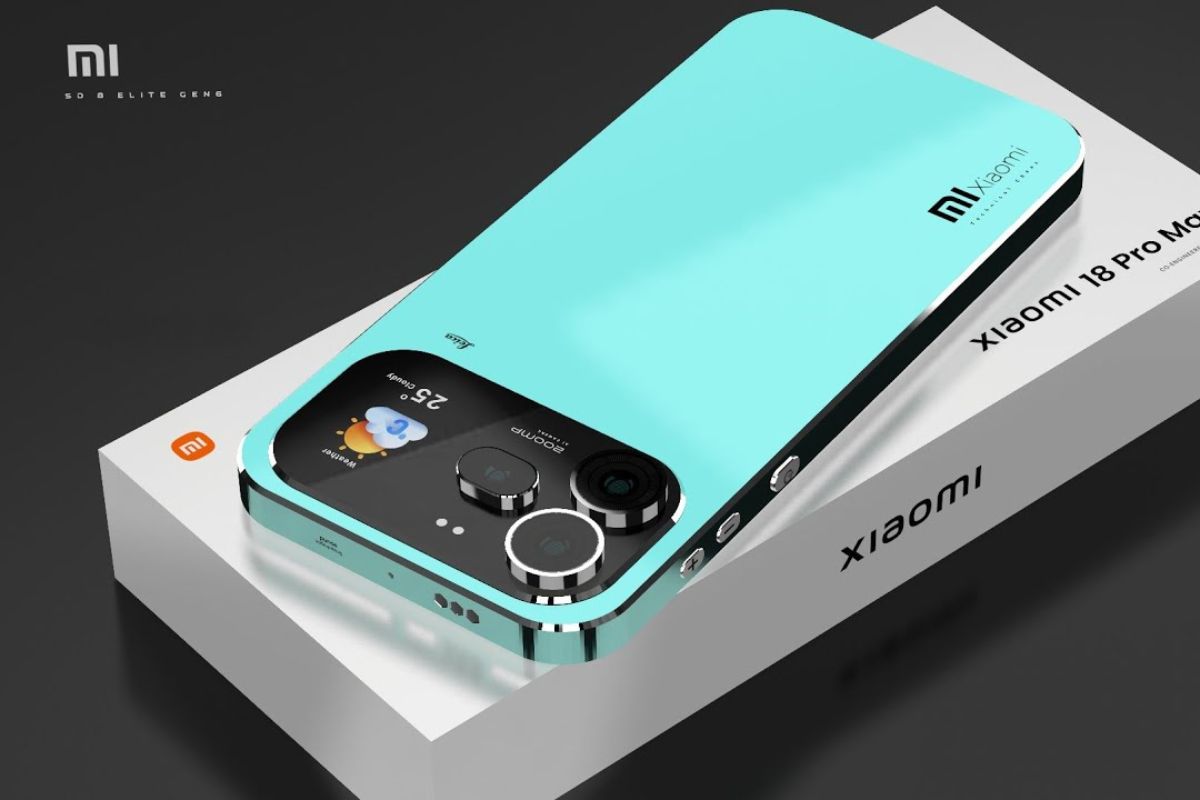
The specifications of the Xiaomi 18 Pro Max have been leaked, and the highlight is a dual 200 MP camera with a new 22-nanometer technology that promises to consume less energy and capture details in shadows and bright areas using LOFIC HDR.

The type certificate, issued by the Civil Aviation Administration of China (CAAC), was announced in public statements as the formal validation of development and the authorization for market entry.
AG600 Numbers: Range, Capacity, and Mission

Part of the international interest in the model lies in the set of numbers that define its operational profile.
According to information disseminated by the state agency Xinhua and reproduced in official Chinese government channels, the AG600 has a maximum takeoff weight of about 60 tons and a maximum practical range of approximately 4,500 kilometers.
The same statements highlight its use in firefighting, with a capacity to transport up to 12 tons of water on a mission, in addition to operating in maritime rescue scenarios.
The scale of the AG600 places it in a rare category, that of large fixed-wing amphibians, with tasks that usually require dedicated aircraft.
Public sources cite dimensions of around 38.8 meters of wingspan, with a length close to 39 meters, numbers that make the aircraft comparable, in size, to some single-aisle commercial jets, even though it has a hull and structural solutions typical of a seaplane.
In materials released by specialized press based on data attributed to the manufacturer, the aircraft also appears with a fuselage around 39.6 meters and a wingspan of 38.8 meters.
Water Collection in Seconds and Firefighting

The role of a “waterplane” relies on a characteristic that differentiates the AG600 from cargo planes and regional aircraft: rapid water collection directly from the surface.
Xinhua describes the system with a belly device that allows the plane to fill its tank by gliding over the water, reaching up to 12 tons in about 20 seconds, a resource designed for repeated cycles of fire attack when lakes, reservoirs, or accessible sea are nearby.
It is also noteworthy the emphasis on firefighting and rescue, two fields where large amphibious aircraft can offer advantages when water is available nearby and a relatively quick response is needed.
Xinhua details, for example, that the water released can cover an area of approximately 3,000 to 4,000 square meters, a dimension presented as equivalent to several sports courts, illustrating the scale of the effect in a single drop.
Public Timeline of Tests and Operation in Freshwater and at Sea
The path to certification involved a series of testing milestones made public over the years by official Chinese channels.
The Chinese government describes that development began in 2009, that the model made its maiden flight in 2017, then executed its first takeoff from a reservoir in 2018 and completed its maiden flight over the sea in 2020.

The same timeline is presented as evidence that the aircraft has undergone validations in different environments — land, freshwater, and maritime conditions — before reaching the certification stage.
Type Certificate from the CAAC and Market Entry
From an industrial perspective, the official narrative associates the AG600 with a capacity for “independent” design and manufacture of a large civil aircraft with specific requirements for stability on water, corrosion, performance at low altitude, and safety in landings and takeoffs over liquid surfaces.
In an interview released by Xinhua, the project is described as part of an effort to consolidate domestic competence in a newer generation of civil amphibious aircraft, indicating that the ambition is not limited to a technology demonstration piece but to a product with operational application.
The type of certificate granted by the CAAC is a central point to understand why the announcement resonates beyond the Chinese market.
In aeronautical programs, type certification is the regulatory validation of design and essential airworthiness requirements, without which a civil aircraft does not enter regular commercial operation.
In the case of the AG600, official statements present certification as the transition from development stage to market phase, with the aircraft described as “approved to enter the market” after receiving the document in a public ceremony in Beijing.
The designation “Kunlong” is often used alongside the name AG600 in official communications and in press texts, while the manufacturer is associated with the state conglomerate AVIC in images and notes distributed through public channels.

In coverage by international specialized press, the model is described as the largest civil amphibian by takeoff weight in the group of aircraft of its type, reinforcing the global appeal of the “largest in the world” when there is a concrete regulatory fact — the certification — that supports the title.
What to Monitor After Certification
The entry of an amphibious aircraft of this size into the market tends to be accompanied by attention to three publicly verifiable factors: what the certification covers, which missions will be prioritized, and what the rhythm of production and delivery for designated operators will be.
In the case of the AG600, the officially released information focuses on the type certificate and the vocation for firefighting and rescue missions, with capacity and range numbers presented in government and Xinhua statements.
If an aircraft capable of collecting tens of thousands of liters in seconds is now certified to enter the market, what changes in the response to large fires and rescue operations when amphibious aircraft of this size begin to be used routinely?








-

-

-

-

11 pessoas reagiram a isso.