





 Portuguese
  English
  Spanish
  5 min of reading
  0 comments


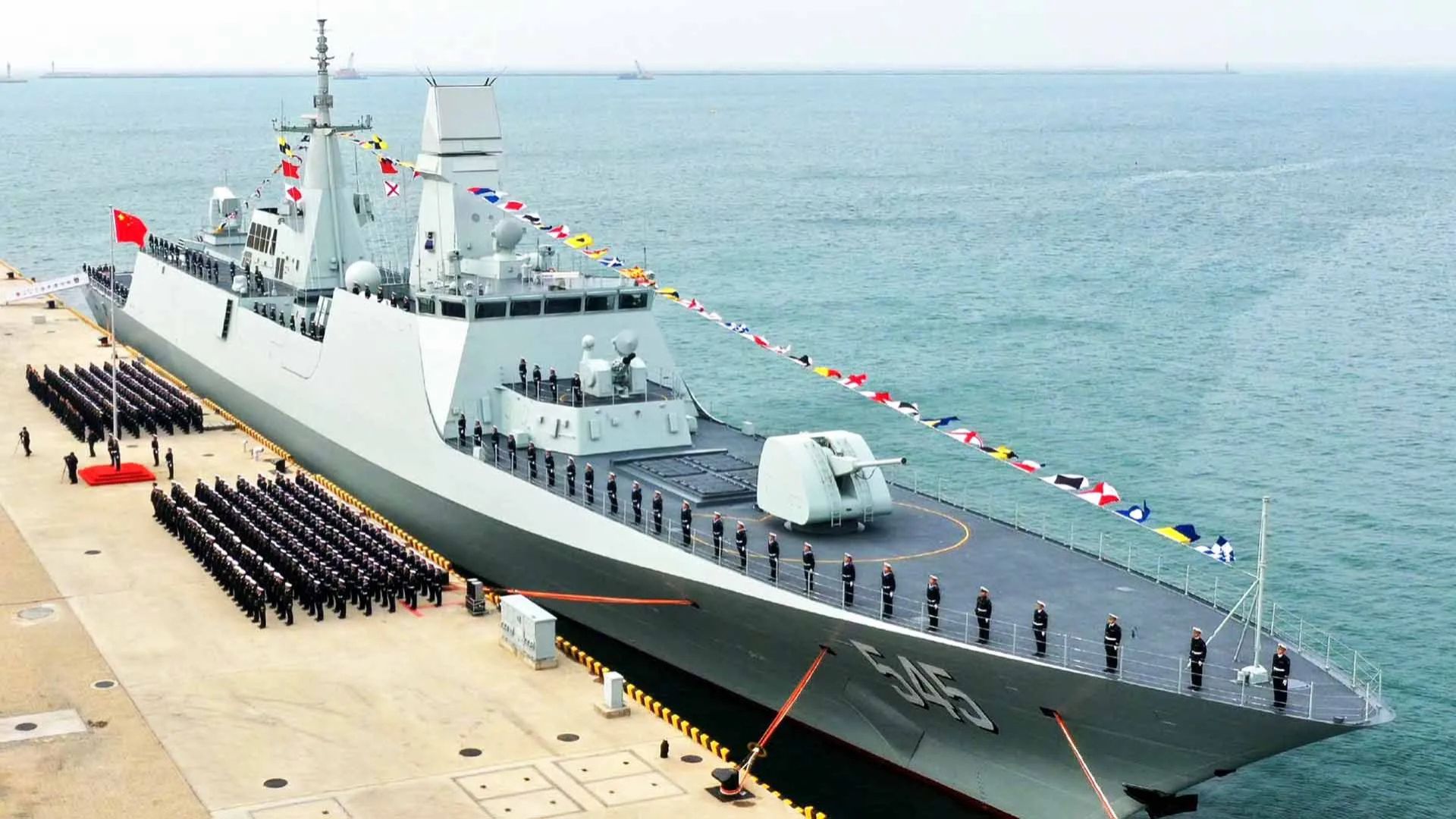
Next-Generation Frigate Appears as a Showcase for Naval Modernization, with Above-Average Dimensions, Focus on Low Detection, and Integration of Advanced Sensors. Type 054B Class is Considered a Piece for Long-Distance Operations, Including Escort of Large Units and Anti-Submarine Missions in Strategic Areas.
China has highlighted a new generation of frigates with the Type 054B, described by media sources and analyses cited by Reuters as larger, more advanced, and more difficult to detect than the previous model, the Type 054A.
Measuring approximately 147 meters in length and 18 meters in width, the class was presented as part of a broader military modernization movement that involves not only ships but also aircraft and engines, in a context of strategic disputes in the Indo-Pacific.
Dimensions, Displacement, and Design Changes
The numbers assigned to the new design draw attention for placing the Type 054B at a level above what is traditionally expected of a frigate.
-
He started running at 66 years old, broke records at 82, and is now a subject of study for having a metabolic age comparable to that of a 20-year-old, in a case that is intriguing scientists and inspiring the world.

-
Oldest tree on the planet reappears after 130 years of searches: Wattieza, 385 million years old, was 10 meters tall and had no leaves or seeds; Gilboa fossils in New York solved the mystery in 2007.

-
A 48-square-meter house assembled in hours with 4,000 bricks made of recycled plastic that does not absorb moisture, has natural thermal insulation, and costs less than 90,000 reais in a complete kit.

-
Luciano Hang revealed that Havan’s air fleet has already accumulated more than 20,000 landings, 10,000 flight hours, and 6 million kilometers traveled, and he says that without the planes, the company would never have grown so quickly.


The Reuters report described the new vessel as displacing about 6,000 metric tons, approximately 2,000 tons more than the 054A.
It also indicated that the evolution includes changes in the main armament, with a 100 mm gun replacing the 76 mm gun used in the previous class, according to media reports mentioned by the outlet.
Modernized Sensors and Low Detection
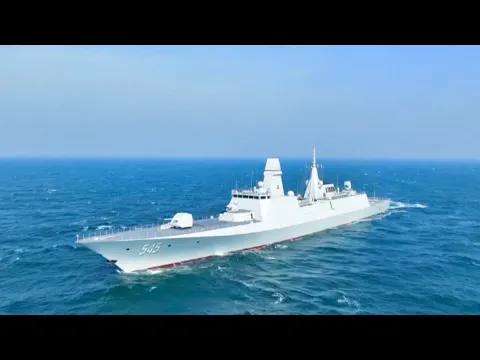

In addition to its size, the interest surrounding the Type 054B is linked to the role a modern frigate plays in a navy with ambitions to operate far from the shore.
Reuters stated that the vessel is expected to “travel faster, go further, and be harder to detect,” a combination that makes the ship more suitable for anti-submarine warfare and the role of escort.
In this type of employment, frigates often integrate into naval formations responsible for protecting higher-value units, such as aircraft carriers and assault ships, while maintaining surveillance and providing defense against surface and air threats, all the while contributing to the search and tracking of submarines in areas of interest.
The discussion around “modernized sensors” has gained traction because, according to Reuters, experts cited by Chinese state media and Hong Kong reports indicated that the Type 054B could receive a more advanced radar, with enhanced detection capabilities.
The same summary mentioned the possibility of more sophisticated propulsion systems, including integrated electric propulsion and an arrangement of engines that would help reduce the ship’s signature, a factor directly associated with survival in environments monitored by satellites, patrol aircraft, and electronic intelligence platforms.
In this context, “being harder to detect” does not rely on a single resource but on a combination of design measures, materials, heat and noise management, and system integration.
Anti-Submarine Warfare and Aircraft Carrier Escort

The enhancement of anti-submarine capabilities appears as a sensitive point in the reading of Western observers.
Reuters recorded that analysts have pointed out for years that China has lagged behind in anti-submarine warfare, an area considered essential for sustaining long-range operations with aircraft carriers.
The logic is straightforward: the farther an attack group moves away from its bases, the greater the number of threats it may face and the less margin for relying on land-based support.
In this context, a frigate with greater range, increased endurance, and a better detection suite can expand its ability to patrol, track contacts, and form a protective layer around main units.
Industrial Scale and Shipyards in Shanghai and Guangzhou
The scenario presented by Reuters also connects the Type 054B to an industrial dimension.
The construction of larger and more complex ships requires stable production chains, shipyards capable of absorbing design changes, and a technological ecosystem that allows for the evolution of components, such as radars and propulsion systems, without disrupting production cadence.
By mentioning that two units were in the final finishing stages at shipyards in Shanghai and Guangzhou, the text reinforced the idea of an initiative that is not limited to a prototype but seeks scale and continuity, a characteristic that often draws attention in high-cost military programs.
Broader Military Modernization in the Indo-Pacific
Within the same report, Reuters described other elements of China’s military modernization package that help frame the Type 054B as part of a larger “board.”
Among them, a turbojet engine of 1,100 kilowatts was showcased at an event focused on helicopters, presented as a significant advancement for the development of medium and heavy aircraft.
The importance of this type of engine goes beyond aviation itself: more capable helicopters tend to broaden the range of missions for surface ships, especially in tasks involving patrol, transport, and search in vast maritime areas.
Reuters also cited tests associated with the stealth fighter J-20 featuring new domestic engines, promising more thrust, higher speed, and increased range.
In parallel, it reported that China was in advanced stages of preparing the aircraft carrier Fujian, touted as the first domestic project with electromagnetic catapults, before the start of sea trials.
These elements, when placed side by side, help to understand why a new frigate attracts attention: escort ships are not “supporting characters” in complex operations, but necessary components for larger platforms to operate safely and persistently.
Although the coverage regarding the Type 054B has relied on media reports and assessments from experts cited by Reuters, the standout point is that of a frigate repositioned to match the leap in ambition of a navy that is growing in number and seeks to enhance quality.
The approximate size, the displacement difference compared to the previous class, and the emphasis on range, speed, and stealth suggest an attempt to fill gaps perceived by analysts while simultaneously providing a more solid escort for operations moving away from the coast.
If the Type 054B has been described as more capable for anti-submarine missions and aircraft carrier escort, what kind of concrete change can this new frigate standard provoke in the naval balance of the Indo-Pacific?








-

-

5 pessoas reagiram a isso.