





 Portuguese
  English
  Spanish
  6 min of reading
  0 comments


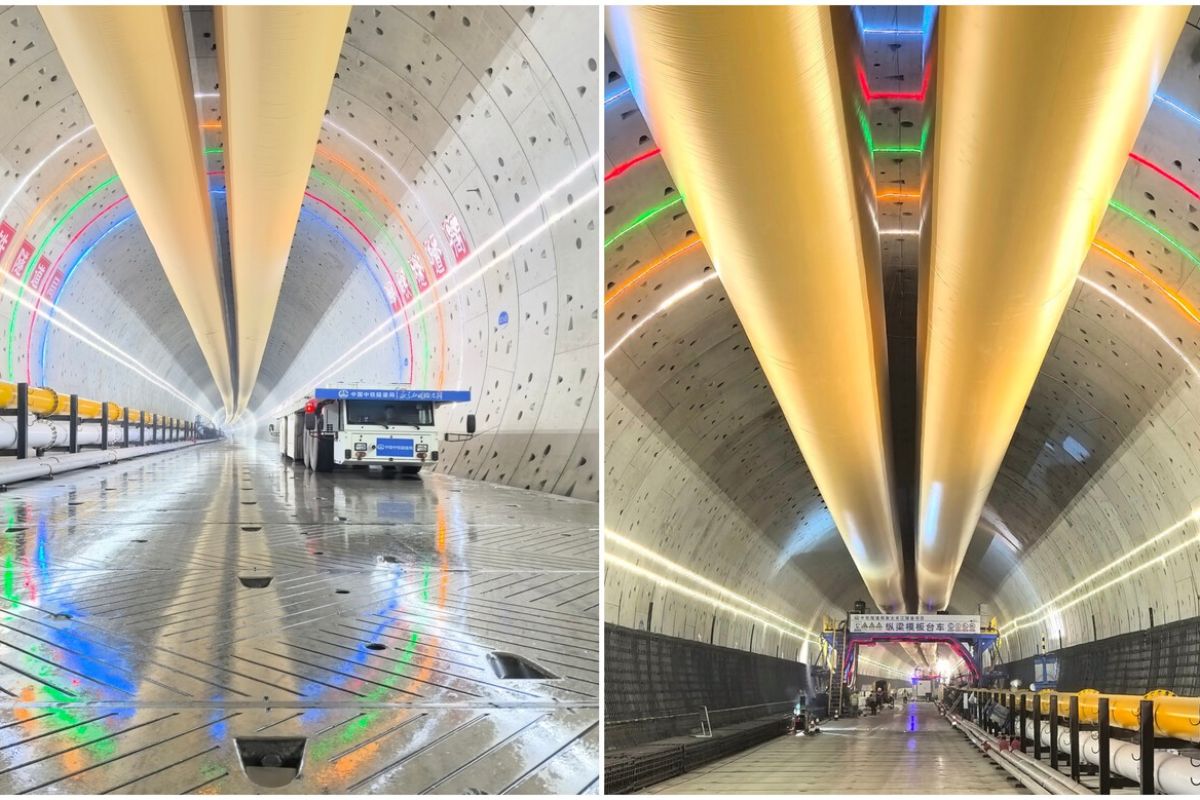
The Linghang tunnel boring machine excavated 11.32 kilometers continuously beneath the Yangtze River, reaching up to 89 meters in depth and took the Chongming-Taicang tunnel to a new technical level in 21st-century rail transport
The intelligent tunnel boring machine Linghang has just delivered one of the most impressive results of transport engineering in China. By completing the most complex section beneath the Yangtze River, the machine advanced over 11 continuous kilometers under extremely demanding conditions and established the Chongming-Taicang tunnel as one of the most ambitious projects in contemporary railway infrastructure.
The achievement of the tunnel boring machine not only represents the completion of a difficult stage. It marks the overcoming of one of the greatest technical challenges of a high-speed railway tunnel, involving deep underwater excavation, continuous operation for nearly two years, and integration into a strategic corridor designed to support trains of up to 350 km/h.
What the Linghang tunnel boring machine completed beneath the Yangtze
The tunnel boring machine Linghang completed the most delicate underwater section of the Chongming-Taicang tunnel, a central work in the high-speed railway corridor between Shanghai, Chongqing, and Chengdu.
-
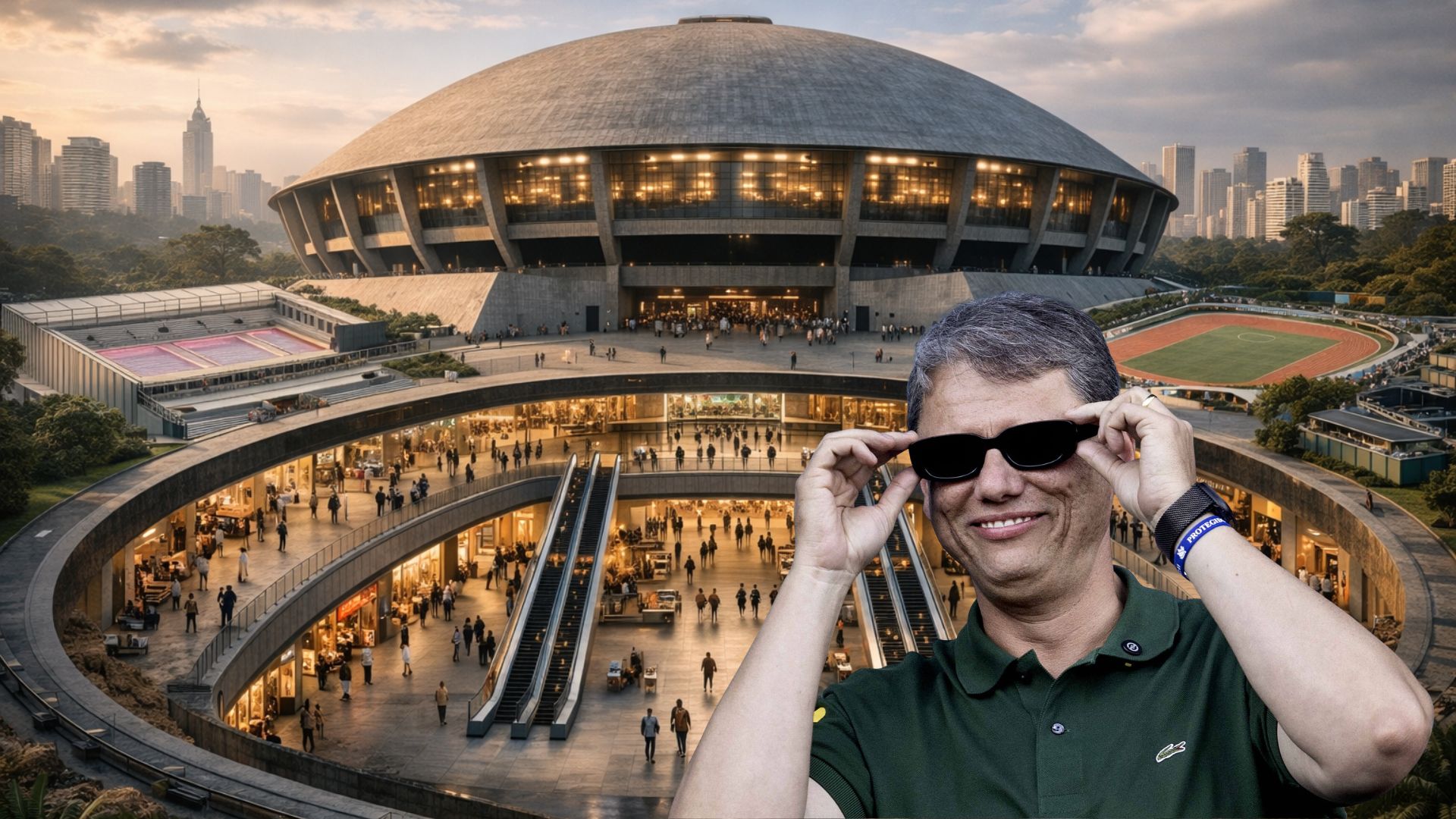
The government of São Paulo surprises South America with a plan to transform the famous Ibirapuera with underground shops, air conditioning, and a 25-year concession in a billion-dollar project that expands the audience, alters a protected area, and provokes an immediate reaction.
-
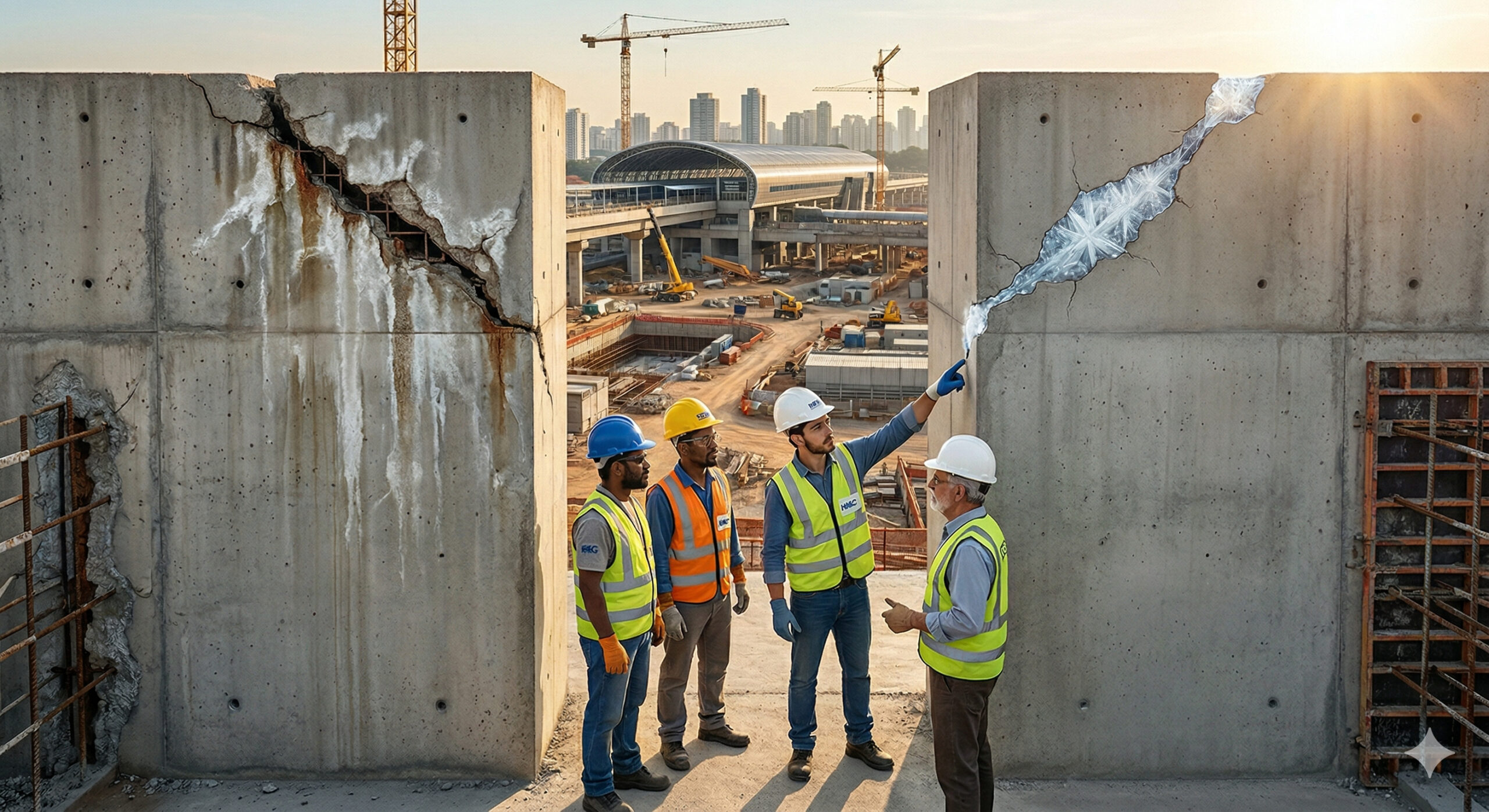
With a lifespan of up to 60 years and a cost up to 30% higher than conventional concrete, self-healing concrete is already being used in Brazil to eliminate leaks, reduce maintenance, and is changing the real cost of construction projects.
-
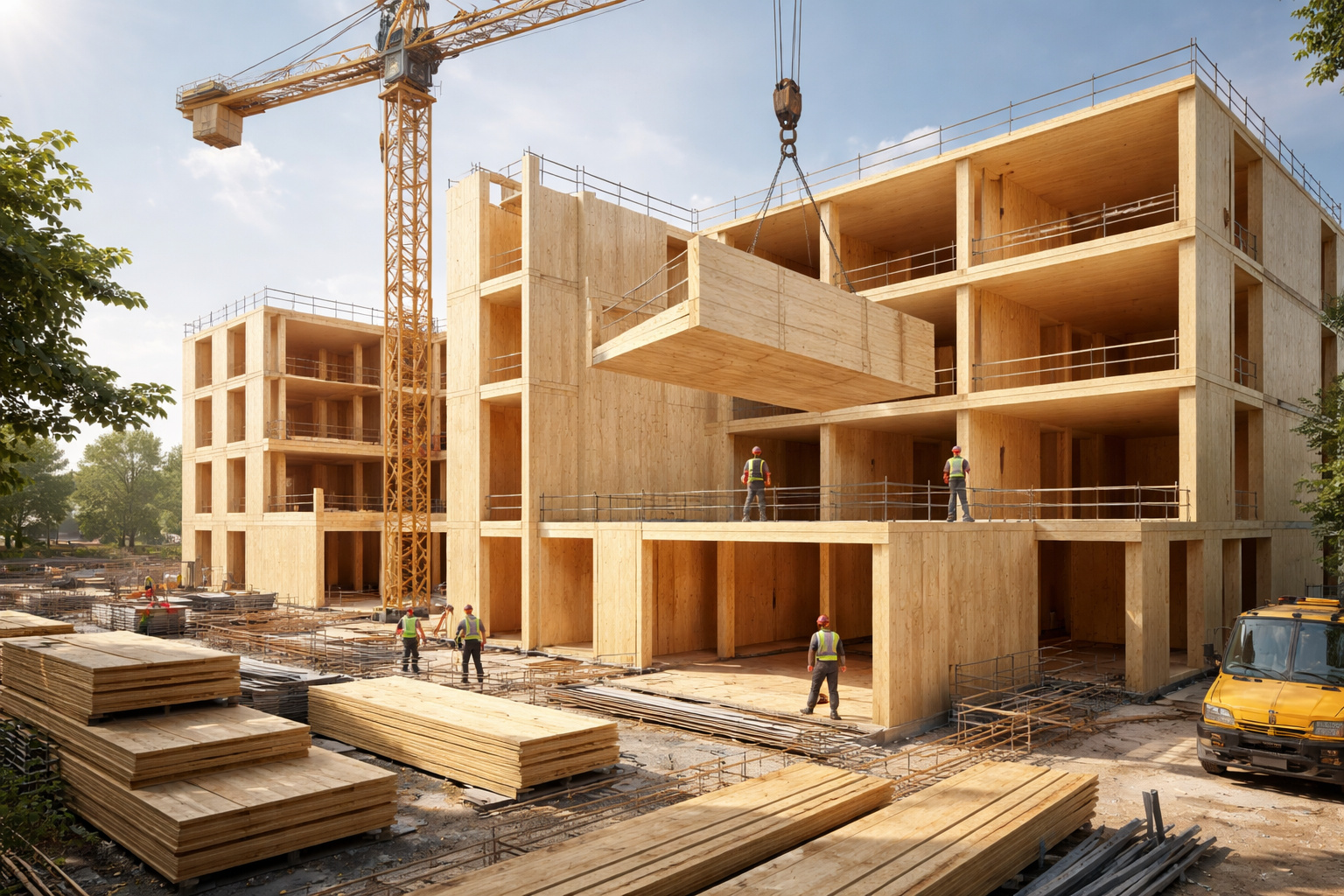
Engineered wood CLT challenges steel and concrete and promises construction that is up to 2x faster with a lower environmental impact in modern civil engineering.
-
Video: Retiree builds 26-meter Roman castle in his backyard with pieces from dozens of countries, ornamental grates from Libya, and a dragon made of recycled metal.


The excavation began on April 29, 2024, on Chongming Island in Shanghai, and continued for 23 months until reaching Taicang in Jiangsu province.
This advancement included crossing beneath the Yangtze River and under the southern levee, one of the most sensitive points of the entire project. Completing this phase means overcoming the technical core of the work, as the underwater section required absolute pressure control, structural stability, and continuous precision throughout the operation.
Why this section is considered one of the most difficult
The challenge was not only in the length of the excavation. The work combined continuous distance, great depth, and safety requirements incompatible with any margin of error.
The tunnel has a total length of 14.25 kilometers, but the section excavated in a single face by the tunnel boring machine reached 11.32 kilometers, a number regarded as a world record for a high-speed railway tunnel.
The maximum depth of 89 meters below the Yangtze River further increases the complexity. The deeper the depth and the more sensitive the geological environment, the greater the need for stability, sealing, and advance control, especially in a crossing that must maintain suitable conditions for future high-speed railway operations.
Tunnel boring machine became the central piece of a new scale of engineering

The tunnel boring machine used in this project is far from being a conventional machine. At about 148 meters long and approximately 4,000 tons, it was designed to operate in severe underwater conditions and maintain consistent performance throughout a prolonged excavation.
Its role went far beyond just drilling the ground. The machine needed to support a highly controlled industrial process, where each step, from internal pressure to shield advancement and removal of excavated material, depended on precise coordination and continuous response to ground conditions.
The intelligent I-TBM system changed the logic of operation
One of the central differentiators of the tunnel boring machine Linghang is the intelligent control system I-TBM. This system was designed to automate much of the excavation process, allowing for more precise management of critical factors for the safety and efficiency of the work.
In practice, this means monitoring and adjusting internal pressure, advance rate, and removal of excavated material in real time.
This level of automation does not eliminate the complexity of the work, but increases the ability to keep the operation within very strict technical parameters, something essential in a high-speed tunnel beneath one of the most important rivers in China.
What exists inside the Linghang tunnel boring machine
The structure of the tunnel boring machine was equipped to withstand conditions that require prolonged resistance and constant stability. Among the highlighted elements are high-pressure seals, a long-lasting main bearing, and a cutting head specifically designed to face demanding underwater conditions.
These components help explain why the machine was able to maintain continuous excavation over such an extensive section.
It is not just about brute power, but about durability, sealing, and mechanical reliability, indispensable factors when the goal is to pave the way for a high-performance railway system.
Chongming-Taicang tunnel integrates a strategic corridor of China
The work is part of the Shanghai-Nanjing section of the Shanghai-Chongqing-Chengdu high-speed railway corridor, a strategic link within the Chinese transport network.
The Chongming-Taicang tunnel is not just an isolated project but a piece of a larger infrastructure aimed at regional integration and shortening travel time between key areas of the country.
In this context, the operation of the tunnel boring machine helps enable infrastructure designed to operate with trains of up to 350 km/h, even in the underground section. This raises the standard of the work, because the tunnel not only needs to exist: it must meet criteria compatible with high-speed railway operations.
Scale, depth, and speed explain the weight of the project
Three factors help to understand why the project attracts so much attention. The first is the scale of the continuous excavation. The second is the maximum depth beneath the Yangtze River. The third is the speed standard projected for the trains that will use the tunnel.
The combination of these elements makes the undertaking a technical milestone. It is rare to gather, in a single work, record length in a single face, such high depth, and operational requirements for trains of 350 km/h, all within a subterranean crossing linked to a strategic railway corridor.
The Linghang is not an isolated case within China’s strategy
The completion of this section by the tunnel boring machine Linghang fits into a broader logic of Chinese engineering. In recent years, the country has accumulated large-scale projects in different areas, such as energy, scientific research, and heavy infrastructure, always focusing on dimension, technical control, and internal development.
In this scenario, Linghang appears as another chapter in a continuous line of work. What impresses is not only the size of the machine or the volume of excavation but the repetition of a strategy based on technical mastery and large-scale execution.
Comparison helps to scale the size of the tunnel boring machine
To understand the dimension of the equipment, comparison with other tunnel boring machines is revealing. The Mayrit, used in the expansion of Line 11 of the Madrid Metro, is considered a large machine in the European context, with about 98 meters in length, approximately 1,500 tons, and a diameter close to 9 meters.
The tunnel boring machine Linghang, with its 148 meters and about 4,000 tons, shows a significant leap in scale. This difference is not just visual or symbolic, but reflects the type of challenge for which the machine was designed: a deep, extensive underwater railway crossing integrated into a high-demand operation.
What this milestone says about 21st-century railway engineering
The completion of the most critical section beneath the Yangtze shows that high-speed railway engineering has entered a new phase. Now, it is not enough to just build large tunnels. They must be built with millimetric control, extreme depth, operational continuity, and compatibility with increasingly fast transport networks.
The tunnel boring machine Linghang symbolizes exactly this transition. It shows that the limit of infrastructure is not only in the capacity to excavate but in the ability to sustain precision, safety, and performance in increasingly difficult environments. This is what transforms the Chongming-Taicang tunnel into a technical milestone of the 21st century.
And you, do you think that works like this show that the intelligent tunnel boring machine will be the great protagonist of the next generation of railway megaprojects?







Seja o primeiro a reagir!