





 Portuguese
  English
  Spanish
  5 min of reading
  4 comments


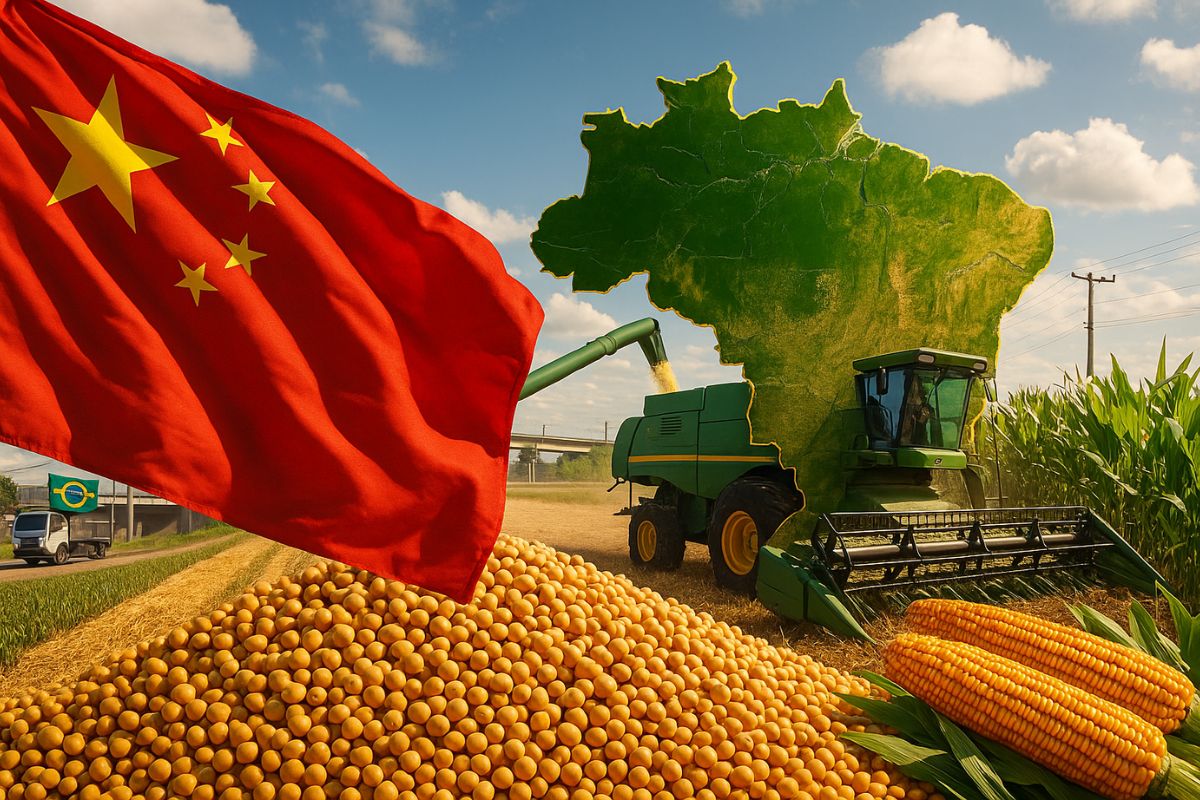


China Buys Land and Companies in Brazil to Ensure Food Security with Only 7% of Arable Land in Its Territory, Intensifying Investments Since the 2000s in Soy and Corn, Port Logistics, and Agricultural Technology, While the Debate on Sovereignty, Regulation, and Land Concentration Grows
China Buys Land and Companies in Brazil as part of a long-term strategy to ensure the supply of soy and corn. With only 7% of arable land, the Asian country seeks to reduce internal vulnerabilities and stabilize the supply of essential inputs for meat and animal feed, connecting production in the fields to offloading infrastructure.
The movement gained momentum starting in the 2000s and solidified in the last decade when state-owned enterprises and large groups advanced on stakes in Brazilian companies and logistics projects. The central narrative is food security, but the advancement also increases Chinese geoeconomic influence and reorganizes production chains in agribusiness.
Origins and Motivations: From Food Security to Productive Integration
The genesis of the process combines three vectors. First, Chinese domestic demand for proteins has grown with income, multiplying grain consumption.
-
Larger than entire cities in Brazil: BYD is building a 4.6 km² complex in Bahia with a capacity for 600,000 vehicles per year, but the discovery of 163 workers in conditions analogous to slavery has shaken the entire project.

-
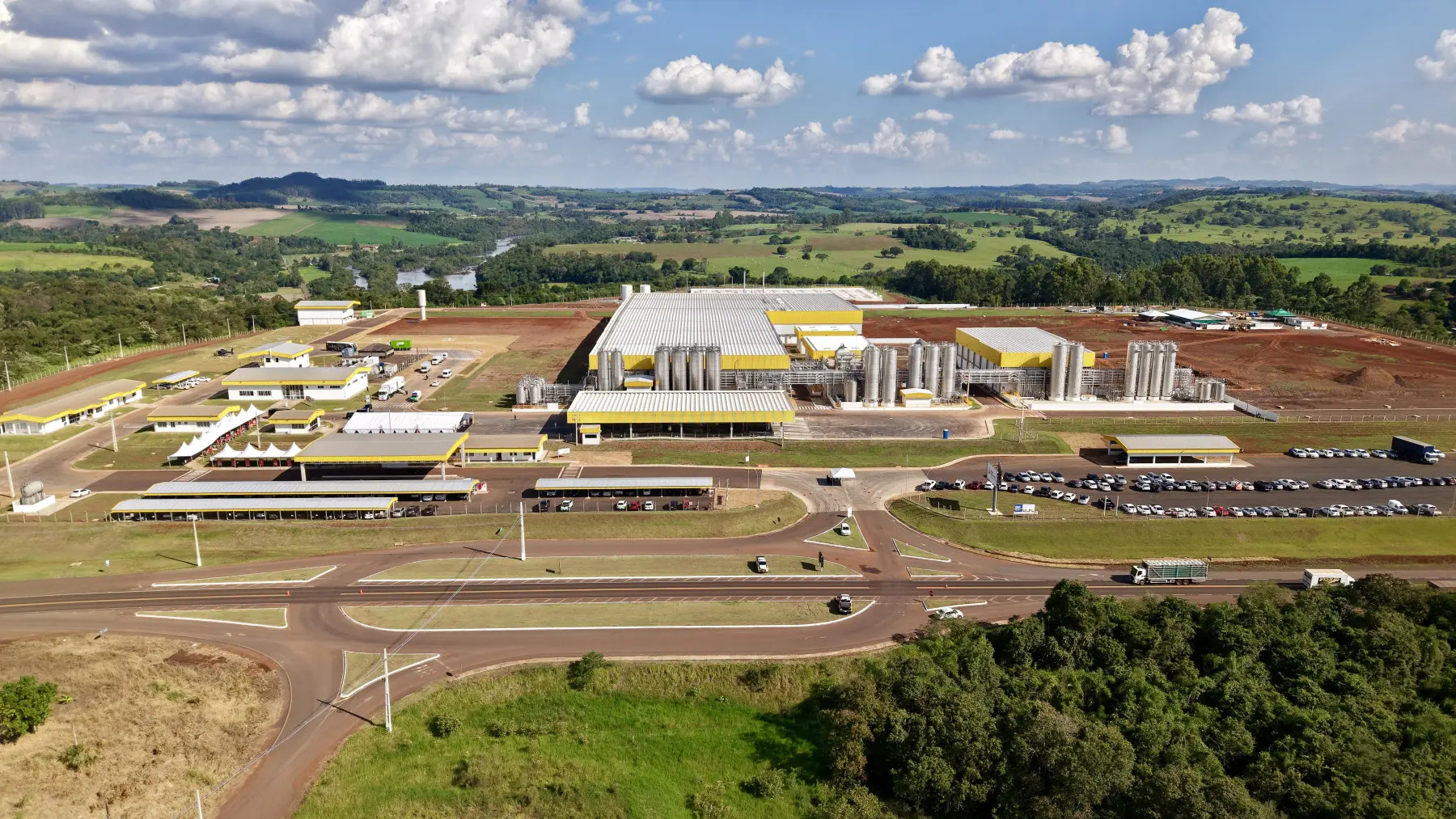
With an investment of R$ 612 million, a capacity to process 1.2 million liters of milk per day, Piracanjuba inaugurates a mega cheese factory that increases national production, reduces dependence on imports, and repositions Brazil on the global dairy map.
-
Brazilian city gains industrial hub for 85 companies that is equivalent to 55 football fields.

-
Peugeot and Citroën factory in Argentina cuts production by half and opens a layoff program for more than 2,000 employees after Brazil drastically reduced purchases of Argentine vehicles.


Second, the relative scarcity of arable land has increased dependence on imports.
Third, the state strategy has begun to prioritize control over critical links in the chain, from field to port.
In this context, China Buys Land and Companies in Brazil to anchor volumes and reduce supply interruption risks.
The bet is not just to plant, but to control logistics and processing, with investments in ports, storage, railways, and agricultural technology that lower costs, shorten timelines, and enhance predictability in shipments.
Historical Milestones: How Presence Evolved
In the 2000s, concern for food security was already appearing in official plans and reports about mapping areas for soy planting in Brazil.
Starting in 2008, the global crisis opened up space for external investments from countries with large savings, and Chinese presence accelerated.
In the 2010s, involvement shifted from commerce to equity positions and operational control in companies linked to grains and infrastructure.
In the 2020s, the cycle solidified with new announcements in agribusiness and logistics, agreements on technological cooperation, and authorization for state-owned enterprises to purchase and lease land, which reignited debates on food sovereignty.
How the Strategy Works: Companies, Logistics, and Technology
The typical design avoids legal friction and privileges the acquisition of companies that already hold rural assets and sourcing networks, rather than just seeking deeds of farms.
China Buys Land and Companies in Brazil in a combined manner, acquiring stakes that ensure access to production, storage, crushing, and trading.
On the logistics pillar, the focus falls on export ports, railways, and terminals on the routes for soy and corn.
Investments in agricultural technology and mechanization complete the arc, boosting productivity and standardizing the quality of the raw material destined for the Chinese market.
The goal is to reduce bottlenecks, lower costs per ton, and ensure regularity of shipments.
Where and Who: Mapping the Actors and Regions
Presence concentrates in strategic agricultural regions in the Midwest and Matopiba, as well as in port hubs where harvests converge.
State-owned enterprises and Chinese conglomerates lead the larger checks, while partnerships with Brazilian companies connect capital, local know-how, and licenses.
On the Brazilian side, rural producers, cooperatives, and trading companies interact according to interest and scale: some benefit from demand and capital, while others fear effects on internal prices, bargaining power, and commercial autonomy.
Government agencies and sector associations monitor the progression of agreements and the evolution of the regulatory framework.
Controversies and Debates: Sovereignty, Concentration, and Misinformation
The expansion raises questions about national sovereignty and land concentration.
Critics warn of the risks of control over productive decisions and the fate of crops, should foreign capital dictate the rhythms and destinations of supply.
Supporters argue that investment raises productivity, expands export capacity, and brings technology.
The topic is suffused with misinformation. False stories about the purchase of cities or strategic areas circulate and distort the debate.
China Buys Land and Companies in Brazil, but legislation limits direct acquisitions by foreigners.
Regulatory loopholes allow control via participation in national companies, which requires oversight and transparency to separate myth from reality.
Regulatory Framework and Risks: What Is at Stake
The purchase of land by foreigners is regulated, but corporate structures can shift control beyond land registration.
The regulatory challenge lies in tracing ultimate ownership, improving governance, and avoiding excessive concentration without stalling productive capital.
There is also the systemic risk of dependence on a single buying market. If Chinese demand fluctuates, entire chains may feel the impact.
China Buys Land and Companies in Brazil to ensure predictability, and Brazil needs to diversify markets, preserve competition, and strengthen instruments for defending competition in agribusiness.
Current Situation and Perspectives: Greater Integration and More Complex Dilemmas
Today, Chinese presence articulates agricultural production, robust logistics, and processing, with new cooperation agreements in family farming and mechanization.
China Buys Land and Companies in Brazil not only for the current crop but as a state policy aimed at the future, aligned with supply targets and technological transition.
For Brazil, the net effect depends on how the regulatory framework evolves and how productivity gains translate into internal value, jobs, and innovation.
The balance between attracting capital and protecting sovereignty will be tested by large-scale projects, the quality of oversight, and the ability to diversify buyers without losing efficiency.
China Buys Land and Companies in Brazil to shield food security and control critical links in soy and corn.
The movement raised productivity and logistical integration, but brought dilemmas of sovereignty, concentration, and transparency.
The next cycle will depend on clear rules, effective monitoring, and a trade strategy capable of combining external capital with national interest.
Do you think that China Buys Land and Companies in Brazil strengthens Brazilian agribusiness with capital and technology or concentrates too much power at strategic links in the chain? In your region, what has changed in logistics, price, and access to markets with the entry of Chinese groups? Share concrete experiences and perceptions — we want to hear from those who live this in practice.







Virando colônia da china comunista graças a um **** uma **** e uma tropa de jumentos em 3,2,1…, o agro ateh então era o que ainda sustentava esse país ainda bancava a roubalheira e a mamata daquela ladroada todo de Brasília, tanto que fizeram que conseguiram o destruir também e agora vão nos vender a preço de **** para os comunas igual vendiam os negros, iremos continuar plantando e criando porém trabalhando por migalhas como escravos nas terras que um dia foram nossas e ateh Lah serão terras do governo, seremos saqueados e explorados novamente e ainda mais do que jah somos igual este país jah era roubado Lah trás pelos portugueses. Brazuela chegando rápido e quem tem como que vah embora enquanto pode pois eu infelizmente vou ter que ficar e penar pela burrice de quem acreditou em conversa de boteco que um bêbado **** prometeu picanha e cerveja de graça e a única coisa que iremos ganhar eh o grosso no **** mesmo. Acorda povo, eh sério mesmo que iremos deixar que 200.000.000 vão se deixar escravizar por meia dúzia de políticos ****, sou a favor de o povo pegar em armas invadir e dominar Brasília mostrar que o brasil eh dos brasileiros e que aqui **** não mais vai se criar, e não prender mas sim fuzilar estes **** que estão destruindo o nosso belo e rico país de uma vez para que nunca mais tenham chance de voltar assim como não o fizeram Lah trás na ****.
Não demora muito para que a China e outros países comprem territórios, que passarão a fazer parte de seu império. O correto seria vender ou arrendar terras agricultáveis para o gaúchos, paranaenses e catarinenses. Porque sendos brasileiros, saberiam desenvolver o país como sempre o fizeram. Para mim o Brasil não é o país do futuro, mas um país sem futuro.
Perfeita a análise… os únicos segmentos que o Brasil é competitivo é na mineração e no Agro e se entregarmos os dois seremos meros escravos do capital internacional …
Viva a China