





 Portuguese
  English
  Spanish
  6 min of reading
  0 comments


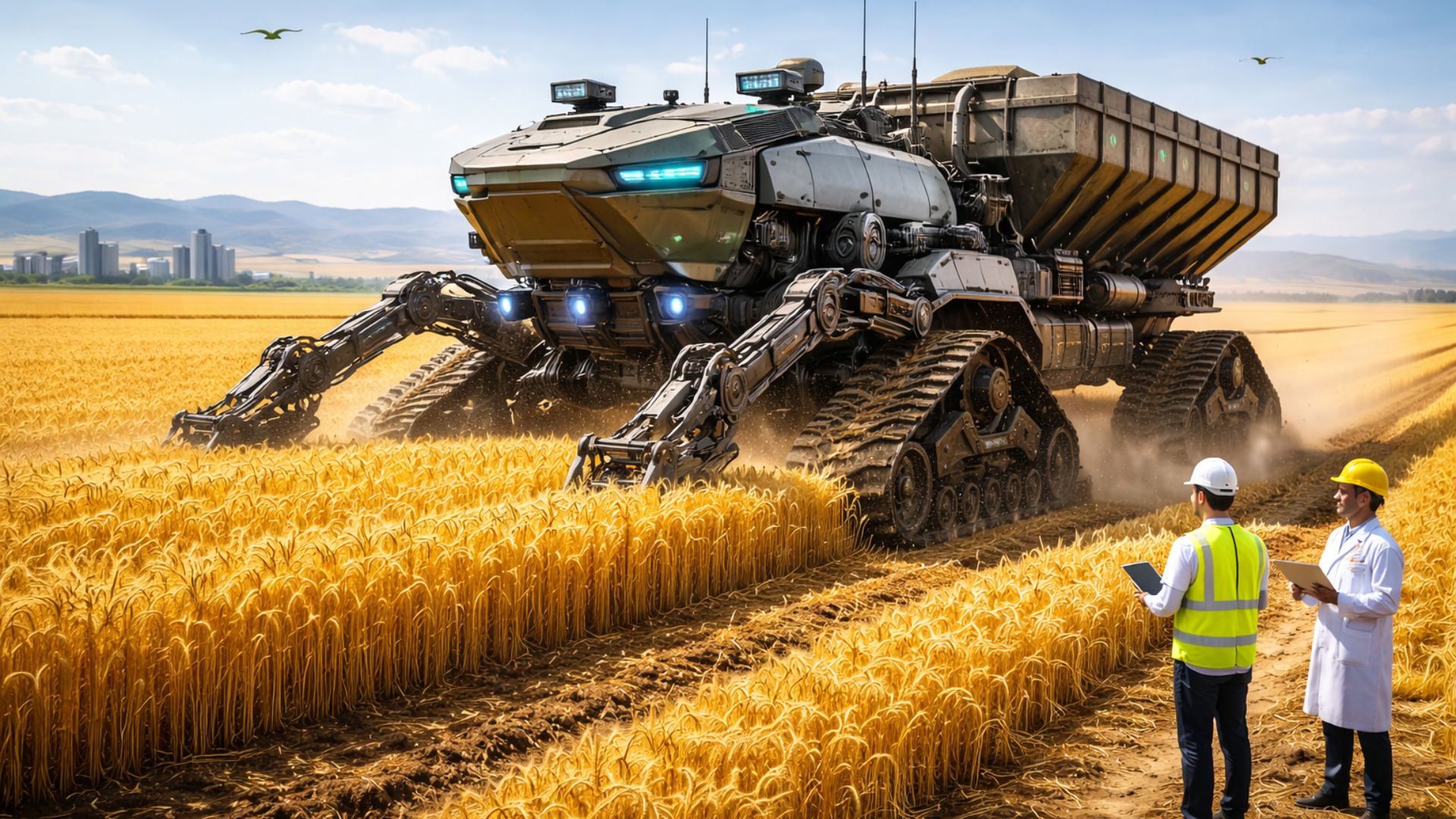
Silent Revolution in the Chinese Field Combines Autonomous Machines, Sensors, and Artificial Intelligence to Transform Farms into High-Tech Centers. Systems that Analyze Soil, Control Machines with Centimeter Precision, and Apply Inputs in a Targeted Way are Changing Agricultural Productivity and Redefining the Future of Food Production.
The transformation of agriculture in China did not come from a single isolated invention, but from the combination of autonomous machines, sensors, drones, and artificial intelligence systems that began to treat every square meter of the crop as a real-time monitored area.
Instead of relying solely on accumulated experience in traditional management, an increasing part of Chinese agriculture started to operate with centimeter-level satellite positioning, soil analysis, targeted application of inputs, and automation in crops and farms.
This advancement helps explain why the country has become one of the world references in digital agriculture and precision mechanization.
-
Something is happening around the Earth: Inside the huge explosion of fireballs in 2026

-
A hot air bubble coming from Argentina expands over Brazil, causing thermometers to exceed 38 degrees with a thermal sensation of 40 degrees in late March, affecting 6 states at once.

-
The radish leaf that almost everyone throws away has more polyphenols, flavonoids, and fiber than the consumed root, and a 2025 study showed that the leaf contains compounds that protect the intestine, combat inflammation, and may inhibit the growth of cancer cells.

-
A planet that seemed to defy the laws of physics has intrigued scientists for decades, until the James Webb revealed what is really affecting Saturn’s rotation.


At the center of this change is what seemed unlikely just a few years ago: the agricultural machine is no longer just brute force but has become a decision-making platform.
Tractors with automatic steering, guided by satellite navigation signals and RTK corrections, can operate with centimeter precision in open areas, which reduces overlap in planting, spraying, and fertilization.
In practice, this means less fuel waste, fewer line failures, and greater consistency in fieldwork.
The logic has changed. The operator no longer corrects every movement on the arm; the system calculates route, alignment, and repetition with minimal error margin.
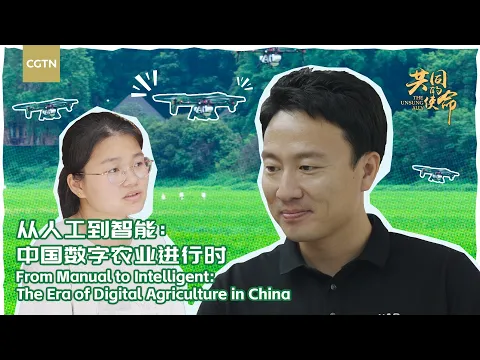

Precision Agriculture and Autonomous Machines in the Chinese Field
This technical leap gained momentum because China did not just invest in mechanization, but in connecting mechanization to data.
Embedded sensors and digital platforms began measuring moisture, terrain conditions, and specific production needs, allowing for decision adjustments according to the variation in the cultivated area.
Rather than treating the entire farm as a uniform block, digital agriculture works with targeted intervention.
Recent studies on the low-carbon transition in agriculture indicate that intelligent irrigation and fertilization systems help increase the efficiency of input use, while variable application of fertilizers can enhance utilization between 15% and 30%.
Agricultural Drones and Smart Spraying in Crops
If tractors have reorganized the ground, drones have changed the way to act on the crops.
In China, the agricultural use of these aircraft has moved from experimentation to commercial scale for over a decade, with accelerated expansion in large-area crops and regions where speed and precision make operational differences.
The main change is not just flying over the field but applying pesticides and other inputs more selectively, based on data readings and route planning.
The most relevant effect of this model appears in waste control.
Recent studies indicate that intelligent plant protection systems can significantly reduce pesticide use, while other research reports even greater reductions compared to conventional application methods under certain experimental conditions.
This does not mean that every aerial operation always yields the same result, but confirms a trend: the drone has ceased to be just a smaller sprayer and has become a precision management tool.
Moreover, aerial automation addresses a real problem in Chinese agriculture: the pressure for efficiency given the cost of labor, the need for scale, and the pursuit of reduced environmental impact.
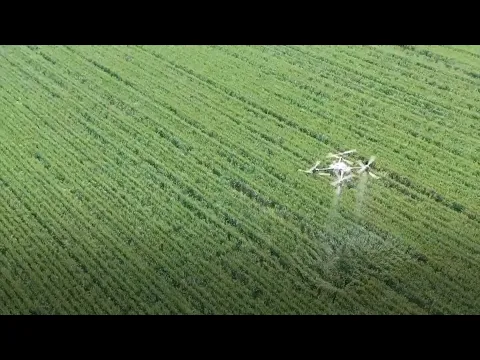
What previously required extensive teams, time, and greater input consumption is now executed with more agility and standardization.
In many regions, especially in the most technified productive chains, drones already occupy a structural space in the farm’s routine.
Cotton in Xinjiang Reveals the Scale of Chinese Mechanization
Few crops illustrate this change as well as cotton in Xinjiang, the main cotton-growing hub in China.
The region has been presented in studies and official data as an example of highly mechanized production, with strong integration between genetic improvement, refined management, mechanization, and intelligent agriculture.
In recent years, Xinjiang has consolidated high productivity by international comparison and, in demonstration areas, has even recorded record yields.
In 2024, a monitored area in the Bortala region reached 11,154 kilograms per hectare, according to data released with the support of technical agencies and Chinese researchers.
More important than the record itself is the production model behind it.
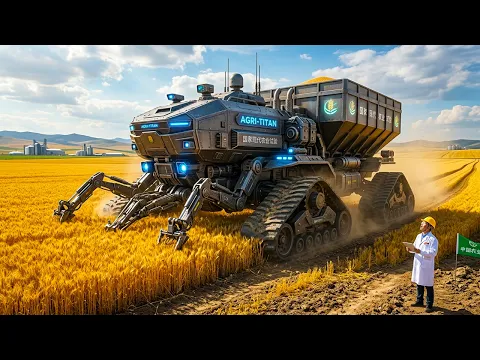
The mechanized harvest, precise management, and integration between machines and agronomic planning have reduced the reliance on manual labor in a culture historically intensive in labor.
In some areas of the region, the mechanization of planting, management, and harvesting has reached 100%, according to reports based on local data.
This helps explain why mechanization has gained symbolic weight in Chinese agriculture: it represents not just speed, but the ability to coordinate scale, predictability, and standardization.
Artificial Intelligence Also Advances in Livestock and Farms
The “impossible machine” mentioned in the title is not limited to open fields.
In China, automation has also progressed in livestock and poultry systems, where sensors, computer vision, and algorithms have begun monitoring health, behavior, and environment in high-density facilities.
Recent reviews on smart technologies in poultry farming show that AI-based systems can detect behavioral and physiological anomalies in advance, allowing for quicker responses to health issues and reducing losses.
This type of technology has been tested and applied in farms where cameras, microphones, and environmental sensors function as a continuous layer of productive surveillance.
In recent studies with farms in China, intelligent systems have managed to identify outbreaks of respiratory diseases with performance comparable to or superior to that of human specialists in certain scenarios.
In practice, this changes the management pattern.
Feeding, ventilation, ambiance, and early disease signals cease to depend solely on sporadic human observation and begin to be continually monitored.
The expected gains appear in various areas: waste reduction, greater production consistency, and quicker responses to sanitary deviations.
How China Built the Most Technological Agricultural System in the World
The idea of the “impossible machine” makes sense less because of a specific part and more because of the system that the country has managed to assemble.
China combined centimeter navigation, digital platforms, drones, large-scale mechanization, and artificial intelligence into the same productive logic.
The result is not a complete replacement of the farmer but a profound change in the human role within production.
Experience remains important; however, it now shares space with predictive models, automated routes, sensors, and data-assisted decisions.
Even so, it is wise to separate real advancement from narrative exaggeration.
Not every Chinese farm operates at this level of automation, and many spectacular numbers circulating in videos and promotional texts vary by culture, region, manufacturer, experimental design, and comparison method.
What is well documented, however, is the direction of this change: Chinese agriculture has heavily invested in precision, mechanization, and automation, and this set already produces concrete effects on productivity, efficiency in the use of inputs, and organization of rural labor.
Therefore, the central question is no longer whether machines can participate in food production. That stage has been surpassed.
What the Chinese experience shows is something else: when machines, sensors, and algorithms begin to operate together, agriculture stops reacting only to what the human eye sees and begins to anticipate problems, dose resources, and execute tasks with a level of repetition that manual labor hardly sustains on a large scale. It is from this turning point that the new strength of the Chinese field is born.





-

-

-

-

-

-

117 pessoas reagiram a isso.