





 Portuguese
  English
  Spanish
  3 min of reading
  12 comments



Chinese Giant GAC Launches the Quark Electric Drive 2.0, an Electric Motor with Record Efficiency and Flexible Metal Technology, Challenging Toyota, Ford and Other Renowned Brands. It Will Arrive Soon in Brazil with Investments of R$ 5.5 Billion.
While brands like Toyota, Ford, and Honda lead the market, a Chinese Giant, GAC (Guangzhou Automobile Group), is emerging with an innovation that could completely change the game.
The manufacturer, known for its rapid production capabilities, is now about to launch an electric motor that promises not only record efficiency but also a new era in electric mobility.
The Motor That Promises to Break All Records
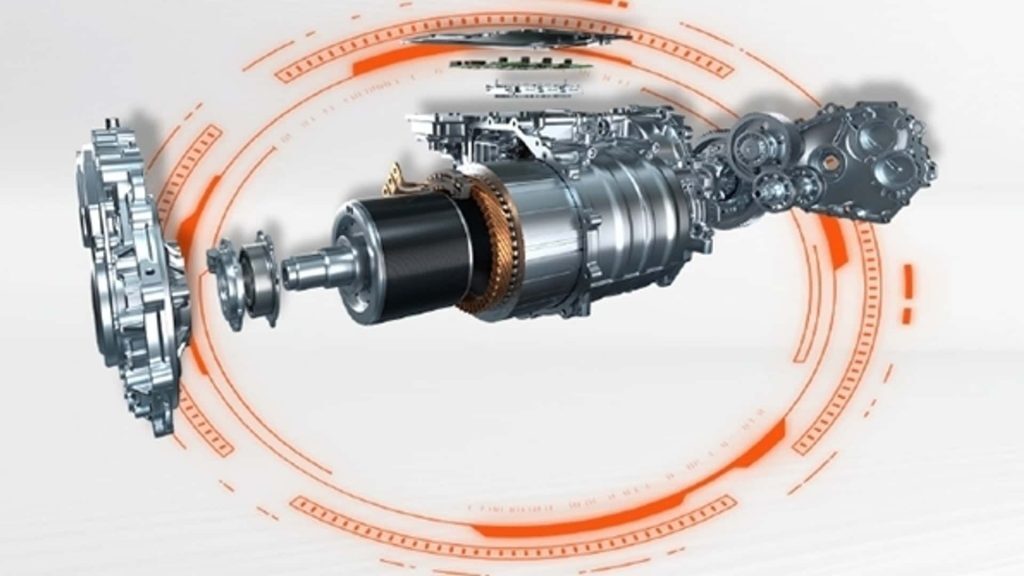
The Quark Electric Drive 2.0, the name given to the new motor developed by GAC, is generating expectations that go beyond the borders of China.
-
A “silent skill” is allowing Brazilians to earn up to R$ 22,000 per month without a degree and become indispensable for companies that rely on millions of data to survive.

-
Researchers at the Toyota Research Institute found that if a human uses robotic arms to flip a pancake 300 times in an afternoon, the robot learns to do it on its own the next morning, and this is currently the most promising method to solve the biggest bottleneck in modern robotics.

-
Goodbye iron: a common item in households is starting to lose space to technology that smooths clothes in minutes without an ironing board and with less energy consumption.

-
Antarctica reveals an unusual clue high in the Hudson Mountains, and what appeared to be just an isolated rock began to expose a secret hidden under the ice for ages.


With an efficiency of 98.5%, this motor redefines the concept of performance in electric vehicles, surpassing models from Toyota, Ford, and Honda.
As revealed by the company, the power density of the motor reaches an impressive 13 kW/kg, a mark that places it ahead of many competitors.
But it’s not just the efficiency that impresses. The Quark Electric Drive 2.0 can achieve 30,000 rpm (revolutions per minute), a number that sets a new standard for electric motors.
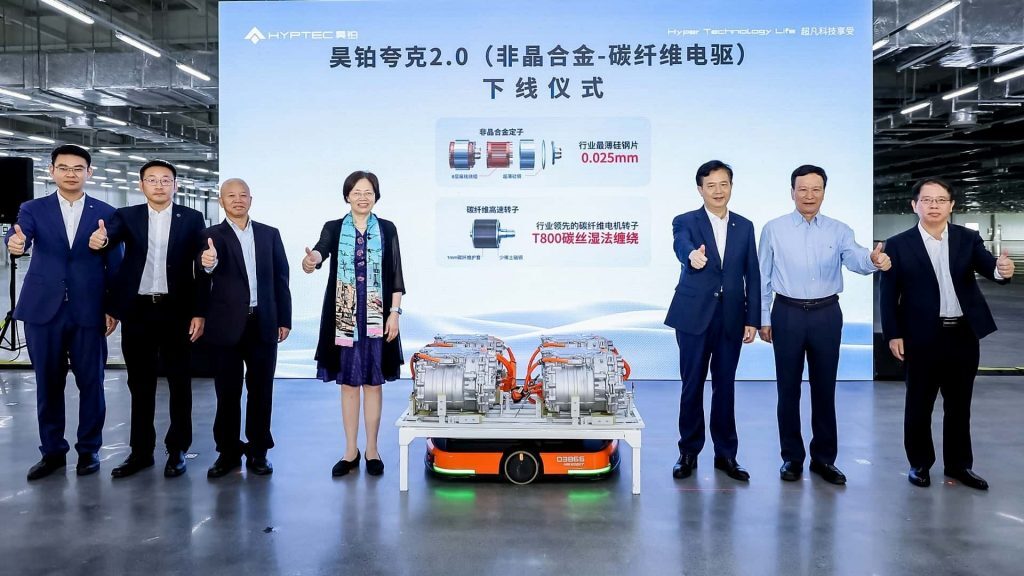
Additionally, the most intriguing innovation is the material used in the motor’s manufacture: a flexible metal called “amorphous soft magnet.”
This material, with permeability up to 100 times greater than that of a sheet of standard steel, has a thickness comparable to a quarter of an A4 sheet of paper.
More Range and Performance
According to the portal CarNewsChina, one of the most significant benefits of the Quark Electric Drive 2.0 is its ability to increase the range of electric vehicles by up to 50 km.
For plug-in hybrids, this margin can reach 150 km additional, a considerable advancement that reinforces GAC’s potential in the sector, positioning it as a serious competitor to established brands like Tesla, Nissan, and Volkswagen.
It’s no surprise that GAC is standing out in the race for energy transition. The company had already made headlines by presenting a new generation of smarter chassis, focused on providing a safer and more dynamic driving experience.
Now, with the Quark Electric Drive 2.0, the automaker reinforces its commitment to innovation, showing it is ready to compete in an increasingly demanding global market.
GAC Invests Heavily in Brazil
Meanwhile, Brazil is preparing to receive one of the largest investments by GAC outside of China. During a recent meeting in Beijing between GAC President Feng Xingya and Brazilian Vice President Geraldo Alckmin, the automaker confirmed a significant investment in the country.
There will be US$ 1 billion (approximately R$ 5.5 billion) invested over the next five years, aiming to expand its operations and bring this cutting-edge technology to the national territory.
The arrival of GAC in Brazil is not only a milestone in the local automotive industry but also an opportunity for the country to position itself at the forefront of innovation in electric mobility.
With this investment, GAC intends not only to install production units but also to create a research and development center focused on adapting its technologies to the needs of the Brazilian market.
What to Expect from the Future
With so many innovations on the horizon, the global automotive industry is about to undergo a significant transformation.
GAC, with its Quark Electric Drive 2.0, positions itself as one of the leaders of this new era, challenging traditional brands like Toyota, Ford, Tesla, and Volkswagen, promising to redefine the standards of efficiency and performance in electric vehicles.
Now, the question remains: is Brazil ready to receive this technological revolution? Comment below and share your expectations about the impact of this innovation on the national market.






Muito importante para o Brasil esse mega investimento espero que seja no Vale do Paraiba
Não só estamos prontos, como merecemos esse avanço afinal até bem pouco tempo nossos carros estavam muito aquém dos estrangeiros. Agora chegou a nossa vez, aguardo ansioso pela transformação, estou planejando a compra do meu primeiro carro elétrico para janeiro do ano de 2025 e espero que já tenhamos essa nova opção.
Com o avanço rápido da tecnologia de motores e baterias os carros elétricos atuais vão acabar no ferro velho. A tecnologia está mais rápida do que a capacidade de construção de uma infraestrutura para carregamento das baterias e as pessoas vão preferir carros com maior autonomia. Não é à toa que existem milhares de carros elétricos abandonados na Europa, na China e nos EUA. Conforme os carros atuais vão ficando obsoletos vão sendo abandonados porque ninguém quer comprar. A solução é colocar em todos os postos de combustíveis estrutura para carregamento de baterias ou passarmos a usar baterias carregadas na base de troca que a meu ver seria a melhor solução…