





 Portuguese
  English
  Spanish
  6 min of reading
  14 comments


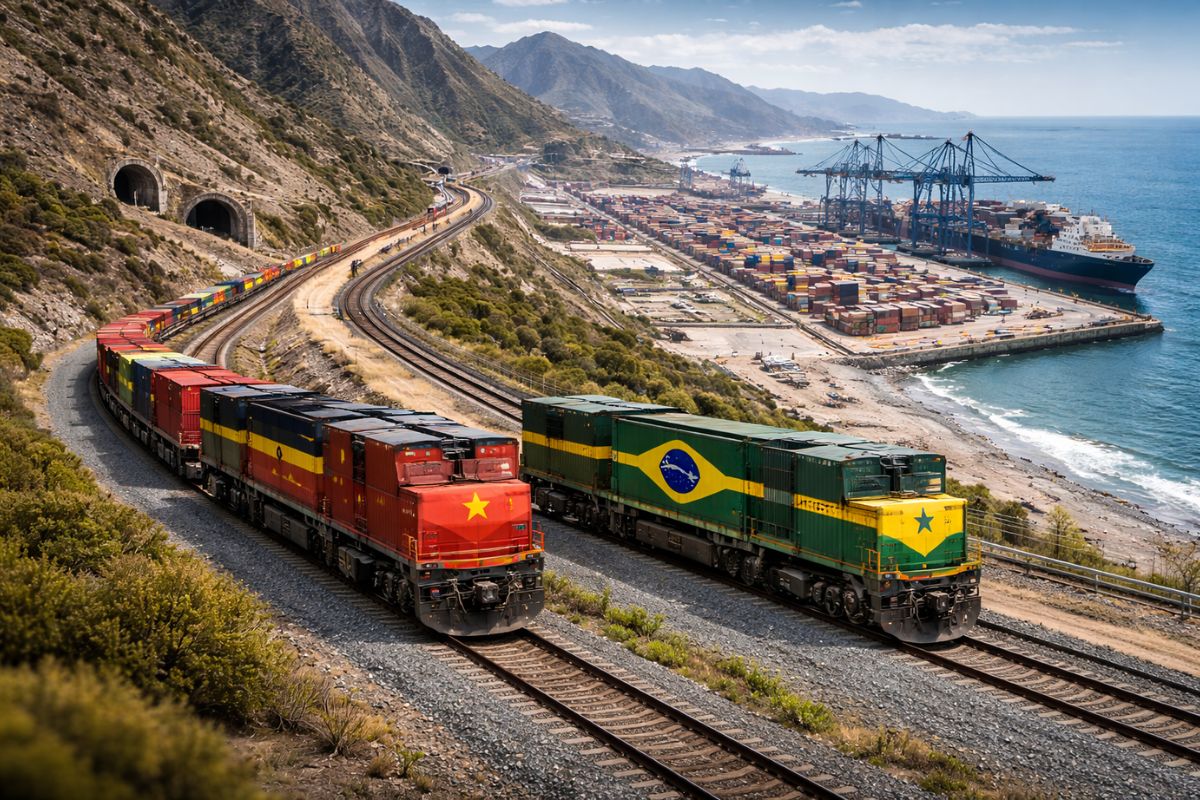


Agreement with Infra S.A. and China Railway Studies Railway Corridor Integrating Fiol, Fico and Norte Sul, Creates Path Between Atlantic and Pacific via Chancay Port, Challenges the Panama Canal and Promises to Reduce Costs and Deadlines for Brazilian Exports to Asia in Large Scale Containerized Cargo Today
A South American logistics corridor where China and Brazil aim to open a new path between the Atlantic and Pacific, connecting Brazilian railways to Chancay Port in Peru, with an estimated investment of US$ 3.5 billion, about 18 billion reais. The initiative is informally referred to as a “new Panama Canal made on land,” linking the Brazilian producing interior to a Pacific port built and inaugurated by the Chinese by the end of 2024.
The technical cooperation agreement that enables the studies was signed in July 2025 between the state-owned Infra S.A., linked to the Ministry of Transport, and the China Railway Economic and Planning Research Institute. In practice, the project aims for a corridor that reduces operational costs, shortens transport deadlines, creates a railway shortcut between oceans, and strengthens China’s political and economic presence in South America through a path between the Atlantic and Pacific that passes through Brazilian territory.
How the Corridor That Aims to Become the New Panama Canal on Land is Born

The starting point is the Chinese decision to build an alternative to the Panama Canal, currently the main global maritime route between the Atlantic and Pacific.
-
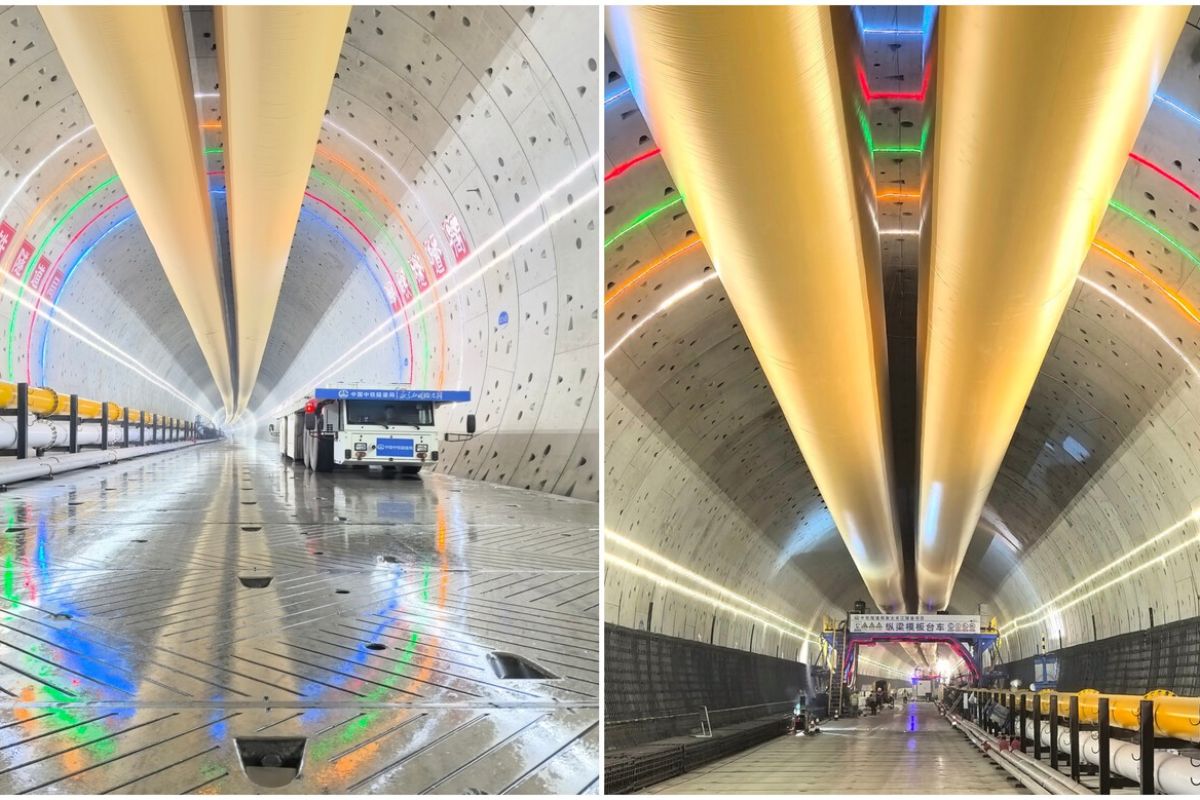
China completes the most critical section under the Yangtze River with the intelligent tunneling machine Linghang, excavating 11.32 continuous kilometers at depths of up to 89 meters and transforming the Chongming-Taicang tunnel into a landmark that redefines the scale of high-speed rail engineering in the 21st century.
-
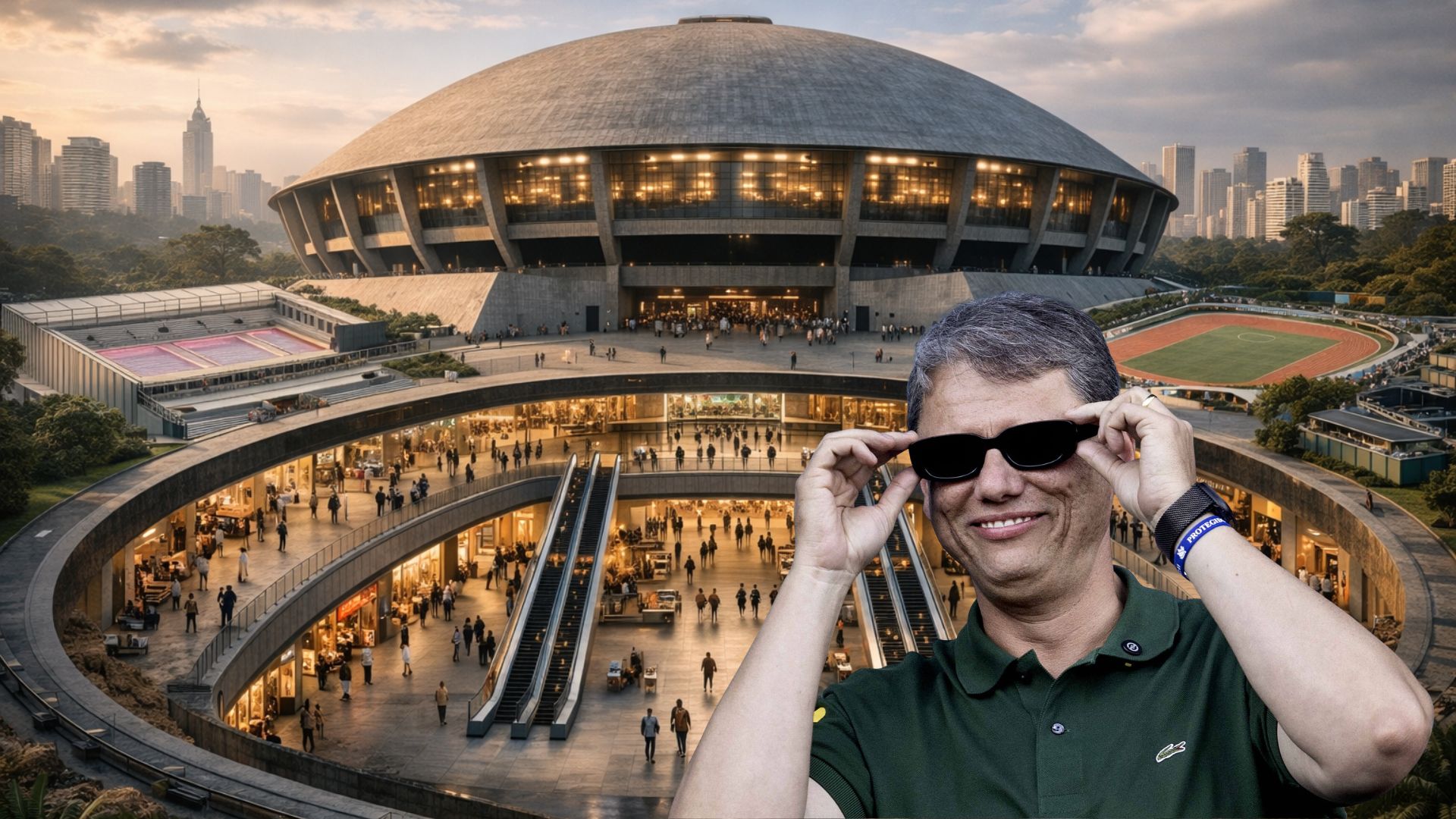
The government of São Paulo surprises South America with a plan to transform the famous Ibirapuera with underground shops, air conditioning, and a 25-year concession in a billion-dollar project that expands the audience, alters a protected area, and provokes an immediate reaction.
-
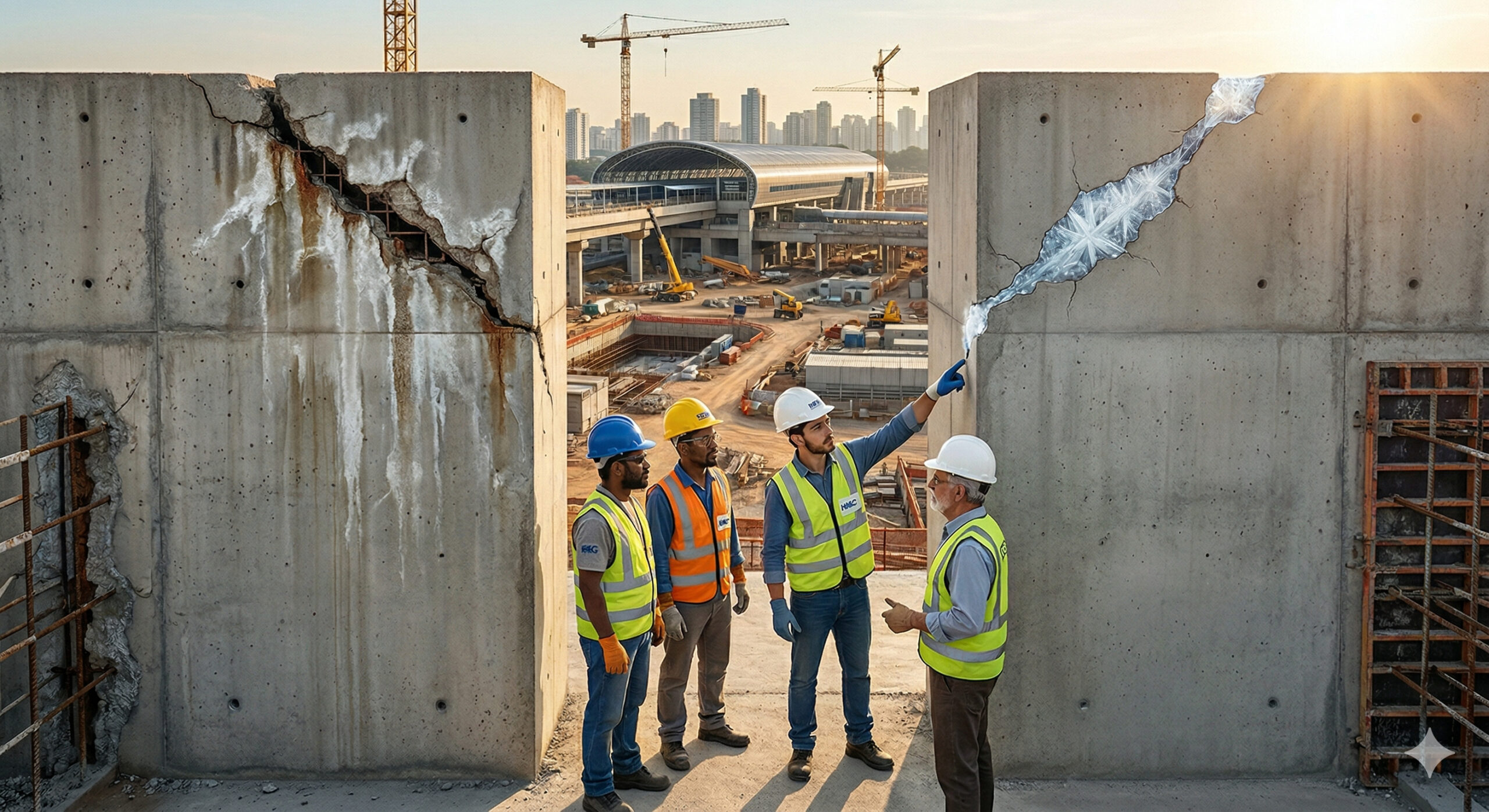
With a lifespan of up to 60 years and a cost up to 30% higher than conventional concrete, self-healing concrete is already being used in Brazil to eliminate leaks, reduce maintenance, and is changing the real cost of construction projects.
-
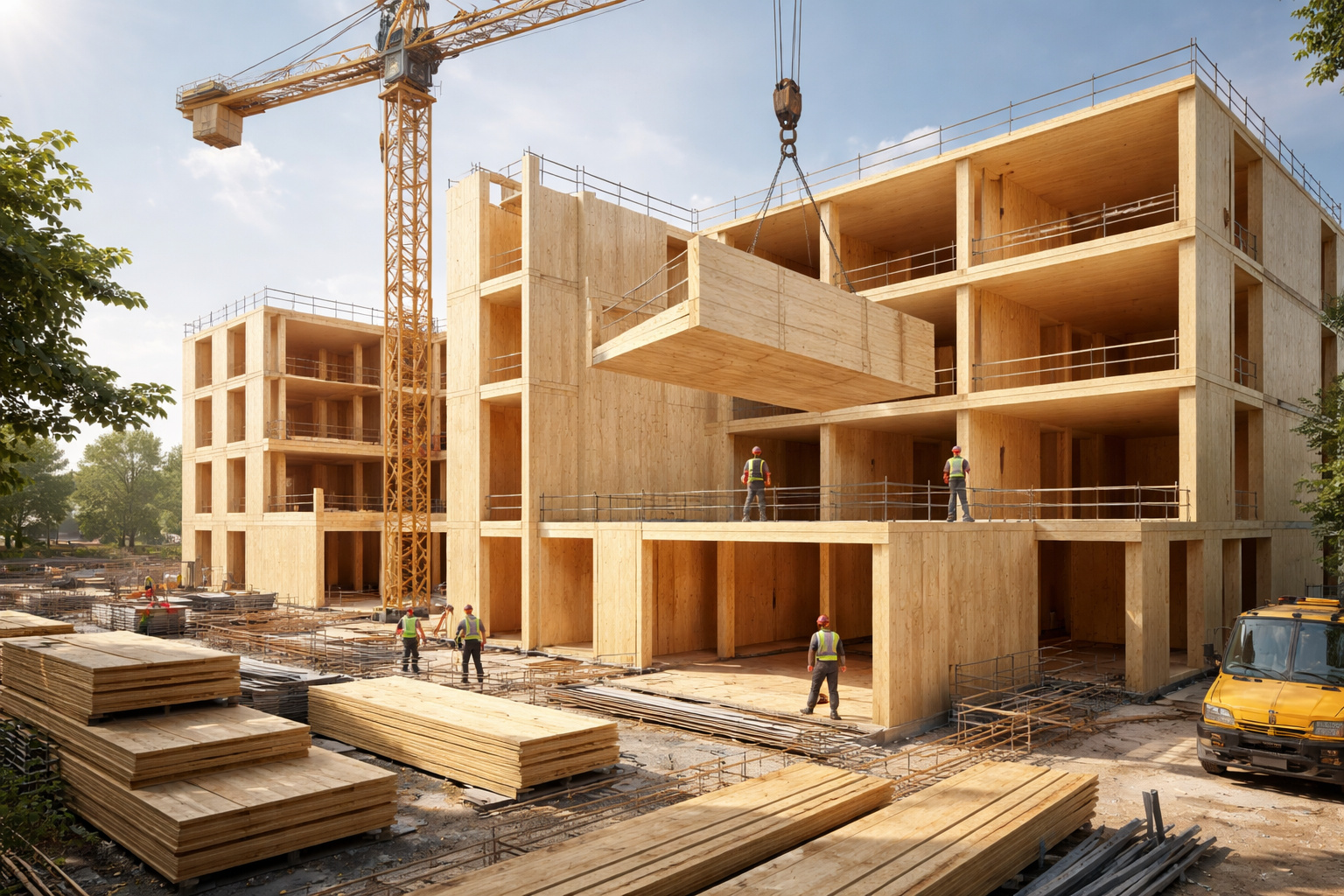
Engineered wood CLT challenges steel and concrete and promises construction that is up to 2x faster with a lower environmental impact in modern civil engineering.

The bet is to combine railway infrastructure in Brazilian territory with Chancay port to offer a mixed land-sea route capable of competing for some of the cargo that currently crosses the Central American isthmus.
According to the understanding disclosed by the parties, the corridor serves the same central objective as the Panama Canal, but through a different geographical axis in which the path between the Atlantic and Pacific goes through the agribusiness in the Midwest and ends up in the Peruvian Pacific, under strong Chinese logistical influence.
The ambition is for ships departing from Chancay to shorten the journey to Asia, while trains carry soybeans, corn, meats, and minerals coming from the interior of Brazil.
Fiol, Fico and Norte Sul as the Backbone on the Brazilian Side

On the Brazilian side, the initial design of the railway corridor utilizes already planned or ongoing projects.
The West-East Integration Railway, Fiol, is the physical foundation being deployed, linking Ilhéus in Bahia to Mara Rosa in Goiás.
It is this section that connects the coastal region of Bahia to the production areas inland.
In Mara Rosa, a connection with the Norte Sul Railway is planned, which runs through the country from Açailândia in Maranhão to Estrela d’Oeste in São Paulo.
This junction transforms Mara Rosa into a strategic nodal point in the network, where the flow coming from the Atlantic coast can be redirected to the Midwest through the Fico, the Central West Integration Railway.
The Fico will start at Mara Rosa and go to Lucas do Rio Verde in Mato Grosso, solidifying railway access to one of the most dynamic agricultural regions in the country.
From the Cerrado to the Pacific: Route of the Bioceanic Railway to Chancay


From Lucas do Rio Verde, the plan provides for the initiation of the Bioceanic Railway, which leaves being just a concept and becomes part of the corridor studied jointly by China and Brazil.
The projected route goes from the border of Mato Grosso with Bolivia, crosses Rondônia territory, and advances through the south of Acre until it reaches the border with Peru.
From this point on, the railway would continue towards Chancay port, built by Chinese investors and inaugurated by the end of 2024 on the Peruvian coast.
It is this stitching between the Brazilian Cerrado, the Amazon border, and the Pacific coast that materializes the path between the Atlantic and Pacific outside the Panama Canal, with trains replacing ships over much of the route and concentrating the final exit of cargo in Chancay.
Why the Path Between Atlantic and Pacific Is So Interesting to China
For Beijing, the corridor represents more than just an infrastructure project.
The studies are described as a combination of commercial objectives with broad geopolitical interests.
By participating from planning to the destination port, China positions itself as a financier, operator, and privileged user of a new flow of South American exports.
Controlling a path between the Atlantic and Pacific outside of Panama means, for China, diversifying routes, reducing exposure to bottlenecks in traditional channels, and strengthening the capacity to import Brazilian food and minerals via pathways where Chinese companies are protagonists.
Chancay port, designed to receive large long-haul ships, is a central piece of this strategy and serves as the “gateway” of the corridor to the Pacific.
What Brazil Gains by Integrating the Corridor with Chancay
On the Brazilian side, the project is presented as an opportunity to lower freight costs and enhance the competitiveness of exports.
By integrating Fiol, Fico, and Norte Sul into a continuous corridor to the Pacific, Midwest producers gain an alternative route to the Atlantic exits, which are currently concentrated in ports like Santos and Itaqui, often pressured by queues, road bottlenecks, and high logistical costs.
Moreover, the existence of a path between the Atlantic and Pacific tends to increase Brazil’s bargaining power in freight negotiations, since trading companies and shippers will have more than one strategic axis to move production toward Asia.
For the Brazilian government, the partnership also reinforces the role of railway infrastructure as a vector of regional development, especially in states like Bahia, Goiás, Mato Grosso, Rondônia, and Acre.
Engineering, Licensing, and International Coordination Challenges
Despite the announcements, the corridor is still in the technical study phase conducted by Infra S.A. and the China Railway Economic and Planning Research Institute.
The investment volume, estimated at US$ 3.5 billion, depends on detailed modeling, route definition, economic feasibility analysis, and resolution of environmental and land issues along the route.
Building a path between the Atlantic and Pacific based on railways requires reconciling construction schedules in more than one country, aligning regulations, resolving land use conflicts, and defining how the future governance of the corridor’s operation will be structured.
It will also be necessary to align the project with other infrastructure priorities in Brazil, such as road duplications, expansion of Atlantic ports, and ongoing railway concessions.
New Logistics Axis or Just Another Megaproject on Paper
For now, the South American corridor remains a great promise in the design phase.
There are clear synergies between the network already planned in Brazil, the operational port in Peru, and Chinese interest in shortening routes to the Asian market, but the distance between study and construction site is vast.
In an ideal scenario, the path between the Atlantic and Pacific would consolidate as a permanent axis of productive integration between Brazil, Peru, and China, transforming rail into a preferred route for grains, minerals, and containers while reducing dependence on congested routes passing through the Panama Canal.
In a pessimistic scenario, the project may face delays, internal political disputes, and local resistance, turning into a megaproject frequently announced and rarely completed in the region.
Faced with this design where China and Brazil bet on railways, Chancay port, and a new path between the Atlantic and Pacific to compete for cargo with the Panama Canal, do you believe this corridor will materialize and actually change the route of Brazilian exports, or is it likely to remain limited to a level of geopolitical promise in study?









Sim, acredito por várias razoes: a China tem que otimizar seu investimento feito no porto do Peru; para o Brasil será um canal aberto para chegar a 2/3 da população mundial localizada as margens dos oceanos Pacífico e Índico.
Please, Brazil planning to get the Pacific many years ago, before China. They planning it in 2016 , because for Brazil is very import to export all over Asia, it’s not only to China. The ex president Dilma Rousseff planned it many years ago with Peru.
Time for South America rename Latin America adjust political correctness and develop and modernized cross nations infrastructure and oils & gases pipe lines by pass outside political interference.