





 Portuguese
  English
  Spanish
  10 min of reading
  0 comments


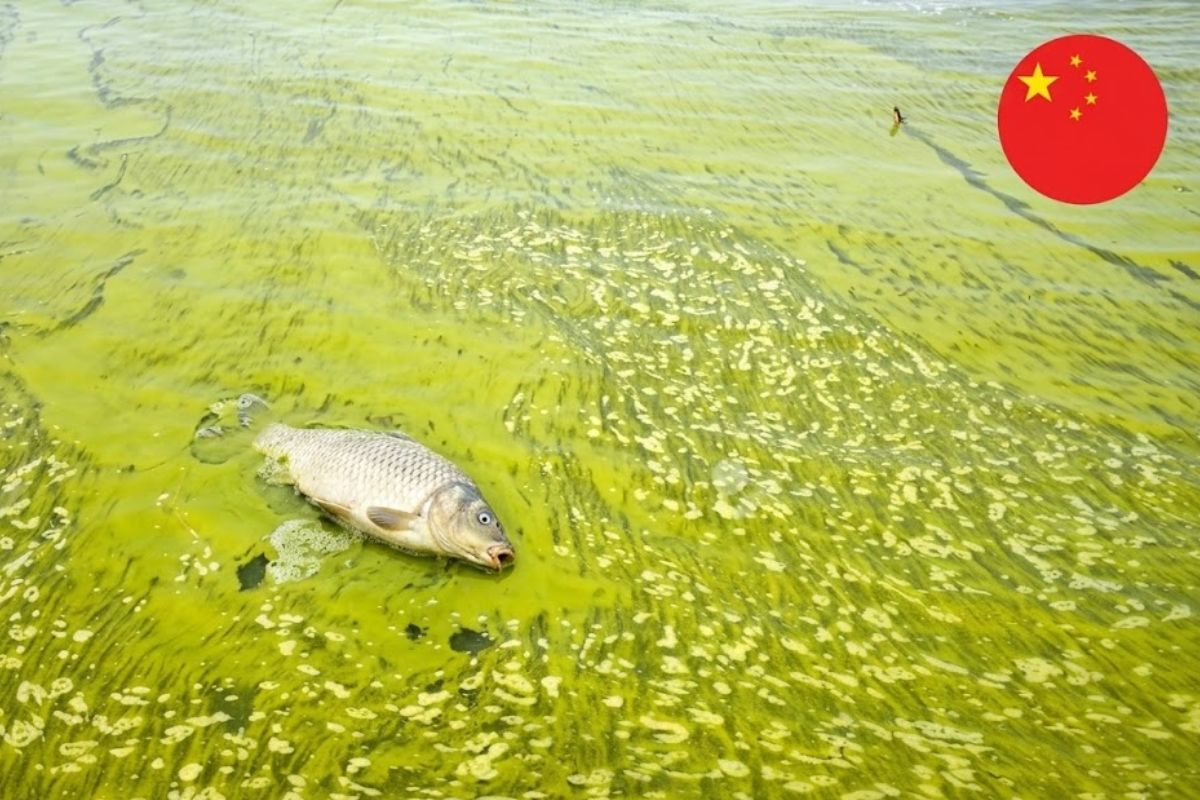
The Taihu Lake, in the industrial heart of the Yangtze Delta, emerged from a crisis that left yellow taps, water smelling of rotten fish, and millions without supply to become a symbol of environmental recovery after factory closures, massive dredging, new sewage systems, and permanent continuous integrated monitoring.
The Taihu Lake transformed from a celebrated landscape for its abundance to the epicenter of one of the most shocking environmental crises in modern China. In May 2007, the water reaching the homes of millions turned yellow, with a strong smell of rotten fish, making it unfit for drinking, cooking, and even basic daily tasks.
The rupture was not caused by an isolated accident but by decades of industrial pressure, sewage, intensive agriculture, and uncontrolled aquaculture on a shallow and extremely vulnerable lake. When the crisis exploded, the problem had been long-standing, deep, and too big to be hidden, forcing a response on a scale rarely seen in the recovery of a freshwater ecosystem.
The Day The Lake Stopped Being A Landscape And Became An Emergency
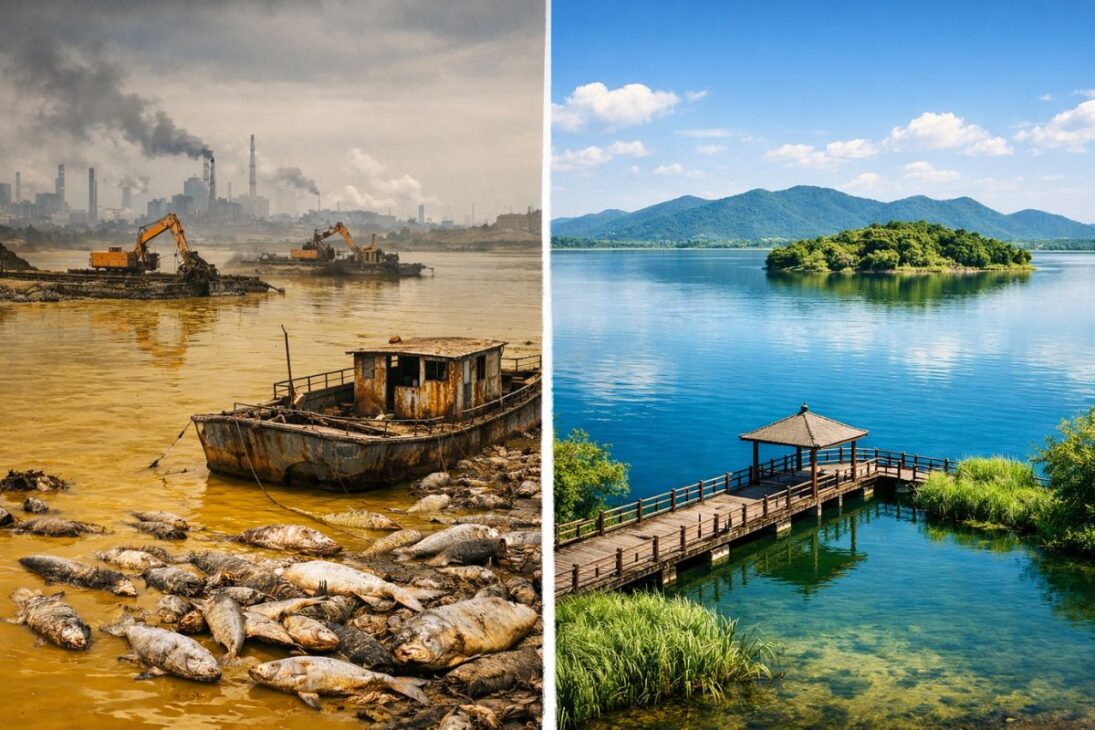
The collapse of Taihu Lake became apparent when the treatment station supplying Wuxi could not cope with the mass of decaying algae pushed by the wind to the intake area. The tap water changed color, acquired an unbearable smell, and became unreliable overnight. Supermarkets ran out of bottled water within hours, prices skyrocketed, and restaurants lost customers because no one trusted the safety of the water used in kitchens anymore.
-
Maria Branyas Morera lived to be 117 years old, eating three yogurts a day without developing cancer or dementia, and when scientists analyzed her DNA, they found a secret that no one expected: her biological clocks indicated an age two decades younger than her actual age.

-
Upside Down House transforms abandoned warehouses from the 1970s, blending art with concrete and steel engineering, becoming a phenomenon in South Korea and impressing with a surreal experience that attracts tourists from around the world.

-
Brazil became 18 square kilometers smaller in the new official update from IBGE, which redrew the boundaries of 784 municipalities in 13 states and even changed the names of cities that you might know, such as Açu, which is now called Assú.

-
Stephen Hawking said that the worst enemy of knowledge is not ignorance but the illusion of knowledge, and he dedicated his entire career to proving that science dies when people act as if they already have all the answers.


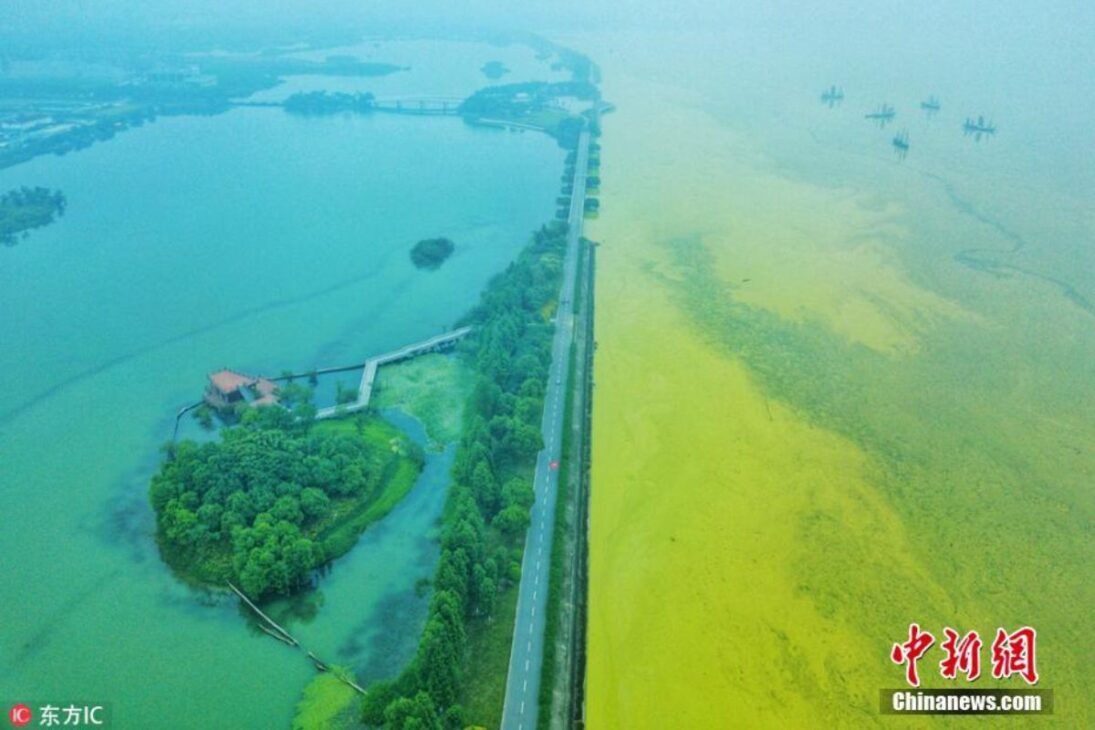
More than 2 million people were left without drinking water for at least a week, while the government had to distribute bottled water for nearly a month until the service was fully restored.
The episode brutally exposed the risk of relying on a degraded lake to supply a vast region. It was not a secondary reservoir, but a vital system for densely populated and economically strategic cities.
How An Essential Lake For Millions Was Degraded Over Decades
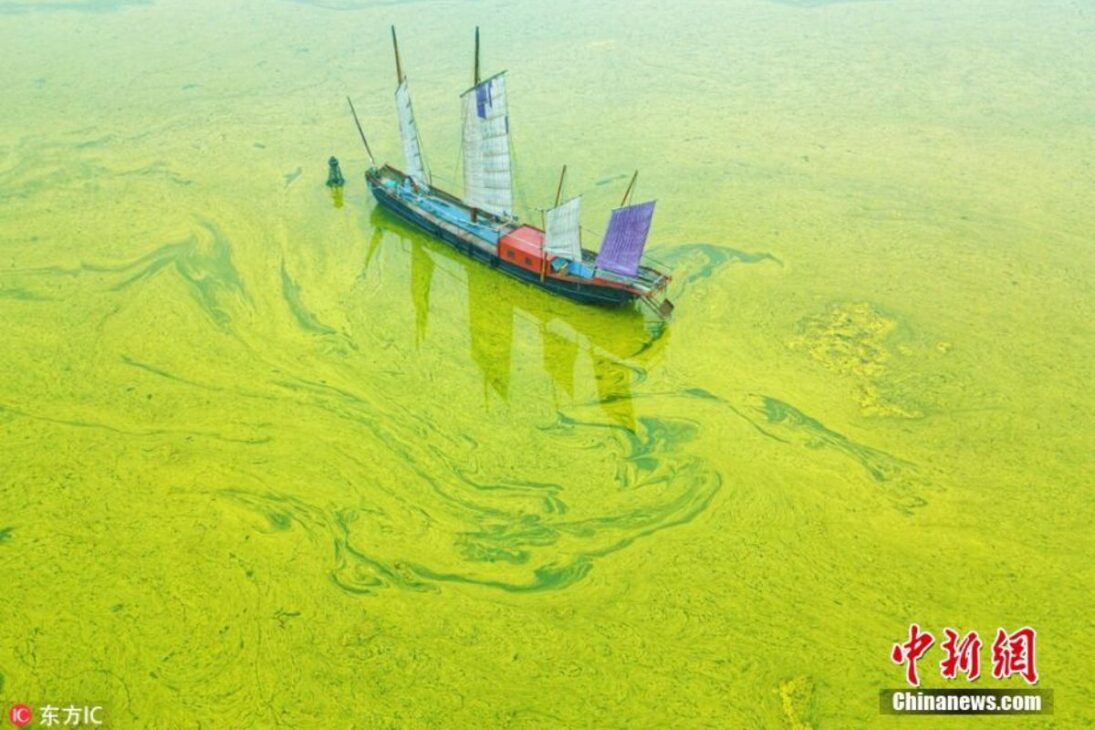
Taihu Lake was not just any body of water. At 2,338 km², it is the third largest freshwater lake in China and occupies a central position in the Yangtze River Delta, one of the most industrialized and populous areas of the country. More than 40 million people live around it, in cities like Wuxi, Suzhou, Changzhou, and Huzhou, and 17 million depend directly on this water. When this lake became ill, it was not just the environment that entered into crisis, but the entire urban and economic machinery of the region.
The natural vulnerability of Taihu exacerbated everything. It is a shallow lake, with the deepest point around 3 meters. This means that sediments, nutrients, and pollutants accumulated on the bottom easily mix with the surface whenever the wind blows harder. Instead of diluting impacts, the system recirculates them. The result is an environment conducive to eutrophication: excessive nitrogen and phosphorus, algal blooms, oxygen depletion, fish deaths, and the progressive weakening of the ecosystem.
Accelerated Industrialization Turned The Lake Into A Pollution Deposit
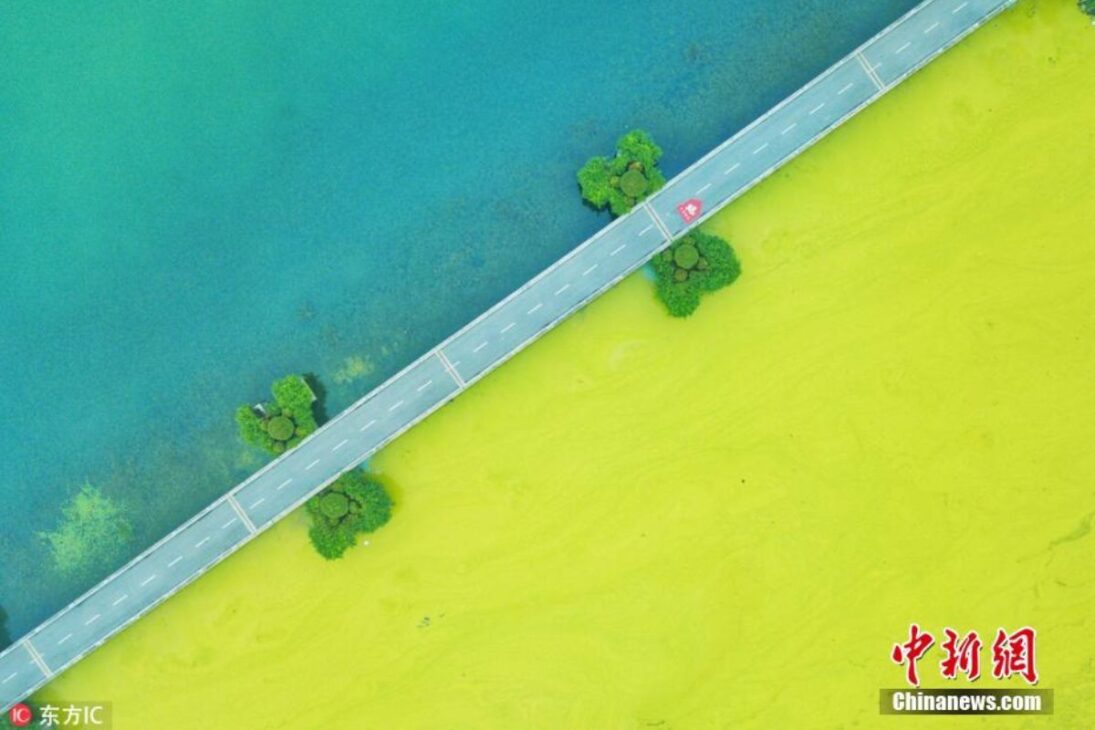
Starting in the late 1970s, China’s economic expansion accelerated the transformation of the lake’s surroundings. The strategic location near Shanghai attracted chemical factories, textiles, metallurgy, electroplating units, and food processors. Many operated with obsolete technology and insufficient wastewater treatment. At the same time, agriculture intensified fertilizer use, while aquaculture grew without effective control.
This combination dumped increasing volumes of organic matter, domestic sewage, industrial waste, and agricultural nutrients into the lake. The effect was devastating. The excess nitrogen and phosphorus fueled the explosive growth of cyanobacteria, which formed thick green layers on the surface and released toxins dangerous to aquatic organisms and the food chain. By 1983, 40% of the rivers flowing into the lake were already polluted. By 1996, this percentage had risen to 86%. Taihu went from being a symbol of abundance to practically becoming a regional sewage sink.
Since 1993, the entire lake had been suffering from eutrophication. The signs were clear: fish dying, aquatic plants disappearing, increasingly unstable water, and continuously deteriorating tributary rivers. Yet, for many years, economic growth took precedence. Pollution was known but often tolerated because factories generated jobs, revenue, and local influence.
The 2007 Crisis Was The Point Where Omission Was No Longer Possible
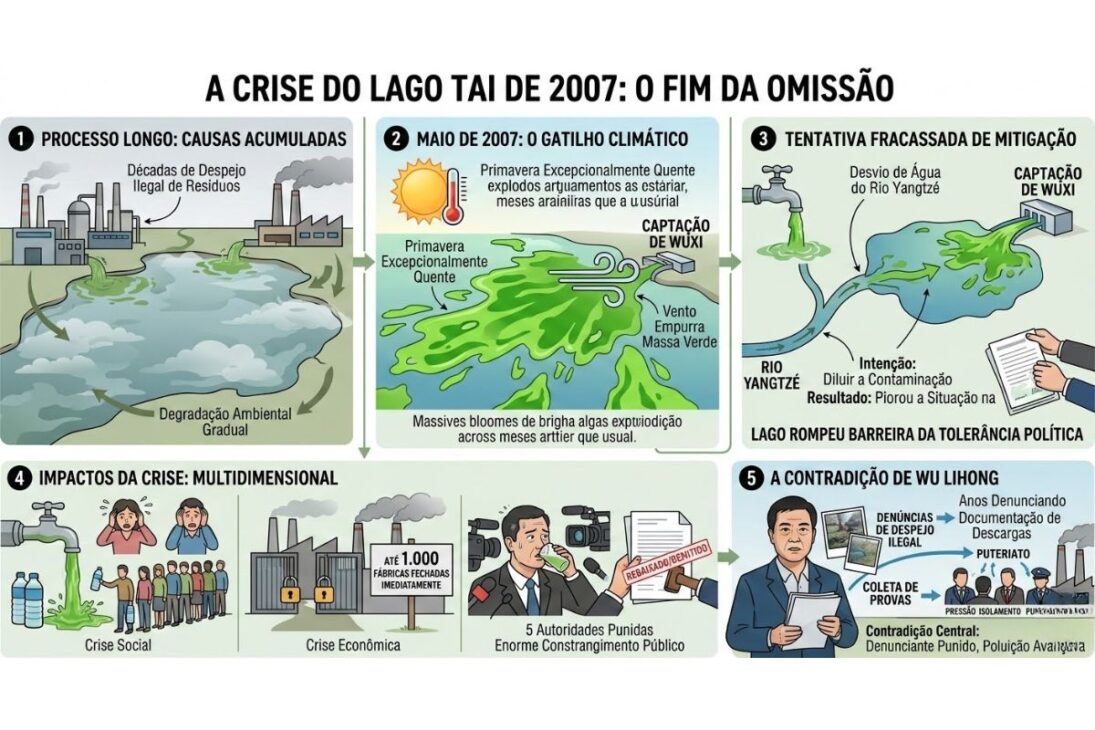
The explosion of the crisis in May 2007 did not come out of nowhere. It was the culmination of a long process, exacerbated by an exceptionally warm spring that accelerated the multiplication of algae about two months earlier than normal. The wind pushed the green mass toward the northern shore, precisely where the intake that supplied Wuxi was located. The emergency attempt to divert water from the Yangtze River to dilute the contamination only worsened the situation, pushing more algae into the system’s entrance.
The public embarrassment was enormous. Local authorities even drank tap water in front of cameras to try to regain public trust. At the same time, up to 1,000 factories were immediately closed, and five local officials were demoted or dismissed for negligence. The lake had finally broken through the barrier of political tolerance because environmental degradation turned into a social, economic, and institutional crisis simultaneously.
In this scenario, the trajectory of Wu Lihong, a local resident who had spent years denouncing illegal waste dumping around the lake, also gained prominence. He documented discharges, collected samples, and presented hundreds of reports to environmental authorities. His story highlighted a central contradiction: the problem was known, but those who insisted on denouncing it often faced pressure, isolation, and punishment while contamination advanced.
The Rescue Of The Lake Required Closing Factories, Dredging Sediments, And Redesigning Sewage Systems
After 2007, China abandoned piecemeal actions and adopted a systematic strategy for Taihu Lake. The first step was to attack the sources of pollution. Almost 60,000 polluting factories were closed, restructured, or forced to comply with much stricter emissions standards. Companies that remained in operation had to install nitrogen and phosphorus removal systems, under the risk of suspension and permanent shutdown. An inventory of phosphorus was also created to accurately trace the use and discharge of the nutrient by industries.
The second axis was sanitation. Over 32,000 kilometers of sewage pipelines were built, an extension equivalent to about 80% of the Earth’s circumference. Rural and suburban communities that previously dumped sewage directly into rivers and canals were connected to treatment systems. In Wuxi, over 95% of urban wastewater was professionally treated before reaching any body of water. Without cutting the continuous inflow of pollutants, the lake would never escape the cycle of collapse.
The third axis involved dredging the bottom. Over two decades, more than 55 million cubic meters of contaminated sludge were removed from the lake bed. This sludge contained decades of accumulated nutrients that continued to be released into the water. Operations removed approximately 29,000 tons of nitrogen and 24,000 tons of phosphorus. By 2024, the process was reinforced with the intelligent dredger Taihu Star, capable of processing up to 5,000 cubic meters of sediment per day.
The fourth axis was removing the already formed biomass. Since 2007, more than 16.6 million metric tons of algae have been extracted from the lake. In Wuxi, 14 specialized bases began processing up to 66,500 tons daily. Instead of simply discarding the material, part of it was transformed into organic fertilizer or used for electricity generation. This reduced the internal system load and gave productive purpose to a waste that had previously been just a symptom of disaster.
New Water, Wetlands, And Permanent Monitoring Changed The Lake Dynamics
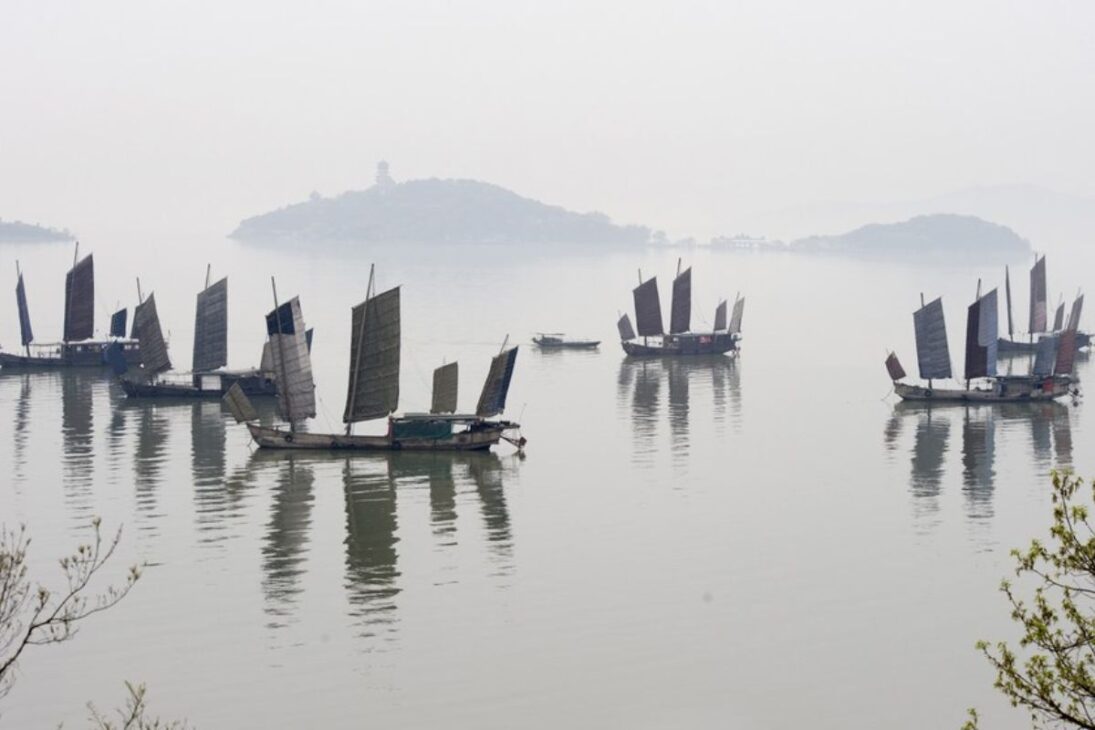
Another decisive component was increasing the circulation of water. A large diversion project brought water from the Yangtze River through the Wangyu River, pumping more than 10 billion cubic meters into the lake. As a result, the water renewal period fell from 300 days in 2002 to about 250 days, while the flow velocity in the affected areas increased from around 10 centimeters per second to between 20 and 30. In Wuxi, the city also expanded the intake area away from the shore, where the wind usually concentrates algae, and began receiving half of its drinking water directly from the Yangtze.
The recovery also involved ecological reconstruction. More than 30 buffer zones and 190 wetlands were created around the lake, in addition to planting over 190 hectares of submerged aquatic vegetation in the northern and eastern areas. These plants compete with algae for nutrients and help stabilize the ecosystem. In 2023, the area of aquatic vegetation in the lake reached 200 km², an increase of 25.8% compared to the previous year.
In September 2024, the system entered an even more sophisticated phase of monitoring. The province of Jiangsu launched a smart platform that tracks water quality with over 400 automated systems, more than 40,000 monitoring stations, satellite images, drones, and artificial intelligence for inspecting pollution sources. The lake was no longer observed only when the crisis was already established; it began to be monitored continuously to prevent disaster from repeating.
The Results Show That The Lake Has Truly Improved
The scale of the investment helps explain the turnaround. Since 2007, more than 300 billion yuan, about US$ 41 billion, has been invested in the recovery of Taihu Lake. In January 2025, came the most symbolic milestone: for the first time in 30 years, the water quality of the lake reached level 3 in the Chinese classification system. Before the great crisis, Taihu had been associated with level 5, the worst on the scale. The change does not mean perfection but represents a concrete exit from the condition of collapse.
The quality indicators followed this advance. Total nitrogen concentrations in the lake decreased by 60.9% compared to 2007, while total phosphorus declined by 42.6%. The nitrogen load carried by rivers into the lake dropped from 47,400 tons in 2008 to 25,800 tons in 2023. Phosphorus fell from 2,200 to 1,400 tons. The 15 main rivers flowing into Taihu began to meet or exceed the level 3 standard, and four of them reached level 2.
Algal blooms also shrank. In 2022, 104 episodes were recorded; in 2023, the number dropped to 53. In the summer of 2024, the average area covered by algae fell by 15.8%, and the average density decreased by 17.5% compared to the previous year. In 2023, the density of cyanobacteria reached the lowest recorded peak, equivalent to just 16.4% of the peak observed in 2021. The return of aquatic birds, submerged plants, and visibly clearer stretches of water reinforces that the change was not limited to spreadsheets: it also appeared in the landscape.
The Lake Improved Without Slowing The Regional Economy
One of the most impressive aspects of the recovery of Taihu Lake is that the region’s economy did not collapse after closing the most polluting factories. What happened was a structural replacement. The population in the basin increased by almost 7 million since 2007, and the regional GDP multiplied by 3.6. Even occupying only 0.4% of China’s territory, the Taihu basin now accounts for 10% of the national GDP.
The productive transformation was decisive. In cities of the region, high-tech industries began to account for more than half of industrial production. Suzhou gained strength as a pharmaceutical hub, Wuxi accounted for more than 10% of China’s semiconductors, and Changzhou emerged as a center linked to renewable energies. The lake was not saved despite the economy; it was recovered alongside an economic reconfiguration that reduced space for dirtier sectors and increased the weight of more sophisticated activities.
This point changes the reading on the cost of restoration. The investment was colossal, but it served not only to clean water. It helped reorganize infrastructure, environmental control, production matrix, and water security of one of the country’s most valuable areas. The case of Taihu shows that recovering a degraded lake can cease to be seen merely as expense and be treated as protecting the very engine of regional economic growth.
The Lake Is Not Yet Cured And Is Still Under Pressure
Despite the progress, Taihu Lake is not fully restored. Algae have not disappeared and continue to return during the warmer periods. The lake remains slightly eutrophied, indicating the presence of nutrients above ideal levels. The sediment on the bottom still releases phosphorus and nitrogen accumulated over decades, prolonging the problem. Saving the lake did not mean erasing the past; it meant reducing damage and preventing it from continuing to dominate the system.
Diffuse pollution remains a more complex obstacle than classic industrial pollution. Closing a factory is an objective action. Controlling fertilizers that runoff from fields, waste from pig and poultry farms, or aquaculture residues requires extensive oversight, political coordination, and money to compensate for local economic activities. The very surroundings of the lake still produce a large volume of wastewater related to agriculture, which maintains constant pressure on recovery.
Climate change makes this scenario even more delicate. Higher temperatures favor the multiplication of cyanobacteria, just as occurred in the exceptionally warm spring of 2007. This means that the lake will become more vulnerable to new outbreaks precisely in a context where extreme heat is likely to become more frequent. Taihu has improved significantly, but it remains fragile because it is still shallow, warm, and surrounded by one of the most productive and densely populated regions on the planet.
The Taihu Became A Reference Because It Proved That An Almost Lost Lake Can React
The story of Taihu draws attention because it unites rare scales in the same case: a gigantic lake, tens of millions of people around it, a dramatic supply crisis, 60,000 factories affected, 32,000 kilometers of pipelines, 55 million cubic meters of sludge removed, and US$ 41 billion mobilized to change the trajectory of an ecosystem that seemed doomed. There was no miracle, nor instant recovery. There was a prolonged, costly, technically broad, and politically tough intervention.
By reaching level 3 water quality for the first time in three decades, Taihu Lake ceased to be merely a portrait of environmental collapse and began to represent something greater: proof that even a highly degraded system can react when the fight against pollution ceases to be symbolic and begins to address sources, infrastructure, sediments, water circulation, and ecological restoration simultaneously. The before and after impresses precisely because it shows that the lake almost died but was not abandoned.
The recovery of Taihu Lake also raises a question that goes far beyond China: to what extent do cities and governments only act when degradation ceases to be statistical and enters the population’s tap?
And, looking at this case, do you believe that closing polluting activities and replacing this model with cleaner sectors is the only real way to save strategic lakes without sacrificing economic growth?









-

-

-

-

-

33 pessoas reagiram a isso.