





 English
  Francês
  Alemão
  Italiano
  Japonês
  Norueguês
  Portuguese
  Spanish
  5 min of reading
  0 comments


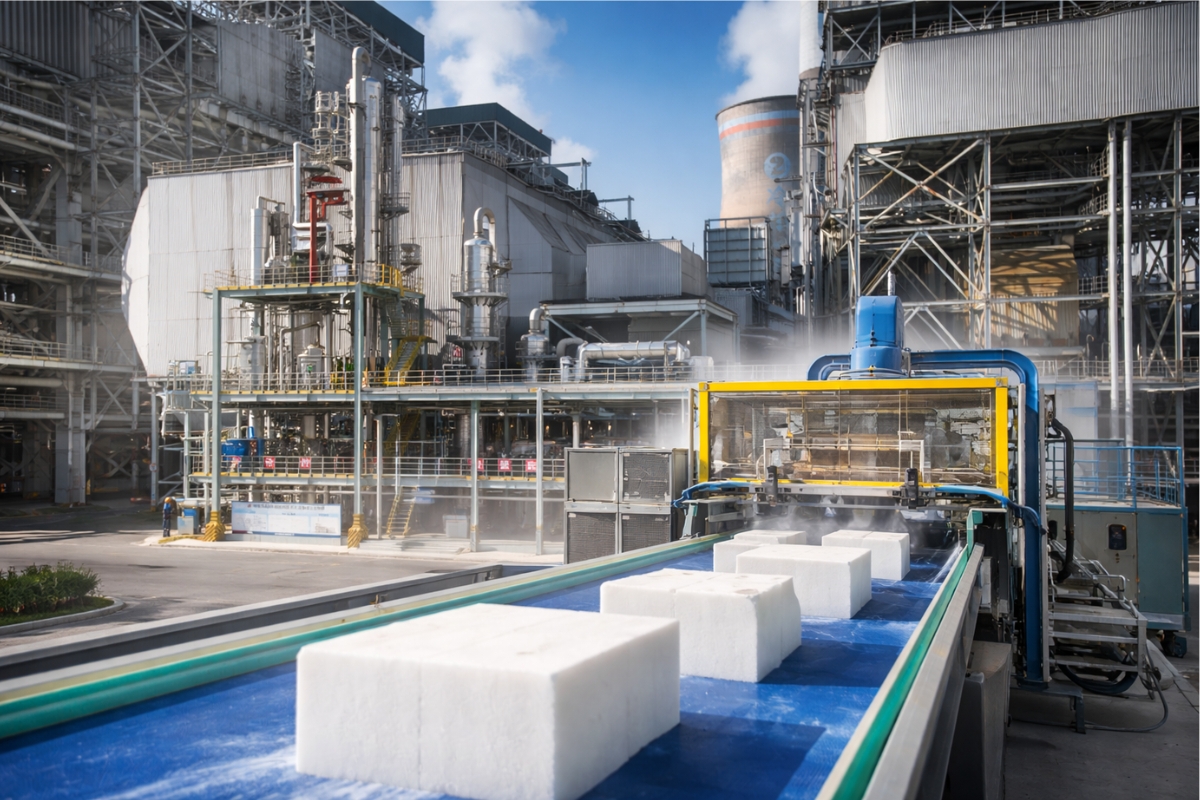
What used to come out of the chimney now enters the construction: China tested for 72 hours a system that captures CO₂ from a coal plant and transforms part of the gas into building blocks.
72 hours changed the course of a project that tries to give practical destination to one of the biggest problems of heavy industry. In Lanxi, in the province of Zhejiang, a coal plant completed a continuous operation that captured carbon dioxide and took this material for the production of building blocks.
The result drew attention because it takes carbon out of the abstract field of emissions and places it into a real, visible product linked to the construction industry. In practice, part of the industrial smoke stops going into the atmosphere and starts entering a new production chain.
The scale is still demonstration, but the test shows a path that could influence the future of sectors that still depend on energy-intensive processes with high volumes of emissions.
-
With 19,000 tons, 199 meters in length, and the capacity to carry 720 marines, the ROKS Marado has become a floating amphibious base that extends South Korea’s naval reach in one of the most tense regions on the planet.

-
The United States has unveiled the MQ-25 Stingray, the world’s first carrier-based tanker drone designed to operate on aircraft carriers and extend the range of naval fighters.

-
A cheap Brazilian invention promises to change the fate of patients in ICUs by accelerating muscle recovery even in critical condition.
-
Kawasaki surprises by revealing a 140-ton aircraft capable of winning wars without a single shot and bets on ultra-secret technology to protect Japan by 2027.

Project in Lanxi completed 72 hours continuously and released a decisive stage
The continuous operation of 72 hours was treated as the turning point that put the installation in a condition to move to the operational phase. The test took place in Lanxi, a city in the province of Zhejiang, within a plant linked to coal power generation.
This type of test is important because it verifies whether the system can operate without interruptions, maintaining stable capture and quality of the recovered gas. When this milestone is reached, the project ceases to be just a concept and begins to demonstrate concrete industrial application.

System was designed to capture 15,000 tons per year of CO₂
The unit was designed to remove about 15,000 tons per year of carbon dioxide from the plant’s gas stream. This volume alone does not solve the total weight of emissions from a coal plant, but it shows the attempt to create an integrated solution for a significant part of the problem.
The central point is the destination of the captured carbon. Instead of treating this material merely as waste, the project seeks to transform it into an industrial input with real utility and economic value.
Capture reached 90 percent and purity of 99 percent
During the testing period, the average capture rate reached 90 percent. The recovered carbon dioxide also achieved 99 percent purity, an important number to enable subsequent uses within the industrial chain.
These figures indicate that the process managed to separate carbon with a high level of efficiency. In simple terms, this means removing a good part of the gas from the plant’s smoke and recovering this material in a suitable condition for later use.

Carbon turned into building blocks and also generated dry ice
About two-thirds of the captured carbon dioxide was directed to the curing of building blocks. The remainder went to the production of food-grade dry ice, expanding the utility of the system within the industrial logic itself.
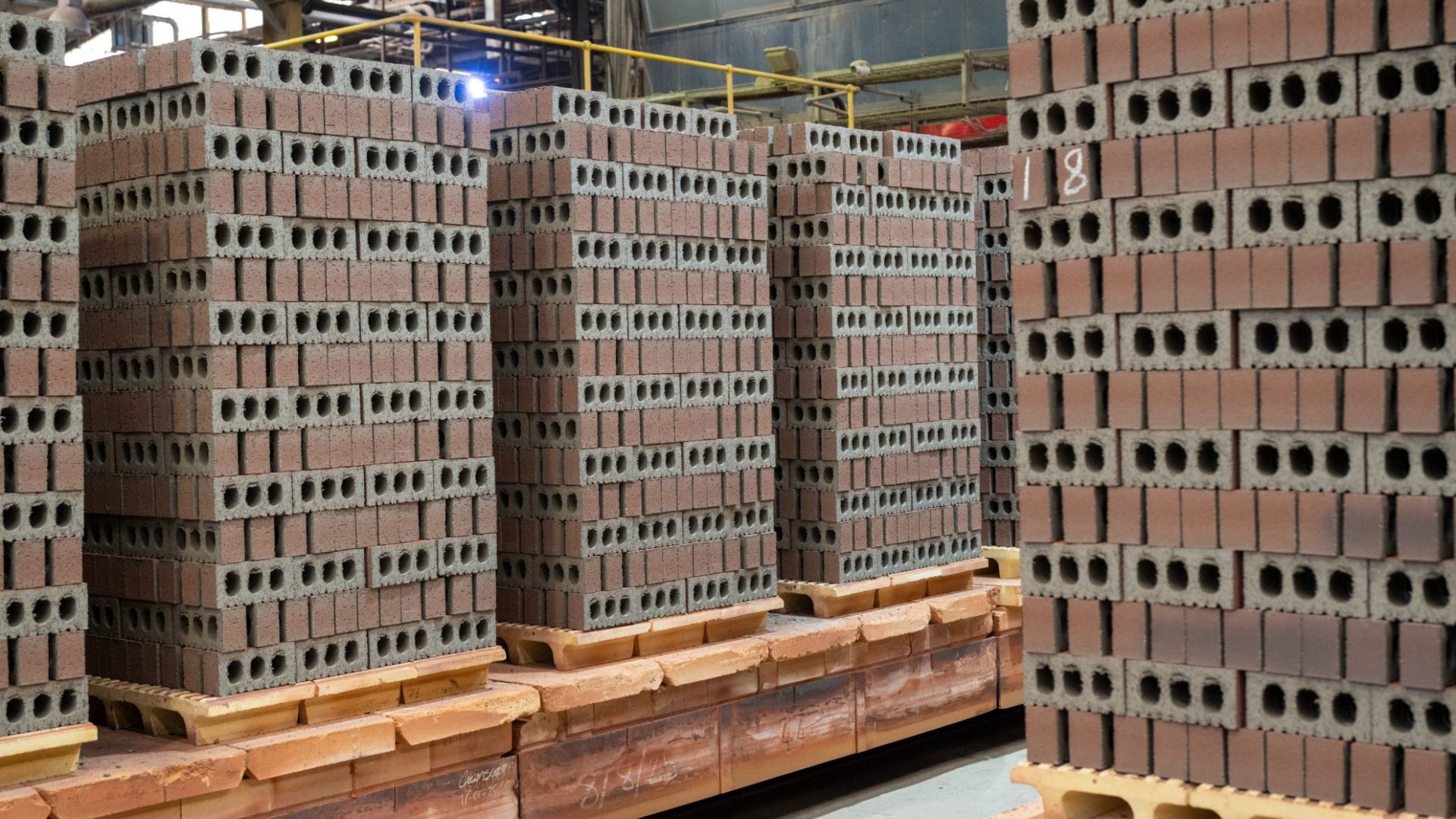
In the case of the blocks, the process helps to lock the carbon in the material through a reaction that transforms it into a stable part of the structure. This makes a difference because it reduces the chance of that carbon quickly returning to the atmosphere.
Blocks used in the project are not common construction bricks
The image of carbon trapped in bricks is strong, but the material used in the project is closer to aerated concrete blocks than traditional bricks. This difference matters because it shows that the process is linked to a specific type of building material.
Even so, the visual and industrial impact remains. What used to come out of the chimney now enters pieces that can be used in construction, bringing the climate debate closer to the concrete reality of the construction industry.

Technology tries to reduce the climate weight of hard-to-change sectors
Coal, cement, steel, and petrochemical plants are among the sectors most difficult to decarbonize quickly. Therefore, solutions that capture part of the emissions at the source gain space as an attempt to reduce damage while the energy transition advances.
This model does not make coal clean nor does it eliminate all the impacts of the activity. What it does is create a route to retain part of the carbon and give this material a more lasting industrial use.
Result in Zhejiang brings energy and construction closer in the same chain
The test draws attention because it connects two ends that normally appear separate. On one side is the emitting plant. On the other is the industry capable of absorbing part of that carbon and placing it into a practical use product.
This fit can open space for new projects in regions with a strong industrial presence and demand for construction materials. When capture finds immediate and nearby destinations, the economic logic of the process gains strength.
The advancement still needs to prove scale, competitive cost, and repeatability in other plants. Nevertheless, the experience in Zhejiang shows that the industry is seeking more concrete ways to deal with emissions that are difficult to cut in the short term.
By transforming smoke into construction material, the project repositions the discussion about carbon within the real economy and changes the strategic reading.
Sources: eHangzhou, Xinhua, Zhejiang Energy, IEA, ScienceDirect






Seja o primeiro a reagir!