





 Portuguese
  English
  Spanish
  6 min of reading
  19 comments


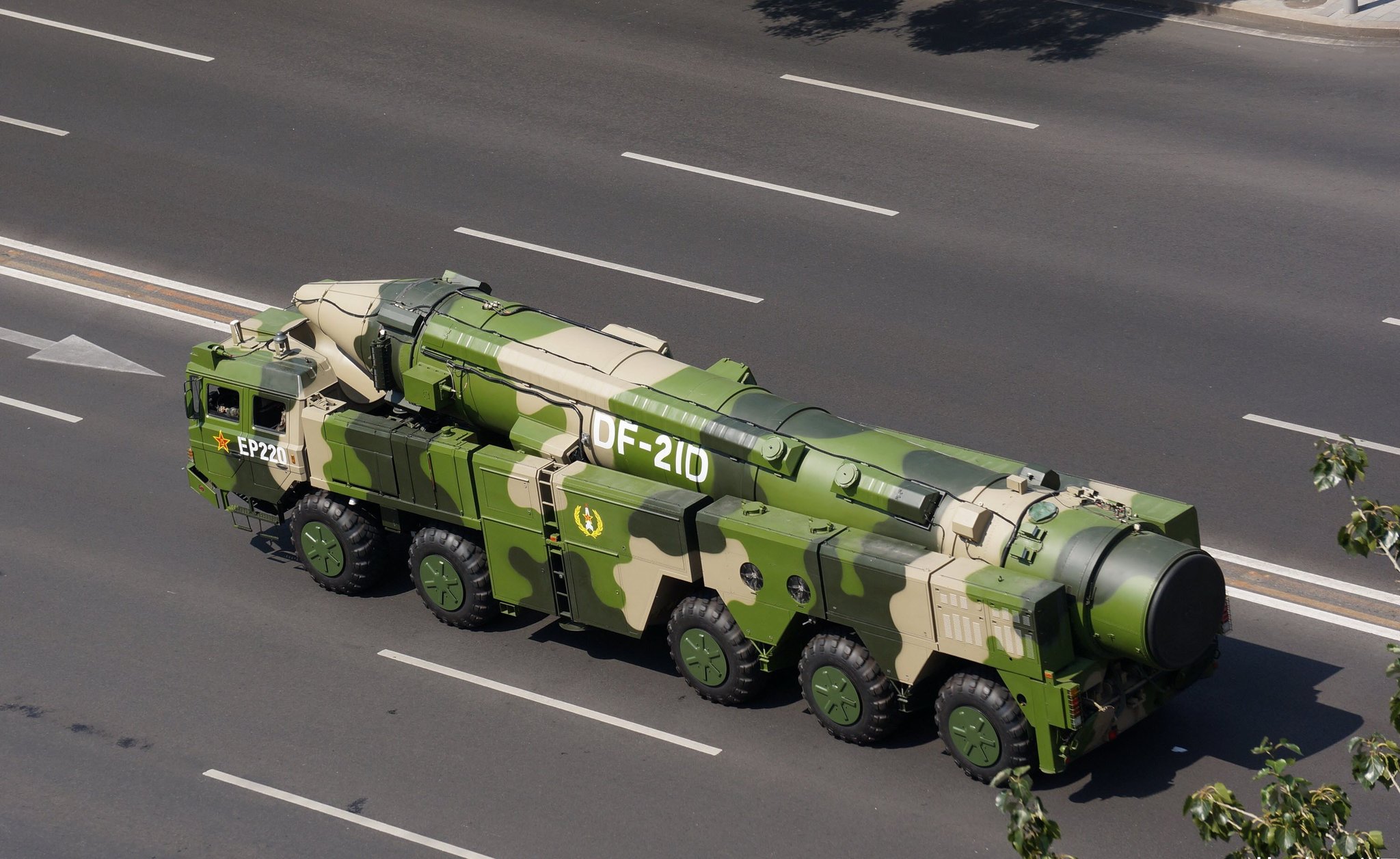


China’s DF-21D Ballistic Missile Can Hit Aircraft Carriers Over 1,500 km Away, Threatening U.S. Naval Supremacy and Changing the Military Balance in the Pacific.
For eight decades, the question that defined the naval power balance in the Pacific was always the same: How many aircraft carriers do you have? The American answer was practically unchallenged. The United States operates 11 nuclear-powered aircraft carriers, each costing between US$ 4.5 billion and US$ 13 billion, capable of carrying between 60 and 90 aircraft and projecting air power thousands of kilometers away. A modern aircraft carrier is not just a warship. It functions as a floating airbase, with virtually unlimited autonomy due to nuclear propulsion and the ability to launch combat operations anywhere in the ocean.
For decades, the presence of an American aircraft carrier in a region was interpreted as an unequivocal demonstration of military power and political influence. When a U.S. president would ask, “Where are the aircraft carriers?”, the answer determined what the country could or could not do in international crises.
China spent more than twenty years trying to change this logic. The instrument of this change is called DF-21D (Dong Feng-21D) — an anti-ship ballistic missile developed specifically to hit moving aircraft carriers on the open sea. Its creation introduced a strategic concept that threatens one of the foundations of U.S. naval supremacy since World War II.
-
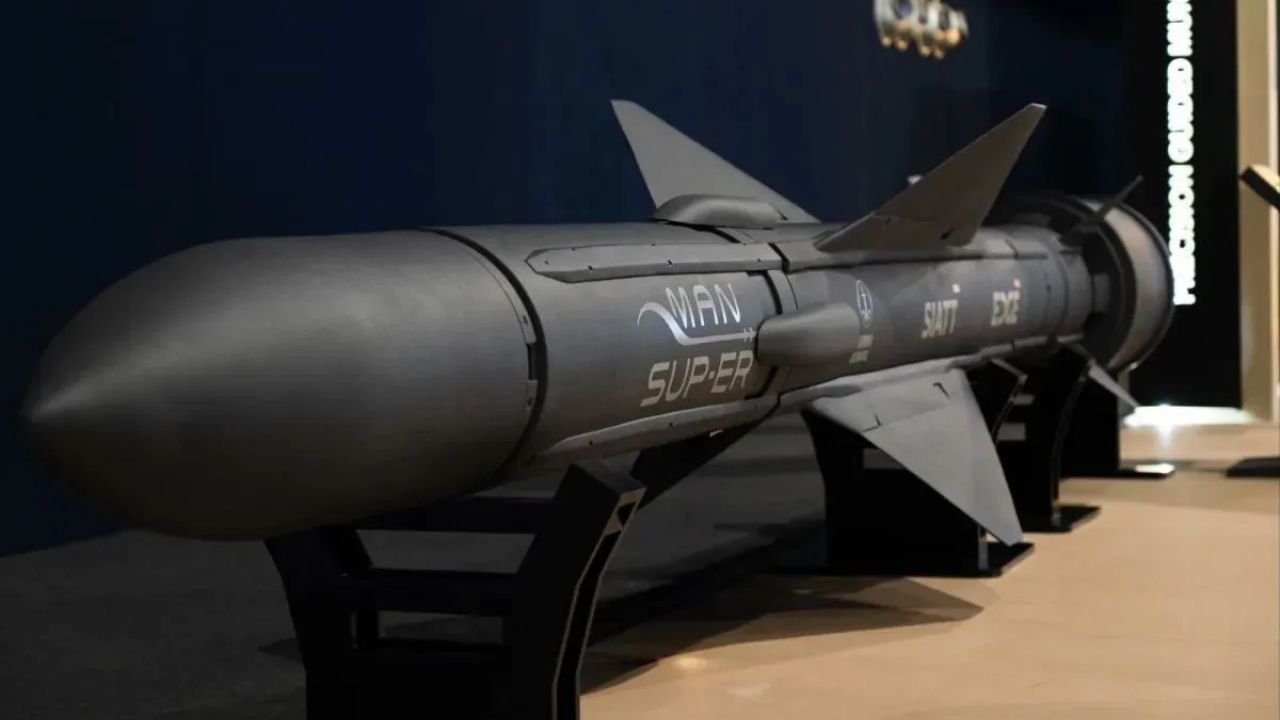
Brazil accelerates the evolution of the MANSUP missile, designing an air-surface version with a range exceeding 200 km, advanced guidance, and precision strike capability against land and naval targets, paving the way for a new generation of national armaments with global potential.
-
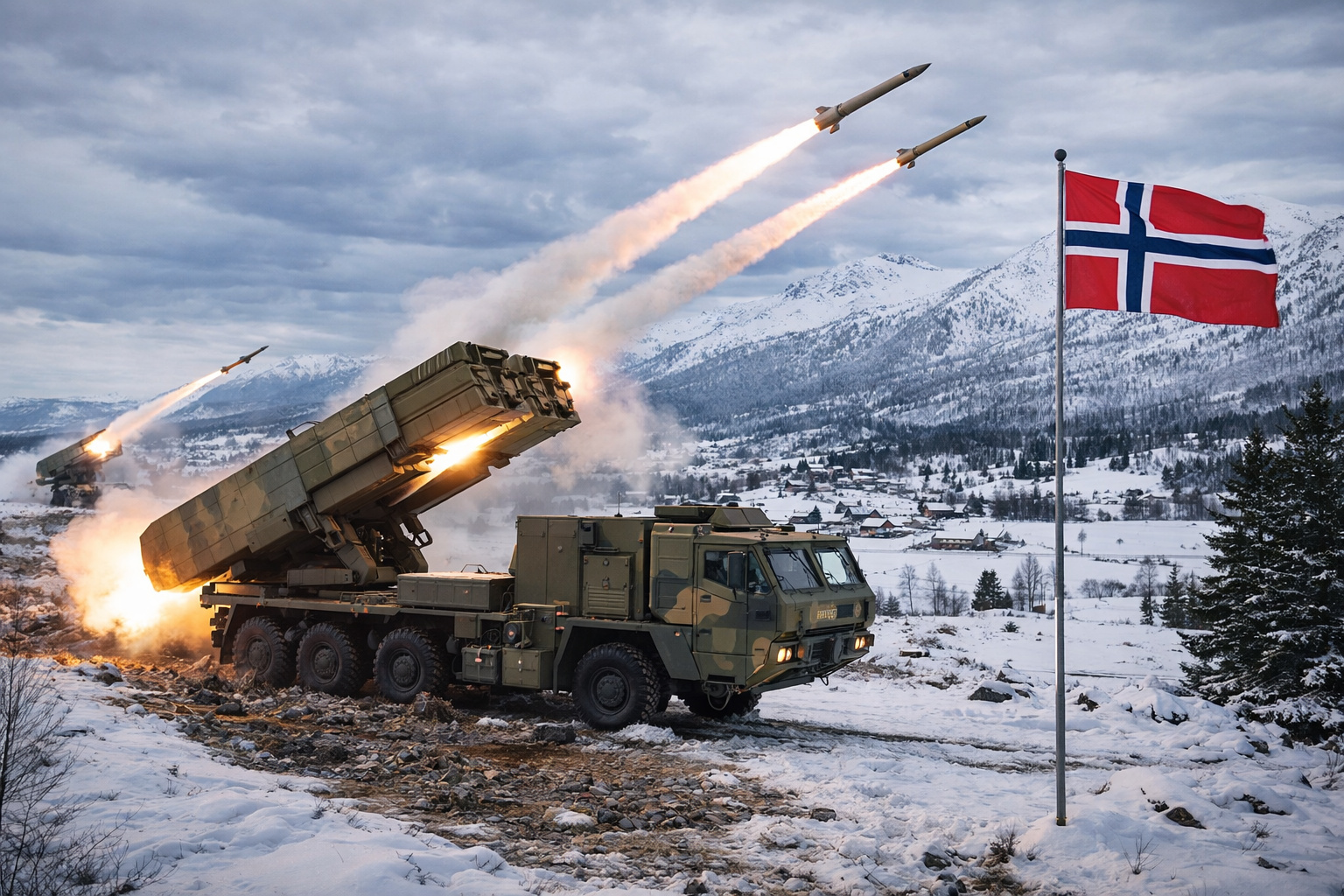
South Korea signs a $922 million deal with Norway, bringing Chunmoo launchers capable of firing guided missiles up to 290 km with an accuracy of 15 meters to Europe and turning the system into a key component of the new global race for precision artillery.
-
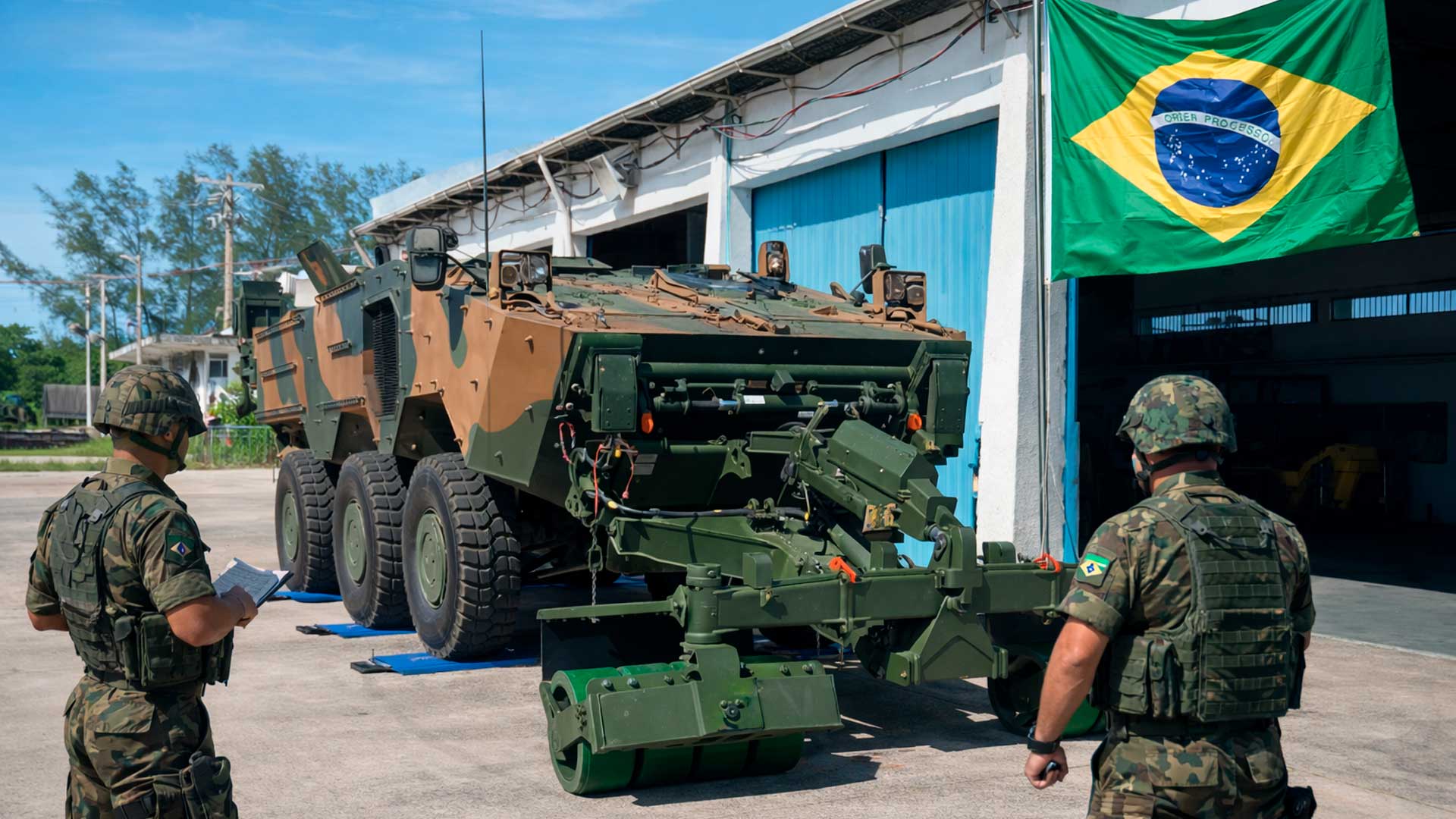
Brazil advances with decisive tests until June, the 6×6 Guarani armored vehicle with engineering equipment enters the most important phase and can enhance the operational capability of the Army.
-
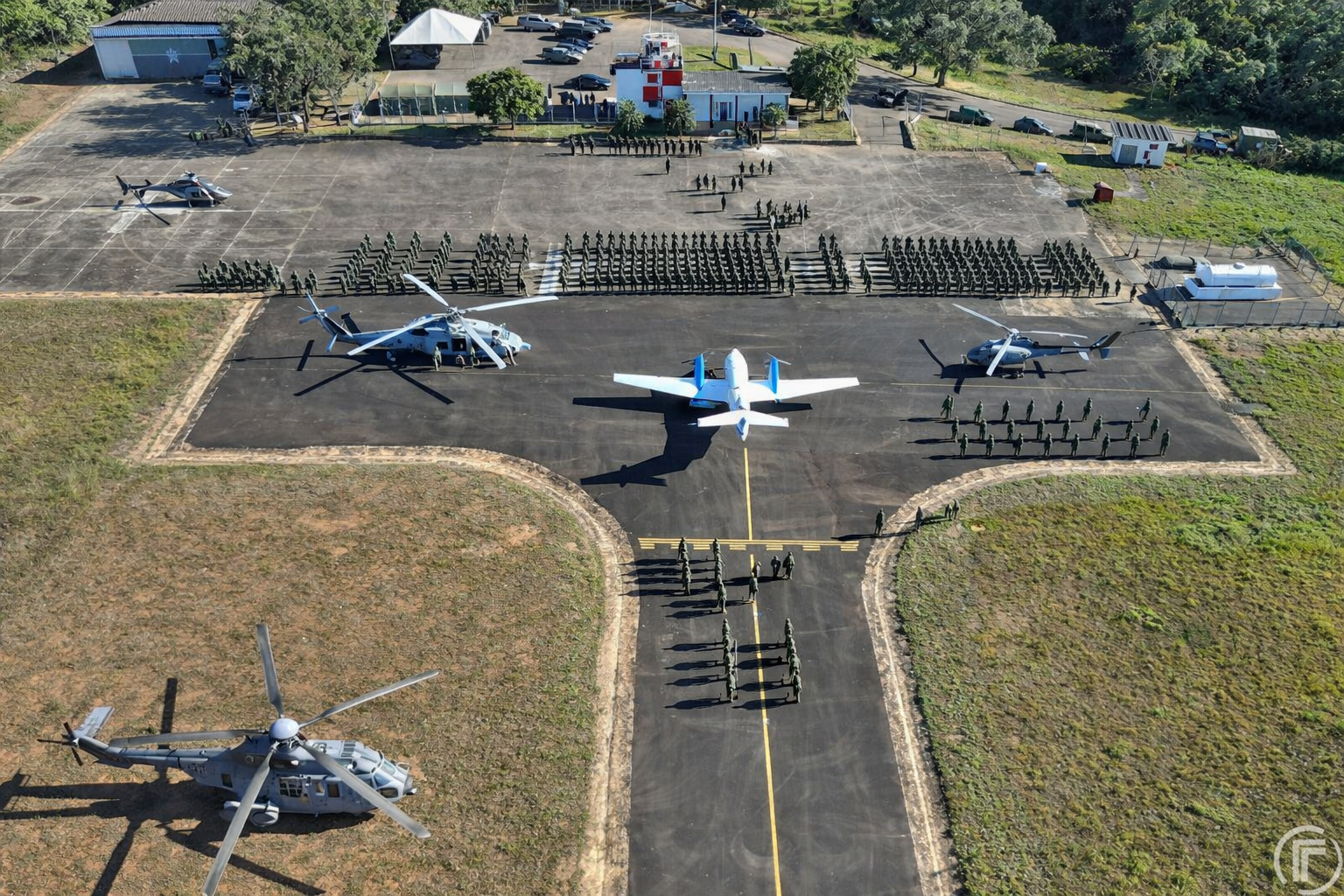
Furnas Airport is handed over to the Navy and becomes a strategic base with complete military operations, attack drones, and international mobilization at Furnas Lake.

What an Aircraft Carrier Really Represents in the U.S. Military Strategy
To understand the impact of the DF-21D, it is necessary to understand the actual role of an aircraft carrier in American military strategy. An aircraft carrier never operates alone.
It is part of a Carrier Strike Group (CSG), a battle group composed of:
- the nuclear aircraft carrier
- two or three Arleigh Burke-class destroyers
- a cruiser equipped with Aegis system
- at least one nuclear attack submarine
- logistical supply ships
This ensemble forms one of the most complex military structures ever created. A single CSG can mobilize between 5,000 and 6,000 personnel, in addition to dozens of combat aircraft, drones, helicopters, and advanced radar and missile defense systems. The operational cost of such a battle group ranges from US$ 6 million to US$ 8 million per day.
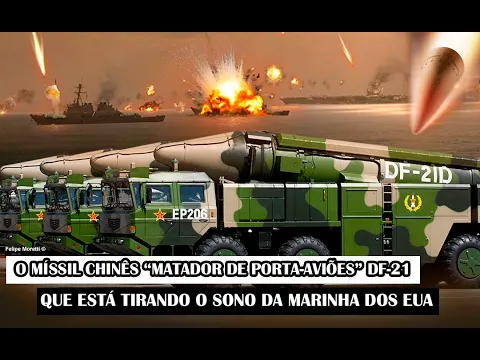

Since the end of World War II, the presence of a Carrier Strike Group in a region equated to a clear political signal: the United States had the capability to launch large-scale airstrikes anywhere within a radius of approximately 800 kilometers. This projection power was decisive in numerous conflicts and international crises.
Dictators backed down, wars were averted, and alliances were strengthened simply by the presence of these ships. However, there was a historical vulnerability. Aircraft carriers have always been potentially vulnerable to submarines or missiles launched from aircraft.
But until recently, no country had developed a system capable of attacking them directly from the mainland, thousands of kilometers away. The DF-21D was created specifically to fill that gap.
How the DF-21D Works, the First Ballistic Missile Designed to Destroy Aircraft Carriers
The DF-21D is considered the world’s first operational anti-ship ballistic missile. Its operation is based on a ballistic trajectory similar to that of missiles used in strategic armaments.
After launch, the missile ascends into the upper atmosphere or near space and travels a significant portion of the trajectory outside the atmosphere. In the final phase, the warhead returns toward the target at extreme speeds.

It is estimated that the DF-21D reenters the atmosphere between Mach 5 and Mach 10, which equates to 6,000 and 12,000 kilometers per hour. This speed drastically reduces the time available for any defense system to react. The U.S. Navy employs the Aegis system as its primary naval missile defense. This system uses interceptors like the SM-3, designed to destroy ballistic missiles during their flight phase in space.
The problem is that, to intercept a DF-21D this way, the system would have to detect the launch immediately and position an interceptor exactly on the correct trajectory. In a real combat scenario, this is extremely difficult.
There is also the possibility of interception in the terminal phase using the SM-2 Block IV. But the DF-21D has a feature that complicates defense even further. It employs a maneuverable reentry vehicle, known as MaRV (Maneuverable Reentry Vehicle).

This means that the warhead can alter its trajectory during the final descent phase, making directional corrections guided by radar or optical sensors. Instead of following a predictable line, the projectile can maneuver at hypersonic speeds. This makes it much harder to calculate where to intercept it.
Studies published by military analysts suggest that electronic countermeasures, such as radar jamming and electronic deception techniques, may be more effective than direct interception.
The Detection Chain That Allows Hitting Ships in Motion at Sea
One of the biggest technical challenges of an anti-ship ballistic missile is locating the target. Moving ships constantly change positions. To solve this problem, China has developed a complex military surveillance network. This network includes:
- reconnaissance satellites from the Yaogan series, equipped with synthetic aperture radar
- maritime surveillance drones
- submarine sonars
- electronic reconnaissance ships
All these systems are part of a military architecture known as C4ISR, an acronym for:
- Command
- Control
- Communications
- Computers
- Intelligence
- Surveillance
- Reconnaissance
This system allows for target detection, continuous tracking, and missile coordinate updates during flight. In August 2020, China demonstrated this capability during military exercises in the South China Sea. On that occasion, the People’s Liberation Army launched a DF-21D and a DF-26 into the sea after an American U-2 reconnaissance plane flew over a Chinese no-fly zone.
According to the Pentagon, both missiles hit the target area. The demonstration was interpreted as a political signal directed at the United States.
The Range of the DF-21D and Its Impact on the Military Balance in the Pacific
The estimated range of the DF-21D varies between 1,450 and 1,550 kilometers, with some estimates reaching 2,150 kilometers. This means that from the Chinese coast, the missile can hit virtually the entire strategic area of the Western Pacific.
Among the areas within this range are:
- the South China Sea
- the Taiwan Strait
- the East China Sea
- a large part of the Philippine Sea
American aircraft carriers operating in these regions could theoretically be attacked by missiles launched from mobile ground platforms.
These platforms consist of launch trucks that can be quickly moved and hidden before any attempt at a preemptive attack.
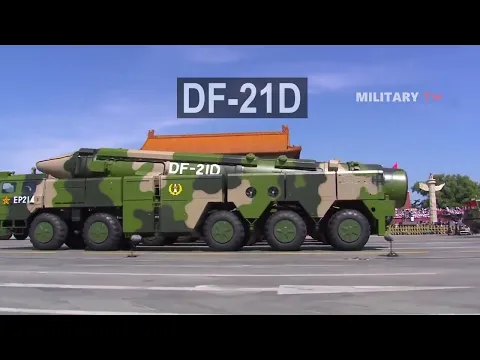
Analysts from the United States Naval Institute assert that a direct impact from a DF-21D could severely incapacitate a supercarrier of the Nimitz or Gerald R. Ford class. The missile’s warhead weighs approximately 600 kg.
Descending at hypersonic speeds, it carries enormous kinetic energy. Even without explosive detonation, the impact would be devastating.
How the United States Is Responding to the Threat of Anti-Ship Missiles
The U.S. Navy has not ignored the emergence of this new threat. One of the responses was to strengthen the presence of ships with missile defense capabilities in the Pacific.
There was also an expansion of the use of the SM-6 interceptor, which has limited interception capability during the terminal phase of ballistic missiles. However, the most important response was doctrinal. The Pentagon developed the strategic concept called AirSea Battle, later incorporated into the strategy known as Joint All-Domain Operations.
The central idea is to neutralize the chain of sensors and communications that allows China to locate aircraft carriers. Instead of just trying to intercept the missiles, the strategy aims to prevent the enemy from finding the target. This includes attacks on satellites, radars, command centers, and communication networks.
In other words, protecting the aircraft carrier now means making its position invisible or uncertain to the adversary.
The Future of Aircraft Carriers in the Era of Hypersonic Missiles
The DF-21D has not ended the era of aircraft carriers. The United States still possesses the largest fleet of this type of ship in the world, and no other country has comparable global power projection capability. But the emergence of anti-ship ballistic missiles has changed the strategic calculus.
Operating a battle group near heavily defended coastlines now involves a level of risk that did not exist previously. For decades, the central question of naval strategy was simple. How many aircraft carriers do you have?
Today, a new question is beginning to gain importance. How far from the enemy coast are you willing to operate an aircraft carrier?







Zoaram a Rússia que não conseguiu tomar a Ucrânia até hoje, mas os EUA tão tomando um baile dos iranianos, e não foi por falta de aviso
É disso que precisamos! Anti tiranismo!
Porta aviões são coisas do passado com custos astronômicos para construir, baixa mobilidade, alto custo de manutenção e exigindo muitos suprimentos pra se manter ativo. A guerra hoje é de mísseis e drones, quem controla isso controla tudo