





 Portuguese
  English
  Spanish
  3 min of reading
  0 comments


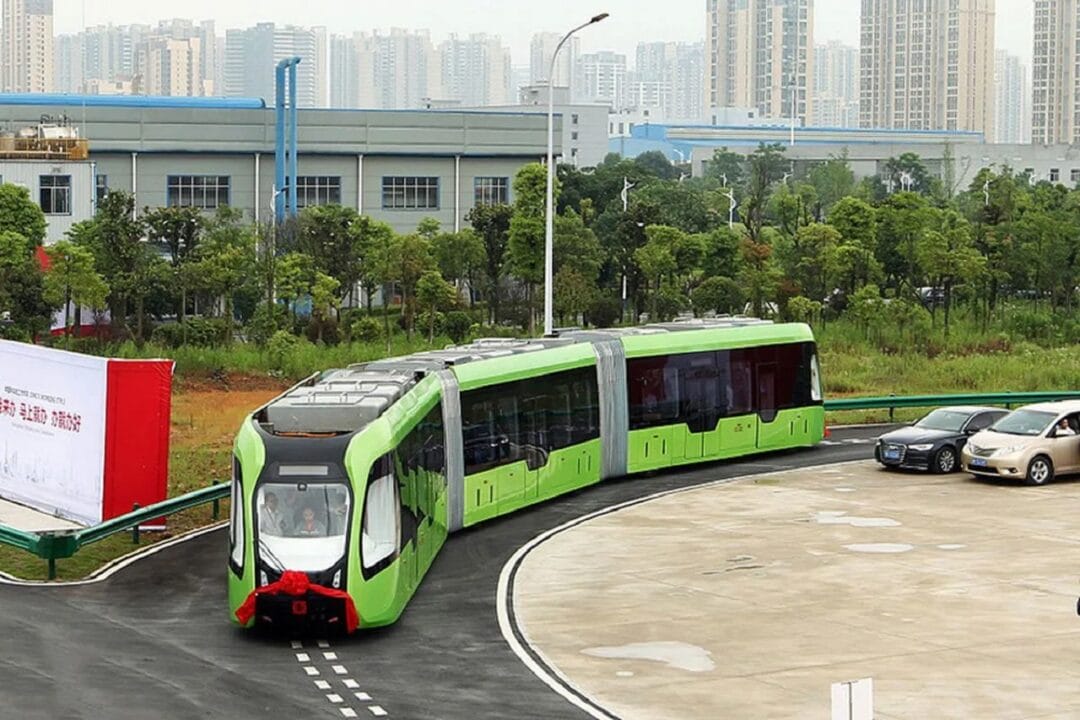
China Moves Toward The Future With The Development Of A Trackless Train, Promising To Revolutionize Urban Mobility With Innovative Technology – Learn More About This Pioneering Project.
China has recently taken a big step in urban mobility innovation with the debut of the world’s first trackless train. This innovative technology, developed by the CRRC Corporation, one of the largest train manufacturers in the world, promises to transform urban transportation. The launch of the Autonomous Rail Rapid Transit (ART) took place in Zhuzhou, Hunan province, and is seen as a milestone in the journey toward more sustainable urban mobility. This pioneering advance in public transport signals a new chapter in the history of urban transport in China.
China’s Trackless Train Can Carry Up To 300 Passengers
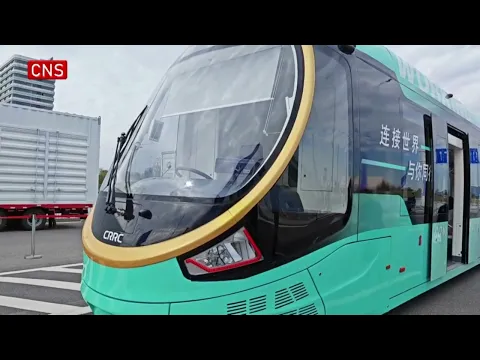

Equipped with cutting-edge technology, the trackless train stands out as a significant innovation in the urban mobility sector and promises to operate using advanced sensory technology, following mapped routes on the road. Initially, the train has three carriages, but it is expected that it can carry up to 5 carriages in another phase when it is expanded.
The developing company has innovated by using rubber wheels with a plastic core, a novel model in the market. The expectation is that the trackless train will have a lifespan of approximately 25 years.
-
While the world looks at oil, the war with Iran is already disrupting helium supply from Qatar, affecting car and iPhone chips, threatening AI expansion, and putting pressure on aluminum packaging at the highest value in four years.

-
Global warming will expose a treasure hidden under the ice of Antarctica and may spark an international dispute over gold and valuable minerals.

-
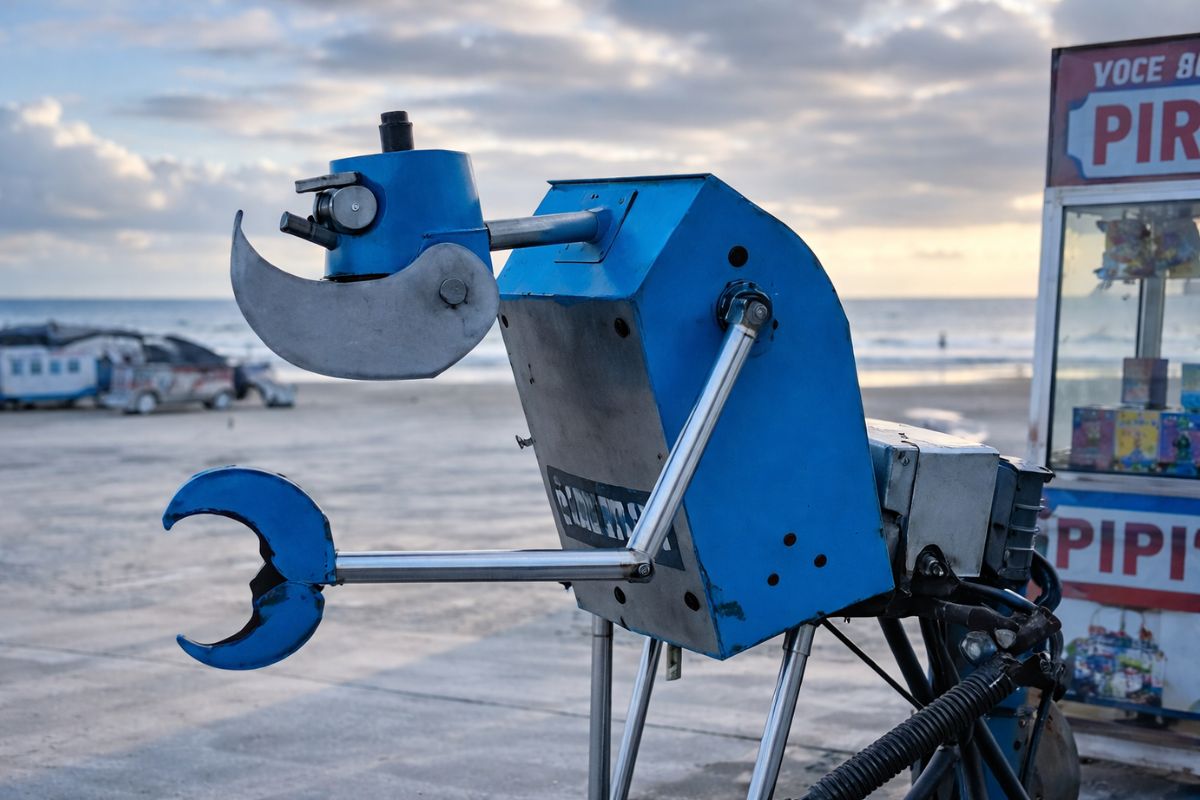
A street vendor from Praia Grande built a robot made of scrap from scooters and washing machines that pulls his popcorn cart on the beach, emits sounds, and interacts with customers, becoming an attraction on the coast of São Paulo.
-
The specifications of the Xiaomi 18 Pro Max have been leaked, and the highlight is a dual 200 MP camera with a new 22-nanometer technology that promises to consume less energy and capture details in shadows and bright areas using LOFIC HDR.


Measuring 32 meters in length, the project in China has the capacity to carry up to 300 passengers at once. Operating on electric power, the trackless train can travel 25 km after 10 minutes of charging. It can reach a maximum speed of 70 km/h.
Instead of physical tracks, the train follows dotted lines painted on the road, with a width of 3.75 meters. The train has advanced sensors that detect the pavement and collect essential data for the journey.
New Trackless Train Combines All The Main Features Of A Bus
With an innovative design, the trackless train is considered an evolution of the traditional public bus, resembling more of a streetcar. Its operation does not require physical tracks, and the two-headed system allows it to function like a subway train, eliminating the need for maneuvers to change direction. This train represents a significant advancement for the city of Zhuzhou, which has a population of approximately 4 million residents, offering an efficient and modern transportation solution.
According to Peter Newman, a sustainability professor at Curtin University, buses fail on two fronts regarding urban mobility: this type of vehicle does not compete with cars, generating traffic, and does not allow for denser development, making cities expansive instead of undergoing a process of reurbanization.
For Newman, trackless trams, such as ART, combine all the best and none of the worst characteristics of a bus. In 2022, the system was already present in the cities of Yibin and Harbin. Next, it was Suzhou and Xian in China, Abu Dhabi in the United Arab Emirates, and Kuching in Malaysia. Countries like Zimbabwe, Australia, and Qatar also plan to invest in the technology.
Trackless Trains Are Not A New Concept
The main difficulty in implementing an efficient rail system is the appropriate placement of tracks. However, currently, with technology, more and more ways are emerging to avoid this need. One example of development in this area is the tubular trains, developed by Tubular Rail Inc.
The project, developed in 2011, consists of using a series of elevated rings, and the tracks are developed by the model itself as it passes between each ring. According to those responsible for the project, the installation of such a system would be much cheaper than current systems. Additionally, the model supports a constant speed of approximately 240 km/h.







Seja o primeiro a reagir!