





 Portuguese
  English
  Spanish
  3 min of reading
  0 comments


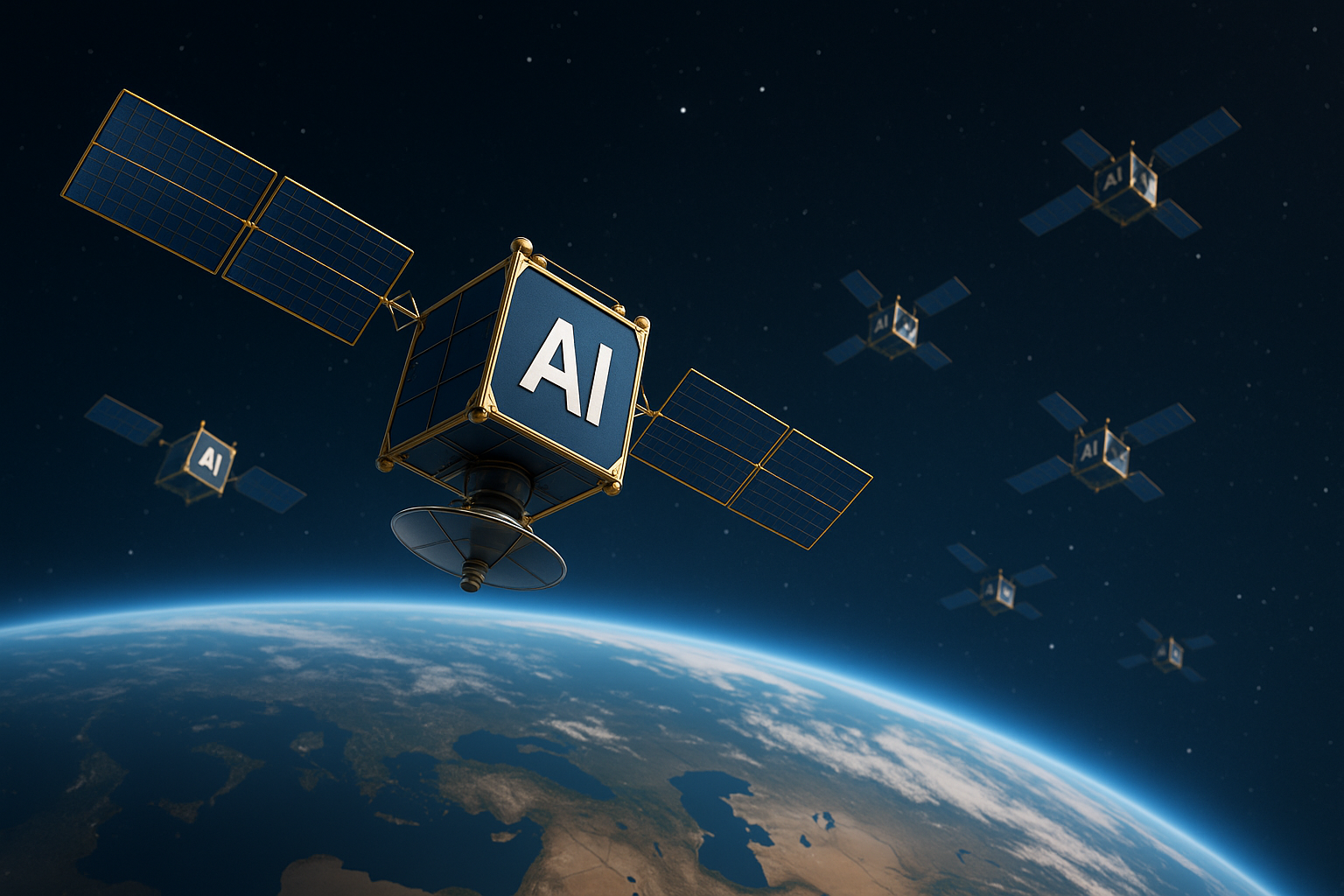
Constellation of 2,800 Satellites Will Process Data Directly in Space with AI, Reducing Losses and Use of Terrestrial Energy.
China has embarked on an ambitious technological project that could change the way spatial data is handled. The idea is to build AI supercomputers in space.
On May 14, the country launched its first 12 satellites with integrated artificial intelligence supercomputers.
The launch took place at the Jiuquan Satellite Launch Center, using a Long March 2D rocket. The initiative is led by ADA Space and Zhejiang Lab.
-
The entire Brazil is expected to face above-average rainfall in the next ten days, with accumulations reminiscent of the peak of summer, raising concerns especially for those living in the Southeast, Northeast, and Northern regions of the country.

-
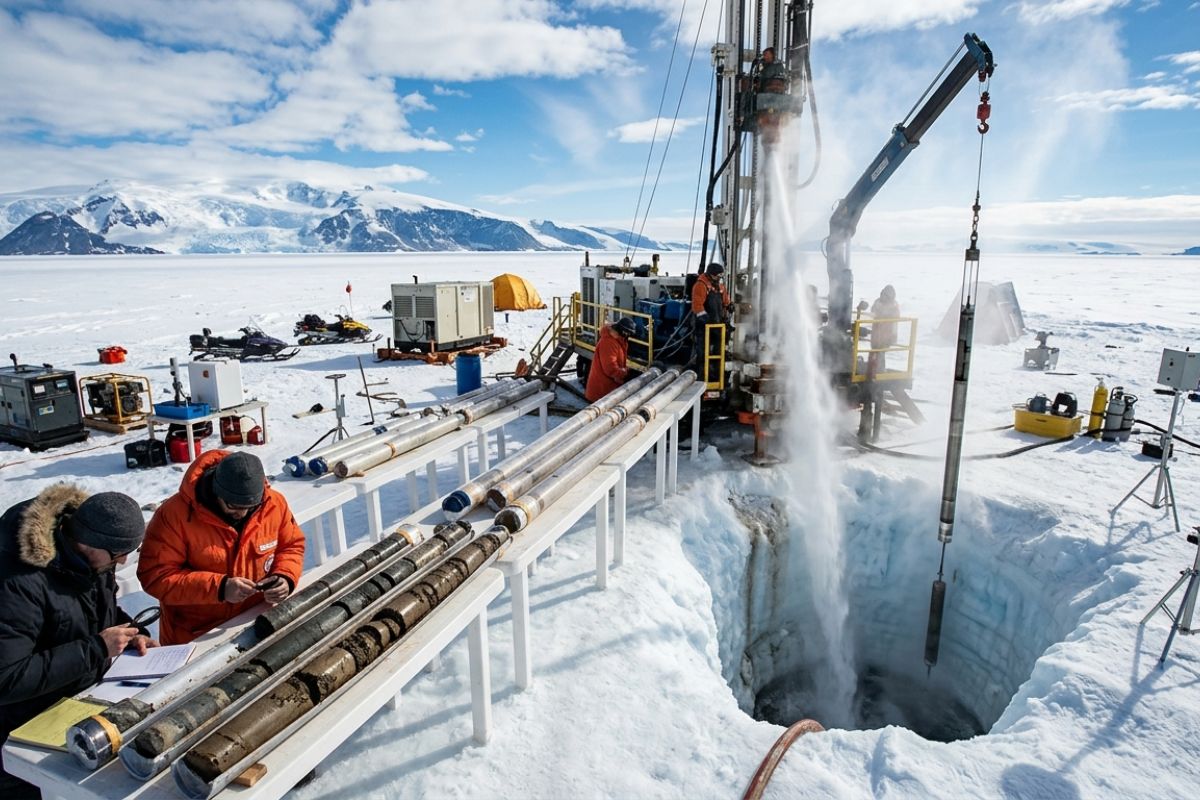
With pressurized hot water, scientists melt 523 meters of ice in West Antarctica and extract a 228-meter rock core with a record of 23 million years, revealing ice-free periods and global warnings.
-
Denmark resumes the idea of building the world’s first energy island with $30 billion, connecting several countries and changing the European energy game amid uncertainty due to the war in Iran.

-
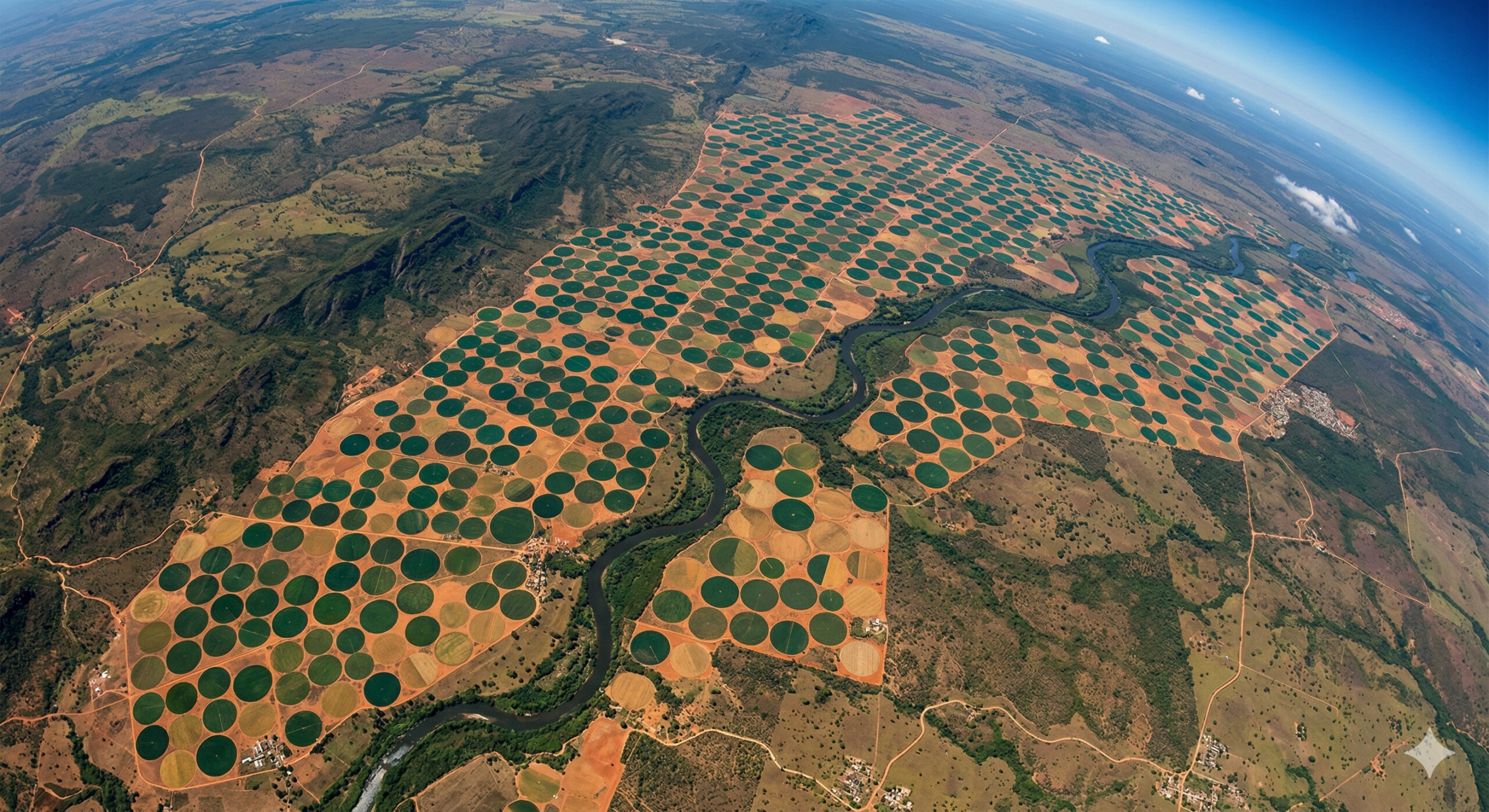
In the interior of Bahia, gigantic “perfect” circles drawn on the land appear from space as targets kilometers in diameter, revealing irrigation systems so precise that they transform crops into geometric patterns visible from orbit.

AI Supercomputers
These satellites mark the beginning of the so-called Three-Body Computing Constellation.
The full plan aims for a total of 2,800 satellites.
With AI supercomputers, the proposal is to allow data to be processed directly in space, without the need to transfer it to terrestrial computers.
This could reduce dependence on Earth’s infrastructure and streamline information processing.
Space, being cold and a vacuum, serves as a natural cooling system.
This characteristic favors intensive calculations with lower energy costs and reduced environmental impact. According to the Chinese government, the combined computing power of the satellites is one thousand peta operations per second.
Artificial Intelligence and Laser Communication
Each satellite is equipped with an AI model with 8 billion parameters. This allows each unit to achieve up to 744 tera operations per second (TOPS).
Together, they reach a total of five peta operations per second. By comparison, the new laptops with Copilot+ from Microsoft process around 40 TOPS.
In addition to computational capacity, the satellites can communicate with each other via lasers. One of them is equipped with an X-ray polarization detector.
This equipment will be used to study cosmic phenomena, such as gamma-ray bursts.
The initiative was also inspired by the “three-body problem“, a concept in physics that describes the unpredictable motion of three objects under gravitational influence.
The name of the constellation directly refers to this challenge and also to the science fiction trilogy written by Liu Cixin, which inspired a Netflix adaptation.
Less Data Loss and Less Carbon
Today, satellites that capture images or climate data need to send them to Earth for analysis. However, transmission depends on the satellite passing by specific stations, which limits the amount of data utilized.
With the new approach, data will be processed in orbit. Only the final results are transmitted, saving bandwidth and energy.
The satellites use solar panels as an energy source and dissipate heat in space. This reduces the carbon footprint of the process.
This so-called “edge computing”, when performed directly on the satellite, represents a promising innovation for various sectors. It can benefit everything from weather forecasting to more advanced astronomical studies.
International Cooperation and Global Advancements
Wang Jian, director of the Zhejiang Lab, stated that the moment is right to think about how artificial intelligence can be applied in space.
He argues that the constellation could also serve other international organizations, expanding the reach of the project.
Although the United States and Europe have conducted tests with space computers, this is the first time a system like this is launched with a focus on continuous operation.
In the United States, former Google CEO Eric Schmidt has also proposed moving data centers to space.
After taking a controlling stake in Relativity Space, Schmidt advocated for the construction of orbital data centers in response to the growing energy demand of these systems.
During a hearing in the U.S. House of Representatives in April, Schmidt stated that data centers may require an additional 29 gigawatts of energy by 2027 and 67 gigawatts by 2030. For him, this industrial scale represents an unprecedented challenge.
With China’s initial launch, the space computing sector enters a new phase. The Three-Body Computing Constellation project proposes technical solutions that could transform data handling worldwide.
At the same time, it raises discussions about energy, sustainability, and global cooperation.





Seja o primeiro a reagir!