





 Portuguese
  English
  Spanish
  5 min of reading
  0 comments


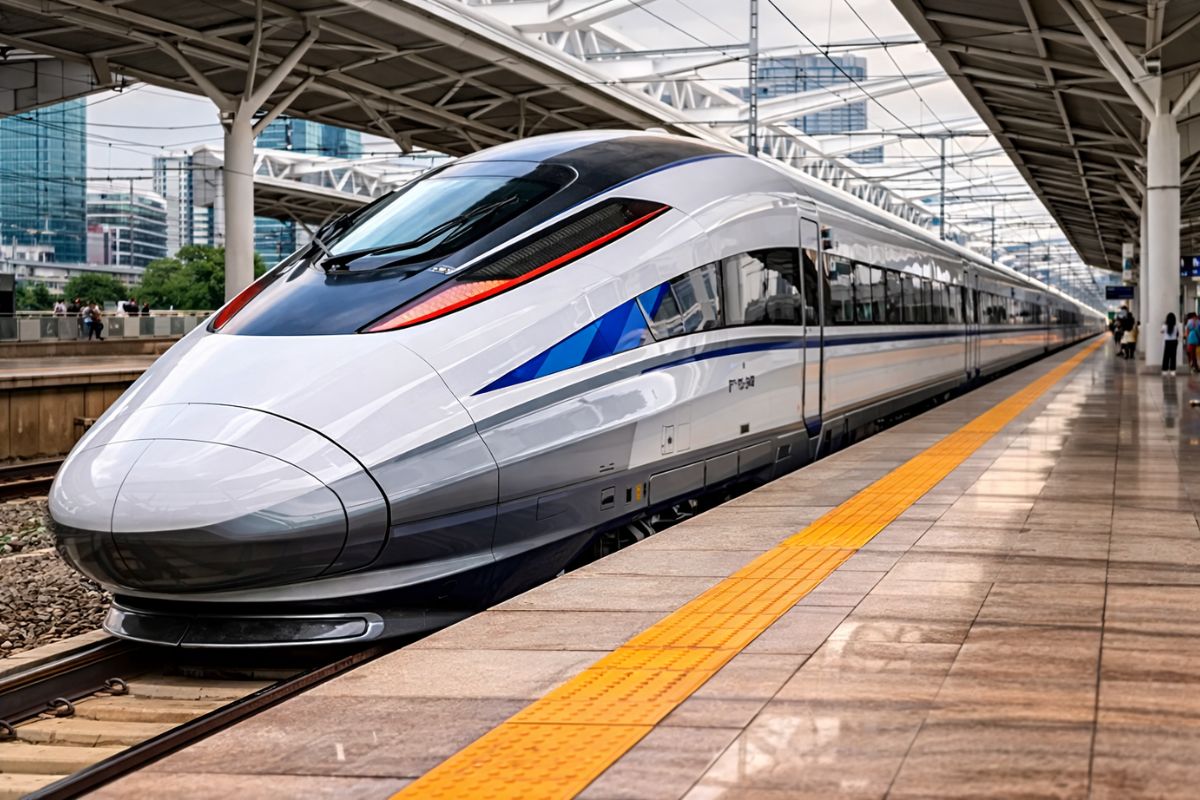
The CR450 train from China is a prototype of the Fuxing family designed to operate at 400 km/h in daily commercial service, 80 km/h faster than the French TGV, using carbon fiber composites, magnesium alloys, and over 4,000 onboard sensors, and engineers have already completed tests in static position and low speed with the expectation of starting production still in 2026
China is testing a train that could become the fastest in the world for daily commercial operation. The CR450 is a new prototype from the high-speed Fuxing family, designed to reach 400 km/h in regular passenger service. This train is 80 km/h faster than the French TGV in commercial operation, which reaches 320 km/h, and uses materials such as carbon fiber, magnesium alloys, and over 4,000 onboard sensors to operate at speeds that no other conventional train achieves on a daily basis.
According to Future Sciences, Japan holds the absolute speed record with the Maglev, which reached 603 km/h. The French TGV achieved 574.8 km/h in tests. But none of these numbers translate to daily commercial speed. The CR450 train from China is designed to operate at 400 km/h every day, not in tests, and that is what makes it different from any other. China is already the only country where conventional trains regularly operate at 350 km/h. The CR450 will raise that standard by another 50 km/h.
What makes the CR450 train capable of operating at 400 km/h every day

Reaching 400 km/h in a test is one thing. Operating at 400 km/h in daily commercial service, with passengers, every day, is a completely different matter.
-
Forget about having an air fryer, electric oven, and steam pot taking up space in your kitchen because a 30-liter smart oven combines all these functions, automatically selects the ideal temperature, and even turns off by itself when cooking is done.

-
Engineers rewrote all the apps from scratch and bet everything on a buttonless screen: now the creator of the iPhone says that Apple needs to make the same revolution again because of AI.

-
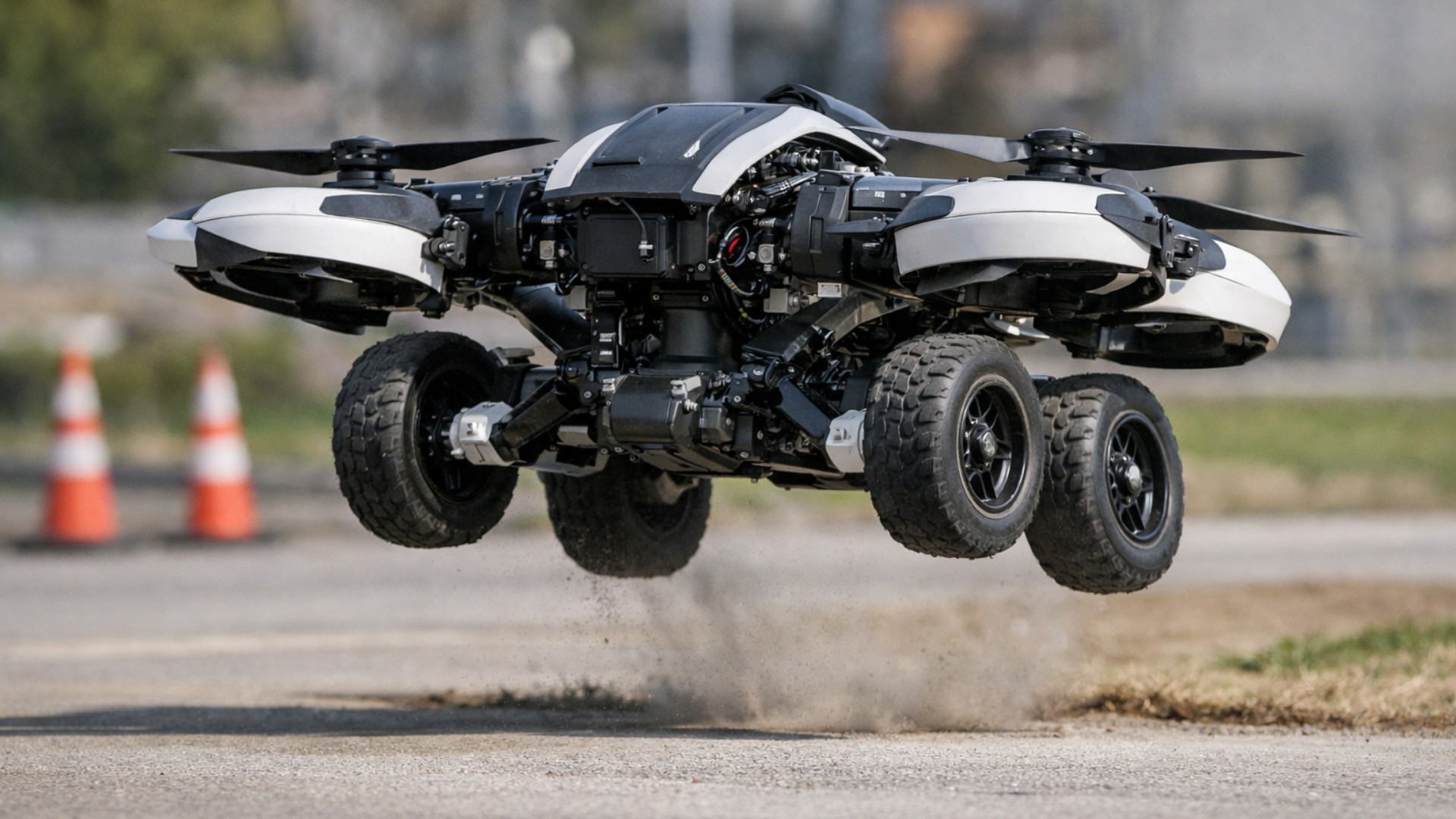
Researchers in the U.S. have created a flying robot that transforms into a land vehicle while still in the air. The technology, based on aerodynamic transition, converts landing into a scene worthy of Transformers and redefines mobility between sky and ground.
-
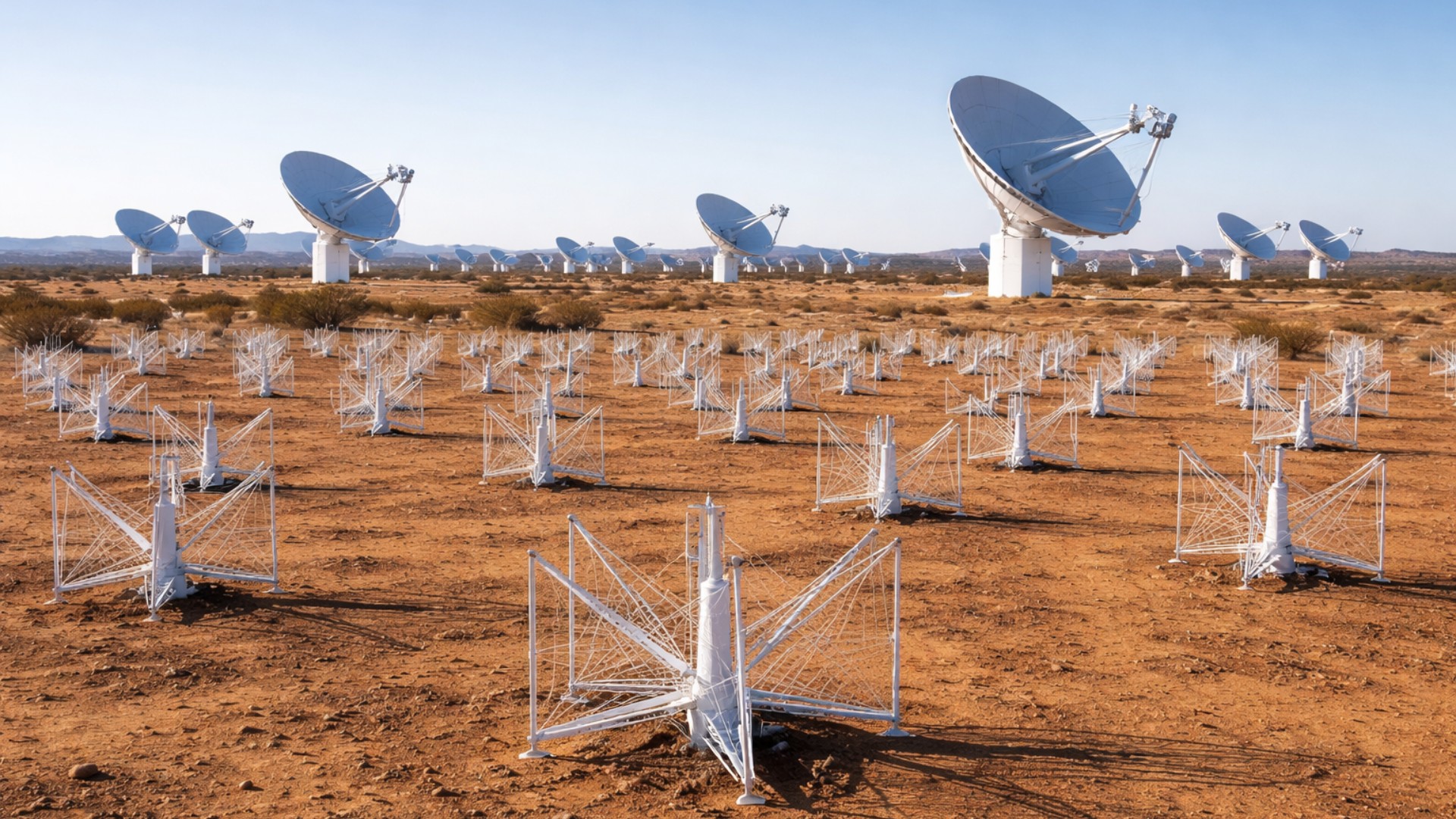
Spread across two continents, with 197 parabolic antennas in South Africa, 131,000 2-meter antennas in Australia, and a range of up to 150 km, the SKA begins to “listen” to the Universe on an unprecedented scale and accelerates the search for black holes, primitive galaxies, and nearly invisible radio signals.

To achieve this speed as an operational standard, the engineers of the CR450 train implemented structural improvements that go far beyond more powerful motors.
The train uses carbon fiber composites and magnesium alloys, materials that are lighter and stronger than those used in the previous generation.
The lighter the train, the less energy is needed to accelerate it, and the less mechanical stress the tracks endure at extreme speeds.
Over 4,000 onboard sensors constantly monitor the train’s performance and safety conditions in real-time, a surveillance system that allows for the identification of any anomaly before it becomes a problem.
The CR450 also utilizes a new propulsion system with permanent magnets, which is more efficient and generates less heat than conventional systems.
How the CR450 train overcomes air resistance at 400 km/h

At extreme speeds, air resistance becomes the biggest enemy of a train.
At 400 km/h, aerodynamic drag is so intense that it consumes most of the propulsion energy. For the CR450 train, reducing drag is as important as increasing the power of the motors.
The designers carefully reshaped parts of the body and covered the trucks located under the cars, eliminating exposed surfaces that generate turbulence.
The aerodynamic design of the CR450 train optimizes movement through the air and improves energy efficiency, allowing for higher speeds without a proportionally greater energy consumption.
Another achievement of the engineers was the reduction of noise. High-speed trains generate considerable sound due to air turbulence and mechanical vibrations, but the CR450 was designed to be quieter despite being faster.
For passengers, this means traveling at 400 km/h with less noise than on trains that run at 350 km/h.
The CR450 train compared to the French TGV and the Japanese Maglev
The French TGV is the most famous high-speed train in the world, with a record of 574.8 km/h in tests. But in daily commercial service, it operates at 320 km/h.
The CR450 train from China is designed to operate commercially at 400 km/h, which is 80 km/h faster than the TGV in daily use.
The Japanese Maglev reached 603 km/h, but it uses magnetic levitation over special tracks, a technology completely different from conventional tracks. The CR450 runs on normal high-speed tracks.
The difference is that the CR450 does not rely on special infrastructure. It can operate on the high-speed network that China has already built, which is the most extensive in the world.
The CR450 will replace the CR400 model, which currently operates at 350 km/h, using the same railway infrastructure but adding 50 km/h of commercial speed, significantly shortening travel times on long routes.
China already has over 45,000 kilometers of high-speed lines, and the CR450 can run on all of them.
When the CR450 train starts operating and what this means for global transport
The prototype of the CR450 train has successfully completed tests in static position and at low speed.
The next phase involves testing at higher speeds to verify the train’s performance under real operating conditions. If the tests proceed as planned, production of the CR450 should begin in 2026.
Commercial deployment would follow shortly after, putting China even further ahead of any other country in operational railway speed.
No other country operates conventional trains at 350 km/h regularly. With the CR450 at 400 km/h, China would expand an already significant advantage.
The CR450 represents a major step in the evolution of high-speed trains and could reshape the future of rail travel by proving that 400 km/h is viable as a daily commercial speed, not just as a number in a test.
400 km/h every day: the train that can change what it means to travel fast
China is testing the CR450, a train that will operate at 400 km/h daily, 80 km/h faster than the French TGV.
The train uses carbon fiber, magnesium alloys, over 4,000 sensors, and an aerodynamic design that reduces drag and noise, and production could start as early as 2026.
While other countries discuss high-speed projects, China is already testing the train that will make 400 km/h routine. The future of rail transport is not on paper. It is on the tracks.
Would you use a train at 400 km/h every day? Do you think Brazil should invest in high-speed trains? What impresses you more about the CR450: the speed or the 4,000 sensors? Leave your comments and share with those interested in technology and transport.








Seja o primeiro a reagir!