





 English
  Francês
  Alemão
  Italiano
  Japonês
  Norueguês
  Portuguese
  Spanish
  4 min of reading


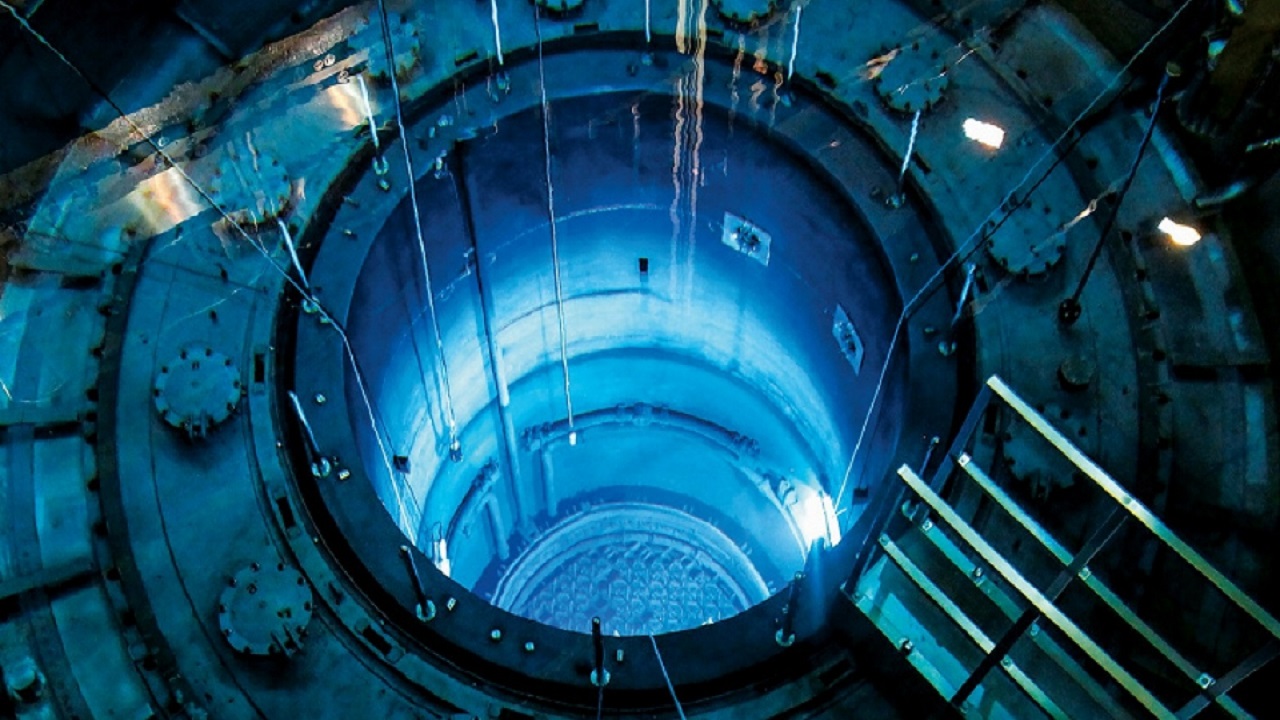
China Is Leading Studies Around The World In A New Type Of Clean, Low-Cost, Almost Endless Renewable Energy Production Using Thorium. The Reactor That China Is About To Test Is Small, But It Holds Enormous Importance For The Energy Future Of The Country And The World.
Oil, gas, and coal seriously pollute the planet, but influential entrepreneurs and governments in China promise to resist any change. China has a real problem – severe pollution in its major cities caused by burning fossil fuels in transportation, homes, and the use of nuclear energy in its key industries. As Reported By Scientists At The Island.Lk Portal, Chinese researchers have acted and invested heavily in modern and updated projects using Molten Salt Thorium to produce heat and generate renewable, clean, low-cost energy.
Read Other Related News
Old Studies Involving The Use Of Thorium

Americans conducted a Thorium experiment at Oakridge National Laboratory in Tennessee and successfully operated a heat-producing plant nonstop for five years in the 1960s, providing proof of principle.
It was a watershed event. However, researchers encountered some serious problems, such as corrosion of the reactor vessel walls by the fluoride salts used and corrosion of the materials from which the reactor control valves were made.
-
With 160,000 m² of collectors, an area larger than 20 football fields, Silkeborg, in Denmark, hosts a solar thermal plant that heats 19,500 homes and could become the largest solar heating plant in the world.

-
A study reveals the expansion of renewable energy procurement in Brazil and shows how companies are taking advantage of opportunities to reduce expenses, ensure energy efficiency, and strengthen strategic environmental commitments.

-
Mato Grosso do Sul excels in the sugar-energy sector: the state reaches a milestone of 22 operating mills and accelerates the production of clean energy in MS with a focus on sustainability.

-
National energy dilemma: Brazilians support clean energy but reject increases in tariff costs to finance the sustainable transition.


They also faced the issue of being unable to measure the high operating temperatures around 500°C. But now, with advancements in metallurgy and instrumentation, these are no longer obstacles. This heat generation method can work successfully and promises to become very cheap — thorium is four times more abundant on Earth than uranium.
Nuclear Fission Reactor – Clean Energy Generated From Thorium Is A Game Changer
In a molten salt nuclear reactor, the fissile material is dissolved in heated fluoride salt (= liquid) in the reactor core. This liquid salt acts as a coolant instead of water but operates at atmospheric pressure. Fission occurs in the reactor core, generating heat.
The hot ‘coolant’ passes through a heat exchanger with water, producing steam. This steam drives a turbine that generates electricity. With thorium, there are no high-pressure steam chambers to explode, and leaks are impossible because thorium reactors have safety features, and if overheating occurs, the fusible drain plugs melt and drain the hot fluid to emergency dump tanks below.
The Shanghai Institute of Applied Sciences, supervised by the Chinese Academy of Sciences, has been active. In 2011, they employed about 700 PhD researchers to investigate and design new thorium reactors based on the Oakridge reactor design, and in 2017, they built their first experimental 2 MW prototype in the Gobi Desert, Wuwai, Gansu Province, for operational and materials testing.
Because of the success they had with these prototypes, they now plan a 10 MW plant to enter service in 2025 and a 100 megawatt plant to be operational by 2035. China expects to become carbon neutral by 2060.
Renewable, Clean, And Low-Cost Energy
Thorium is abundant and relatively cheap, but it does not contain enough fissile material to sustain large chain reactions. Therefore, it needs to be mixed with plutonium oxide, which makes the whole process more powerful — the alloy is being referred to as Thorium-MOX. Additionally, it is an efficient way to recycle plutonium, which would otherwise become stranded after enrichment. What is being tested in China is a method that, although not new, has never been tested on such a large scale.
They are using molten fluoride salt combined with thorium, a chemical element found in minerals that is “four times” more abundant on the planet than uranium, says Forsberg. In a reactor, the two elements combine to produce a physical reaction (fission) that generates more heat than the traditional method using uranium-235/238 combined with plutonium.
“Molten salt reactors provide heat at higher temperatures than other reactors, between 600°C and 700°C. Heat at higher temperatures is more valuable,” states Forsberg.










Seja o primeiro a reagir!