





 Portuguese
  English
  Spanish
  5 min of reading
  68 comments


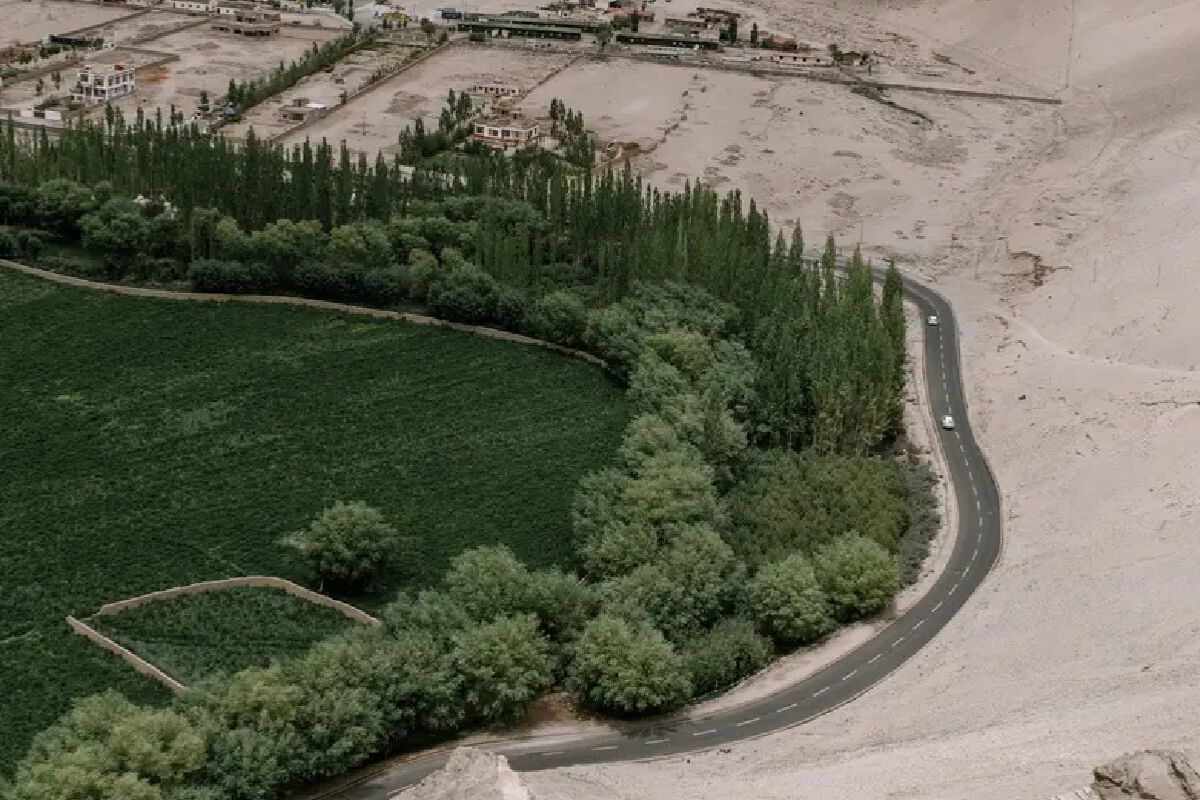


When China Massively Planted Trees on the Great Green Wall of China to Halt the Gobi Desert, It Ended Up Causing Water Scarcity and Today Is a Lesson for the Great Green Wall of Africa.
When China massively planted trees to stop the advance of the Gobi Desert, the idea was simple and powerful: to contain the sand, capture carbon, and transform arid regions into green corridors. However, the plan had an uncomfortable side effect. In several areas, the forest began to suck up groundwater, aquifers, and community water, changing the rainfall regime and redistributing water away from where it was most needed.
Meanwhile, on the other side of the planet, the Great Green Wall of Africa was being redesigned with a different logic. Instead of repeating the formula of quick monocultures, the continent focused on restoration mosaics, adapted species, and the protagonism of local communities, trying to recover soil, water, and income simultaneously. The contrast between the two megaprojects shows that reforesting isn’t just about planting, and that a forest without planning can exacerbate the water crisis instead of solving it.
When China Planted Trees to Secure the Desert
Northern China has been living under the pressure of the Gobi Desert for decades, which advances on cities, farmland, and logistics routes.
-
With a cost per shot close to zero, the DragonFire laser could change naval warfare in 2027 and provide British ships with nearly unlimited defense against drones.

-
A British startup creates tires that generate electricity in electric vehicles when passing over potholes, speed bumps, and cracks.

-
Scientists have created robots made with living cells that have their own nervous system, swim on their own, explore the environment, and self-organize without any genetic engineering, and now they want to do the same with human cells.

-
Students create a solar-powered ambulance that operates without a plug, without fuel, and still keeps medical equipment running in remote areas.


To combat this, China planted trees on a historical scale, creating what became known as the Great Green Wall of China, a forest belt designed to act as a barrier against sand and, in addition, help reduce CO₂ in the atmosphere.
Initially, the strategy worked. Satellite images and official reports showed that the advance of the desert was contained on several fronts, previously bare areas began to turn green, and the country showcased the project as a flagship in the fight against desertification and climate change.
China planted trees, the desert receded, and the narrative seemed perfect.
The Calculation Error: Forest That Consumes People’s Water
The problem began to surface when independent studies and climate analyses looked beyond the green map.
In many sections, China planted fast-growing, non-native trees, chosen more for how quickly they filled the graphs than for their adaptation to the local ecosystem. These species have a tremendous appetite for water.
Through evapotranspiration, they pull large volumes of water from the soil and aquifers and return this moisture to the atmosphere.
In practice, the forest began to compete directly with agriculture and human supply for the same resource.
Studies published in scientific journals like Earth’s Future indicate that, between 2001 and 2020, regions in eastern and northwestern China experienced a decrease in available freshwater, while areas such as the Tibetan Plateau saw availability increase.
This means that when China massively planted trees, it not only changed the landscape. It altered the hydrological cycle, causing water to continue circulating but falling in another place.
The trees, with deep roots, capture water from lower layers of soil, send this moisture into the atmosphere, and help shift the destination of rainfall.
The result was an unexpected redesign: the forest helped hold back the desert but dried out the soil and aquifers of communities that depended on that water.
This is the paradox of poorly planned reforestation. When China planted trees in extensive monocultures, without considering species, soil, and water, it created a solution that also became part of the problem.
The lesson is straightforward: it is not enough to fill the map with green if that green disrupts the water balance of an entire region.
Great Green Wall of Africa: A Belt That Grows from the Ground Up

While the Chinese experience gained global attention, another project with a similar name emerged on the other side of the planet.
The Great Green Wall of Africa, coordinated by UNCCD, was initially created with the goal of establishing a continuous strip of vegetation approximately 8,000 kilometers long, crossing 22 countries in the Sahel and around the Sahara.
Over time, however, Africans themselves realized that repeating the logic of a “green wall” could lead to the same mistakes.
The concept was reformulated, and today, the African Great Green Wall is a mosaic of interventions, not a continuous line of trees.
In this model, the priority is not only to plant, but to restore 100 million hectares of degraded land by 2030, sequester 250 million tons of carbon, and create 10 million green jobs.
This means combining assisted natural regeneration, planting native species, water management, agroforestry, and sustainable agricultural practices.
Instead of an industrial forest, Africa bets on productive and resilient landscapes, where trees are part of a system that includes crops, pasture, rainwater harvesting, traditional seeds, and local knowledge.
When Reforesting Is More Than Just Throwing a Seedling on the Ground
Comparing the two cases side by side, the contrast is evident. On one side, China planted trees with a focus on scale, speed, and a physical barrier against the desert, often with species that have high water demand and low connection to the ecosystem.
On the other, Africa redesigned its strategy to put soil, water, and people at the center of the equation, using the forest as a tool, not an end in itself.
Both projects make it clear that reforestation is a precision science, not a symbolic act of “green for the photo.” If you choose the wrong species, in the wrong place, and without water management, you run the risk of:
- Creating forests that drain the soil and dry up aquifers.
- Shifting the rainfall regime to other regions.
- Increasing competition for water with farmers and cities.
Even initiatives with the same name, like the two “Great Green Walls,” can produce opposite effects.
When China planted trees on a large scale, it demonstrated the strength of a state capable of executing megaprojects, but it also exposed the risks of treating nature as a standardized factory.
Meanwhile, Africa, with fewer financial resources, is trying to build a slower and more complex solution, but potentially more stable, where biodiversity, water, and communities walk together.
In the end, the success of a reforestation project is not measured solely in hectares covered, but in available water, living soils, food on the table, and quality of life for those living there. A greener map can hide a drier territory.
And you, after learning that China planted trees and ended up affecting the water cycle, do you think the world still underestimates the risks of reforesting without listening to the soil, water, and communities around?






Se cultiva la lluvia para la zona y se soluciona más para recuperar el aquifero y mojar el desierto
De acuerdo al diseño original del gran arquitecto del universo para el planeta Tierra que contempla la creación de varios biomas terrestres, entre ellos las selvas tropicales y todo lo que conlleva de flora y fauna, y que la naturaleza se tardó años en crear grandes bosques, al hombre le han bastado unos pocos años para destruir rápidamente y alterar los ecosistemas de esas zonas en especifico.
El gran error del hombre es que no se ha dado a la tarea de reforestar las áreas que ha talado, lo que lleva a alterar los ecosistemas de esos grandes bosques, destruyendo y alterando los ciclos del agua, el oxígeno y el nitrógeno entre los principales además de la flora y la fauna logrando crear un gran caos de destrucción y deterioro del planeta y además con el crecimiento de la población de seres humanos vienen agregados problemas de contaminación de suelos y sobreexplotacion de mantos acuíferos que es la principal fuente de vida para la raza humana.
El panorama actual es desalentador para las actuales generaciones, que poco a poco se van convirtiendo en los mayores depredadores de este mundo.
Cada vez hacen más estupideces esos ****