





 English
  Francês
  Alemão
  Italiano
  Japonês
  Norueguês
  Portuguese
  Spanish
  5 min of reading
  0 comments


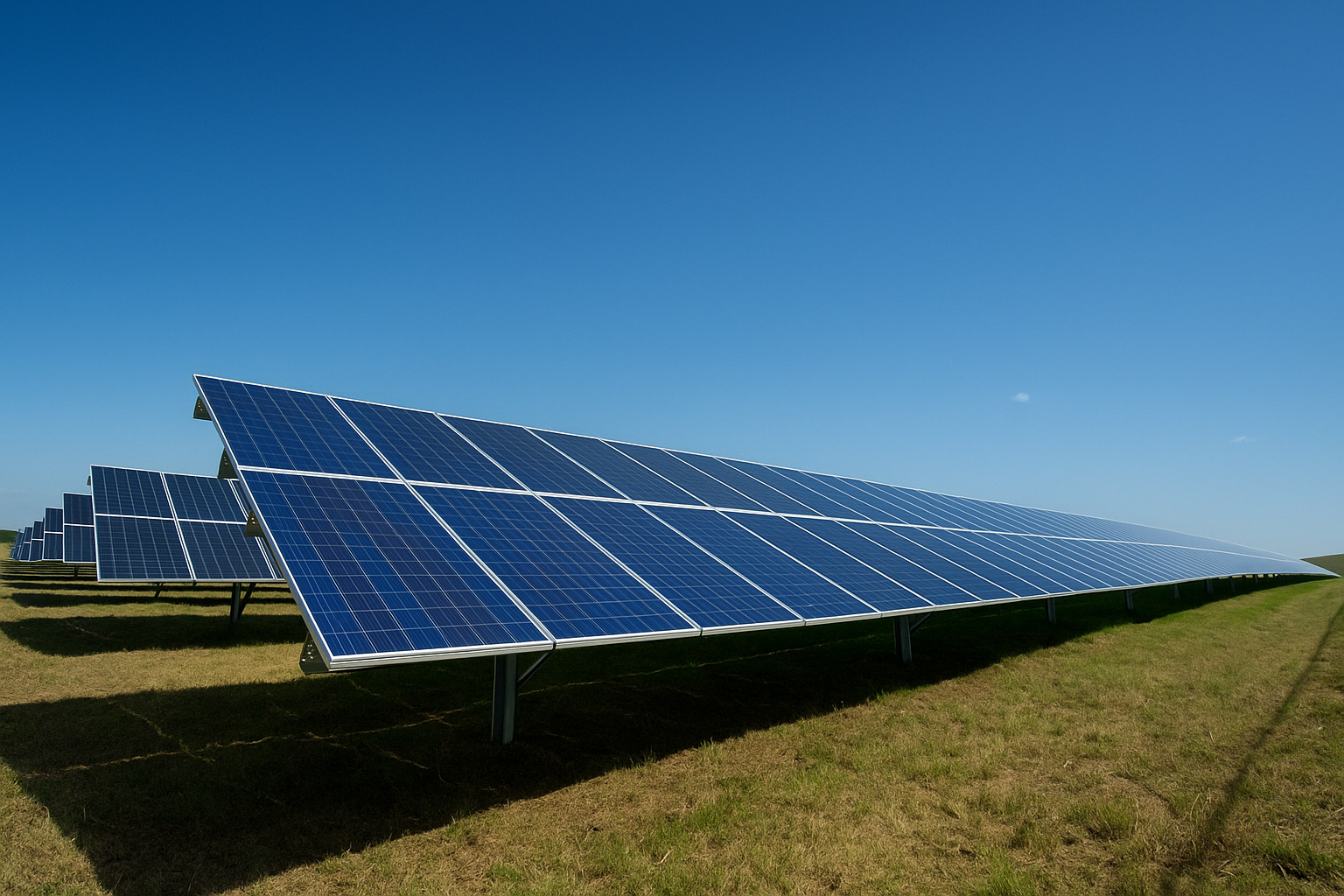
Discover How the Largest Solar Park in the World in China Transforms Clean Energy into Reality and Redefines the Sustainable Future of the Planet.
China has become a global leader in the race for clean energy. In recent years, the country has heavily invested in renewable sources, primarily in solar energy.
Now, it takes an even bigger step as it prepares to inaugurate the largest solar park in the world, located in the vast and sunny Tibetan plateau.
This project is not just a demonstration of technological capability. On the contrary, it reflects a comprehensive strategy for reducing carbon emissions and the structural transformation of China’s energy sector.
-
Roraima bets on the sun to escape high tariffs: Amid the energy crisis and price hikes, solar energy is growing in Roraima and transforming consumption in the North region.

-
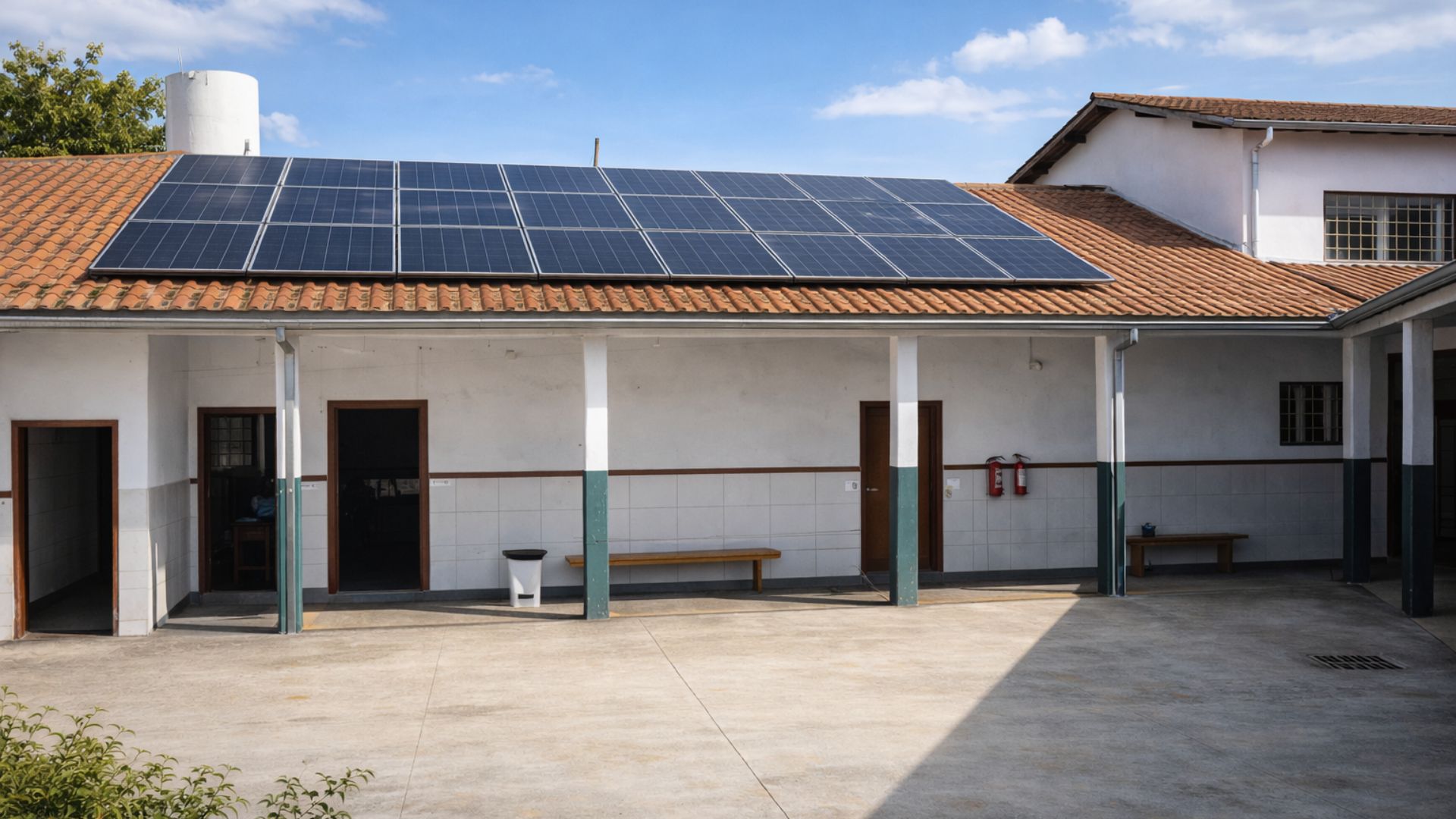
Copel boosts solar energy in Paraná and brings innovation to public schools, promoting savings on electricity bills, energy efficiency, and a direct impact on the quality of education.
-
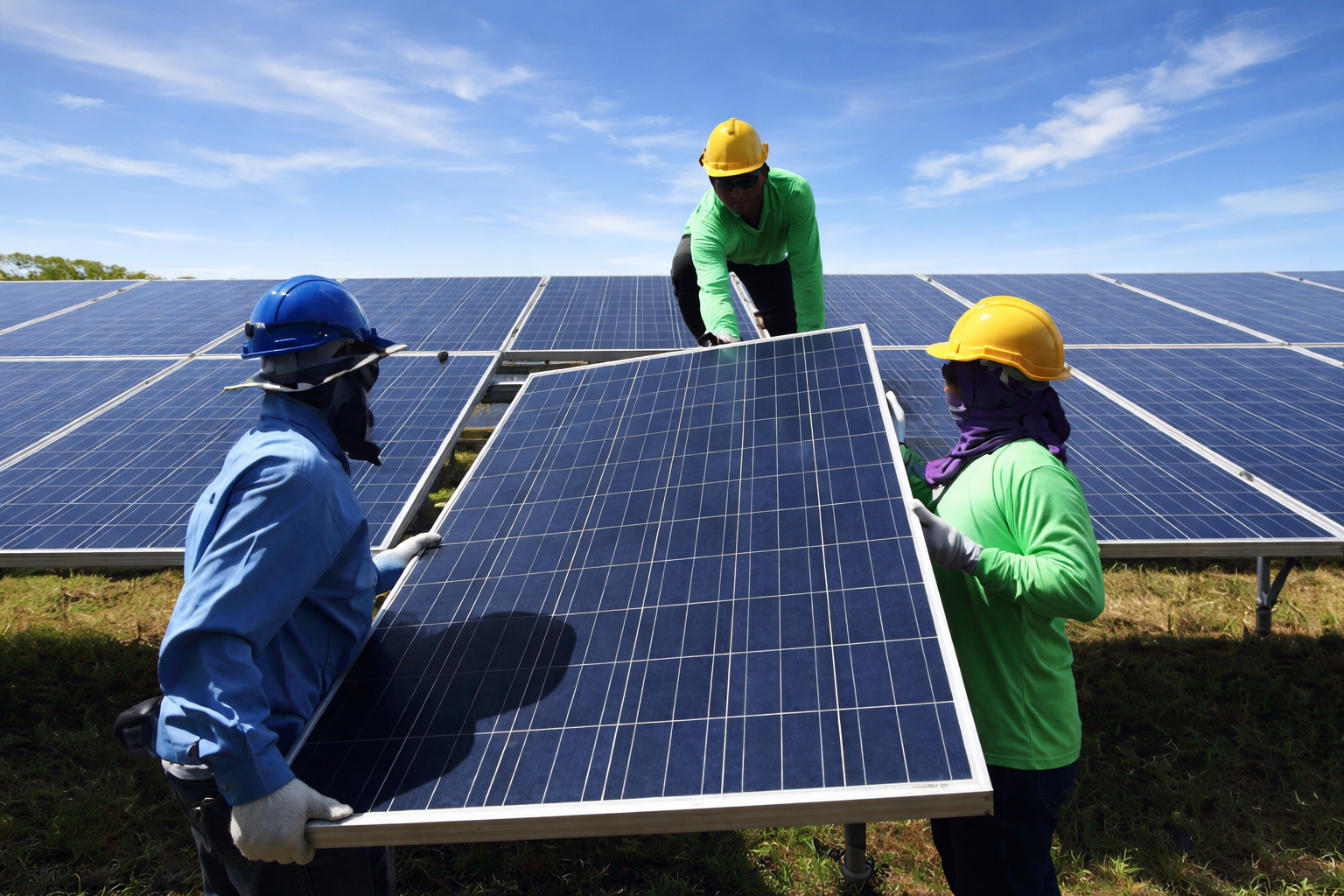
Brazil reaches historic milestone in solar energy: Sector surpasses 2 million accumulated green jobs and generates billions in the national economy even under market pressure.
-
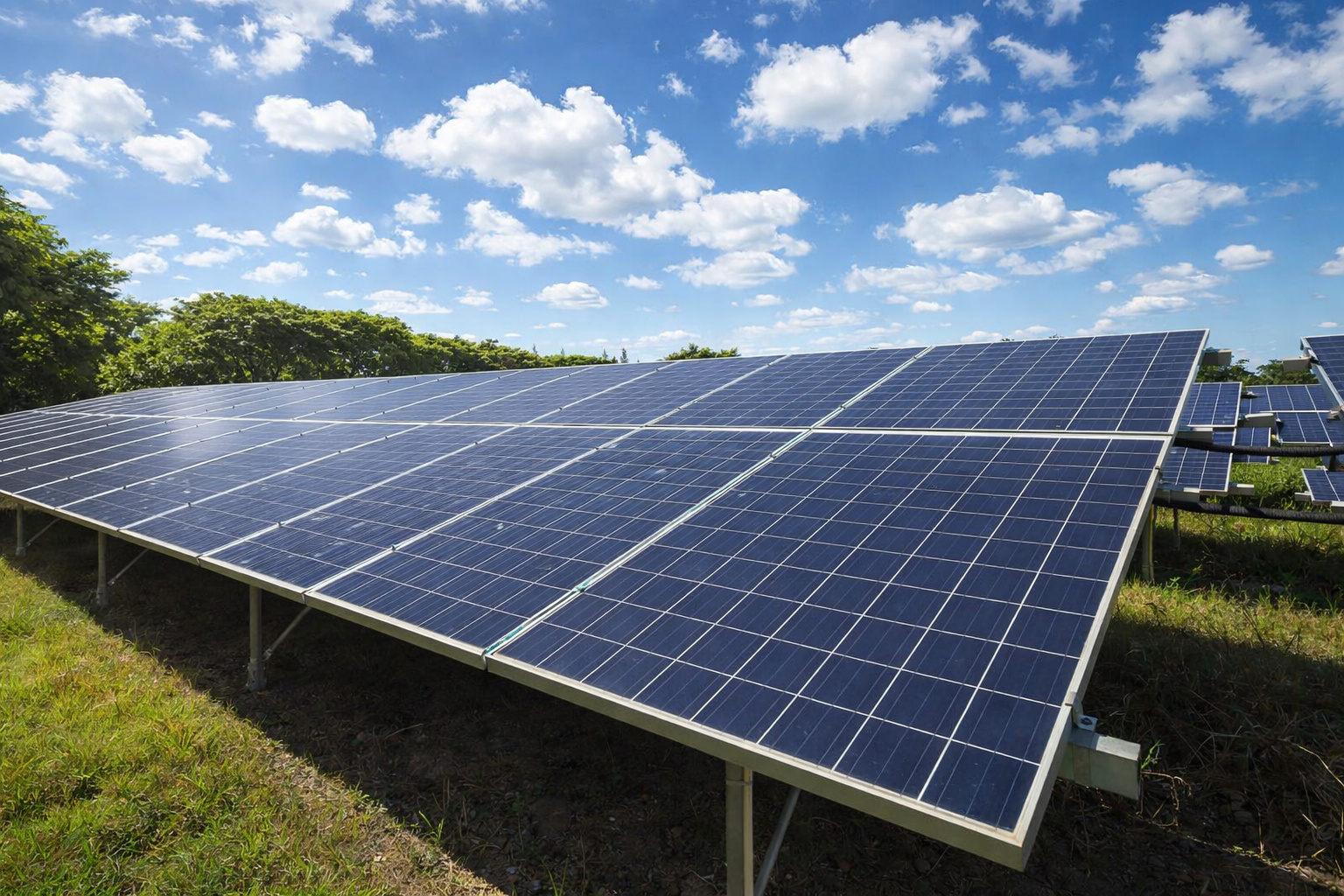
Minas Gerais takes the lead in renewable energy: State surpasses historic mark of 14 GW in solar energy generation in MG and consolidates dominance in the Brazilian electric sector.

Moreover, with over 600 square kilometers of area, the park will be able to power around five million homes. This places solar energy on a new level both inside and outside China.
The Path of Solar Energy in China
To understand the magnitude of this achievement, it is important to recall the trajectory of solar energy in China.
In the 1980s and 1990s, the country was still almost entirely dependent on coal to power its economy.
Therefore, major cities suffered from intense air pollution, and public health issues garnered worldwide attention.
However, it was only in the early 2000s that the Chinese government began to strategically focus on renewables.
With increasing international pressure and technological advancement, Beijing encouraged the local solar panel industry.
In this way, in a short time, the country ceased being an importer and began to lead the global manufacturing of photovoltaic equipment.
This movement was planned. After all, besides ensuring energy security, the investment in solar energy brought economic benefits.
As a result, production costs fell, new job chains emerged, and the country consolidated its technological leadership.
By 2025, China had already installed more than 212 gigawatts of solar capacity just in the first half of the year. This number surpassed the total accumulated capacity of the United States.
The Largest Solar Park in the World on the Tibetan Plateau
The choice of the Tibetan plateau to host the largest solar park in the world was not by chance.
In fact, the region combines high solar incidence, vast uninhabited areas, and dry climate—ideal factors for the installation of large photovoltaic panels.
With an estimated area of 610 square kilometers, the park becomes comparable to the size of entire cities.
Therefore, the energy generated will be sufficient to supply millions of homes and significantly reduce the need for fossil sources.
Additionally, the project brings positive environmental effects. For instance, the panels reduce soil evaporation, helping to preserve moisture and stimulating the growth of local vegetation.
At the same time, China aims to integrate sustainable agricultural practices, allowing sheep herds to circulate among the panels.
This coexistence, known as “photovoltaic grazing”, combines energy production and environmental preservation in the same area.
Global Benefits of the Energy Transition
The impact of the largest solar park in the world extends beyond Chinese borders.
First of all, the reduction of carbon emissions directly contributes to the fight against climate change, a growing global concern.
Historically, China has always been among the largest emitters of greenhouse gases due to its dependence on coal.
However, the rapid expansion of solar energy has already generated visible results.
By 2025, the country recorded a 1% decrease in emissions during the first half of the year. This was a significant milestone considering the size of the Chinese economy.
Therefore, this transformation signals a new global balance in the energy matrix.
If before oil and coal dominated, now solar energy takes a prominent role.
The Tibetan park symbolizes this historic turn. Thus, it shows that large-scale projects can become viable as long as there is planning and long-term investment.
Infrastructure and Distribution Challenges
Despite the advancements, the Chinese energy transition still faces challenges.
In particular, it is necessary to ensure that the energy generated in remote areas, such as Tibet, reaches the major urban and industrial centers.
To this end, the government is investing in new ultra-high voltage transmission lines.
These state-of-the-art power grids allow energy to be transported over thousands of kilometers with low loss.
In this sense, this technology becomes essential in a country of continental dimensions.
Without it, the potential of the largest solar park in the world would be limited.
Another obstacle lies in the need to balance intermittent renewable sources, such as solar and wind, with constant electricity demands.
For this reason, China is seeking solutions in energy storage, with large-scale batteries and pumped hydroelectric plants.
Thus, it becomes clear that the solar revolution depends not only on generation but also on the ability to maintain a stable and efficient grid.
The Role of the Largest Solar Park in the World in the Energy Future
The Tibetan park serves as a symbol of the global transition to cleaner energies.
In addition to expanding China’s energy capacity, it represents a model for other developing countries.
By demonstrating that solar energy can reach grand scales, China sends a clear message to the world.
It is possible to grow economically without repeating the environmental mistakes of the past.
In this way, the example can inspire sunny regions in Africa, Latin America, and the Middle East to invest more in similar projects.
In the long run, the consolidation of solar energy in countries like China helps to reduce dependence on imported fossil fuels.
Consequently, this strengthens energy security and reduces vulnerability to fluctuations in oil and natural gas prices.
The launch of the largest solar park in the world marks a turning point in the history of global energy.
It combines technological innovation, environmental commitment, and unprecedented mobilization capacity.
Although China still faces challenges in reducing its dependence on coal, the advancement of solar energy is already showing concrete results.
Therefore, the project on the Tibetan plateau represents not only a national achievement but also a milestone for all humanity.
Thus, the future of clean energy lies in initiatives like this.
The more countries follow this example, the greater the chances of building a sustainable planet, with quality of life for future generations.











Seja o primeiro a reagir!