





 Portuguese
  English
  Spanish
  4 min of reading
  0 comments


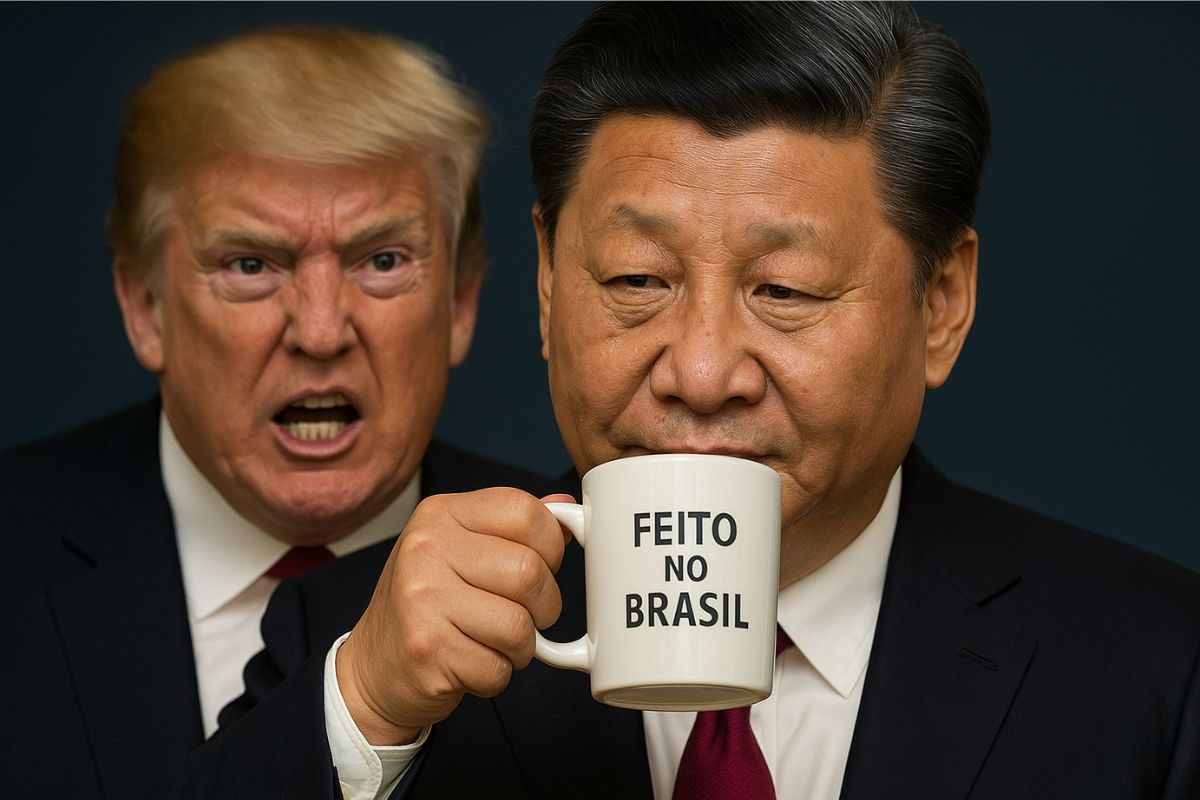
China Praises the Flavor of Brazilian Coffee Just as the U.S. Imposes Tariffs — Coincidence or Calculated Opportunity?
Trade relations between Brazil and the United States have entered a new period of tension. This Wednesday, the 50% tariffs imposed by former President Donald Trump on Brazilian products came into effect, with a special focus on coffee — one of the country’s main exports to the U.S. market. The measure triggered immediate reactions in the diplomatic arena and opened up space for China to intensify its engagement with Brazil, publicly praising the national coffee.
China Responds with Irony and Invests in More Brazilian Companies
The Chinese embassy in Brazil was quick to seize the moment. It published a video on social media extolling Brazilian coffee, mentioning the “beloved coffee from Brazil” as a symbol of the relationship between the two countries. The post also highlighted the growing presence of Chinese companies in the country, such as Meituan — a delivery giant — and emphasized that the bilateral relationship is “two-way,” with national coffee gaining more and more space in the daily lives of the Chinese.
But the message went beyond diplomatic rhetoric. Days earlier, the embassy itself had reported that China approved the certification of 183 new Brazilian companies for coffee exports to its market. The authorization is valid for five years and represents an important step in consolidating Brazil as a strategic supplier in a sector that is gaining strength in the Asian country.
-
The government requests the Federal Revenue Service for a new system to automate the income tax declaration, reducing errors, time, and bureaucracy for millions of Brazilians.

-
Pix in installments, international Pix, and contactless payment without internet: the Central Bank revealed the new features coming to the tool that is already used by almost every adult in Brazil.
-
Mercado Livre has just started selling medications with delivery in up to three hours to your door, and this move could completely change the way Brazilians buy medicines on a daily basis.

-
In Dubai, rising tensions from the war in the Middle East are causing super-rich individuals to leave the Gulf and direct their fortunes to a new financial refuge in Asia.

In another statement, the Chinese representation highlighted that coffee consumption in China has been growing continuously and still presents a huge margin for expansion compared to the global average. “Brazilian coffee is gaining traction in the daily lives of the Chinese,” the text stated.
Coffee: The Link Between Brazil and the U.S. That Is Now Under Threat
Trump’s decision directly affects one of the pillars of the trade balance between Brazil and the United States. In 2024, Brazil accounted for 30.7% of the 1.5 million metric tons of coffee imported by Americans, consolidating itself as their main supplier.
To illustrate the relevance of this market, about 66% of adults in the United States consume coffee daily, even surpassing the consumption of bottled water. With the new 50% tariff, the price of Brazilian coffee is likely to rise, which could reduce its competitiveness and open space for competitors from other countries.
Political Pressure and Accusations Between Governments
The decree signed by Donald Trump that establishes the new tariff scheme is not limited to economic issues. In the document, the former president accuses the Brazilian government of “serious human rights violations” and claims that these alleged actions would be undermining the rule of law in the country.
The publication of the decree occurred just days after Trump sent a formal letter demanding the end of the judicial proceedings against Jair Bolsonaro. In the letter, the former U.S. president even accused Lula’s government of conducting a “witch hunt” against his political ally, who is currently a defendant accused of involvement in an alleged coup attempt. The pressure generated strong repercussions both in the diplomatic sphere and in the national political arena.
In response, President Luiz Inácio Lula da Silva stated that Brazil should be treated equally in any negotiations with the United States and emphasized that there is a “limit to the discussion” with Trump’s current stance. The Brazilian government promised to announce measures in response to the tariffs but has not yet disclosed what the concrete actions will be.
China Presents Itself as a Strategic Alternative
While Washington imposes barriers, Beijing positions itself as a partner willing to expand its influence in South America. During a press conference this Wednesday, the spokesperson for China’s Ministry of Foreign Affairs, Guo Jiakun, stated that cooperation between China and Brazil has brought concrete benefits to both peoples. He further reinforced that the country is committed to deepening ties with Brazil “in various areas” and adding “new strategic dimensions” to the partnership.
With the certification of almost two hundred new Brazilian companies to export coffee and the symbolic appreciation of the national product, China is showing clear signs that it intends to fill the vacuum that may be left by the United States, should the trade friction prolong.









-

-

-

6 pessoas reagiram a isso.