





 Portuguese
  English
  Spanish
  3 min of reading
  0 comments


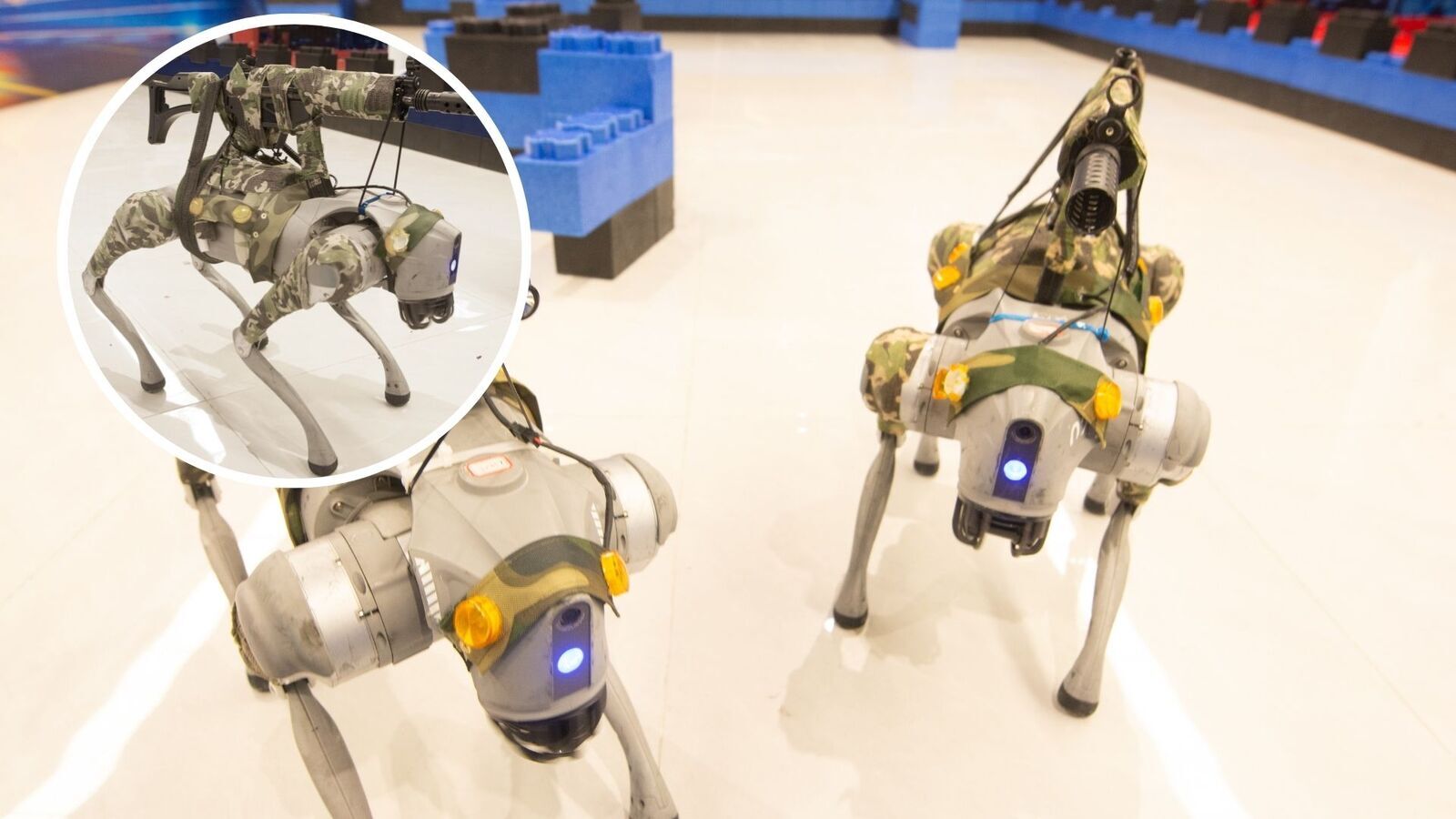
Report shows that Chinese robot dogs operated as a single unit, with a shared brain, networked sensors, integration with drones, and multiple forms of control, in a recent simulation that highlighted enhanced physical capabilities, autonomous cooperation, and possible future military impacts
Chinese robot dogs operated as a single unit in an urban cleaning simulation, according to a report. With a shared “brain,” a network of sensors, and coordinated action, the systems executed complex tasks and reinforced the transition to more autonomous, cooperative, and intelligent operations.
Group operation
According to the report, several robot dogs acted together as a coordinated “wolf pack.”
Instead of functioning as isolated machines, they operated as a unified system, exchanging information through a shared digital framework.
-
The coldest seawater ever recorded in Earth’s history was hidden under extreme ice 717 million years ago and reached an impressive -15°C.

-
China has launched the world’s first floating artificial island, a scientific structure designed to face open seas, test equipment weighing hundreds of tons, and reach depths of 10,000 meters.

-
China accelerates global science and may surpass the United States in 2 years with increased public investment, continuous growth, and direct impact on the global technological competition.

-
Scientific studies indicate that drought may be strengthening a much greater silent threat: more resistant superbugs.


This connection allowed for autonomous collaboration and joint decision-making within the group.
The model was presented as a sign of a shift towards smarter, more cooperative, and autonomous forms of warfare, with integrated action in complex scenarios.
Physical capabilities and control of the robots
The robot dogs were designed with enhanced physical and operational capabilities. They can move quickly, carry substantial equipment, and operate in challenging terrains while maintaining stability and efficiency even under difficult conditions.
According to the report, the latest models have more flexible joints, a maximum speed of up to 15 km/h, a payload capacity of 25 kg, resilience in extreme environments, and enhanced adaptability to different types of terrain.
The units can also be controlled by consoles, by voice, by a tactical glove, and by a joystick attached to the rifle.
This variety of interfaces offers more flexibility to human operators in supervising or conducting missions.
Integration with other systems
The series “Unmanned Vehicle Competition,” launched this week, showcased China’s latest developments in unmanned weapon systems.
The program highlighted maritime, aerial, and ground drones from the People’s Liberation Army.
According to the SCMP, the series also demonstrated artificial intelligence capabilities in anti-drone weapons, including smart laser platforms.
The robot dogs can also be integrated with drones for coordinated operations between air and ground.
Specialization and concerns
The “wolf pack” logic is based on specialization. Each robot is assigned a distinct function.
Some units perform monitoring and information gathering, others engage in direct combat, and others provide logistical or operational support.
This networked design allows the robot dogs to respond collectively to rapidly changing situations, effectively in complex environments, especially urban ones.
By sharing data, the group enhances its adaptability during different types of operations.
Despite the advantages noted, the advancement of these robot dogs also raises concerns about accountability, control, and rapid response in combat scenarios.
If a machine makes a critical decision, defining accountability becomes more complex.
The report raises concerns that technologies with greater autonomy could escalate conflicts more quickly, as automated systems can react faster than humans can intervene in these situations.
With information from Interesting Engineering.







Seja o primeiro a reagir!