





 Portuguese
  English
  Spanish
  5 min of reading
  0 comments


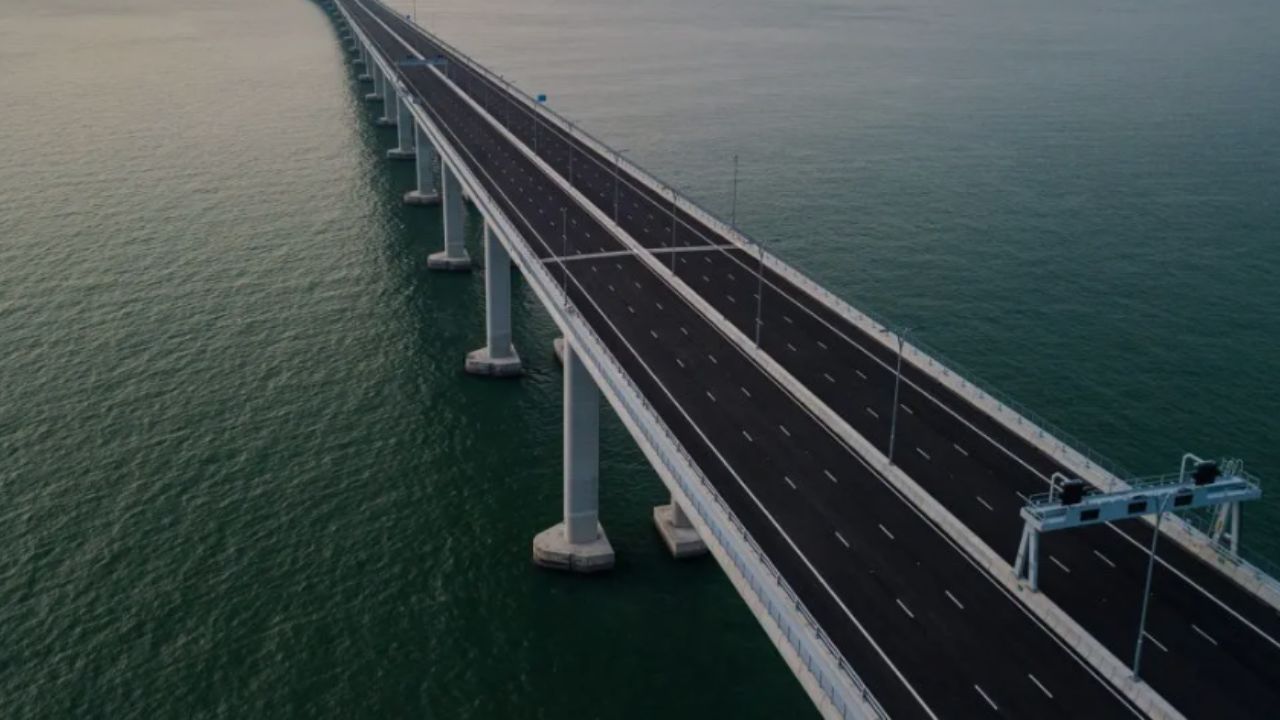
The 164.8 km Railway Viaduct Redefined Global Engineering, Connecting Metropolises and Boosting China’s GDP in One of the Most Complex Regions of the Country. Discover the Mega Structure That Overcame Rivers, Lakes, and Swampy Lands.
The idea of crossing such a vast bridge that the journey could start in one city and end in another more than 160 km away has ceased to be fiction and become the reality of the Danyang-Kunshan Bridge in China. This feat of modern engineering, considered the longest bridge in the world, cost an impressive $8.5 billion and took approximately four years to complete, establishing a new global standard for the construction of megaprojects. With 164.8 km in length, the structure not only connects metropolises but also overcame complex geographical challenges.
Although technically classified as a railway viaduct – allowing high-speed trains to reach speeds of up to 300 km/h – the work is globally recognized as the longest bridge in the world due to its continuous span. Strategically located in Jiangsu province, eastern China, it connects the cities of Danyang and Kunshan, symbolizing progress and a vision of a more interconnected future, as detailed by the cited source, Construction Time.
Why Did China Need the Longest Bridge in the World?
Before the construction of the Danyang-Kunshan Bridge, traveling along the eastern coastal area of China, especially between major cities like Shanghai and Nanjing, was described as a “true nightmare”. The travel time to destinations like Ningbo and Jiaxing took about 4 and a half hours, making the need for a new high-speed railway urgent.
-
Scientists use sawdust mixed with clay to create a lighter brick, promising efficient thermal insulation and impressing by transforming waste into a solution for construction.

-
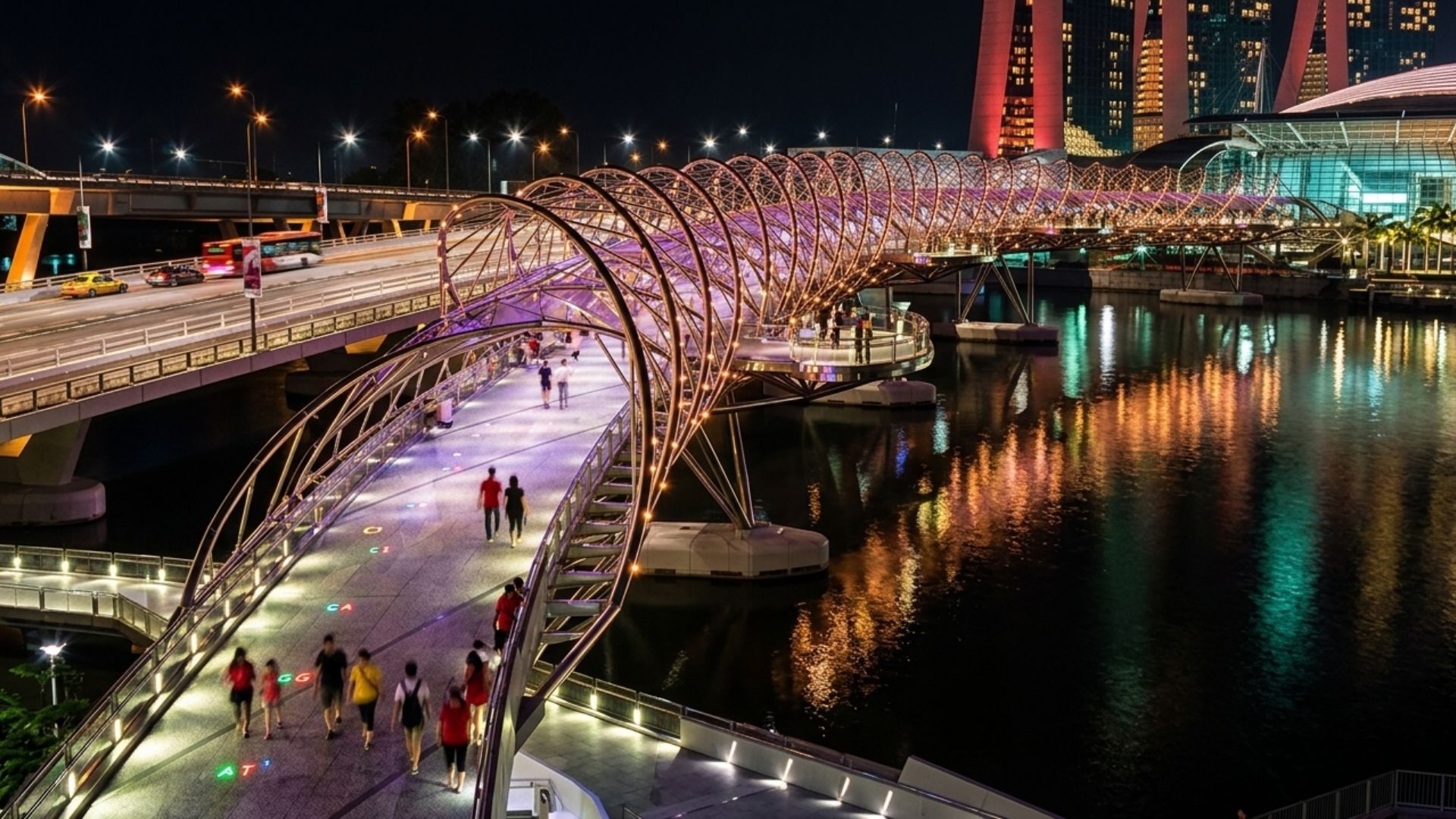
With a DNA shape, this bridge in Singapore draws attention in modern architecture and surprises tourists by transforming a simple crossing into an unforgettable visual experience in the urban heart.
-
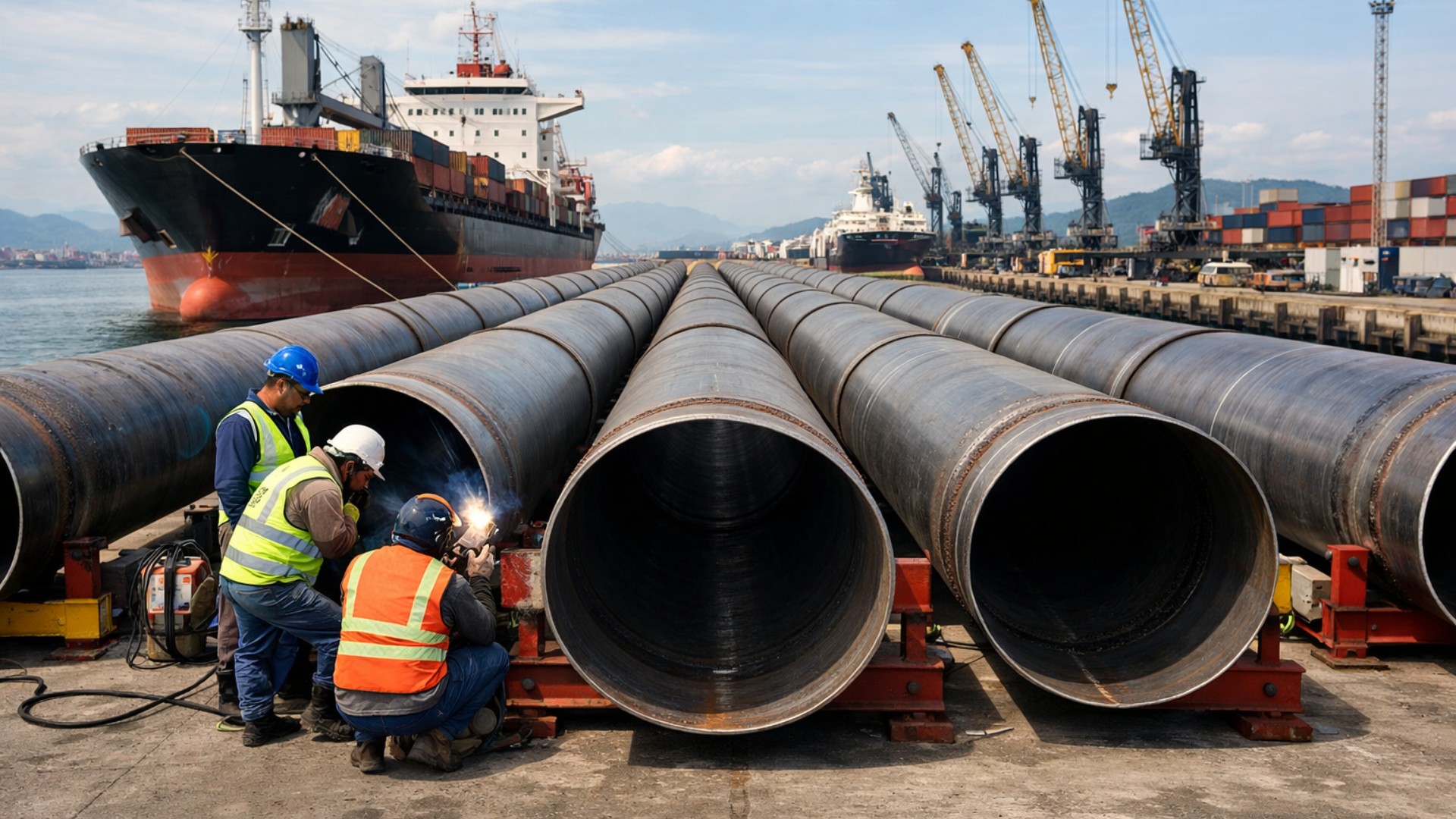
Giant underwater pipeline begins to take shape with a R$ 134.7 million project at the Port of Santos: the 1.7 km structure uses 12-meter and 700 mm pipes to supply water to 450,000 people in Guarujá.
-
A mason reveals a professional plastering technique that uses aligned guides and a 3-meter ruler to plaster an entire wall in up to 3 hours, without visible seams, with uniform thickness, perfect plumb, and a finish ready for painting without rework.


- The Geographical Challenge and Soft Soil: The main obstacle was the region’s geography, known for vast rice fields, winding rivers, serene lakes, and swampy lands. The soft and flooded soil was not ideal for constructing stable railway structures, as ground-level tracks risked sinking or displacement, unacceptable for high-speed trains.
- Rivers and Communities: The area is crisscrossed by a dense network of rivers and lakes, with over 115 waterways wider than 20 meters. Conventional construction would require numerous smaller bridges and cause significant disruption, including the displacement of people and destruction of valuable fertile farmland. The solution found to build a quick, stable railway with minimal disruption was precisely the elevated mega structure of the Danyang-Kunshan Bridge.
The Colossal Engineering: Project Details


The project began on April 18, 2006 and was inaugurated in June 2011, completed in approximately four years, even in the face of unique challenges. The bridge is divided into three main sections: the Danyang section (9 km), the Kunshan section (8.1 km), and the main section extending over an impressive 147.7 km, according to Construction Time.
- Gigantic Material Scale: The construction required over 450,000 tons of steel, enough to build 60 Eiffel Towers. The concrete used would be enough to fill 3,000 Olympic swimming pools, demonstrating the unparalleled scale of this megaproject.
- Overcoming Yangcheng Lake: One of the biggest challenges was the section that crosses Yangcheng Lake, requiring the installation of 2,000 pillars in the middle of the lake. To protect the local ecosystem, temporary enclosures in the water were used, allowing workers to operate on the lake bed. Construction debris was carefully handled on land to preserve ecological quality.
- Stability and Technology: To handle uneven soil settlement, the design combined friction piles (deep support) and end-bearing piles (pressure distribution), ensuring the stability and longevity of the longest bridge in the world. China used equipment like the bridge construction machine SLJ900/32, nicknamed the “Iron Monster”, essential for the rapid and precise assembly of prefabricated segments.
Resilience Against Disasters and Comparable Megaprojects
The infrastructure of the Danyang-Kunshan Bridge incorporates advanced resistance engineering, ensuring its durability in extreme conditions:
- Earthquakes and Typhoons: The foundation features base isolators, elastomeric supports, and sliding plates, allowing controlled lateral movements to dissipate seismic energy. The design also considered aerodynamics, with wind tunnel tests and reinforced anchoring systems to withstand forces generated by typhoons, in addition to stainless steel reinforcements and protective coatings against corrosion. The bridge is even designed to survive an 8 magnitude earthquake.
- Naval Impact: Another crucial safety factor is the bridge’s ability to withstand direct impacts from ships weighing up to 300,000 tons without sustaining significant damage.
Despite being the longest bridge in the world, the Danyang-Kunshan is not alone in megaprojects. China is also responsible for the Hong Kong-Zhuhai-Macau Bridge, considered the longest sea bridge in the world, at 55 km. In Brazil, the Rio-Niterói Bridge stands out as the largest bridge in the Southern Hemisphere, with 13.29 km in length, a symbol of national engineering that connects Rio de Janeiro and Niterói.
Economic Impact and the Future of Connectivity
The construction of the Danyang-Kunshan Bridge brought significant impacts. The main benefit was the dramatic reduction in travel time between cities, from hours to just a few minutes, facilitating the mobility of people and the transport of goods.
This improvement in infrastructure directly boosted the economic development of the region. The ease of access attracted investments, fostered job creation, and encouraged trade exchanges. The bridge serves as a vital transport link in southern Jiangsu, a vibrant economic area that, while representing only 0.3% of China’s total area and 1% of its population, contributes an impressive:
- 5% of the country’s GDP.
- 7% of total industrial output.
- 10% of total exports.
The structure is a testament to human capability to overcome seemingly insurmountable challenges and serves as an inspiring symbol for future global infrastructure initiatives, demonstrating that large-scale projects can be accomplished with technological innovation and consideration for environmental and social impacts.
Did you know about the incredible and immense Danyang-Kunshan Bridge? Do you think China’s ability to construct this mega structure, overcoming such significant environmental challenges, impacts the global engineering market and sets a new standard for the future of infrastructure? Please share your honest opinion in the comments; we want to hear from those who understand or experience the reality of these megaprojects firsthand!






-

Uma pessoa reagiu a isso.