





 Portuguese
  English
  Spanish
  5 min of reading
  0 comments



Chinese space program expands human studies in orbit with focus on health, microgravity, and long-duration missions, as the country accelerates lunar plans and consolidates the Tiangong station as a strategic laboratory for biomedical science and technological innovation.
China has opened a new front in its crewed space program by launching a call for research proposals focused on human health at the Tiangong station, in an initiative that combines space medicine, long-duration exploration, and preparation for the goal of sending astronauts to the Moon by 2030.
The plan includes the creation of a human space atlas, the formation of a dedicated database on the subject, and the expansion of studies on the effects of microgravity on the body.
According to the China Manned Space Agency, the selection of projects began on April 1, 2026 and targets issues considered strategic for human presence in space for increasingly longer periods.
-
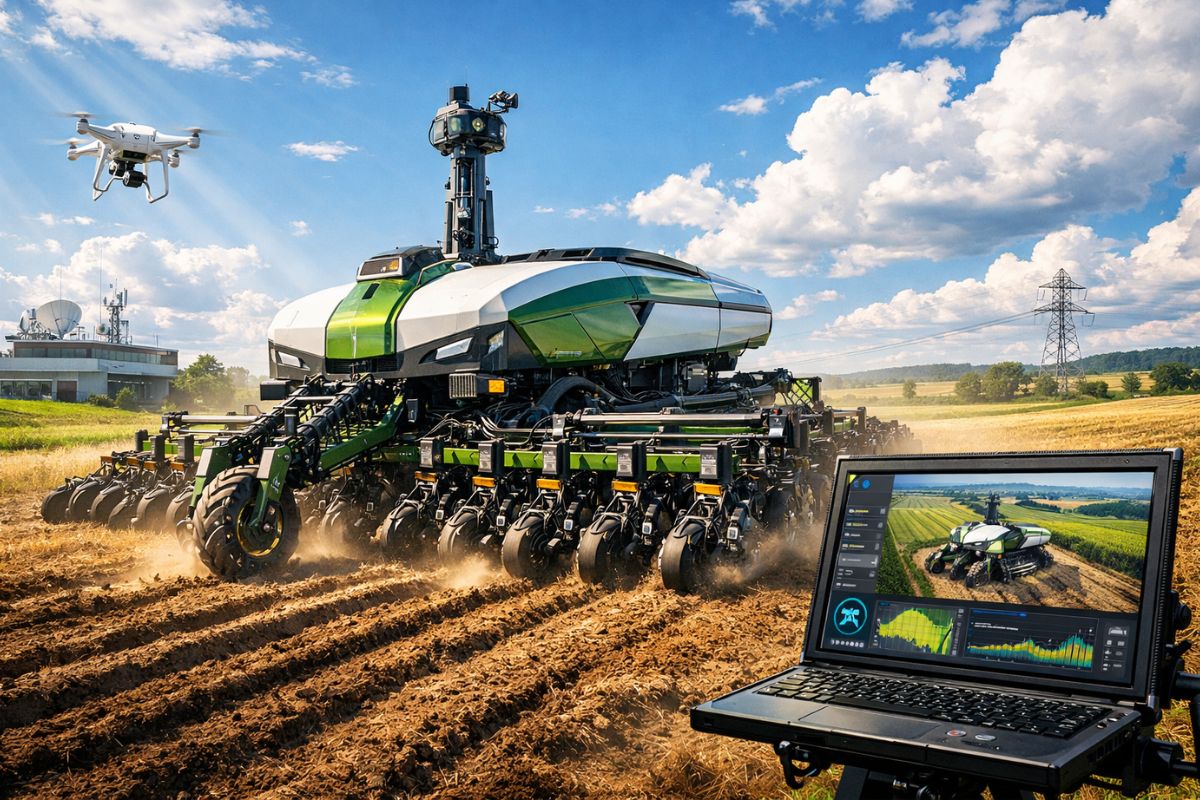
With R$ 22.5 million from BNDES, J. Assy accelerates the hybrid diesel-electric autonomous planter, featuring remote monitoring and AI: it promises to plant without an operator and adjust to the terrain; the prototype will be ready in the second half of 2026.
-
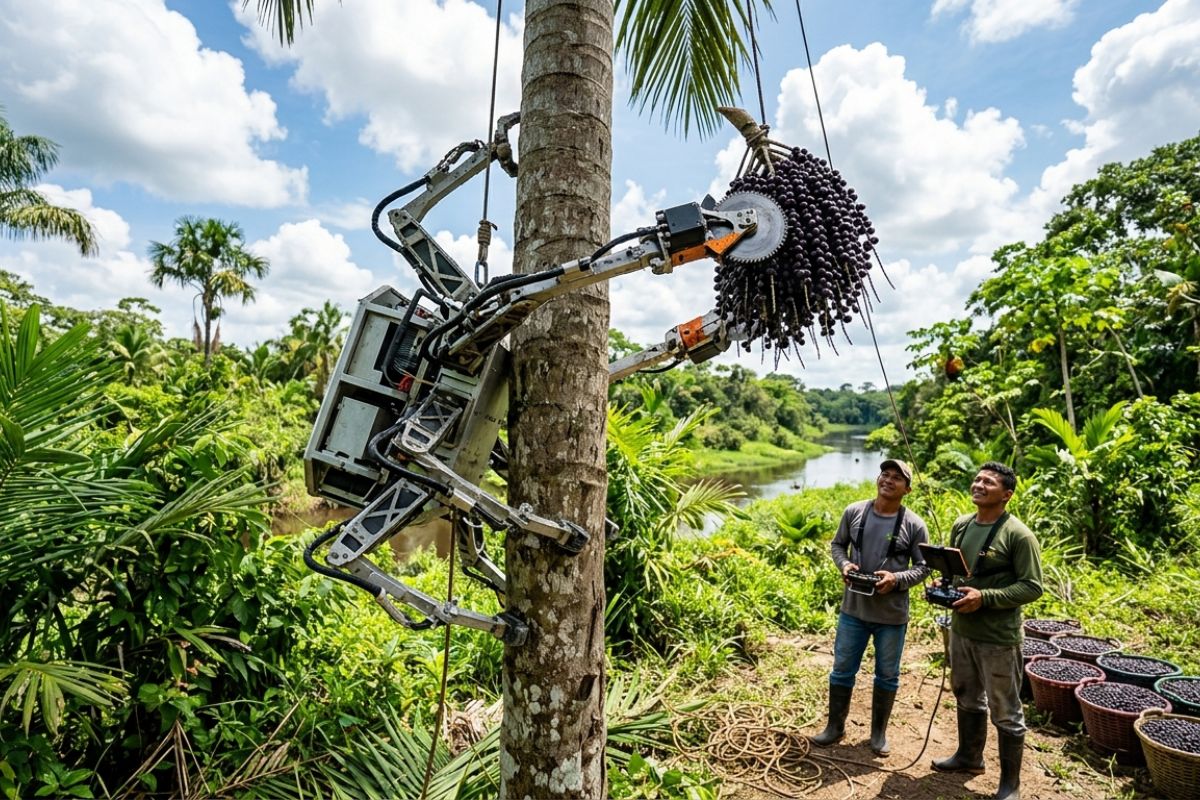
Robot that climbs açaí trees in Pará cuts bunches with a remote control, reduces accidents for harvesters, and promises to harvest 10 times more, reaching 1,000 kg per day, costing R$ 21,000 with subsidized PRONAF.
-
Scientists have discovered for the first time a gigantic cave hidden beneath a volcano on Venus, nearly a kilometer wide and 375 meters high, using radar images that had been forgotten for over 30 years.

-
They were brilliant! Scientists discover that our ancestors in China were already making super advanced tools 160,000 years ago, changing everything we knew.

The proposal focuses efforts on topics related to healthy survival in prolonged orbital flights and future lunar landing missions, at a time when Beijing is trying to align biomedical research with its more ambitious goals in the space race.
What China wants to discover at the Tiangong station
The central axis of the program is to understand, with greater precision, how the human body reacts to prolonged stays outside of Earth.
To this end, China has indicated that it intends to work with human samples, organoids, and cells, observing changes in bones, muscles, the cardiovascular system, metabolism, cognition, and processes associated with aging, both during the mission and after returning to the surface.
This line of investigation has gained weight because Chinese crewed flights have ceased to be sporadic missions and have become part of a continuous operational agenda for Tiangong.
As the frequency of stays in orbit increases, so does the need to measure risks with greater detail, from loss of bone and muscle mass to cardiovascular changes and neurological impacts that may compromise the performance of crew members.
The creation of a human space atlas fits precisely into this context.
The idea is to compile physiological and biomedical data in a standardized way to form a base capable of guiding medical protocols, preventive measures, and monitoring technologies.
Although the immediate focus is on the health of the taikonauts, the Chinese agency maintains that the results may also have applications in treatments, drug screening, and clinical research developed on Earth.
Scientific projects at Tiangong gain scale
Space medicine experiments are already among the fields considered priorities within Tiangong.
Since the previous public call for proposal submissions, announced in June 2023, China has registered 387 submitted projects, of which 53 had already been executed in the national space laboratory by the end of March 2026.
This volume indicates that the station has begun to function not only as a platform for human presence in orbit but also as a permanent scientific infrastructure.
In practical terms, Tiangong has been used to consolidate a routine of experiments in a microgravity environment, which includes everything from biomedical studies to technological research and applications of industrial interest.
Beyond the number of proposals, the most revealing data is the continuity.
Instead of isolated actions, the Chinese strategy shows an attempt to build comparable series of observation, something essential for long missions.
Without this accumulation, it becomes more difficult to separate acute and transient effects from those that only appear after months of exposure to microgravity, or even after returning to the terrestrial gravitational environment.
One-year mission and plans to reach the Moon
The human research program was presented in the same cycle in which China detailed part of its crewed agenda for 2026.
The Manned Space Agency reported that Tiangong is expected to receive two crewed missions and one cargo flight throughout the year.
At the same time, the country maintains the official goal of conducting a crewed landing on the Moon before 2030.
In this timeline, one of the points of greatest scientific interest is the extended stay experiment in orbit.
According to the planning released by the agency, one crew member of Shenzhou-23 will undergo a stay of about one year in space.
The experience was designed to expand knowledge about physiological and operational limits of longer missions.
The connection between prolonged stay and lunar ambition is direct.
Before sending astronauts to the lunar surface, China needs to reduce medical uncertainties associated with confinement, radiation, loss of physical conditioning, and post-flight recovery.
In this scenario, Tiangong appears as a preparation laboratory, where biomedical science plays a role as decisive as rockets, capsules, and landing modules.
Advances in space medicine and impact on Earth
Researcher Li Yinghui, affiliated with the China Astronaut Research and Training Center, stated that the country has already accumulated results considered relevant in this field.
Among them, the completion of the first Chinese study with organ-on-a-chip in a space environment stands out.
An experiment with artificial vascular tissue chip has also been recorded, noted as pioneering in this type of application in orbit.
These platforms aim to reproduce, on a reduced scale, functions of human tissues and organs to observe biological reactions with greater experimental control.
In the orbital environment, they can help measure changes associated with heart health, the muscular system, aging, and neurodegenerative diseases.
Additionally, they provide support for drug testing and selection.
Space medicine, in this context, ceases to serve only the logistics of flight and begins to engage with biomedical research for broader use.
Beijing seeks to transform Tiangong into a continuous base for scientific production, reducing dependence on foreign data and expanding its technological autonomy.
As a result, the space station gains a role that goes beyond geopolitical symbolism and consolidates itself as a central piece in preparing for the Chinese human presence in longer flights and future lunar operations.








Seja o primeiro a reagir!