





 Portuguese
  English
  Spanish
  4 min of reading
  61 comments


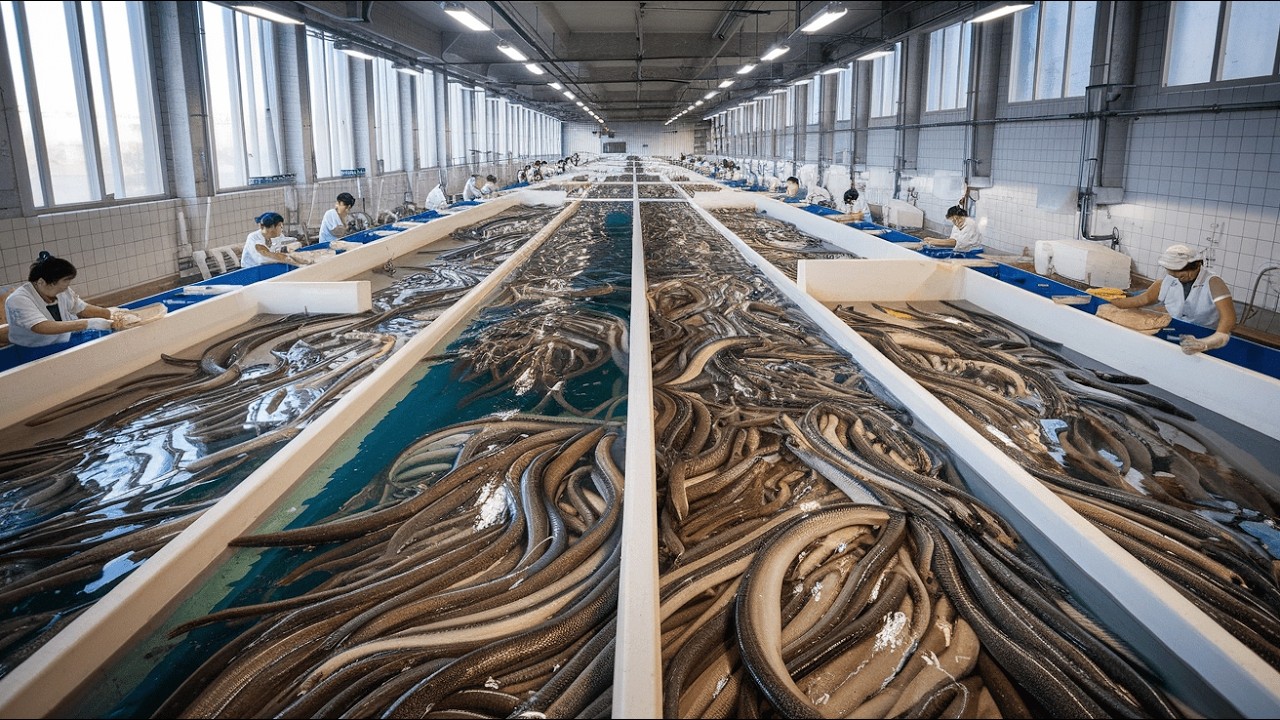


China Dominates Over 70% of Global Fish Production and In the Eel Sector, It Is No Different; The Country Operates Mega Aquaculture Farms That Turn This Expensive Fish Into A Billion-Dollar Industry.
Eel production is one of the most secretive, expensive, and fiercely contested markets in global aquaculture. At the center of this silent industrial machine is China, responsible for over 70% of the globally farmed eel, according to data from the FAO (Food and Agriculture Organization of the United Nations). What few people know is that behind these numbers, there are mega farms that operate almost like submerged cities, with continuous pumping, filtration, and biological control systems functioning 24 hours a day.
The eel, especially in Asia, generates billion-dollar figures. In Japan, it can cost more than many premium cuts of tuna. But it is China that dominates the most difficult and delicate stage of the chain: large-scale farming.
Next, you will understand how this country built an empire based on a rare, expensive, and technically complex fish to raise.
-
The water that almost everyone throws away after cooking potatoes carries nutrients released during the preparation and can be reused to help in the development of plants when used correctly at the base of gardens and pots, at no additional cost and without changing the routine.

-
The sea water temperature rose from 28 to 34 degrees in Santa Catarina and killed up to 90% of the oysters: producers who planted over 1 million seeds lost practically everything and say that if it happens again, production is doomed to end.

-
An Indian tree that grows in the Brazilian Northeast produces an oil capable of acting against more than 200 species of pests and interrupting the insect cycle, gaining ground as a natural alternative in soybean, cotton, and vegetable crops.
-
The rise in oil prices in the Middle East is already affecting Brazilian sugar: mills in the Central-South are seeing their margins shrink just as ethanol gains strength.


The Most Expensive Fish in the World? And Why Is Eel Worth So Much Money?
Japanese eel (Anguilla japonica) and European eel (Anguilla anguilla) are among the most valuable fish in global cuisine. Historically, Japan is the largest consumer, driven by the traditional dish unagi kabayaki, which elevates the cost per kilo to levels that can exceed US$ 1,000 in times of high demand.
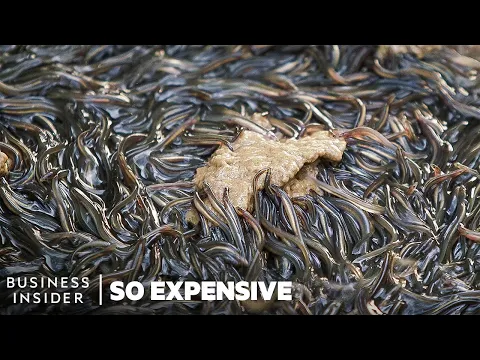

But there is a problem: eels do not reproduce in captivity on a commercial scale. The larvae need to be captured in the wild — a complex, seasonal, and highly regulated process.
This is where China becomes indispensable in the global market. Chinese units have specialized in transforming fragile glass eels (young, transparent eels) into adult animals with a high survival rate, mastering stages that few countries can achieve.
Mega Aquaculture Farms: How China Created Entire Cities to Fatten Eels
Chinese mega farms are not simple lakes or improvised tanks. They follow industrial models comparable to power plants:
• Recirculating Aquaculture Systems (RAS) that continuously treat water.
• Millimetric temperature control, essential for eels to grow without stress.
• Hyper-controlled feeding, with a mix of animal protein, fish meal, and vitamins.
• 24-hour operation, with automatic monitoring of oxygen, nitrite, and ammonia.
• Tanks that reach tens of thousands of cubic meters, some covering more area than stadiums.
A single farm can have thousands of tanks, with production cycles so precise that the process resembles an assembly line — only submerged.
These units operate mainly in Fujian, Guangdong, and Jiangxi, regions considered the heart of global eel farming.
Why Does China Dominate Over 70% of Global Production?
Three factors explain the absolute dominance:
Proprietary Fatting Technology
The transition from “glass eels” to juvenile eels is the most critical point in the cycle. China has developed specific feeding and immunity protocols that have increased survival rates and reduced costs.
Unmatched Industrial Scale
The FAO states that China produced over 1 million tons of eels over the past decade, including domestic production and re-export. No other country comes close to this scale.
Integrated Logistics
The country controls:
• International capture
• Fatting
• Processing
• Export to Japan, South Korea, and Europe
Japan remains the top consumer, but it heavily relies on eel fattened in China to keep its domestic market supplied.
The Production Cycle: What Happens Inside These Mega Farms
The process is divided into very well-defined stages:
Collection
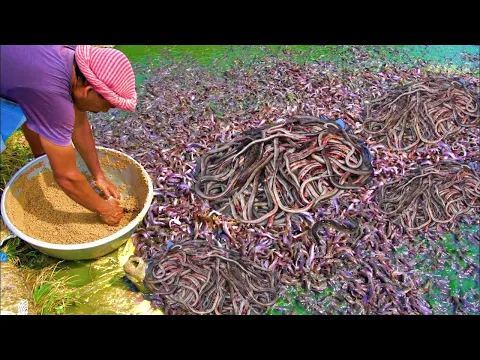
Glass eels are acquired from fishermen in various Asian countries — especially China, Taiwan, and the Philippines. They arrive at the tanks just a few millimeters long.
Acclimatization
The larvae undergo a slow and rigorous process of chemical adaptation to the water.
Fattening
For months, technicians control the diet and metabolism, ensuring the animal grows without stress — something essential to maintain valuable meat.
Classification
The eels are separated by size, weight, and commercial destination.
Processing
Mohs cut, filleting, smoking, quick freezing — everything is done to maintain the standards required by the Japanese market.
Why Is Eel Farming So Difficult?
The eel has a unique biological challenge: its reproductive cycle is not yet fully mastered by science for industrial purposes. Japanese researchers have managed to close the cycle in the lab, but it is still economically unviable.
This keeps the market extremely expensive, scarce, and dependent on nature, raising the value of the fish and the relevance of China as a central player in the fattening chain.
A Billion-Dollar Market That The World Is Trying to Reach
Japan is heavily investing to break its dependence on China. Europe is trying to recover threatened populations. South Korea is seeking more sustainable alternatives. But no one comes close to the technical capacity and scale of China.
Chinese production is so large that it influences:
• Global prices
• Gastronomic offers
• Fishing practices
• Export flows in Asia
It is a market where each kilo moves more value than practically any other farmed fish.
The Future of Eel in the World: Scarcity, Science, and Environmental Pressure
The FAO and environmental organizations point out that European and Japanese eels are in decline. Therefore, there is a global race for:
• Artificial reproduction technologies
• Reducing predatory capture
• Environmental improvements
• International certifications
If science can close the reproductive cycle on an industrial scale, the geopolitics of this sector could change completely; but until then, China remains the absolute empire of eel.








Que nojo….não quero nem de graça….
Vamos lá, a China tem dominado todo o comércio, seja comprando tidos e/ou criando comércios externos sem o menor conceito de responsabilidades. Não é uma crítica, mas realidade, são predadores em todos os momentos, desde sempre. Mas o comércio é assim,oferta e procura.
Não leu ali animail a fazenda é sustentável
A china já entrou com autosustentabilidade não são iguais os arrombados dos agroboy **** do Brasil que acredita que não existe aquecimento global por pura ignorância kkkk
Meter o pal na China achando como se o Brasil fosse algum modelo de agricultura… Brasil é um país de **** !
Falar do Brasil e fácil o que você faz para melhorar, eles tem a cultura deles você deve comer e beber da cultura brasileira e fica pagando **** só explicar seu **** ****..
Falou pouco e falou ****! **** é você, que sem dúvidas não entende pohaaa nenhuma de do agronegócio Brasileiro. O Brasil é sim um país de m… Mas por causa da corrupção e das leis que só favorecem a quem não produz nada e a quem saqueia os cofres públicos. Se você já não mora no exterior, vaza do Brasil “gênio” vai pra China, pra Coreia do Norte, ou pra Cuba talvez, por que **** como você, só falam porque tem boca mesmo.
Vicê é a prova mais concreta de queo Brasil é um país de ****!
A China é o país mais poluidor do mundo e pratica o tal famigerado capitalismo selvagem.
Pessoas ignorantes como você é que são o retrocesso de qualquer nação!
In a continent where **** cruelty is rife the fact that they are not farming kittens and puppies is a positive thing.
The missing word is A N I M A L