






 Portuguese
  Spanish


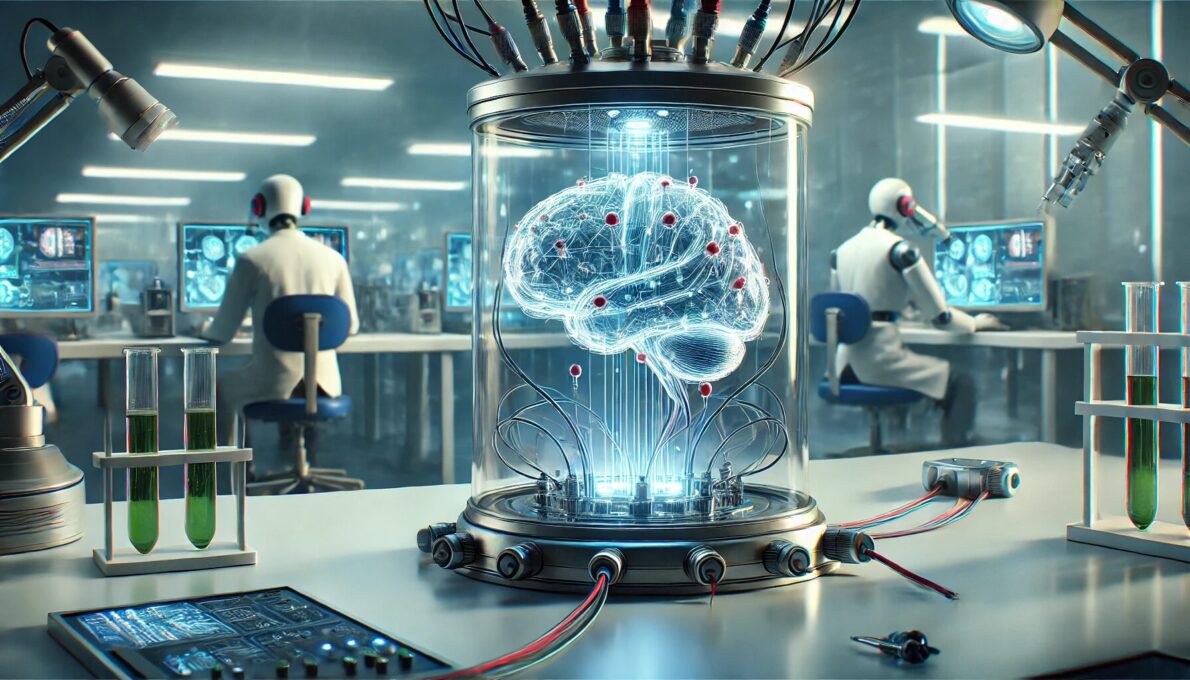

China Took a Step Forward in Mind-Machine Integration! With a Brain on a Chip, It Will Be Possible to Control Robots with Thought.
An ambitious scientific project is underway at the Chinese universities of Tianjin and the Southern University of Science and Technology, where researchers are creating what they describe as a “brain on a chip”.
This innovative technology — reminiscent of science fiction concepts — promises not only to revolutionize human-machine interaction but also to challenge our understanding of where the human mind ends and artificial intelligence begins.
Officially called a “brain on a chip”, the project focuses on creating a synthetic brain in a lab that can interact directly with the environment through electrical signals.
-
Longest Solar Eclipse of the Century Will Turn Day to Night for Over 6 Minutes, Allowing Star Gazing; Won’t Recur for 156 Years

-
Brazilian Researcher Develops Protein Supplement from Tilapia Waste, Combining Innovation and Sustainability with Economic Potential

-
Women in São Paulo Unknowingly Tracked by Coin-Sized Tags Hidden in Cars and Belongings, Raising Stalking Concerns
-
Near a $750 million AI data center in Brazil, a resident’s well runs dry, leaving her unable to afford the $25,000 needed for repairs.


Controlled by coded stimuli, the chip is advanced enough to command robots in complex tasks.
But are we ready to deal with the implications of a technology that comes so close to our own mind?
How the Brain on a Chip Works: Connection Between Mind and Technology
The “brain on a chip” is a device made up of artificial neural cells that mimic the functioning of a human brain.
This synthetic brain is cultivated in a lab and interacts with the environment through processes of encoding, decoding, and feedback, allowing it to act as a mental controller for robots and other devices.
This system uses electrodes as mediators to convert mental signals emitted by the chip into digital commands understandable by machines, enabling a highly sophisticated brain-machine interface.
According to the researchers, this technology is essential for transforming neural stimuli into real actions, meaning the signals emitted by the artificial brain are encoded to instruct robots to avoid obstacles, lift objects, and perform other tasks of varying complexity.
This mechanism positions Chinese technology at the forefront of brain-machine interfaces, generating interest and expectations about its future applications.
The brain on a chip, therefore, acts as an extension of the human user’s mental control, which can execute commands through impulses transmitted to the chip.
Although the concept is still in the experimental phase, creating a device that simulates aspects of human thought to control external devices is an achievement that could open doors to a new paradigm in robotics and artificial intelligence.
Challenges of the Artificial Brain: Nutrition and Longevity
However, developing an artificial brain that can function as a true interface still involves challenges, particularly related to the maintenance and longevity of the chip.
One of the main problems faced by scientists is the need to provide adequate nutrients to the brain on a chip, ensuring it maintains its functions for prolonged periods.
Thus, in addition to advances in chip and circuit technology, there is a constant concern about creating an environment where the synthetic brain can survive and operate stably.
The team behind the project is already working on new approaches to enhance the infrastructure that supports this artificial brain.
One possibility is creating a support network that offers constant digital “nutrition”, providing the brain with the stimuli and support necessary to prevent the chip from deteriorating.
This development could ensure that the “brain on a chip” has a longer life cycle, enabling long-duration experiments and practical applications.
Hybrid Intelligence: The Future of the Brain-Machine Interface
The concept of “hybrid intelligence” — which combines human cognitive abilities with machine processing — represents one of the main focuses of Chinese scientists.
For researchers, this hybrid intelligence has the potential to change the way we interact with technology, transforming the human relationship with machines.
According to them, brain-machine interfaces create a connection that allows humans and technological devices to work in synergy, optimizing functions that were previously exclusively manual.
Experts in the field believe that hybrid intelligence could soon enter our routines in ways previously unthinkable, such as controlling household appliances, vehicles, and even communication systems.
The team involved believes that the “brain on a chip” will play an essential role in integrating the human mind with AI devices, as it provides a platform where the boundaries between biology and technology blend.
This technology, however, raises significant ethical issues.
The idea of a brain directly controlling machines may spark debates about privacy, security, and even mind control.
As the Tianjin team emphasizes, it is crucial that the development of hybrid intelligence is done responsibly, with regulations and standards that protect the usage and implications of this type of technology.
Patents and Expansion: The Future of the Brain on a Chip
In order to protect the innovations developed, the Tianjin team has already secured 15 patents in China and has sought protections in the United States and the United Kingdom.
These patents are essential to guarantee intellectual property rights and prevent the technology from being used without permission.
According to the scientists, the regulation and protection of the project are important steps to make the brain on a chip a viable technology in the global market.
In addition to patents, the team plans to expand the project into other areas, such as smart communication and data migration.
These studies aim to broaden the practical applications of the artificial brain, offering a development potential that could revolutionize various sectors of society, such as medicine, industrial robotics, and even education.
Scientific publications and constant advancements in the project contribute to the dissemination of knowledge, inspiring other teams to explore the possibilities offered by the brain-machine interface.
The Impact of the Brain on a Chip and the Promises of Technology
The brain on a chip developed by China represents an important milestone in the journey toward hybrid intelligence and the evolution of robotics.
The technology is still in the experimental phase, but its future applications could impact everything from the medical field, providing assistance to people with disabilities, to the automation industry.
The question that remains is whether society is prepared to integrate such advanced and potentially invasive technology into our daily lives.
While the technology presents an opportunity to enhance control and interaction with technological devices, creating a brain-machine interface raises questions about the independence and autonomy of machines.
Would we truly be prepared to live in a world where our minds are directly connected to machines?


