





 Portuguese
  English
  Spanish
  4 min of reading
  0 comments


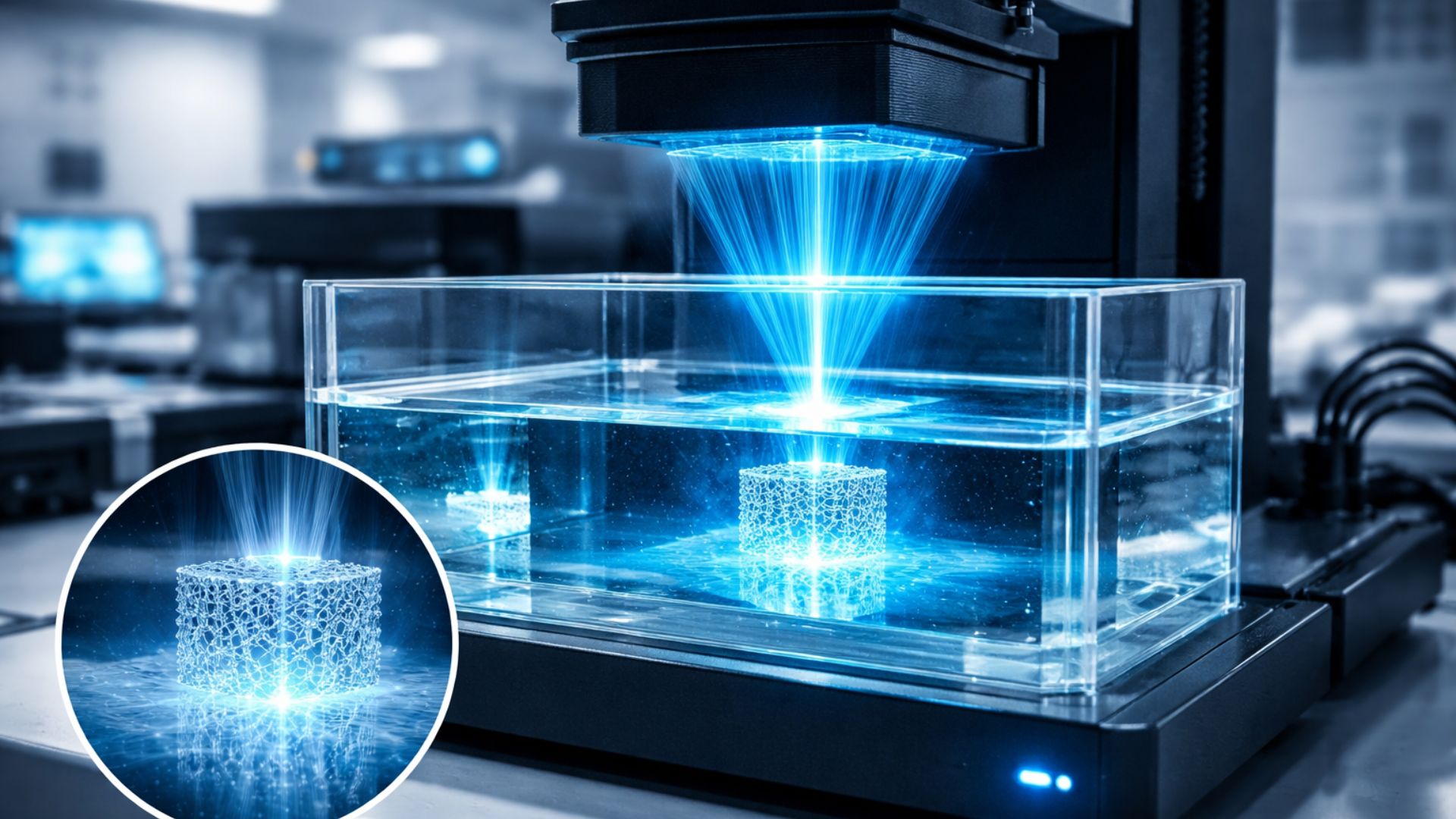
DISH Technique Uses Holographic Light Projections to Manufacture Microstructures in 0.6 Seconds, Reaches 333 mm³ Per Second Without Supports and Proposes a New Path for the Production of Advanced Components Directed at Cameras, Photonics, Microrobotics, and Flexible Electronics.
Chinese researchers presented a 3D printing method capable of producing complex microscopic structures in 0.6 seconds, achieving a rate of 333 mm³ per second and eliminating the need for supports, according to a study published in Nature.
Named Digital Incoherent Synthesis of Holographic Light Fields (DISH), the technique was developed by a group linked to Tsinghua University in Beijing, under the leadership of academic Qionghai Dai, according to information published by the state agency Xinhua.
The announcement gained attention for tackling a historical challenge in additive manufacturing, which is to increase production speed without compromising precision, especially when it comes to microscopic geometries that traditionally require long printing periods.
-
China is testing a train that will operate at 400 km/h in daily service, which is 80 km/h faster than the French TGV, and uses carbon fiber, magnesium alloys, and more than 4,000 sensors to become the fastest commercial train on the planet.

-
Forget about having an air fryer, electric oven, and steam pot taking up space in your kitchen because a 30-liter smart oven combines all these functions, automatically selects the ideal temperature, and even turns off by itself when cooking is done.

-
Engineers rewrote all the apps from scratch and bet everything on a buttonless screen: now the creator of the iPhone says that Apple needs to make the same revolution again because of AI.

-
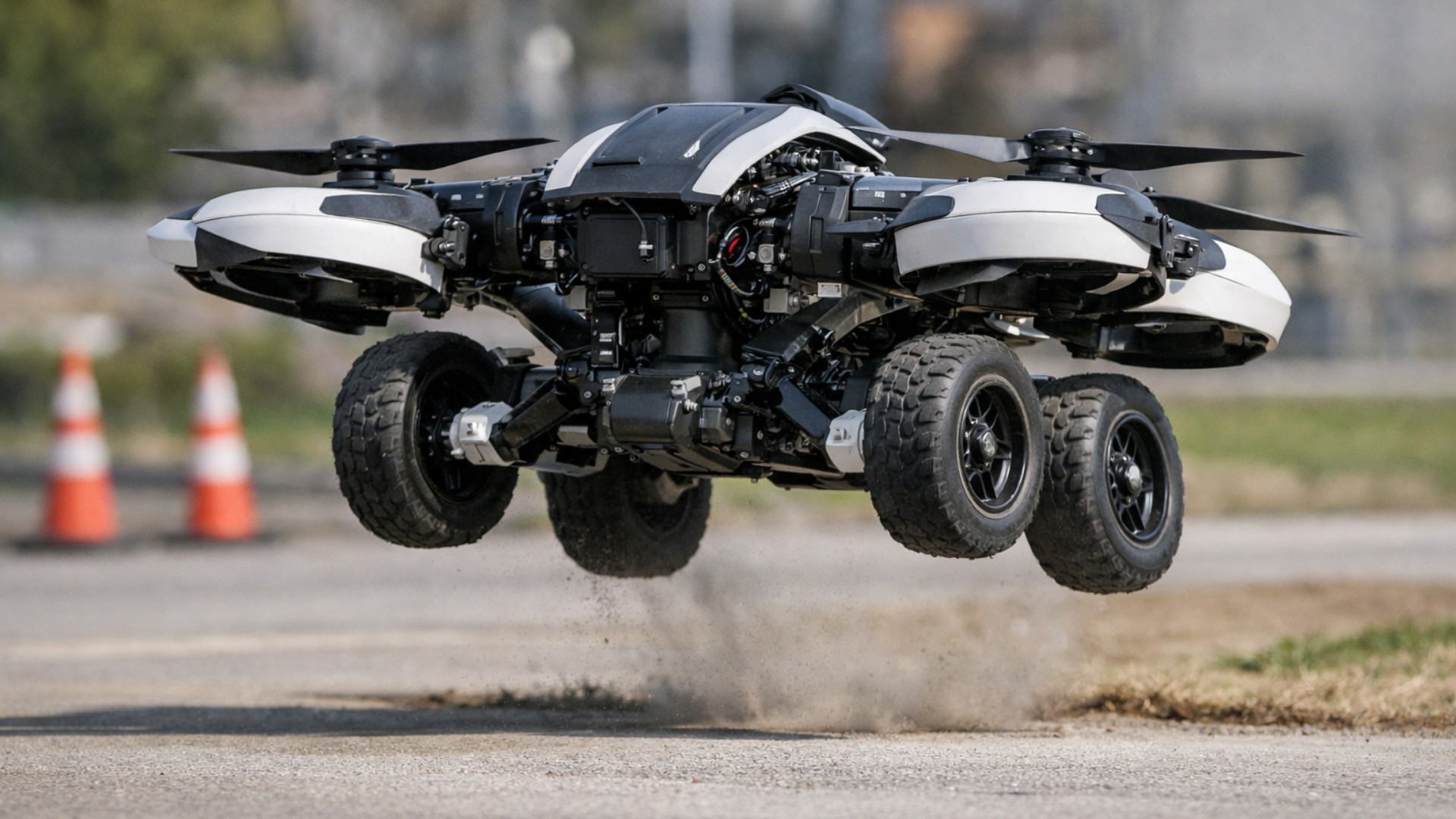
Researchers in the U.S. have created a flying robot that transforms into a land vehicle while still in the air. The technology, based on aerodynamic transition, converts landing into a scene worthy of Transformers and redefines mobility between sky and ground.

Volumetric 3D Printing and Holographic Light Projections
Unlike conventional systems that build objects layer by layer, DISH uses calculated light projections to solidify the material volumetrically, allowing the structure to form almost instantaneously, without the progressive deposition sequence typical of traditional printing.
In this arrangement, the resin container remains still while an optical component performs an angular scan of the illumination around the material, a strategy that reduces mechanical interferences and alters the operational logic adopted by other volumetric approaches.

By controlling three-dimensional distributions of light intensity in extremely short intervals, the system manages to form geometries with curves, cavities, and sharp angles in less than a second, maintaining, according to the authors, a high standard of structural definition.
Microstructures of 12 Micrometers and High Manufacturing Rate
In the tests described, the team reported obtaining minimal structures of 12 micrometers, a dimension smaller than the average thickness of a human hair, associated with a maximum speed of 333 mm³ per second, according to data released by Xinhua.
Although speed is one of the main highlights, the article also details that the final resolution depends on the optical arrangement employed, the conditions of light exposure, and the computational optimization routines responsible for adjusting the projected holographic field.
According to the scientific publication, the combination of coherent light source, holographic calculations, and iterative algorithms allows modulating the light field at multiple angles, reducing the need for physical displacements of the focal plane and contributing to the stability of the process.
3D Printing Without Supports and Fixed Container
The absence of supports arises from the fact that the piece is formed directly within the volume of the photosensitive material during controlled light exposure, which decreases the reliance on auxiliary structures typically necessary in methods based on successive layers.
According to the description provided, the system requires only a flat surface inside the container and keeps the tank stationary throughout the entire procedure, a feature that tends to reduce requirements for extremely precise mechanical alignment.
In previous volumetric solutions, rotating the sample or platform often imposed stability limitations, especially when seeking high resolution, as minimal vibrations could compromise delicate details on a microscale.
Applications in Photonics, Cameras, and Flexible Electronics
According to Xinhua, researchers point out the potential for using DISH in large-scale production of microcomponents intended for photonics devices and cell phone camera modules, segments that require tiny parts with complex geometries.
The released material also mentions possible future applications in flexible electronics, microrobotics, and highly detailed fabric models, areas where microscopic and precise prototypes play a relevant role in research and technological development stages.
While industrial prospects are highlighted, such applications are presented as technical possibilities derived from performance observed in the laboratory, with no indication that there is already immediate incorporation into commercial production lines.
The transition from academic experiment to large-scale manufacturing often depends on factors such as material compatibility, consistent repeatability of results, and strict quality control, crucial elements for broad adoption in industrial environments.
Speed Versus Precision in Additive Manufacturing
The release itself emphasizes that 3D printing has historically faced the challenge of balancing agility and geometric fidelity, and the reported performance suggests that objects previously produced in dozens of minutes could, in this format, be manufactured in fractions of seconds.
Experts note that the advancement is associated with a sophisticated set of optics and high-speed light modulation, indicating that cost, technical complexity, and scalability will be decisive factors in determining the practical reach of the technology.
If the combination of speed, precision, and stability is maintained across different materials and geometries, the DISH method could influence sectors that rely on advanced microcomponents, but which area will be the first to incorporate this almost instantaneous manufacturing capability?





-

-

-

-

-

-

117 pessoas reagiram a isso.