





Purchases from China jumped from 29,000 to 515,000 units, while manufacturers request a 25% tariff and distributors claim lack of quick delivery after increased demand from the federal program Gás do Povo
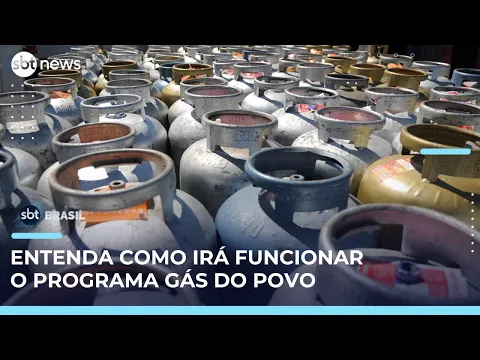
Imports of Chinese cylinders jumped from 29,000 units throughout 2025 to 515,000 just in the first half of 2026. The increase, associated with the demand rise caused by Gás do Povo, has sparked a dispute between national manufacturers and distributors over production capacity, prices, and import tariffs.
In a Brazilian market that moves about 2 million cylinders per year for replacement, the imported volume represents a significant change.
According to numbers compiled by Mangels, the largest national manufacturer of the product, at least one in every four containers currently sold in the country comes from China.
-
New minimum wage in Brazil: Lula prepares change that could raise the floor in the coming years, alter pensions and benefits, and affect the pockets of millions, but a fiscal rule may limit the progress.

-
INSS retirement may change for millions of women: project proposes an increase of up to 15% per child, sets new rules, and advances in the Chamber; see who may receive it.

-
End of an era at Electrolux: company will close 2 appliance factories and may lay off more than 2,000 employees after restructuring.
-
New shoe factory will create over 400 jobs and produce 3 million pairs per year with an investment of US$ 21.6 million and an expectation of US$ 37.5 million in exports.


The company requested the Ministry of Development, Industry, and Commerce to raise the import tariff on cylinders from the current 12.6% to 25%.
The distributors, represented by Sindigás, contest the measure and claim they turned to the external market because they did not quickly receive the necessary volumes.

Gás do Povo increased the need for cylinders
The rise in imports occurred during the market reorganization caused by Gás do Povo. The federal program guarantees 13 kg cylinders free of charge for about 15 million low-income families.
The vouchers are released on the 10th of each month and can be exchanged at accredited resellers. To keep up with the expected increase in consumption, distributors began to reinforce stocks and seek suppliers both inside and outside Brazil.
Months before the current dispute, Sindigás itself had advocated for the temporary suspension of the import tariff on containers.
With the accelerated entry of Chinese cylinders, the national industry began to request the opposite move, with an increase in the tax.
Manufacturer points out tariff imbalance
Mangels claims that there is an asymmetry in the tariff policy. According to the company, the Foreign Trade Chamber raised the tariff applied to steel plates and other inputs used in the manufacture of containers to 25%.
At the same time, the imported finished cylinder remains subject to a 12.6% rate. For the company, this difference favors the purchase of the finished product abroad and increases the pressure on those who produce in Brazilian territory.
Steel accounts for approximately 72% of the cost of raw materials and 57% of the total manufacturing cost of the cylinders, according to Mangels.
The company argues that taxing the input more than the final product harms national production.
The manufacturer also compares the scale of steel mills in the two countries. China produced 991 million tons of steel in 2024, while Brazil manufactured 31.5 million tons in the same period.
According to Mangels, the Brazilian industry would have the capacity to produce up to 8 million cylinders per year. This volume, in the company’s assessment, would be enough to meet the needs created by Gás do Povo without relying on imports.
The defense of the tariff increase also has the support of other steel mills and the Instituto Aço Brasil, a representative entity of the sector.

Distributors say there was a lack of immediate delivery
Sindigás states that installed industrial capacity does not mean immediate product availability. According to the president of the entity, Sérgio Bandeira de Mello, a factory cannot expand its operation to three shifts overnight.
According to him, the problems began at the end of 2025, when national manufacturers reduced already scheduled deliveries.
The distributors would have been forced to seek international suppliers to complement their stocks.
Mello states that there is no interest in permanently replacing Brazilian production. He also says that the imported containers arrived in the country costing more than the products purchased in the national market.
The leader also disputes the argument related to the steel tariff. According to him, the Brazilian manufacture of cylinders mainly uses plates produced in the country itself. For Sindigás, the bottleneck is in effective delivery, not in the availability of the input.
Request about Chinese cylinders is under review
The Mdic informed that the request submitted by Mangels is under technical analysis. After this phase, the process should go through the Tariff Changes Committee and the Executive Management Committee of Camex.
This last body will be responsible for the final decision on a possible increase of the tariff from 12.6% to 25%.
The National Agency of Petroleum, Natural Gas and Biofuels informed that the matter is not within its responsibilities and, therefore, did not comment on the dispute. The Brazil Steel Institute had not commented by the time the consulted material was published.
This article was prepared based on information published by Folha de S.Paulo, with data, numbers, and statements preserved according to the consulted material.


