





 Portuguese
  English
  Spanish
  3 min of reading
  1 comment


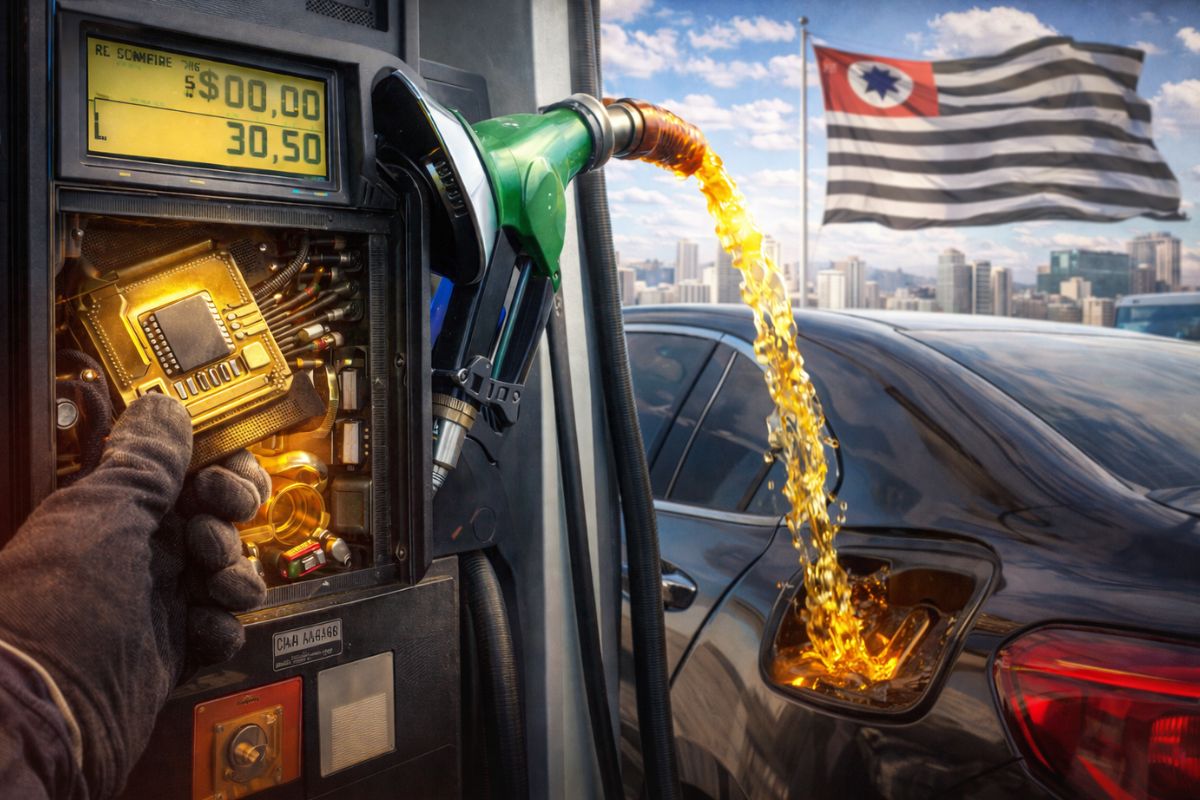


Inspections Indicate That The Hidden Chip In The Electronic Board Of The Fuel Pump Allows Diversion During Refueling, With Million-Dollar Impact In São Paulo
An illegal chip installed in fuel pumps can retain up to 10% of the volume requested by the customer, without reducing the amount charged. In practice, the driver pays for fuel that never reaches the tank.
The suspicion was raised from inspections attributed to the Legal Fuel Institute, which reported anonymous visits to more than 3,200 gas stations in São Paulo with analysis equipment. The survey indicates hundreds of suspicious points, with direct risk to consumers when buying fuel.
How The Illegal Chip Works In The Fuel Pump
The described mechanism is simple and difficult to perceive. The chip is placed on the electronic board of the pump and starts to control how much fuel actually comes out of the nozzle.
-
The institute that trained the greatest aerospace engineers in Brazil has just opened its first campus outside São Paulo after 75 years: ITA Ceará will have R$ 445 million, new courses in energy and systems, and classes are expected to start in 2027.

-
Luciano Hang, owner of Havan, goes to Juiz de Fora after the tragedy in February, brings R$ 1 million, hands out R$ 2,000 cards, and donates up to R$ 15,000 to victims in the region.

-
The Brazilian passport allows legal residence in dozens of countries without the need for a prior visa, and most Brazilians are unaware that they can apply for residency directly upon arriving in nations in South America, Africa, and even Europe.

-
Petrobras sends a message to Brazilian truck drivers after fuel collapse and reveals plan to have 100% domestic diesel.

The display and the amount paid may indicate a larger volume than what is effectively delivered, making the scam practically invisible to those who are filling up.
In the illicit practice mentioned in the report, stations could withhold up to 10% of the fuel ordered. The customer pays the full amount but receives less, with no discount and no obvious alert.
What The Inspections Indicate In São Paulo
According to the data presented, technicians from the Legal Fuel Institute visited more than 3,200 stations in the state of São Paulo anonymously, using analysis equipment.
The report mentions at least 216 stations that may be diverting fuel during refueling, within a sample cited as 2.5% of the total establishments of this kind in the state.
There are also projections of volume and financial impact. The material mentions that nearly 120,000 liters of fuel per day could be subtracted by the scam, with associated values approaching R$ 700,000 diverted per day and about R$ 250 million per year.
In another excerpt, an annual estimate of R$ 50 million is cited in the state, suggesting calculation differences or distinct cuts within the projections themselves.
Why This Type Of Fraud Grows And Demands Coordinated Action
The report also points to a migration of crime to quality and quantity frauds, requiring an integrated response.
The identification and interruption of this type of scheme depend on coordinated action between the Public Ministry, police forces, and federal and state regulatory structures, especially to map vulnerabilities and prevent the installation of chips in fuel equipment.
What The Driver Can Observe While Refueling


Although the chip is described as invisible to the consumer, the report lists practical precautions that reduce risk:
Prefer stations where you frequently refuel, where there is a history of trust in purchasing fuel.
Watch the refueling from start to finish, including whether the pump was reset before starting.
Be attentive to the amounts displayed on the pump and the type of fuel indicated, checking if it corresponds to what was requested.
Check the inspection seals on the nozzle, which indicate periodic verification by responsible agencies.
Request the invoice immediately after payment, as the document helps in any potential complaint and in attempts for reimbursement if the fuel delivered does not match what was charged.
What Changes For The Consumer When There Is An Invoice
The invoice does not prevent fraud, but it improves the ability to respond. Without the invoice, reporting and any request for reimbursement becomes more difficult, as there are no formal data of the purchase of fuel.
Do you usually check if the pump has been reset and ask for an invoice whenever you refuel?









Tem que fechar o posto e não abrir nunca mais.