





 Portuguese
  English
  Spanish
  4 min of reading
  0 comments


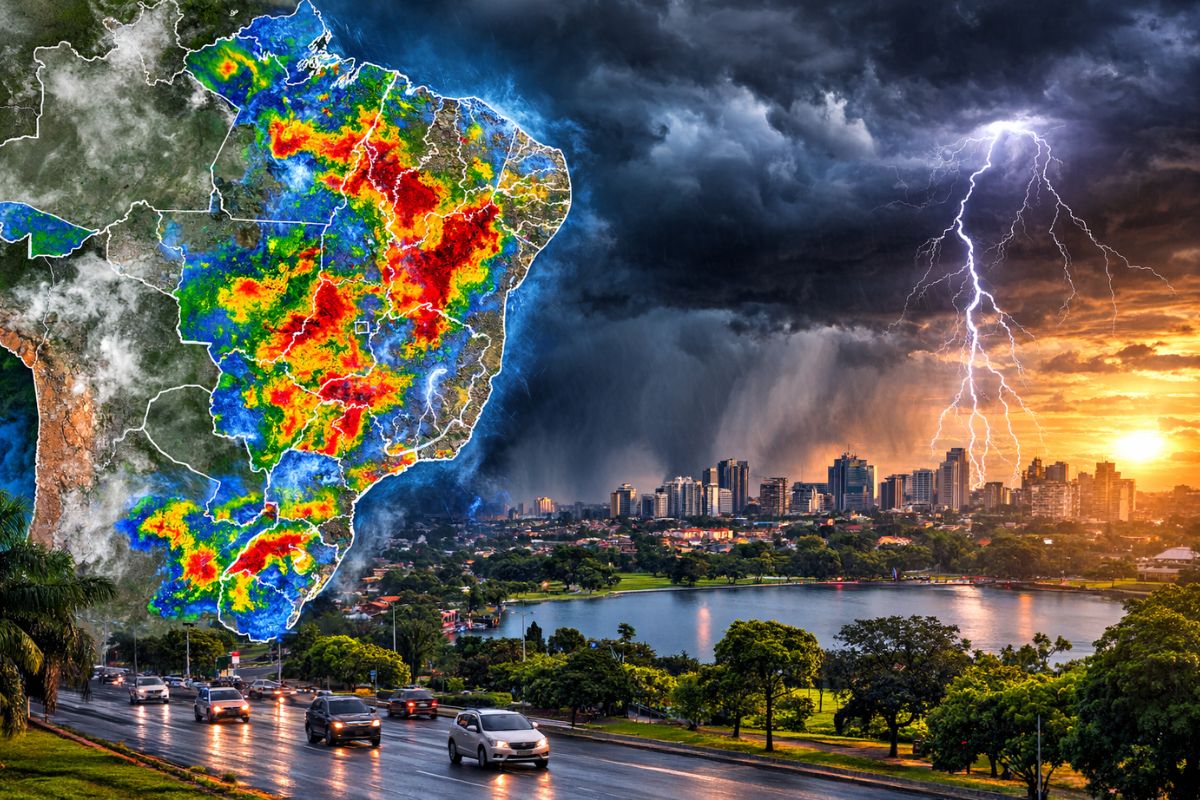
This Friday’s (13) Forecast Indicates Increased Risk of Geo-Hydrological Events in Different Regions of Brazil, with Moderate Potential for Flash Floods, Flooding, and Overflowing of Urban Channels. Cities in Amazonas, Southeast, and Midwest May Register Continuous Rain or Intense Showers Capable of Causing Localized Disruptions.
The forecast for geo-hydrological risks released by the GOV.BR portal for this Friday (13) indicates a caution scenario in several regions of the country. Moderate to heavy rains may affect urban areas and cause episodes of flash floods, flooding, and overflowing of channels, especially in places where drainage is considered deficient.
The alert involves municipalities in the states of the North, Southeast, and Midwest. The meteorological forecast indicates that showers, some of moderate to heavy intensity, may increase the volume of water accumulated over short periods, raising the likelihood of urban and environmental impacts.
Amazonas May Register Intense Showers and Risk of Flash Floods
In the North of the country, the state of Amazonas is among the monitored areas. The forecast indicates a moderate possibility of flash floods, overflowing of urban channels, and flooding, especially in areas with insufficient drainage.
-
In a flooded well, archaeologists found a 1,700-year-old Roman egg that still contains clear and yolk intact inside the very thin shell.

-
Something is happening around the Earth: Inside the huge explosion of fireballs in 2026

-
A hot air bubble coming from Argentina expands over Brazil, causing thermometers to exceed 38 degrees with a thermal sensation of 40 degrees in late March, affecting 6 states at once.

-
The radish leaf that almost everyone throws away has more polyphenols, flavonoids, and fiber than the consumed root, and a 2025 study showed that the leaf contains compounds that protect the intestine, combat inflammation, and may inhibit the growth of cancer cells.


The conditions are primarily observed in the intermediate region of Manaus. According to the analyzed scenario, moderate to heavy rain showers may occur throughout the day, favoring the rapid accumulation of water on streets and urban channels.
In addition to hydrological impacts, there is also a possibility of isolated occurrences related to mass movements. Slopes with higher susceptibility may record localized landslides, especially during periods of more intense rain.
Southeast Concentrates Cities with Forecast of Continuous Rain or Heavy Showers
The Southeast region includes some of the areas with the highest attention in this Friday’s monitoring scenario. The forecast indicates a moderate risk of flash floods, flooding, and overflowing of urban channels in cities in Minas Gerais, São Paulo, and Rio de Janeiro.
Among the cited locations are intermediate regions of Pouso Alegre, Juiz de Fora, and Belo Horizonte in Minas Gerais; Ribeirão Preto and São José dos Campos in São Paulo; along with Volta Redonda, Petrópolis, and the capital of Rio de Janeiro.
In São Paulo, the forecast indicates a possibility of continuous rain throughout the day, while in Minas Gerais and Rio de Janeiro, the showers may intensify mainly in the afternoon.
This scenario also increases attention for slope areas. Moderate to heavy rain may favor isolated landslides in terrains with greater geological vulnerability, especially in mountainous cities.
Midwest Also Enters the Radar with Possibility of High Accumulations
In the Midwest, the forecast highlights a moderate risk of hydrological events in Mato Grosso and the Federal District, primarily in the intermediate regions of Cuiabá and Brasília.
The trend is for isolated rain showers, which may occur with moderate to heavy intensity. Even being localized events, these rains may generate high precipitation accumulations over a short period, increasing the possibility of flooding.
In urbanized areas, the combination of heavy rains and insufficient drainage can lead to the overflowing of channels and water accumulation on streets and avenues.
Furthermore, the monitoring considers factors such as recent rainfall history, soil conditions, and the meteorological forecast, elements that help shape the hydrological risk scenario.
Monitoring Combines Meteorological Forecast and Risk Analysis
The alert scenario presented this Friday is developed from a multidisciplinary analysis. Experts evaluate not only the rain forecast but also the current conditions of the terrain, recent precipitation history, and geographical characteristics of the monitored regions.
This type of analysis allows for the identification of areas with greater susceptibility to events such as rapid flooding, flash floods, and mass movements.
Even when the risk is classified as moderate, monitoring is essential to reduce impacts and guide preventive actions.
In addition to technical monitoring, reports made by the public also help improve alert systems. Information about occurrences of flooding, flash floods, or landslides contributes to enhancing the accuracy assessment of forecasts.
Rain and Urban Risks Reinforce the Importance of Local Attention
The forecast this Friday reinforces that different regions of Brazil may face episodes of rain capable of generating urban impacts, even if in a localized manner.
Situations such as flooded streets, overflowing channels, and flash floods tend to occur more frequently in areas with limited drainage or intense urbanization.
Therefore, monitoring the forecast and observing changes in weather conditions can be essential to reduce risks in daily life.
At the same time, continuous monitoring allows for the rapid identification of changes in the meteorological scenario and an increase in the alert level when necessary.
Events of heavy rain tend to affect different regions of Brazil every year.
But the reality varies significantly from city to city; some suffer from frequent flooding, while others rarely face such situations.
In your city, do heavy rains usually cause urban disruption? Have you witnessed flash floods, flooding, or landslides after storms? Share your experience in the comments and tell how these events impact the daily life of the local population.







Seja o primeiro a reagir!