





 Portuguese
  English
  Spanish
  6 min of reading
  0 comments


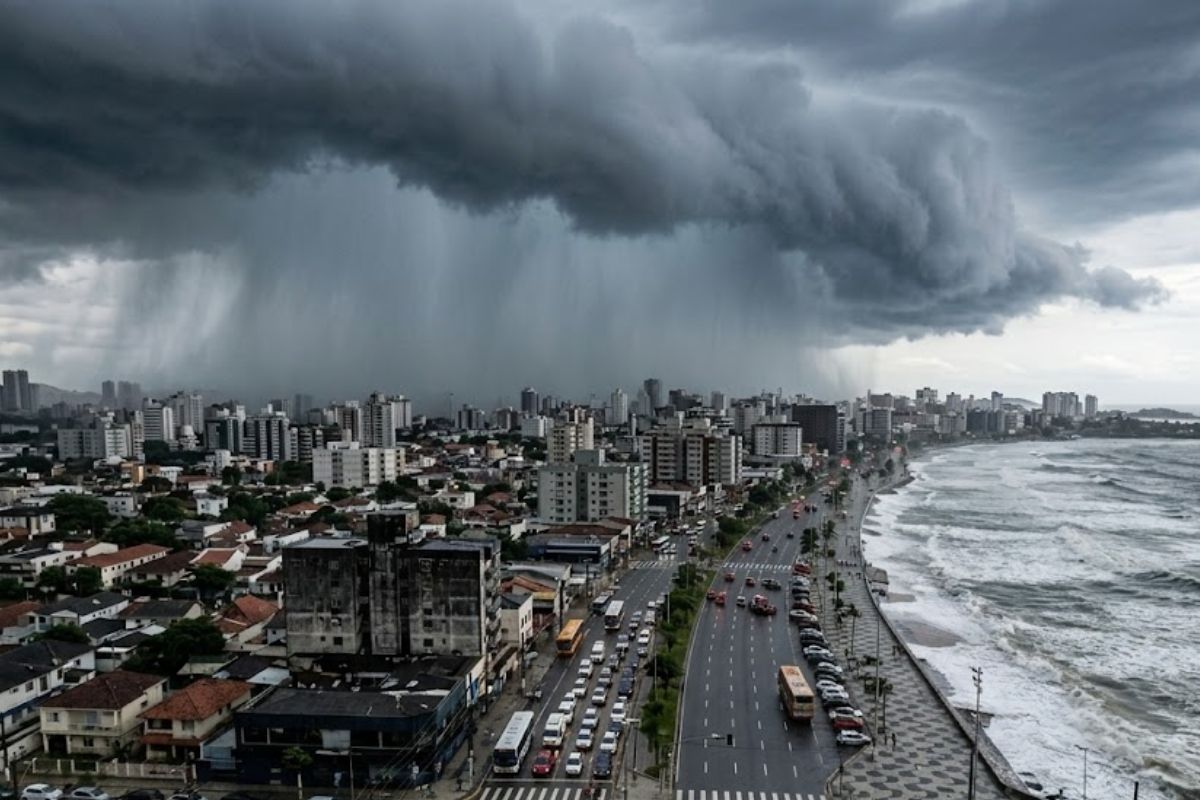
This Saturday (28), The Cyclone Operates Near The Coast, Maintains A Moisture Channel And Reinforces Instability From The North To The Northeast, Also Affecting Areas Of The Midwest And Southeast. With 16 States At Risk, The Forecast Indicates Storms, Flooding, Landslides And River Overflows In Different Cities Already Hard Hit.
The Cyclone operating near the coast maintains an active moisture corridor this Saturday (28) and broadens the area at risk of extreme rain, with 16 states on alert for storms and impacts such as flooding, landslides, and rivers above normal levels. The central point is that instability is not limited to a single strip of the country: it reorganizes and advances as moisture is sustained throughout the day.
This corridor acts as an atmospheric “track” that feeds heavy clouds from the North to the Northeast and also reaches areas of the Midwest and Southeast. Even with the system moving toward the Atlantic Ocean, the maintenance of the moisture channel keeps expectations for high volumes and the possibility of new significant accumulations, especially where rain has already been affecting daily life.
Why The Moisture Corridor Changes The Daily Scenario So Much
When a Cyclone sustains a moisture channel, the atmosphere gains continuous fuel to form and reinforce storm clouds. This means that, instead of isolated showers that “come and go” quickly, the instability can persist and move, creating repeated windows of heavy rain in sequence.
-
In a flooded well, archaeologists found a 1,700-year-old Roman egg that still contains clear and yolk intact inside the very thin shell.

-
Something is happening around the Earth: Inside the huge explosion of fireballs in 2026

-
A hot air bubble coming from Argentina expands over Brazil, causing thermometers to exceed 38 degrees with a thermal sensation of 40 degrees in late March, affecting 6 states at once.

-
The radish leaf that almost everyone throws away has more polyphenols, flavonoids, and fiber than the consumed root, and a 2025 study showed that the leaf contains compounds that protect the intestine, combat inflammation, and may inhibit the growth of cancer cells.

In practice, the risk increases because rain does not need to be constant to cause damage: the repetition of intense episodes is what turns soaked soil into landslides and a full brook into an overflow. The moisture corridor increases the chance of storm nuclei “reigniting” throughout the day, especially in areas of relief, riverbanks, and coastal regions.
Where The 16 States At Risk Are And How To Interpret This Alert
The Cyclone maintains the instability strip between the North and Northeast, with reflections also in the Midwest and Southeast. Among the areas at risk, specific cuts within states appear, which is very important: it is not “the whole state” that behaves the same way, but rather regions that are more exposed to the moisture corridor.
Within this scenario, the alert includes: northern Minas Gerais; northern Espírito Santo; northeastern Goiás; northern Mato Grosso; Rondônia; Acre; Amazonas; southern and northern Pará; Tocantins; central-northern Maranhão; northern and southern Piauí; northern Ceará; Pernambuco; Sergipe; Alagoas; Bahia. This detailing by strips helps understand why one city can have extreme rain while another, relatively close, remains only cloudy.
Southeast, Northeast And North: What Changes From One Region To Another
In the Southeast, the highest risk remains concentrated in northern Minas Gerais and Espírito Santo, precisely where instability still finds support from the moisture corridor.
At the same time, there are indications of more stable weather in the South and much of São Paulo, which does not negate the problem: momentary stability does not “reset” the accumulated impact when the soil is already saturated.
In the Northeast, the coast tends to take center stage because moisture from the ocean favors the formation of heavy clouds, with states like Sergipe, Alagoas, and Pernambuco cited as areas of high volumes.
Ceará, Maranhão, and Piauí are also on the radar for instability. In the North Region, the alert mentions northern Pará and eastern Amapá, while Amazonas, Acre, and Rondônia remain under the direct influence of the corridor: a typical rainfall pattern that organizes in a strip and “pulls” energy along the way.
Impacts Already Registered: Why The Recent History Weighs So Heavily Now
In recent days, municipalities in Minas Gerais, São Paulo, and Rio de Janeiro have reported flooding points, landslides, and rivers above normal levels.
In Juiz de Fora (MG), the rains exceeded the historical average for February by almost four times, a sign of how the atmosphere has been delivering volumes far above what was expected for the period. When rain exceeds what the ground can absorb, the risk stops being a forecast and turns into immediate response dynamics.
Minas Gerais emerges as the state with the most severe situation described, with 68 registered deaths and ongoing searches for missing persons, in addition to thousands of people homeless and displaced.
In Rio de Janeiro, about 392 people were displaced and there was one confirmed fatality in Angra dos Reis. São Paulo, on the other hand, recorded the highest rainfall accumulation in the state during the cited period, with about 19 fatalities. These numbers provide context to the current alert: it arrives when many areas are already vulnerable.
What To Expect This Weekend And Which Signs Deserve Attention
The described trend is a reduction of more persistent rains in the eastern Southeast, while instability moves towards the Northeast.
Throughout the weekend, the maintenance of instability areas keeps the possibility of new significant accumulations, especially in already affected regions. The greater risk is not just “heavy rain,” but rather heavy rain on top of terrain that is already not responding well.
In such situations, some signs often precede larger problems: rapid increase in levels in brooks and rivers, emergence of flash floods on steep streets, muddy water indicating sediment washing, and small landslides on slopes.
Monitoring organizations continue to track the evolution of the system, and the behavior of the Cyclone in relation to the ocean is decisive to know if the moisture corridor loses strength gradually or if it maintains pulses of instability throughout the period.
Practical Care In The Face Of The Risk Of Flooding And Landslides
With the Cyclone sustaining a storm scenario, the most effective care tends to be routine: observing local alerts, avoiding unnecessary travel during heavy rain, and being extra cautious in areas historically susceptible to flash floods, low points, and slopes. On days of moisture corridor, “just a quick rain” can be enough to surprise.
For those living near rivers, monitoring the levels and reading the behavior of the water throughout the day can indicate worsening.
In hillside areas, any change in the ground, such as new cracks, small landslides, and water running in unusual places is a sign to pay attention.
The combination of heavy rain with soaked soil reduces the margin for error, and this applies to both large cities and smaller municipalities.
The Cyclone and the moisture corridor place 16 states in a state of alert that goes beyond “rain forecast” : it is a real risk of flooding, landslides, and rivers above normal levels, with the possibility of new accumulations in places that have already gone through very difficult days.
When instability organizes in a strip and remains active, the pressure on cities and infrastructure increases rapidly.
In your city, has the rain in recent days changed your path to school, work, or commitments? Do you live near a river, slope, or flood point and noticed any unusual signs in the terrain?
And what do you do first when the weather closes in: monitor alerts, talk to neighbors, change routes, or only notice when the water is already in the street?










-

Uma pessoa reagiu a isso.