





 Portuguese
  English
  Spanish
 6 min of reading
  211 comments


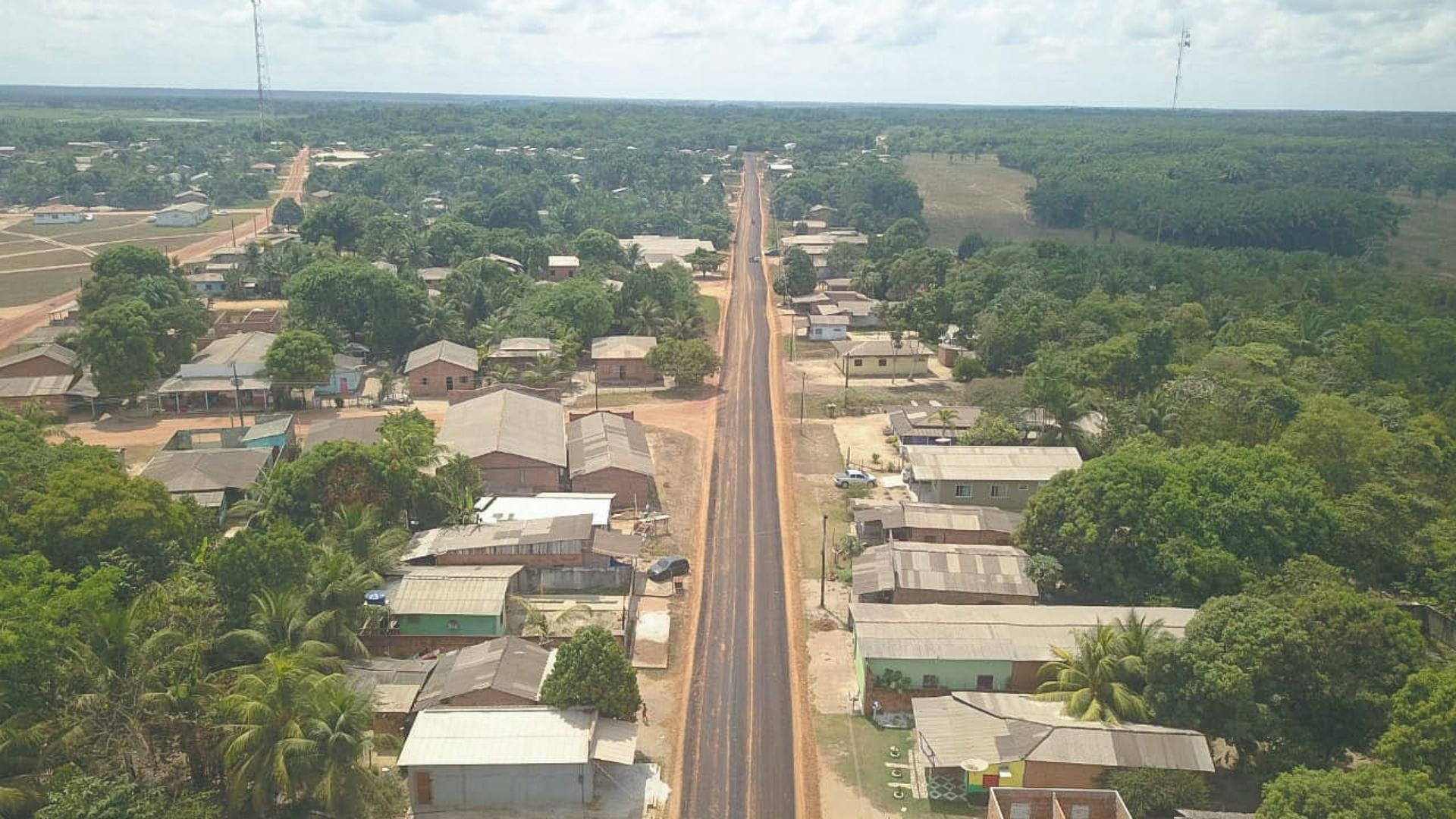


Municipality of Amapá Survives Almost Entirely on Federal Transfers, Maintains a Robust Public Machine Despite Low Own Revenue and Exposes a Model that Repeats in Hundreds of Brazilian Cities
The information was disclosed by official data from the Bolsa Família Portal, the IBGE, the CAGED, and the Transparency Portal, as well as economic surveys cited by independent analyses. Together, these numbers help to understand a reality that, at first glance, seems improbable but exists in Brazil in a concrete and documented way.
Located in the state of Amapá, Itaubal do Piririm draws attention for a fact that, alone, would be enough to cause astonishment: 93% of the population depends on the Bolsa Família Program to survive. In a municipality with around 6,000 inhabitants, approximately 5,640 people are part of registered families in the program. In other words, practically the entire city.
However, as the data accumulates, the scenario becomes even more complex. According to the General Register of Employed and Unemployed (CAGED), there are only 29 workers with formal employment in the entire municipality. This represents one formal job for every 215 residents, an index that is extremely outside the national standard and practically eliminates the existence of a local job market.
-
For years, no one could cross a neighborhood in Tokyo because of the tracks, but an impressive solution changed mobility and completely transformed the local routine.

-
With 15 floors, an unusual building in Curitiba uses concrete, pilasters, and exposed roofs to create the effect of stacked houses.

-
Archaeologists opened a secret chamber that had been sealed by sand for 40,000 years inside a cave in Gibraltar and found what may be the last place where Neanderthals lived before disappearing from Europe forever.
-
The water that may have gone to the Moon with NASA during the Apollo 11 mission and been consumed by the astronauts springs in a Brazilian city at an altitude of 945 meters, famous for its thermal springs, above-average quality of life, and a natural radioactivity so unusual that it attracted Marie Curie.


This set of information raises an inevitable question: how does an entire city manage to function without an active economic base?
An Economy That Practically Does Not Exist Outside the Paper

To understand the extent of the problem, it is necessary to observe other basic indicators. According to data from the IBGE, Itaubal has fewer than 80 registered vehicles, which is equivalent to about 13 cars for every thousand inhabitants. This number is compatible with regions of extreme poverty and reinforces the absence of economic activity, circulation of goods, and regular consumption.
The average annual income per person is around R$ 15,000, which represents just over R$ 1,200 per month. This amount alone positions the municipality at levels similar to those of countries with low economic development. Still, the average is distorted upward by salaries concentrated at the top of public administration.
Within this same low-income territory, the mayor’s salary reaches R$ 173,000 per year, creating a clear contrast between the reality of the population and the remuneration of the administrative elite. While most residents depend on social benefits to survive, the political core operates with salaries comparable to much larger cities.
According to an economic survey cited by Caravela, the Gross Domestic Product (GDP) of Itaubal is approximately R$ 87.9 million, with 72.7% of this added value coming directly from public administration. In other words, the main “economic engine” of the city is the state itself.
The Size of the Public Machine in a Municipality Without Revenue
When analyzing the municipal budget, the impression is that of observing a city that exists formally but does not sustain itself in practice. The budget forecast for 2024 indicated a net revenue of over R$ 20 million. At first glance, this amount seems high for such a small municipality.
However, when detailing the source of these resources, the picture changes completely. Less than R$ 800,000 comes from own revenue, including property tax (IPTU), service tax (ISS), fees, and fines. The rest is composed of federal transfers, sent precisely because the city cannot generate enough resources on its own.
This imbalance directly reflects on the cost of the administrative structure. In 2024, according to data from the Transparency Portal, Itaubal had 651 active employees. This is a high number for a municipality with low urban density, almost no vehicle fleet, and very few functioning businesses.
The payroll of the Executive and the Legislative consumes around R$ 10 million per year, which represents almost half of the entire municipal budget. In practice, it is as if the city exists to sustain its own administrative structure.
To facilitate visualization, some numbers stand out:
- 93% of the population dependent on Bolsa Família
- 29 workers with formal employment
- Fewer than 80 registered vehicles
- R$ 15,000 average annual income per person
- R$ 173,000 annual salary of the mayor
- 651 active employees
- R$ 10 million spent on personnel
- Less than R$ 800,000 in own revenue
These data help explain why the municipality operates in a permanent financial imbalance.
Chamber, Secretariats, and the Cycle of Permanent Dependency
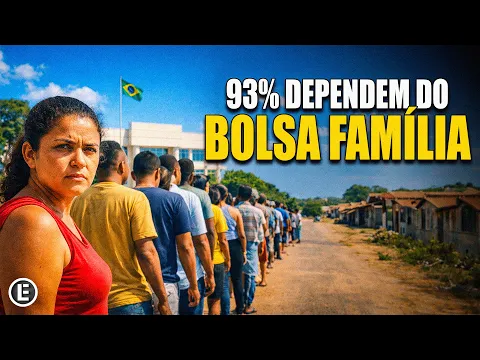

The local political structure reinforces this logic even further. The City Council of Itaubal, composed of 9 councilors, consumes approximately R$ 800,000 per year. In theory, the municipal legislature is responsible for proposing laws and overseeing the Executive. However, according to information available on the Council’s own website, the proposals page appears empty, with no records of projects presented in 2025, the first year of the legislature elected in 2024.
The mayor’s office also draws attention. This administrative unit alone has nearly R$ 500,000 in anticipated annual expenses. In a municipality where own revenue does not reach R$ 800,000 per year, the cost of the mayor’s office represents about 70% of everything the city can collect on its own.
The current mayor was elected in 2024 with 5,252 votes out of a total of 8,242 valid votes. This number indicates that more than 2,000 voters traveled from other municipalities to vote in Itaubal, an unusual fact for a small city located over an hour from the capital.
Moreover, the Transparency Portal has been outdated since December 2024, making it difficult to track expenses in detail. The former Municipal Secretariat of Administration and Finance, responsible for over R$ 2.5 million in spending, was split into two new departments: Secretariat of Administration and Secretariat of Planning, Finance, and Information Technology, further expanding the administrative structure.
In total, the municipality has 19 administrative units, including secretariats, funds, and agencies. For a city of 6,000 inhabitants, with only 29 formal jobs, this is a structure equivalent to that of much larger municipalities.
Bolsa Família as an Economic Foundation and the Limits of the Current Model
According to data from the Bolsa Família Portal, only in November 2025, Itaubal had 2,000 families served, benefiting 5,640 people. The total amount transferred was R$ 1,473,147.00, with an average benefit of R$ 736.94 per family.
Although there is no annual consolidated data available, projecting this monthly amount, the total exceeds R$ 16 million per year, transferred directly from the federal government to the local population. This volume of resources comfortably surpasses the municipality’s own revenue and sustains not only families but also the indirect functioning of the local economy.
The problem, however, is not the existence of Bolsa Família. The program is essential to ensure the survival of thousands of people. The central issue is that, in Itaubal, it has become the beginning, the middle, and the end of the economic structure.
Without jobs, without production, and without revenue, the municipality enters a cycle that is difficult to break. The less it produces, the more it depends on transfers. The greater the dependency, the more indispensable the political structure that manages these resources becomes.
This pattern is not exclusive to Itaubal. A study by the National Confederation of Municipalities (CNM) revealed that, in 2016, 2,725 of the 5,570 Brazilian municipalities had Public Administration as their main economic activity. In other words, almost half of the cities in the country do not sustain themselves autonomously.
After analyzing the numbers, the conclusion becomes evident: Itaubal functions as a municipality but does not function as an economy. It exists officially but does not balance the accounts without external help. The case exposes a model that benefits a few, maintains bloated structures, and perpetuates a dependency that limits any real possibility of development.
With information from the channel: Elementar








Engraçado que existe uma lei que não permite cidades abaixo de uns 10 mil de se tornar cidade, mas o Brasil tem cidades de 900, 1000 habitantes em MG,SP e outros estados
Se temos 1 emprego formal para cada 215 moradores, teriamos algo como 6235 moradores. A população estimada em 2021 era de de 5.730, e o programa atende 5.640 pessoas, que podem estár recebendo mesmo fazendo parte do pessoal com carteira assinada (depende da renda para saber se você tem o direito ou não). Eles tem 651 servidores ativos, presumimos que morem na cidade, o que pode não ser totalmente correto. A cidade conta com 8.242 votos válidos, o que não quer dizer que temos 8.242 eleitores e votos válidos não são o mesmo que total de eleitores. 5.252 votos foram para o atual prefeito o que corrobora a afirmação de que eleitores vem de fora. Lembramos também que a população incluí crianças que não votam. Não é dificil de acreditar no número se tiver aprendido matemática básica. E mesmo que o número esteja errado (e não parece, pra dizer a verdade), ainda assim, estamos desconsiderando o gasto completamente desproporcional da máquina pública da cidade em relação ao número de habitantes e infraestrutura. Assustador. Imagino que possam haver outras “aberrações” de custos no lombo dos trabalhadores pelo Brasil afora…
93% difícil acreditar, até o pessoal da prefeitura recebe a bolsa então? Mas tem muitos municípios em todo Brasil que tem que ser sustentado pelo governo, no RS, na época que iam mudar a lei para dificultar a criação de novo municípios ( acho que por volta de 2000, não lembro direito faz tempo) , o que teve de município novo sendo criado, antes dessa lei entrar em vigor, não foi brincadeira e isso deve ter ocorrido em todo país, não só no RS,tudo para ter um monte de cacique de micro municípios, que não conseguem nem pagar sua folha de pagamento. Do mesmo modo que tinha uma Campanha pra separar o RS em dois, só pra ter mais caciques inchar ainda mais o orçamento de servidores públicos dos que recebem uma caminhão de dinheiro por ano, menos mal que não avançou isso.