





 Portuguese
  English
  Spanish
  4 min of reading
  0 comments


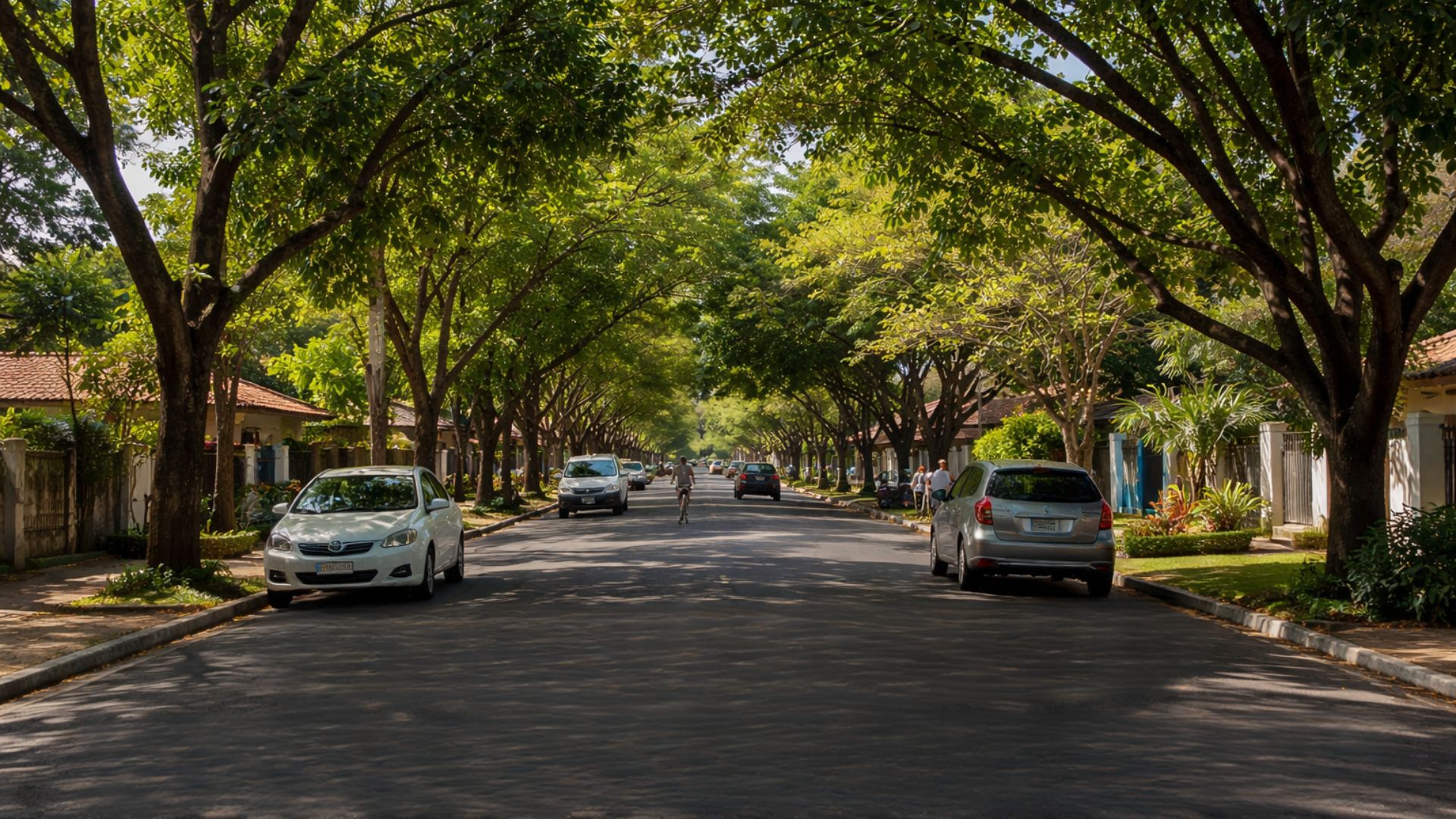
Brazilian Capital Leads Ranking of Urban Tree Cover and Reveals How the Presence of Trees on Streets Influences Landscape, Climate, and Quality of Life in Cities, According to Data from the 2022 Census That Analyzed the Surroundings of Households Nationwide.
Campo Grande leads among Brazilian capitals in the latest IBGE survey on street tree cover, with 91.4% of residents living on streets with trees.
The result is part of the release of the 2022 Demographic Census on the urban characteristics surrounding households and places the capital of Mato Grosso do Sul ahead of the other capitals in this specific indicator.
This data is significant because it is not a subjective perception of urban landscape, but a large-scale national measurement based on direct observation of residential surroundings.
-
Archaeologists find a colossal 2,000-year-old vessel at the bottom of the sea near Alexandria linked to the elite of Egypt and reveal a pleasure barge from the last dynasty of the pharaohs that the sea has hidden for centuries.

-
United Kingdom clears 40 tons of shells and concrete into the sea in an innovative project that promises to restore a marine ecosystem lost for over 200 years and improve water quality.
-
With emergency diversion to abandoned mining craters, engineers save villages from a devastating flood that was advancing through the desert and threatening to destroy entire communities in a matter of hours.
-
It seems simple, but it enriches: from R$ 500 to R$ 6,000 per piece and up to 10 days of handcrafted production, how is the couple from Praia Grande making a high income with hyper-realistic miniatures and turning a hobby into a money-making machine?


In the same survey, the institute reported that 114.9 million people, equivalent to 66.0% of the urban population in the country, lived on streets with at least one tree.
Meanwhile, 58.7 million Brazilians, or 33.7%, lived on streets without any trees.
Differences Between Cities Revealed by the 2022 Census
Among municipalities with more than 100,000 inhabitants, the highest percentage was recorded in Maringá, Paraná, with 98.6% of residents living on tree-lined streets.
At the other end of the survey is São José, Santa Catarina, with 15.1% of the population living on streets with trees.
Campo Grande, in turn, achieved the best result among all evaluated Brazilian capitals.
The contrast between municipalities highlights how the presence of vegetation on streets varies significantly among similar-sized Brazilian cities.
What the IBGE Evaluated on City Streets
The publication is part of the 2022 Demographic Census on the surroundings of households and evaluated ten aspects related to urban infrastructure.
Among the items observed were pavement, public lighting, presence of storm drains, bus or van stops, bicycle signage, sidewalks, obstacles, ramps for wheelchair users, and tree cover.
This data was produced from direct observation of urban census sectors distributed across all Brazilian municipalities.
According to the IBGE itself, urban tree cover is considered an essential element for quality of life in cities.
The institute associates the presence of trees with lower temperatures on streets and a reduction in urban heat islands.
Nonetheless, the survey emphasizes that this indicator alone does not summarily capture urban quality of life nor define overall infrastructure leadership.
Urban Profile of Campo Grande Helps to Contextualize the Data
Campo Grande appears in this report with a significant population weight within the Brazilian context.
According to IBGE, the capital of Mato Grosso do Sul recorded 898,100 inhabitants in the 2022 Census.
The city also presents population density of 111.11 inhabitants per square kilometer.
In municipalities of this population size, the presence of trees along streets transcends aesthetic aspects and integrates into the understanding of urban mobility, thermal comfort, and public space occupancy.
Municipal Policy for Urban Tree Cover
The capital’s performance in the survey also corresponds to public policies already formalized by the municipality.
The Complementary Law No. 184, of September 23, 2011, established the Urban Tree Planting Master Plan for Campo Grande.
The legislation defines guidelines for planning, implementation, and management of trees present on the city’s streets and public spaces.
Among the plan’s objectives are to promote tree planting as a tool for urban development and improvement of quality of life.
The document also establishes actions for the preservation, expansion, and maintenance of vegetation in the urban space.
Technical Manual Reinforces Benefits of Urban Forests
In addition to the legislation, Campo Grande developed a technical manual focused on the management of the so-called urban forest.
In the document, the city hall describes trees as fundamental elements for the balanced functioning of urban environments.
The material relates tree cover to local climate regulation, rainwater absorption, and improvement of air quality in cities.
Effects related to noise pollution reduction and positive impacts on the physical and mental health of the population are also mentioned.
The manual further emphasizes that continuous tree cover planning is necessary to ensure these benefits over time.
International Recognition Reinforces City’s Reputation
The tree cover policy of the capital of Mato Grosso do Sul has also been featured in international recognitions.
Campo Grande has repeatedly received the Tree Cities of the World seal, awarded by the Arbor Day Foundation in partnership with the Food and Agriculture Organization of the United Nations.
The program recognizes cities that demonstrate a commitment to sustainable management of urban trees.
To receive recognition, municipalities must meet criteria related to the existence of specific legislation, dedicated technical teams, budgeting for tree cover, tree inventories, and community participation.
Official program lists indicate that Campo Grande was among Brazilian cities recognized in 2022 and 2023.
The Arbor Day Foundation also maintains a specific profile for the capital within the international network of cities committed to managing urban and community forests.
This set of indicators helps explain why Campo Grande frequently appears in discussions about Brazilian cities marked by the presence of green areas integrated into the urban fabric.
In this case, the highlight does not stem from informal perceptions or tourism slogans, but from an official indicator from the Demographic Census that measures the presence of trees on the streets where the population lives and circulates.








-

Uma pessoa reagiu a isso.