





 Portuguese
  English
  Spanish
  4 min of reading
  0 comments


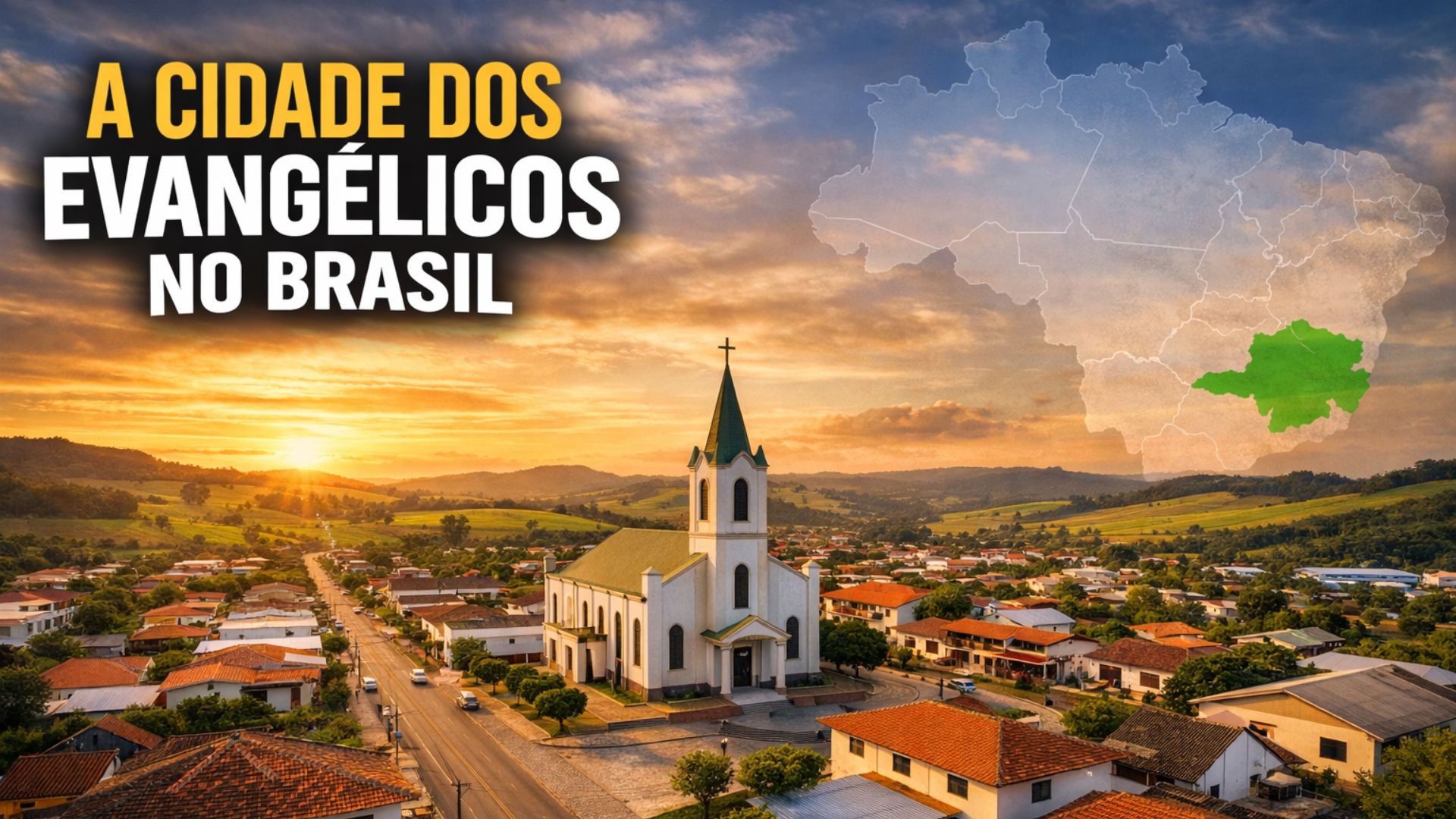
Small Town in Santa Catarina Ranks Among National Leaders in Percentage of Evangelicals, According to Official IBGE Data, and Draws Attention for Diverging from the Brazilian Average Revealed by the Demographic Census by Concentrating One of the Highest Proportions in the Country in a Single Religious Group.
A small town in Santa Catarina has become the center of a statistical curiosity that often grabs the attention of national news.
In Arabutã, 76.47% of the resident population aged 10 years or older reported being evangelical, according to a ranking compiled from the results of religion from the Demographic Census of the Brazilian Institute of Geography and Statistics (IBGE).
National Ranking Places Arabutã Among the Highlights of the Country
The percentage places Arabutã in second position among Brazilian municipalities with the highest proportion of evangelicals.
-
He started running at 66 years old, broke records at 82, and is now a subject of study for having a metabolic age comparable to that of a 20-year-old, in a case that is intriguing scientists and inspiring the world.

-
Oldest tree on the planet reappears after 130 years of searches: Wattieza, 385 million years old, was 10 meters tall and had no leaves or seeds; Gilboa fossils in New York solved the mystery in 2007.

-
A 48-square-meter house assembled in hours with 4,000 bricks made of recycled plastic that does not absorb moisture, has natural thermal insulation, and costs less than 90,000 reais in a complete kit.

-
Luciano Hang revealed that Havan’s air fleet has already accumulated more than 20,000 landings, 10,000 flight hours, and 6 million kilometers traveled, and he says that without the planes, the company would never have grown so quickly.


The city ranks just behind Arroio do Padre (RS), where 88.74% of the population aged 10 or older declared themselves evangelical.
Next in line is Santa Maria de Jetibá (ES), with 73.53%, also according to the cited survey based on the “Census 2022 – Religions: preliminary results of the sample.”


How IBGE Measures the Religion of the Population in the Census
The criteria used in the ranking is important to understand what is being compared.
The classification considers the proportion of residents aged 10 years and older and takes into account the religion declared in the Census, that is, the information recorded by the respondents in the survey questionnaire.
It is, therefore, a statistical snapshot of the religious profile reported by the population, aimed at allowing comparisons among cities and states.
High Percentage Draws Attention Compared to the National Average
The position of Arabutã grabs attention because it diverges from the national standard.
In Brazil as a whole, IBGE indicated that the proportion of evangelicals increased, rising from 21.6% to 26.8% in the comparison between 2010 and 2022.
During the same period, the percentage of Catholics fell, from 65.1% to 56.7%, according to data released by the institute.
Other Religious Groups Also Changed in Brazil
In addition to the changes among Catholics and evangelicals, the Census snapshot also indicates movements in other groups.
Also at the national level, there was an increase in people without religion, from 7.9% to 9.3%, and a rise in other religious beliefs, from 2.7% to 4%.
The share related to Umbanda and Candomblé rose from 0.3% to 1%, while the percentage of Spiritists decreased from 2.2% to 1.8%, according to the data cited from the IBGE survey.
Regional Concentration Among the Most Evangelical Cities
When the focus shifts to municipalities with the highest proportion of evangelicals, the ranking highlights a regional concentration.
According to the cited survey, the cities with the highest percentage of evangelicals are mainly concentrated in Rio Grande do Sul, with six municipalities among the top ten.
The Holy Spirit appears with two municipalities on the list, and Minas Gerais also shows up in the sample with Alto Caparaó, in the Zona da Mata, with 63.02%.
Why Small Towns Rank at the Top of These Rankings
It is in this scenario that Arabutã gains statistical visibility.
The percentage of 76.47% does not mean that the town has more evangelicals in absolute numbers than larger centers, but that, proportionally, it gathers one of the highest concentrations in the country in the population segment aged 10 and older.
In rankings of this kind, small municipalities often stand out because small variations in the local profile can yield very high percentages when compared to the total number of residents.
Local Snapshot Revealed by the Census
The data also shows how the Census can reveal local realities that go unnoticed in comparisons based solely on total population or economy.
When a municipality ranks among the national leaders in a specific indicator, the result often sparks curiosity about daily life, local culture, and how the community organizes itself, even though the survey, in itself, is limited to the statistical record of the profile declared by the residents.
Contrasts Among Brazilian Municipalities
The publication of the ranking by municipality reinforces a characteristic of the Census.
In addition to measuring national trends, it allows seeing contrasts within the country itself, where cities may have very different compositions from each other.
While the Brazilian average indicates a percentage of evangelicals around a quarter of the population aged 10 years and older, Arabutã is among the cases where this share exceeds three-quarters, showing how certain municipalities concentrate quite specific profiles.
With Arabutã ranked among the cities with the highest percentage of evangelicals in Brazil, what other aspects of daily life might help explain how a small town develops such a predominant religious identity in the eyes of the Census?








-

-

-

-

-

-

67 pessoas reagiram a isso.