





 Portuguese
  English
  Spanish
  6 min of reading
  24 comments


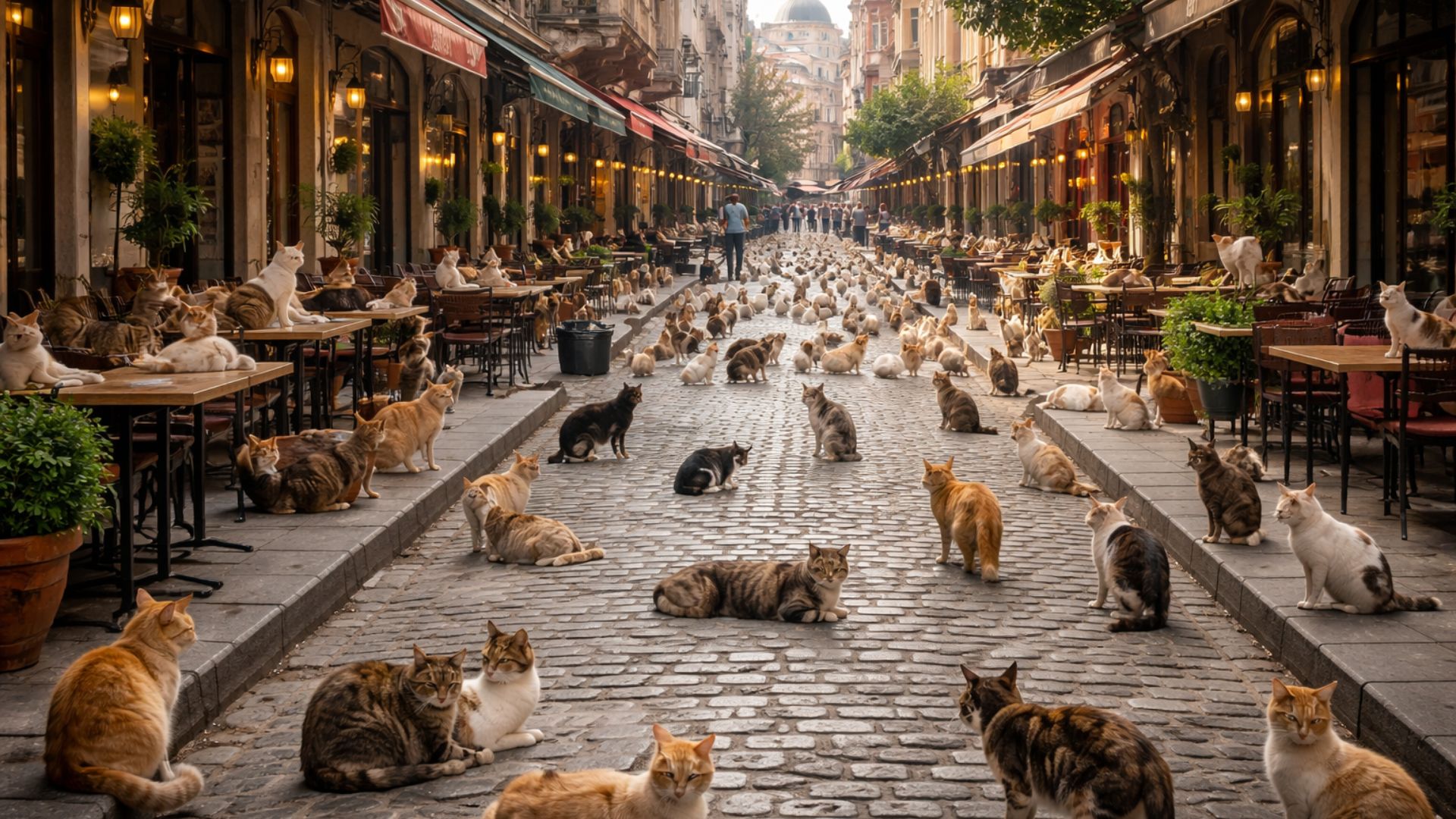


Urban Cohabitation Transforms Stray Cats Into a Part of Istanbul’s Identity, Where Animals Roam Freely, Receive Shared Care, and Occupy Public Space Without Conflict, Resulting From Ancient Cultural Practices, Collective Values, and a Historical Relationship That Shaped the Landscape of the City.
Istanbul, in Turkey, has established a rare coexistence in large metropolises.
Thousands of cats roam the streets, enter shops, cross squares, and lie on sidewalks without this being treated as a problem to be eliminated.
Instead of mass collection, the city maintains a routine of tolerance and shared care, where residents and shopkeepers place water and food at fixed points and recognize the felines as part of urban daily life.
-
He started running at 66 years old, broke records at 82, and is now a subject of study for having a metabolic age comparable to that of a 20-year-old, in a case that is intriguing scientists and inspiring the world.

-
Oldest tree on the planet reappears after 130 years of searches: Wattieza, 385 million years old, was 10 meters tall and had no leaves or seeds; Gilboa fossils in New York solved the mystery in 2007.

-
A 48-square-meter house assembled in hours with 4,000 bricks made of recycled plastic that does not absorb moisture, has natural thermal insulation, and costs less than 90,000 reais in a complete kit.

-
Luciano Hang revealed that Havan’s air fleet has already accumulated more than 20,000 landings, 10,000 flight hours, and 6 million kilometers traveled, and he says that without the planes, the company would never have grown so quickly.

Throughout tourist neighborhoods and residential areas, it is common to see the animals wandering between tables in outdoor café areas, stopping by store doors or following pedestrian traffic without fuss.
The image has become a brand of the city and has spread around the world in travelers’ records, documentaries, and social media.
Still, the presence of cats in Istanbul does not solely depend on foreign eyes.
It relies on local habits, community practices, and, in many cases, on religious and cultural interpretations that reinforce the protection of animals.
Why Cats Have Gained Resident Status in Istanbul

The relationship with felines is not limited to individual preference.
In Istanbul, the idea that the stray animal belongs to everyone manifests in the way neighbors spontaneously organize themselves, without a single guardian assuming responsibility alone.
At different points in the city, containers with water and food appear as part of the landscape, placed by residents, employees of establishments, and people who pass through the same streets daily.
This arrangement allows many cats to have relatively stable areas of circulation, with recurring feeding spots and improvised shelters at building entrances, gardens, parking lots, and small structures made by residents.
The dynamics also reduce the level of conflict typical of other urban centers, where the presence of stray animals is often treated as an exclusively sanitary issue.
The result, for those observing, is a scenario where cats seem integrated into public life.
They are close to people but maintain independent behavior, without relying on collars, fixed homes, or traditional domestic routines.
When they become ill or injured, the response is usually community-based, with neighbors contacting clinics and animal protection organizations or mobilizing financial assistance for treatment.
Cultural and Religious Influence on Cat Care
The protection of cats in Istanbul is often associated with rooted cultural values and a favorable view of felines in part of Islamic tradition.
In general terms, many interpretations of Islam describe cats as clean animals permitted in communal settings, which helps explain why they have historically been tolerated in areas close to people, shops, and places of intense circulation.
When discussing this topic, specialists and outreach content often cite popular narratives linked to religious tradition.
However, not all of these stories are confirmed by religious sources considered central, and some widely repeated versions do not appear in recognized collections of narratives.

In practice, what matters in everyday life is less a specific anecdote and more a set of values that encourages respect for animals and reinforces the idea of care as a collective responsibility.
Beyond the religious dimension, this habit also derives from ancient urban customs.
In a territory that has been the center of empires and an intense trade route, coexistence with animals in public spaces has become part of daily life.
As a result, the cat has ceased to be viewed solely as an ownerless animal and has come to occupy a distinct social place, recognized by the neighborhood and, in many cases, referred to by name by those who interact with it.
Historical Function of Cats in Urban Health
Although the affectionate aura is now the most visible trait, the history of the presence of cats in Istanbul also involves practical utility.
For centuries, port cities and areas with significant food circulation cohabited with rodents.
This turned cats into natural allies for controlling rats in storage areas, homes, and structures close to ports.
In periods when sanitary management was more limited, the role of felines helped protect supplies, reduce losses, and decrease risks associated with pest proliferation.
This role fits the profile of Istanbul, which has grown as a populous and commercial center in different phases of history.
Over time, utility transformed into coexistence.
Coexistence gained protection.
Instead of pushing animals out of the streets, the city kept the cats nearby, creating space for them to reproduce and spread across different neighborhoods.
The multiplication reinforced the very cultural cycle.
The more cats are present, the more they become part of the urban scene.
Collective Care as a Daily Practice


The welcome given to cats in Istanbul often takes place through small actions repeated daily.
Shopkeepers leave containers outside to not disrupt customer flow.
Residents change water at fixed times.
People walking carry food and feed the animals they already know.
In certain neighborhoods, simple shelters appear to protect from the cold and rain, installed in discreet corners of sidewalks and gardens.
In parallel, initiatives from local organizations and volunteers reinforce caregiving, rescues, and care campaigns.
Even when there is action from municipal authorities on animal welfare policies, what stands out is the extensiveness of care.
The maintenance of coexistence does not depend solely on the state.
It involves domestic habits and decisions made on each street.
In recent years, discussions about handling animals in public spaces have gained weight in different Turkish cities.
Although these debates influence the regulatory environment, in Istanbul the image associated with cats remains tied to tolerance and collective care.
Cats as an Affective Symbol of the City
For many residents and visitors, cats have become a symbol of Istanbul because they transform the urban experience.
In a city marked by intense traffic, tourism, and historical contrast, the silent presence of felines creates unexpected pauses.
A cat sleeping on a bench. Another observing people on a corner. A third crossing a busy street calmly.
These scenes feed a perception of closeness between human life and animal life.
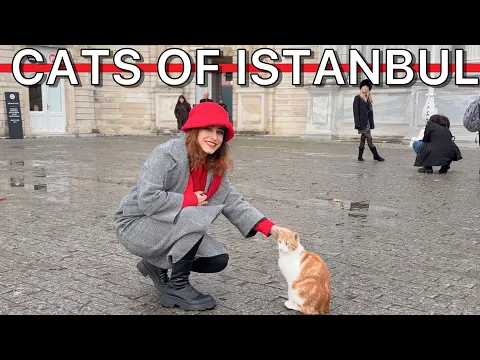
Cats appear as part of public space but retain autonomy.
This helps explain why so many accounts describe felines as guardians of urban memory, connecting past and present.
At the same time, the symbolic status does not eliminate challenges.
The increase in the population of animals, the need for veterinary care, and the risks of the urban environment require constant attention.
Even in a culture of welcome, there are practical limits.
The way to deal with them involves collective decisions, local policies, and community initiatives.
In the end, the story of Istanbul and its cats draws attention because it shows a city that chose to integrate the animal into public space instead of trying to erase it from daily life.
In a world where metropolises often standardize rules to reduce the presence of animals on the streets, the Turkish case continues to serve as a cultural reference and a point of debate on coexistence, responsibility, and well-being.
If this model depends on tradition, community organization, and public policies, what would other cities need to change to create a similar coexistence without turning stray animals into invisible beings?








Me encanta la gente de Estambul que quieren protejen, alimentan y cuidan a estos lindos gatitos, que hermosa cultura y empatica hacia los indefensos animalitos de verdad esto me hace muy feliz y quisiera que se extenderá en todo el mundo.
Conheci Istambul.
E é maravilhoso o convívio e a harmonia.
Gatos são puros e exercem limpeza física e espiritual.
Além do extermínio de pragas.
Me pace maravilloso lo que an conseguido en Estambul,los gatos son estupendos y se cargan a las RRatas las cucarachas y muchos bichos más le doy un 10 de 10 a Estambul los gatos son necesarios