





 English
  Francês
  Alemão
  Italiano
  Japonês
  Norueguês
  Portuguese
  Spanish
 5 min of reading
  0 comments


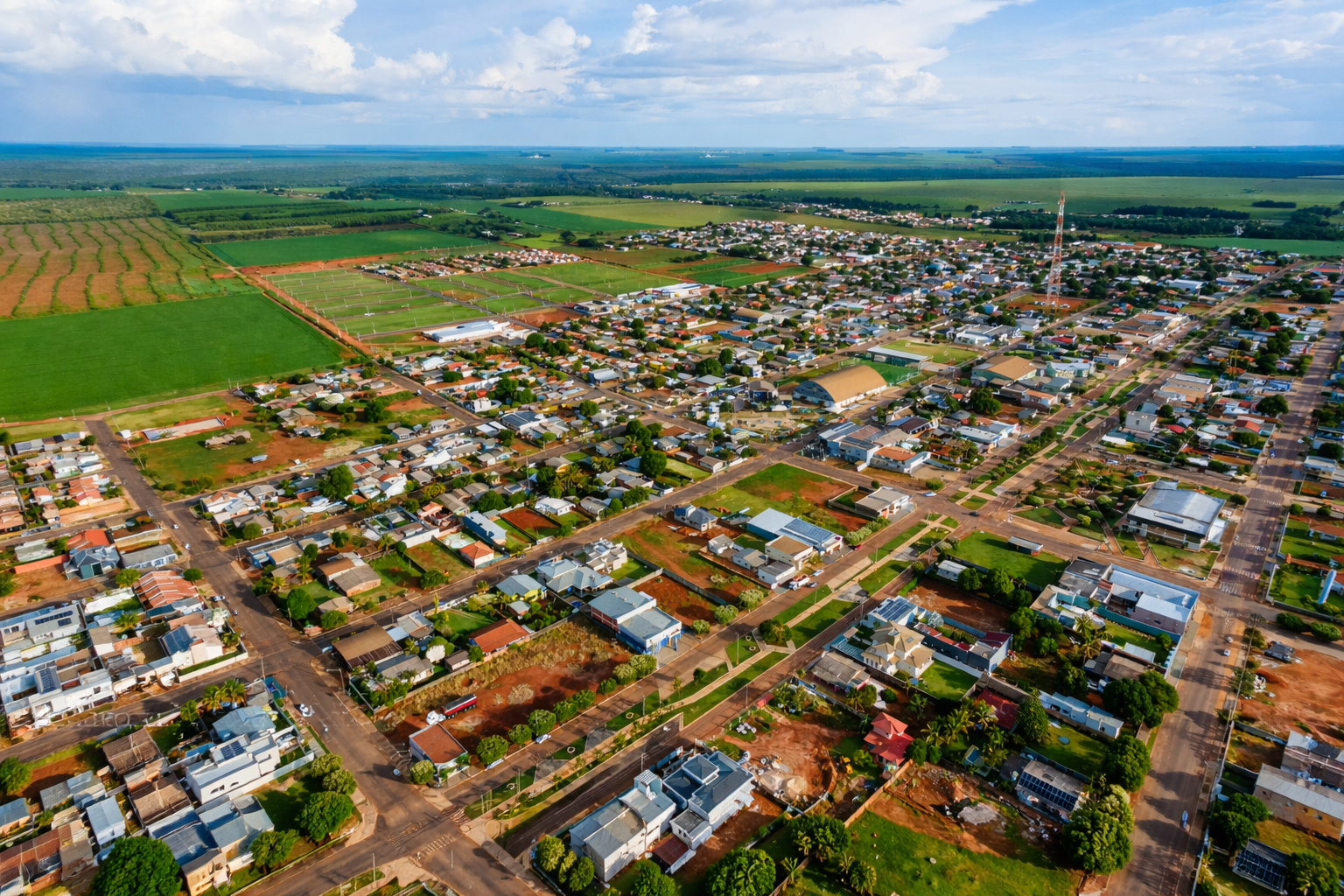
Municipality Located in the Far West of Mato Grosso Is a Long Distance from the Sea, Has Strong Agricultural Production, and One of the Highest Per Capita GDPs in the Country.
A geographical and economic peculiarity draws attention in the interior of Brazil.
Campos de Júlio, a municipality located in the west of Mato Grosso, is situated more than 1,500 kilometers from the Brazilian coast, which places it among the most distant points from the Atlantic Ocean in the country.
Furthermore, even though it is far from traditional maritime routes, the municipality has consolidated a highly productive economy based on large-scale agribusiness.
Data from the Brazilian Institute of Geography and Statistics (IBGE) shows that more than 70% of the local Gross Domestic Product (GDP) is generated by agricultural and livestock activities.
-
While Russia dominates the global wheat market, Brazil emerges as an unexpected competitor in the Cerrado, offering grain available in July and August when stocks in the Northern Hemisphere are at their lowest point of the year.

-
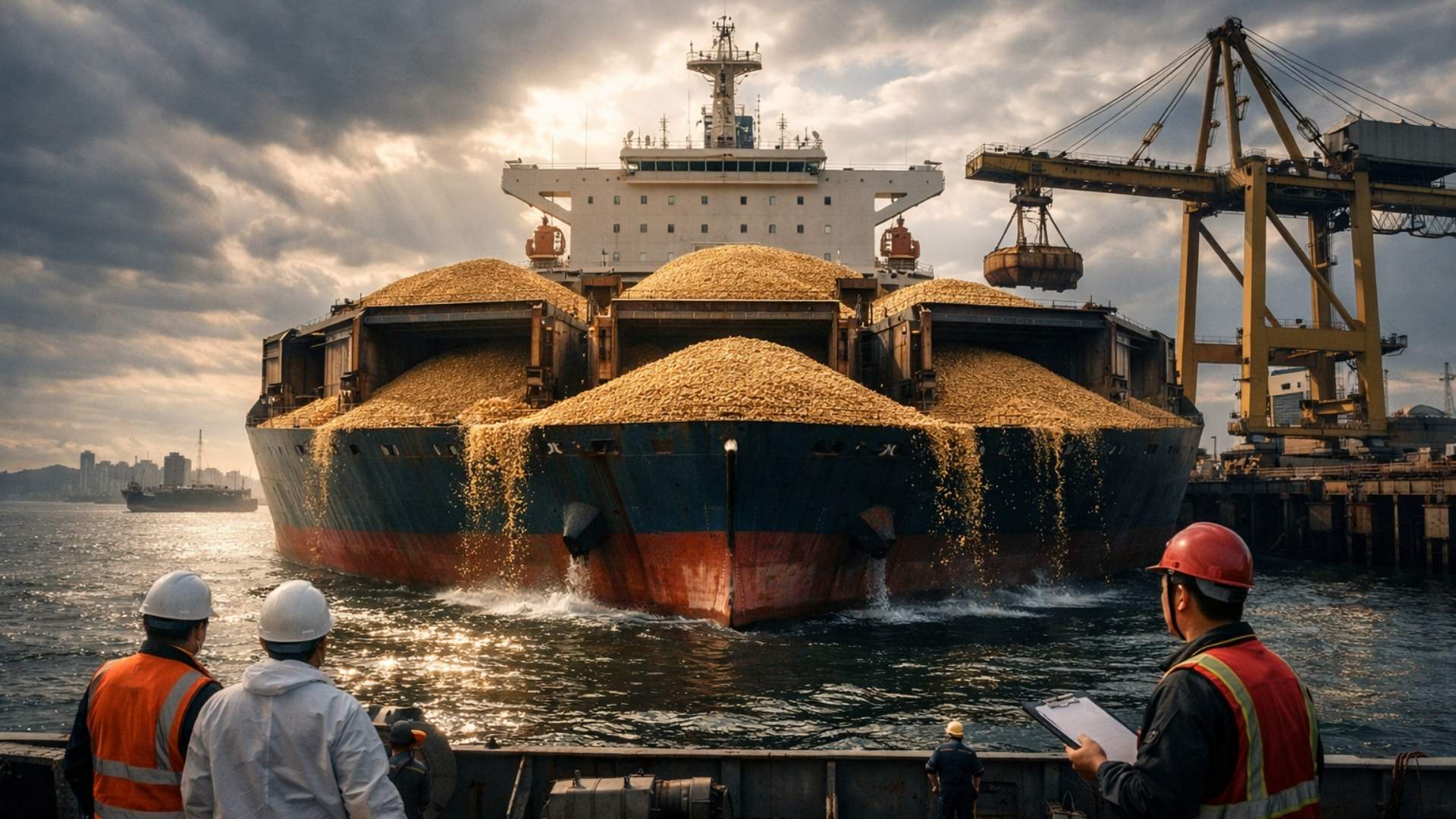
China returned almost 20 Brazilian ships with soybeans, but now everything could change: the country that buys 80% of the grain is considering relaxing regulations after impurities held up shipments of thousands of tons and caused million-dollar losses.
-
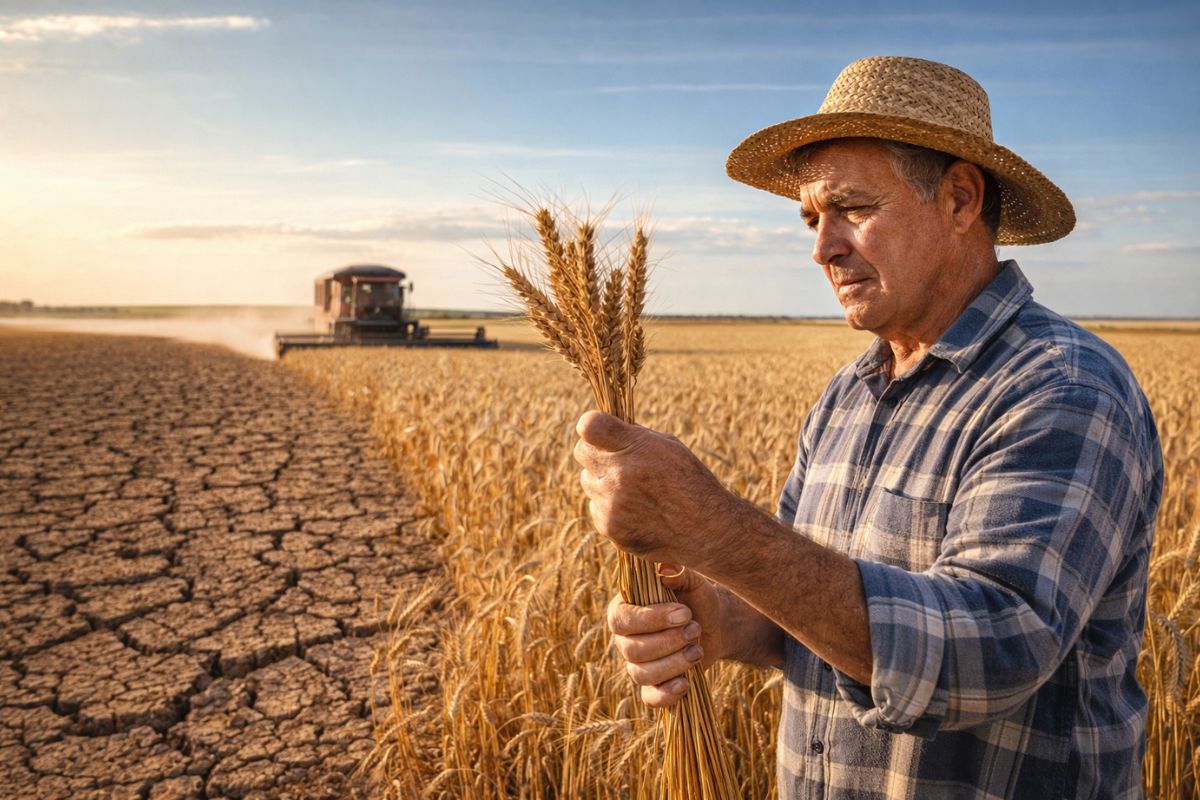
The drought of the cerrado was considered an enemy of wheat, but Brazilian scientists turned the lack of rain into a competitive advantage by creating a grain with quality that is already attracting the attention of international mills around the world.
-
THE OWNER of Brazil: a farmer who came from laundries, created an ’empire’ and today runs a company valued at R$ 42 billion after tripling its value in less than a year and receiving a billion-dollar investment from the USA.

This scenario demonstrates how regions in the Brazilian interior have become significant production hubs, even far from the main maritime trade routes.
Distant Geography from the Coast Marks a Strategic Position in the Country
Campos de Júlio is located in the far west of Mato Grosso, near the border with Bolivia.
Depending on the point considered on the Atlantic coast, the city may be about 1,600 kilometers from the sea.
For this reason, the municipality is part of the so-called continental core of Brazil, an area far from port areas and the main trade connections with the ocean.
Additionally, the municipal territory is situated in the region known as the Chapadão dos Parecis, regarded as one of the most important agricultural frontiers in the country.
The city is also located about 554 kilometers from Cuiabá, the state capital.
Despite this distance from major urban centers and the coast, agricultural production has transformed the municipality into an important regional hub.
Economy Dominated by Large-Scale Agribusiness
While many Brazilian cities have diversified economies, Campos de Júlio exhibits a strong concentration in the agricultural sector.
According to data released by the IBGE, about 70% of the local economy depends directly on agricultural and livestock production.
Among the main productive activities in the region are:
- Soybean Cultivation
- Corn Production
- Cotton Planting
- Cattle Ranching
This set of activities drives the local economy and supports a GDP estimated at approximately R$ 3.3 billion.
Additionally, the per capita GDP reaches about R$ 455 thousand, positioning the municipality among the ten highest in Brazil for this economic indicator.
This result demonstrates the impact of intensive agricultural production on the generation of local wealth.
Large-Scale Agricultural Production Drives Results
Between the 2024 and 2025 harvests, the area designated for soybean cultivation reached about 208 thousand hectares in the region.
Consequently, the estimated production amounted to approximately 1.43 million tons of the grain.
Besides soybeans, other crops also hold great economic relevance.
The corn and cotton, for instance, together occupy about 194 thousand hectares, with production exceeding 1 million tons.
Another highlight of the local economy is the presence of Usimat, considered one of Brazil’s first ethanol production plants from corn.
The facility utilizes the vast availability of the cereal grown in the region to produce biofuel.
This production model demonstrates how regional agribusiness leverages local resources to expand the economic chain.
Origin and Formation of the Municipality
Although it currently has significant economic indicators, Campos de Júlio is a relatively recent municipality.
The city was founded in 1994, as a result of agricultural expansion in the Central-West region.
According to records mentioned by the IBGE, the process of modern occupation began in the 1980s.
During that period, businessman Valdir Massuti brought several families from the south of the country to occupy areas designated for agricultural production.
These families began to cultivate large areas of soybeans and organized a settlement that later became the municipality.
Before agricultural colonization, however, the region was inhabited by indigenous peoples, such as Nambikwára and Ená-wenê-nawê.
With the advancement of agricultural occupation, these groups have not been found in the area currently occupied by the city.
Social Indicators and Characteristics of the Territory
Campos de Júlio is situated at about 650 meters above sea level.
The municipality has approximately 8,822 inhabitants, distributed across a territorial area of 6,792.808 km².
This combination results in a low population density, a common characteristic in large-scale agricultural regions.
Additionally, according to data from the IBGE, the municipality has a Human Development Index (HDI) of 0.744, a value considered above the national average.
These indicators show that the economic growth based on agricultural production has also influenced local development levels.
The Agricultural Interior as an Economic Engine
Even distant from maritime routes and large urban centers, Campos de Júlio shows how the Brazilian interior has consolidated itself as one of the main engines of national production.
The geographical position in the interior of South America, combined with high agricultural productivity, has transformed the municipality into an example of the economic strength of agribusiness in the country.
Thus, the great distance from the coast has not hindered regional economic growth.
On the contrary, agricultural expansion has shown that continental areas can generate wealth and productivity on a large scale.
In light of this scenario, an inevitable reflection arises: Will the growth of agribusiness in the interior continue to transform cities far from the coast into increasingly relevant economic hubs in Brazil?







-

-

-

-

7 pessoas reagiram a isso.