





 Portuguese
  English
  Spanish
  5 min of reading
  0 comments


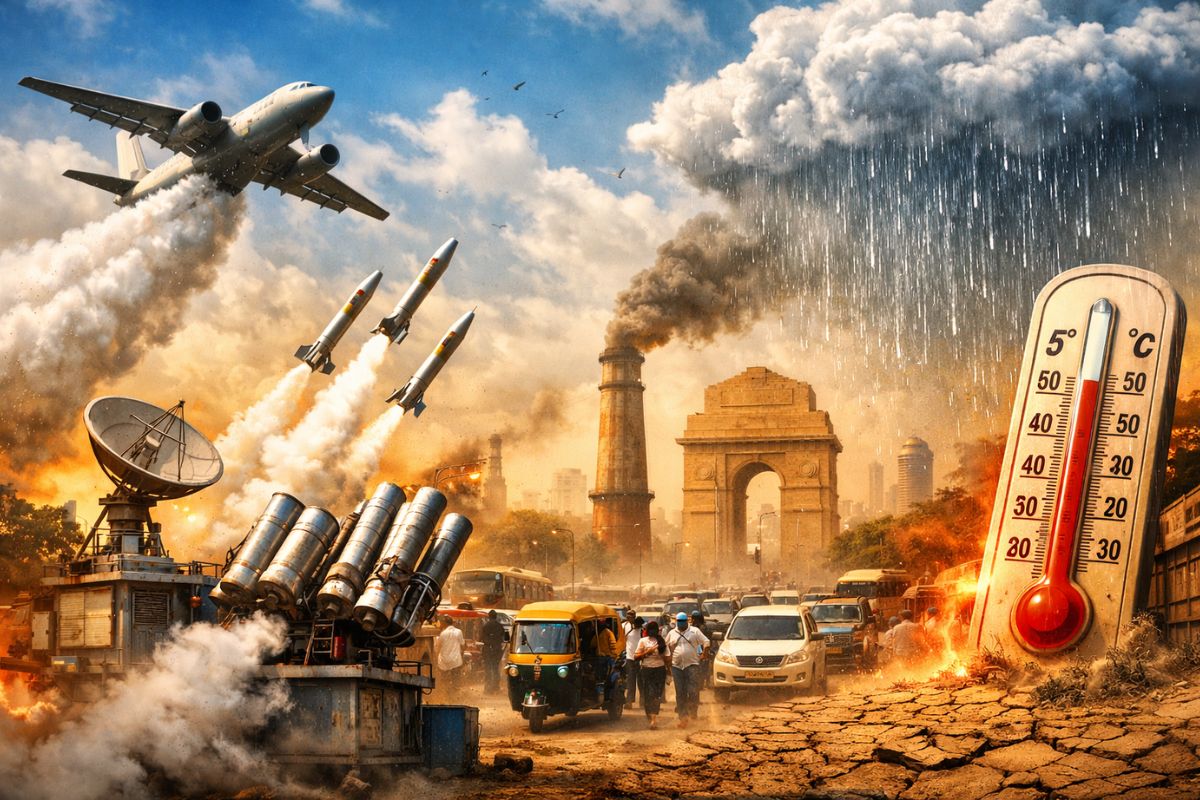
In The Most Polluted City In The World, New Delhi Bets On Artificial Rain With Silver Iodide To Disperse The Stifling Air, Faces Extreme Heat, And Becomes The Setting For A Documentary That Exposes Environmental Collapse.
In the most polluted city in the world, the air is so heavy that it feels almost solid. In New Delhi, the capital of India, breathing has become a daily struggle amidst a gray haze that never dissipates, air quality indexes that soar, and temperatures reaching 52 degrees. Faced with this scenario, the regional government is attempting a solution that mixes science and desperation: to create artificial rain to try to cleanse the atmosphere and restore, for a few hours at least, the feeling of being able to breathe without pain.
The bet is an experiment in cloud seeding that uses planes and drones to disperse silver iodide particles into the atmosphere, a chemical compound capable of stimulating water condensation and rain formation.
The most polluted city in the world is betting on lab-produced droplets as an emergency breath in an environment that is already living on the edge.
-
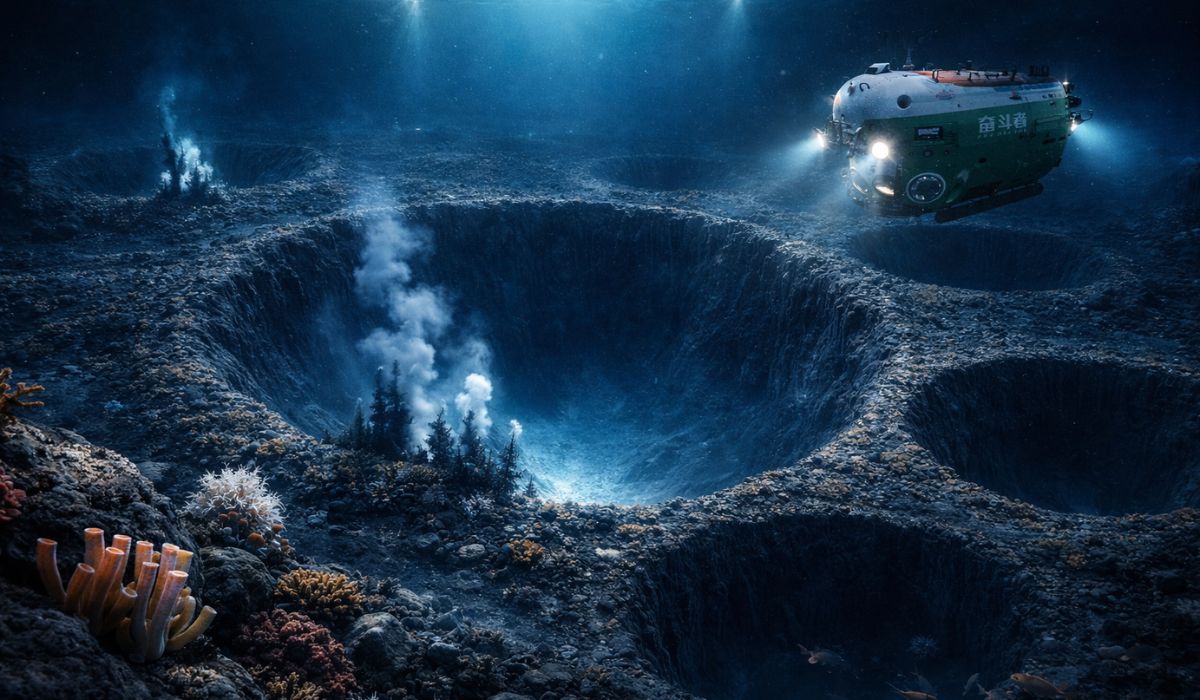
Chinese submersible discovers a colossal system of giant craters on the Pacific floor, previously unknown, teeming with life and so rich in hydrogen that they may help explain the origin of life on Earth.
-
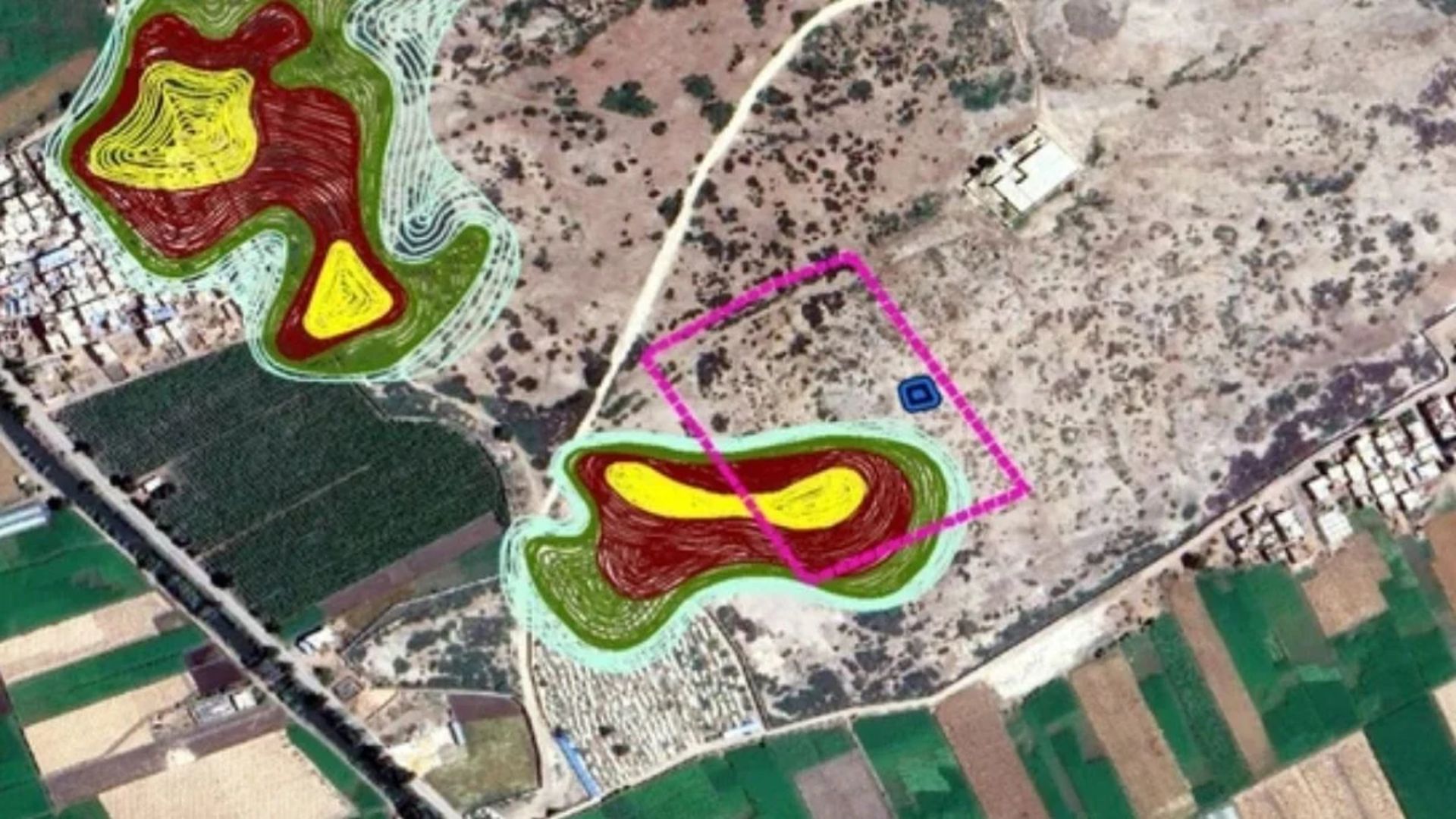
A mysterious structure has been found beneath an ancient city in Egypt — and the most impressive thing is what technology has revealed hidden for 2,600 years.
-
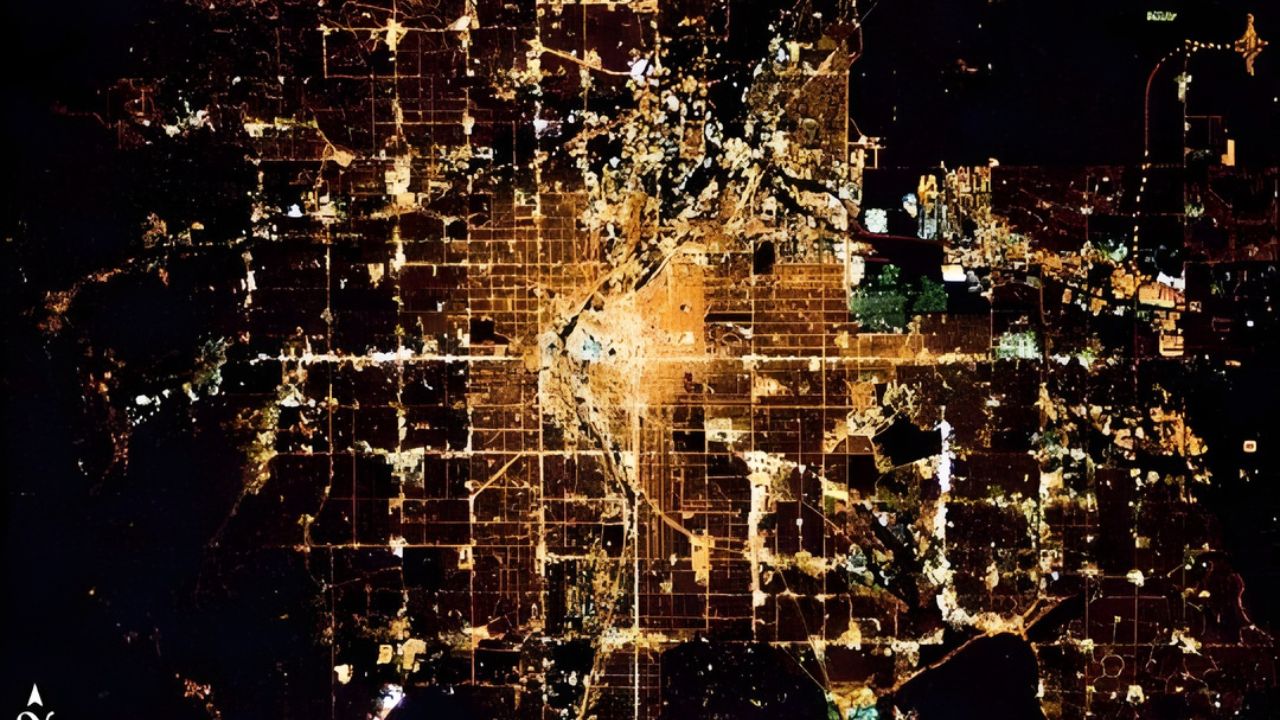
Astronauts reveal that cities shine so brightly at night that they are visible from space as “artificial constellations,” while highways in the desert appear more than the Great Wall of China, which practically disappears when viewed from orbit.
-
A magnitude 9.2 earthquake in Alaska reshaped the coastline in minutes, sank entire cities, raised sections of the seabed by several meters, and left one of the fastest geographical transformations ever recorded on Earth.

But the test, which began during one of the worst pollution moments of the year, is surrounded by doubts, criticism from the scientific community, and images that have become a global symbol of environmental collapse.
When The Most Polluted City In The World Tries To Make Rain
The idea of making it rain is not new, but it takes on a different weight when applied to the most polluted city in the world.
In New Delhi, the plan is simple on paper: locate clouds with rain potential, launch silver iodide from planes and drones, provoke condensation, and accelerate the precipitation.
The hope is that this artificial rain helps to wash away some of the suspended particles, temporarily reducing the level of pollution.
In practice, the scenario is less predictable. The first attempts at cloud seeding provided little relief for the most polluted city in the world, with scarce rainfall and limited impact on air quality.
The scientific community had already been questioning the method’s efficiency, reminding that it is a localized intervention, subject to specific weather conditions, and does not replace structural policies for controlling emissions.
Festival of Lights, Fireworks, And A Toxic Cloud Over New Delhi
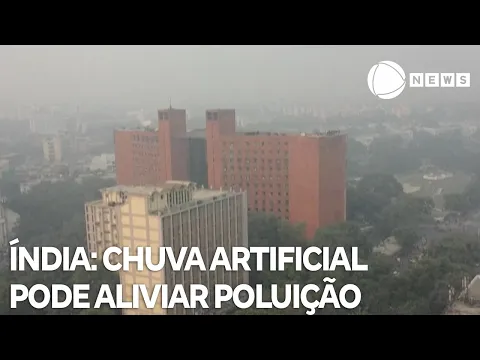

The experiment gained momentum right after the Festival of Lights, one of the most important dates on the Indian calendar.
During the celebration, fireworks light up the sky of the capital and various other cities, creating stunning images for a few minutes. But, in New Delhi, the sparkle of the explosions comes at an invisible cost.
As soon as the smoke from the fireworks mixes with the already laden air, the most polluted city in the world records air quality index levels above 300 points, reaching levels considered severe in various neighborhoods.
What should be merely a celebration becomes a trigger for respiratory crises, with hospitals overflowing and an extra layer of particles that the wind cannot disperse.
It was in this context that artificial rain came into play, as a kind of attempt to “wash” the sky after one of the year’s most critical moments.
However, without sufficient rain, the relief was scarcely felt by the population, which continues to live with the dense air, smell of smoke, and reduced visibility.
Emergency Measures That Do Not Address The Root Of The Problem

Scientists and environmental specialists warn that cloud seeding is, at most, a band-aid solution.
Even if it works on some days, artificial rain does not resolve what has made New Delhi the most polluted city in the world for years. The structural factors remain practically intact.
Among the cited causes are chaotic traffic, with a massive volume of vehicles pouring pollutants into the atmosphere, agricultural burning in nearby rural areas, and industrial pollution accumulated over decades.
These elements combine into a toxic cauldron that cannot be dissolved by a single technology. The main criticism is clear: while emission sources continue to operate almost without restraint, any experiment in artificial rain will be like a bandage on an open wound.
A Documentary That Transforms Suffocation Into Image
This entire reality has become raw material for a documentarian who decided to capture, through the power of images, the daily life of the most polluted city in the world.
The film, screened at an international festival and now available in Brazil, shows New Delhi in environmental collapse, without long narratives, without detailed explanations, trusting in the camera’s ability to speak for itself.
In one of the most impactful scenes, the director leaves the camera still and simply captures millions of dust particles suspended in the air.
They are almost invisible, but lethal, floating before the lens as a constant reminder that each breath carries a package of pollution.
It is the most polluted city in the world displayed in its rawest form, without filters, without retouches, just the dirty air taking over everything.
In another sequence, the film follows the course of a river covered by a thick, white foam.
From a distance, it could look like ice or snow, but it is pure pollution, formed by unchecked chemical waste. These images require no technical captions.
They show a place where water has lost its transparency, the sky has lost its blue, and the line between nature and contamination has become almost unrecognizable.
Living In The Most Polluted City In The World
While the world watches the documentary, daily life in New Delhi goes on. People continue to go to work, children go to school, vendors occupy the streets.
Everyday life unfolds as if the environmental collapse were just another layer to be breathed in every day.
The sun rises behind a toxic cloud, which acts as a permanent filter between the light and the ground. The extreme heat, which has already hit 52 degrees, makes the air even heavier.
Masks, scarves, and homemade filters are part of the landscape, but they do not fully protect those who need to spend hours outside. In many cases, breathing has become a choice between the necessary and the dangerous.
In the end, the portrait that emerges is that of a country trying to survive amid extremes: on one side, record heat and the most polluted city in the world; on the other, millions of people continuing to live, work, and dream in an environment that defies physical and emotional limits.
The documentary, the artificial rain, and the images of toxic foam in the river are not isolated scenes, but chapters of the same story of global alert.
And you, seeing the situation of the most polluted city in the world, do you believe that technological solutions like artificial rain really help or only delay the deeper changes that need to be made?





-

-

6 pessoas reagiram a isso.