





 Portuguese
  English
  Spanish
  3 min of reading
  1 comment


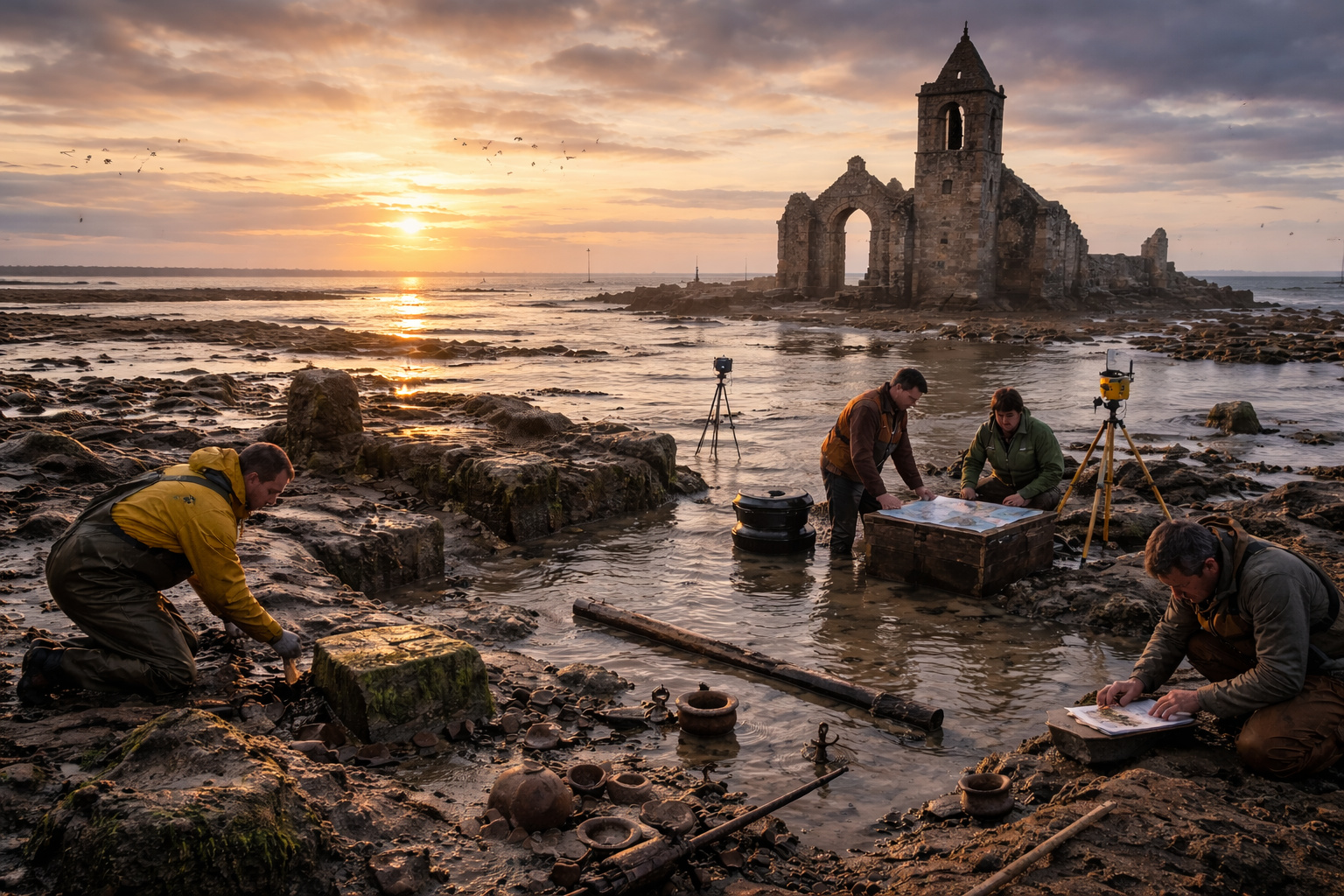


Geophysical Analyses Identify Ruins, Church, and Submerged Commercial Port on the Northern Coast of Germany
German researchers have confirmed the historical existence of the legendary city of Rungholt on the northern coast of Germany. Archaeologists located structural remnants in the Wadden Sea, also known as the Frisian Sea, after conducting detailed scientific analyses in the region.
The teams applied magnetic gradiometry and electromagnetic induction to map buried structures beneath marine sediments. Using these methods, scientists verified that the city, which disappeared in 1362, did indeed exist. Thus, the oral tradition gained scientific support.
Strategic Location in an Area Recognized by UNESCO Since 2009
The Wadden Sea, recognized as a World Heritage Site by UNESCO since 2009, extends between the North Sea and the coasts of Germany, the Netherlands, and Denmark. The region features shallow waters and, during low tide, reveals vast sandy plains.
-
China is building a city in Brazil: a complex with an investment of R$ 5.5 billion comes to light, but allegations involving workers draw attention.

-
While Argentina buys old war equipment, Brazil is keeping an eye open and joins the select group of nations with advanced military technology by investing $5.2 billion, producing 36 Gripen fighters in the country, and reducing operational costs.

-
Brazil on alert? Why invading Brazil is a NIGHTMARE for the USA: 8.5 million km², 213 million inhabitants, Amazon covering 60% of the territory, trillion-dollar war, and resistance that even 13,000 aircraft could not control.

-
How to build a floating island from scratch with reeds, giant blocks, and stakes in the lake in a process that needs to be repeated almost every day.


In this environment, the Frisian Islands form, a group of 13 islands scattered along the coastline of these three countries. Among them is Terschelling, which has about 5,000 residents and maintains its economy based on tourism, agriculture, and fishing.
Around these islands, muddy and sandy banks emerge with the tide’s variation. It was in this setting that archaeologists identified the remnants of Rungholt.
Medieval Legend Tells of a Devastating Storm in 1362
For centuries, locals have passed down the story that a powerful storm destroyed Rungholt in 1362. The popular tradition associated the disaster with divine punishment for the alleged excesses of the population.
The accounts mention drunkenness, ostentation, and inhumanity. Furthermore, the narrative tells that young people tried to force a priest to grant the anointing of the sick to a pig. The religious figure allegedly refused and prayed for punishment.
After the storm, the waters covered the city. Residents of the area claimed to hear the sound of a bell coming from the old church, reinforcing the legendary nature of the story.
Scientific Studies Reveal Urban Structures and Active Commercial Port
Current investigations focus exclusively on scientific evidence. Archaeologists have located remains of the church as well as traces of urban constructions that indicate planned organization.

The teams also identified artificial mounds built to protect the city from high tides, demonstrating technical knowledge adapted to the medieval coastal environment.
Additionally, studies indicate the presence of an active maritime trade port, primarily focused on the sale of fish, oysters, and fishing nets. These findings reinforce the economic significance of Rungholt before its disappearance.
Editorial Transparency and Commitment to Historical Accuracy
Researchers have disclosed data based on verified analyses and scientific methodology. The content prioritizes historical accuracy and avoids exaggerated interpretations.
The approach follows editorial criteria aligned with the quality guidelines required by platforms like Google Discover and Google News, ensuring clarity and informational responsibility.
With the scientific confirmation of Rungholt’s existence, the ancient medieval legend transforms into a validated historical record.
Given this, how many other stories considered myths are still waiting for confirmation beneath layers of sand and tide?







É impossível ler o artigo devido ao elevado número de anúncios.