





 Portuguese
  English
  Spanish
  6 min of reading
  0 comments


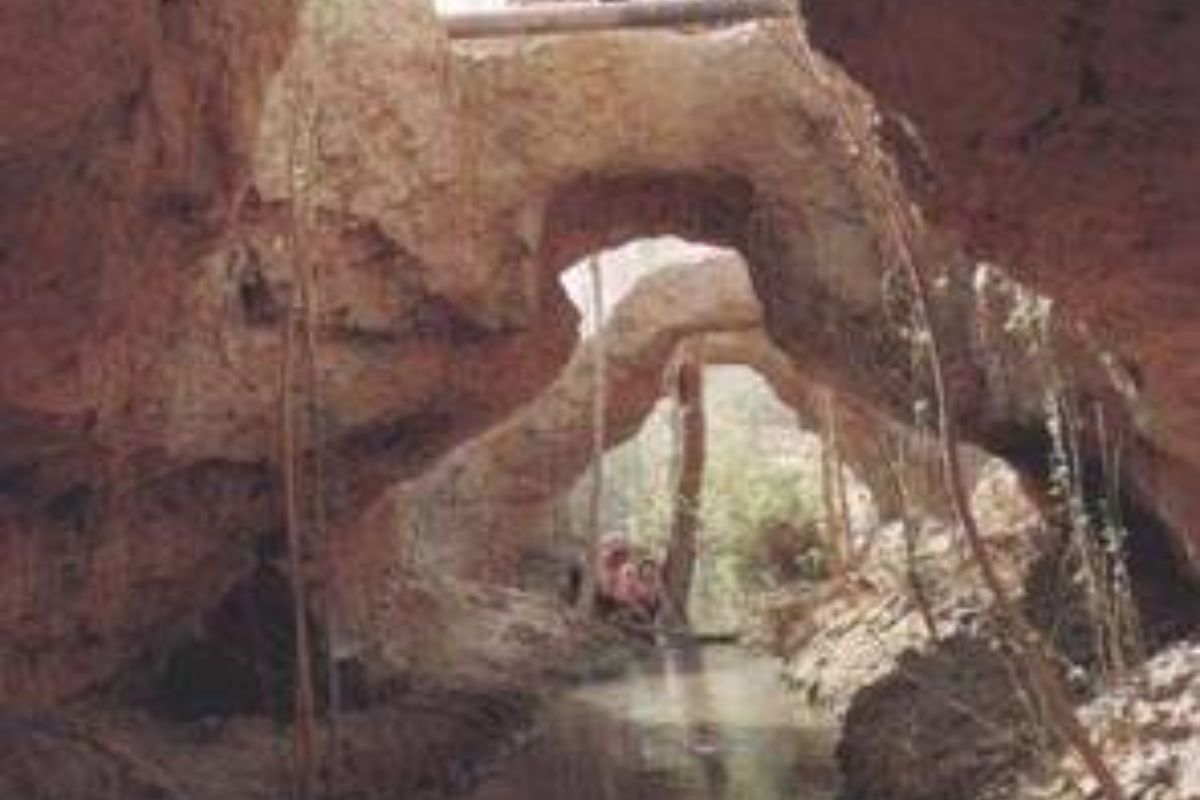
In Bidar, The Ancient Karez Forms An Underground Tunnel With A Gentle Slope, Connecting A Mother Well To Different Valleys And Revealing A Rare Hydraulic Engineering That Could Still Supply Residents
The underground tunnel known as Karez, in the city of Bidar, in southern India, seems like something from another time, but it remains there, traversing the underground beneath highways, buildings, and settlements. It is an ancient water supply and irrigation system that uses a network of access wells to carry water with the help of gravity, as if the city had an “invisible river” flowing beneath its streets.
Over nearly two kilometers, this underground tunnel gathers 32 wells spaced every 45 to 50 meters, allowing people to access water at different points along the route. Part of the structure has collapsed or been buried over time, but what remains helps to explain why the Karez is treated as a masterpiece of engineering and why recent projects aim to recover it for everyday use and heritage protection.
What Is Karez and Why Is It Such An Uncommon Underground Tunnel
The Karez is described as a subterranean network of tunnels that, after a certain distance, opens up to the surface and begins to provide water for settlements and irrigation. In Bidar, the layout begins at the so-called mother well, runs straight for about two kilometers, and ends where the water emerges again, at the so-called mouth of the Karez.
-
For years, no one could cross a neighborhood in Tokyo because of the tracks, but an impressive solution changed mobility and completely transformed the local routine.

-
With 15 floors, an unusual building in Curitiba uses concrete, pilasters, and exposed roofs to create the effect of stacked houses.
-
Archaeologists opened a secret chamber that had been sealed by sand for 40,000 years inside a cave in Gibraltar and found what may be the last place where Neanderthals lived before disappearing from Europe forever.
-
The water that may have gone to the Moon with NASA during the Apollo 11 mission and been consumed by the astronauts springs in a Brazilian city at an altitude of 945 meters, famous for its thermal springs, above-average quality of life, and a natural radioactivity so unusual that it attracted Marie Curie.


The central point is the logic of the system: instead of relying on pumps, the Karez was built with a gentle slope, enough to allow the water to follow its path naturally. It is an engineering solution that combines excavation, slope calculation, and an infrastructure of wells that function as access, maintenance, and distribution.
Two Kilometers Beneath The City: 32 Wells Connected By An Underground Tunnel
In practice, the Karez of Bidar is an underground tunnel that crosses a solid rocky ridge to bring water from a smaller valley to a larger valley. Along this route, there are 32 wells, through which people were able to reach water without needing to walk to the spring.
Not all wells have survived. Many collapsed along the way, others were filled in, and some ended up having buildings constructed over them. Still, there are wells with steps leading down to the tunnel itself, and at least one or two points are still in use. This design, with successive wells over an underground channel, is what makes the Karez so efficient and at the same time so delicate to preserve.
Why Dig All This: Irrigation, Supply, And Soils That Change From Valley To Valley
A question naturally arises: why dig an underground tunnel for two kilometers just to carry water from one place to another? The clue comes from the region itself. The valley of the mother well has clayey soil, and the larger valley, where the water is directed, also has clayey soil.
The conclusion presented is straightforward: with water reaching the larger valley, it would be possible to grow more food, better supply the city, and maintain irrigation of fields.
In other words, the Karez is not just an ancient monument; it is a structure made to sustain life and production, creating a water corridor where the surface did not offer the same safe access.
Where Water Reappears: From The Temple To The Stream That Irrigates Fields
The water carried by the underground tunnel does not stay “trapped” underground forever. It emerges at the surface, at a point connected to the kund of the Siddheshwara Temple, treated by devotees as a sacred site.
From there, the water continues its course, becomes a stream, and starts to irrigate fields beyond the temple. This moment when the underground becomes surface is one of the clearest proofs of the practical impact of the Karez, as it shows the transformation of an invisible work into a flow that sustains collective use.
An Ancient Technology That Travelled The World And Arrived In Bidar
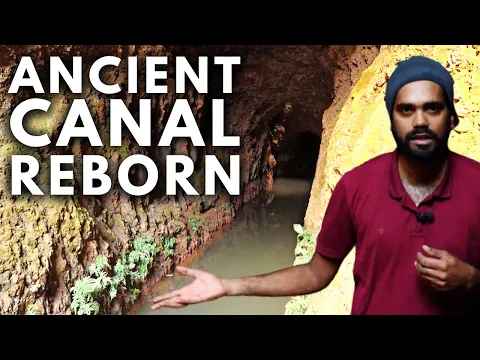

The Karez is also known as Qanat, a type of irrigation system that is believed to have been developed nearly 3,000 years ago on the Iranian plateau and then spread across Asia, Europe, and North Africa. The text highlights that this expansion accompanied the expansion of Islam, introducing the technology to different territories.
In Bidar, it is believed that the system was constructed around the 1400s. The local geology helps explain why it worked so well: the rocky formation of the region is laterite, a material that is extremely porous to water, which favors the implementation of tunnels that capture and direct subterranean flow without relying on modern structures.
When Engineering Becomes A Problem: Pollution, Trash In The Wells, And Ruin Of The Underground Tunnel
Over time, the Karez has fallen into ruin and neglect. One of the most serious issues has been pollution: water has become contaminated due to a lack of sewage treatment, and solid waste from the Nawabad settlement was thrown into the wells.
This impacts the heart of the system. If the wells are the “doors” of the underground tunnel, when they become garbage dumps, the entire channel suffers. Degradation is not just aesthetic; it compromises water quality and structural safety, accelerating collapses and blockages due to siltation.
The Attempt To Recover The Karez: Desilting, Waste Management, And The Community At The Center
Starting in 2014, the Deccan Heritage Foundation began actively working on the revitalization of the Karez, with the participation of the Bidar district administration. The work includes desilting operations along the length of the system, although the process has not yet been fully completed.
One detail shows the potential for recovery: when about 60% of the length of the underground tunnel had been desilted and it rained for a day, water began to flow through the Karez.
To prevent setbacks, a solid waste management system has also been implemented in Nawabad, with the idea of preventing garbage from returning to the wells and the tunnel.
The declared goal is clear: when the community creates real utility for water and develops a connection with the monument, it increases the chance of taking responsibility for its protection. Conservation ceases to be merely “restoration” and becomes use, care, and continuity.
A Monument That Could Still Become Living Infrastructure
The Karez of Bidar is presented as a masterpiece of engineering, not only for being ancient but for uniting technical design, gravity, well access, and integration with the territory.
At the same time, it shows how structures of this kind depend on maintenance, urban management, and collective care to continue existing.
If the recovery progresses and the water flows from end to end again, the underground tunnel could cease to be merely a historical curiosity and return to being a real system of supply and irrigation for those living around it, reinforcing the connection between heritage and daily life.
Do you think an underground tunnel like the Karez should be treated only as a historical monument or as essential infrastructure that deserves to supply the city in everyday life?







Seja o primeiro a reagir!