





 Portuguese
  English
  Spanish
  3 min of reading
  8 comments


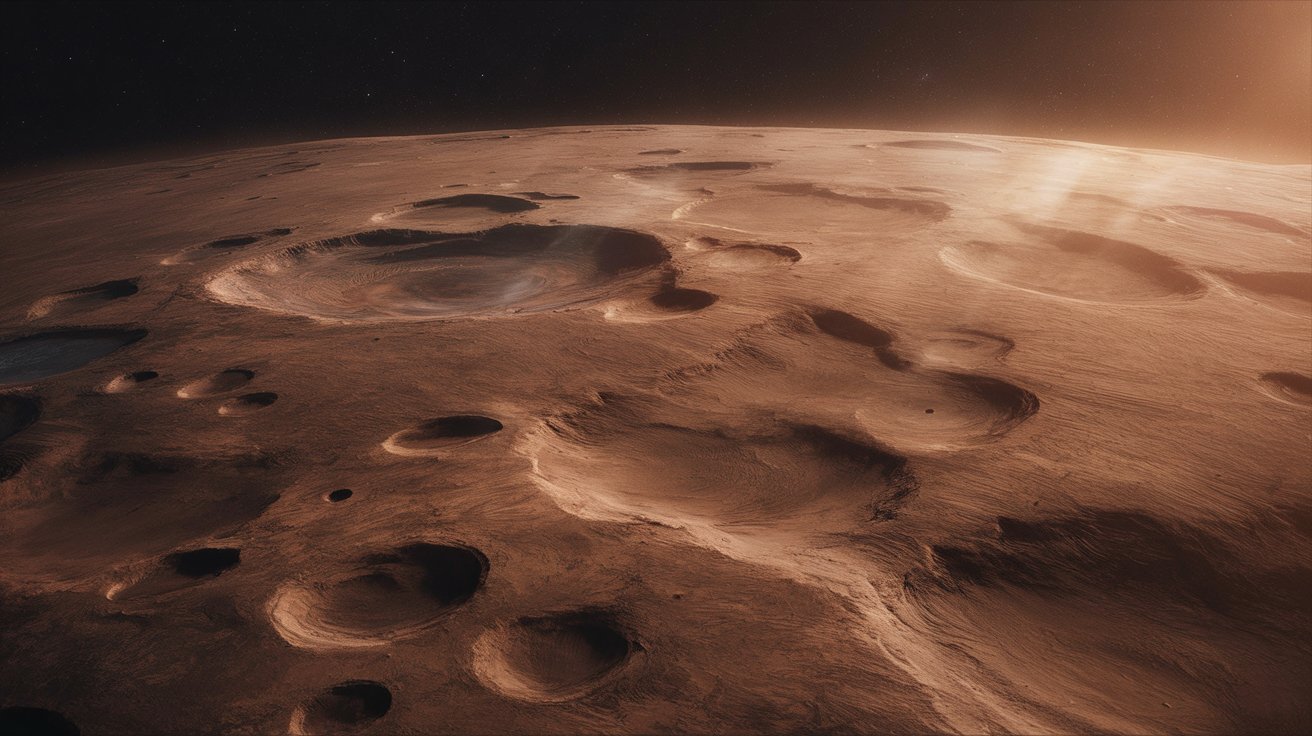


New Proposal for Interplanetary Trajectory Allows Crewed Missions to Travel to Mars Round Trip in Up to 6 Months Using SpaceX’s Starship and Local Resources
A study conducted by a physicist at the University of California revealed a new interplanetary route that could shorten trips to Mars to just 90 days. The discovery involves the use of SpaceX’s Starship rocket with existing technology, offering a viable alternative to reduce time and risks in crewed missions to the red planet.
Jack Kingdon, a physicist at UC Santa Barbara, was responsible for identifying this new “highway to Mars.” Using advanced algorithms like the Lambert Solver, which calculates minimum elliptical arcs in two-body problems, Kingdon found two ideal launch windows: April 2033 and July 2035. In both windows, it would be possible to travel to the red planet in 90 days, with a return in up to 104 days.
The proposal makes the mission feasible using the current chemical propulsion of the Starship, combined with refueling in Earth orbit and on Mars. In the latter case, the plan includes the use of ISRU (In-Situ Resource Utilization) technology, which converts local resources into fuel. This way, dependency on technologies still under development, such as nuclear propulsion, is eliminated.
-
The most famous volcano in the world could paralyze one of the largest metropolises on the planet: Japan accelerates emergency plans for the eruption of Mount Fuji, which could bury Tokyo in ash for over two consecutive weeks.

-
The United States has a serious problem with its F-35s: China is already producing fighters at a pace that exceeds American capacity and could manufacture up to 300 aircraft per year before the end of the decade, shifting the global military balance.

-
Remains with battle wounds of over 100 soldiers from the Roman Empire are found beneath a football field in Vienna, leaving everyone surprised.

-
Elon Musk notes Brazil and lowers the price of his internet, Starlink, promising to connect all corners of the country with affordable plans, 10,000 satellites, and 1 million active users in the national territory!


With the mission entirely based on already available resources, the proposed trajectory fits within SpaceX’s operational scope for the next decade. This innovation could accelerate the schedule for Mars exploration and colonization, a declared goal of Elon Musk’s company.
Less Time, Less Risks for Astronauts
In addition to time savings, the route offers significant health benefits. Shorter trips reduce astronauts’ exposure to cosmic radiation, considered one of the greatest threats in long-duration missions in deep space.
Another benefit is the preservation of crew members’ physical condition. In microgravity, astronauts lose about 1% of their bone mass per month, even with rigorous exercise routines. With the new route, the occupants of the Starship would arrive on Mars in better condition for demanding tasks such as habitat construction and scientific exploration.
The proposal also aligns with ambitions for large-scale exploration. With a shorter and more effective trip, concrete possibilities arise for more frequent, robust, and sustainable expeditions on the red planet.
Technical Challenges Still Need to Be Overcome
Despite the benefits, Kingdon’s plan requires a series of operational advances. Simulations suggest that the Starship will need to withstand extreme atmospheric re-entries both on Earth and Mars. Although current thermal shields have been designed for this, there are still not enough public data on their performance under real conditions.
Another critical point is logistics: up to 45 Starship launches would be necessary per mission to enable the entire transport, refueling, and return process. This requires a flight cadence that the company has not yet achieved.
Still, the possibility of conducting missions to Mars with reduced duration, without relying on futuristic technologies, represents an unprecedented advancement in space exploration.
Study Was Released by Academic Source in the USA
The information was released through an academic study conducted by physicist Jack Kingdon from the University of California, Santa Barbara. The content gained prominence on specialized portals such as ecoticias and forums about space exploration, especially due to the feasibility of the proposal with already existing resources.
According to the researcher, the smart use of algorithms and orbital windows can pave the way for a new era of sustainable interplanetary missions without the need to reinvent foundational technologies.





Por alguns comentários aqui os grandes descobridores ainda estariam no cais.
PALHAÇADA
COISA DE LUNÁTICO
INVISTAM NO NOSSO PLANETA QUE É MARAVILHOSO E TEM TUDO QUE O SER HUMANO PRECISA.
NO ESPAÇO NÃO TEM NADA DE BOM PARA NÓS.
PATETICE!!!
Marte deve ter trilhões em “Bitcoins” para justificar essa obsessão!