





 Portuguese
  English
  Spanish
  4 min of reading
  0 comments


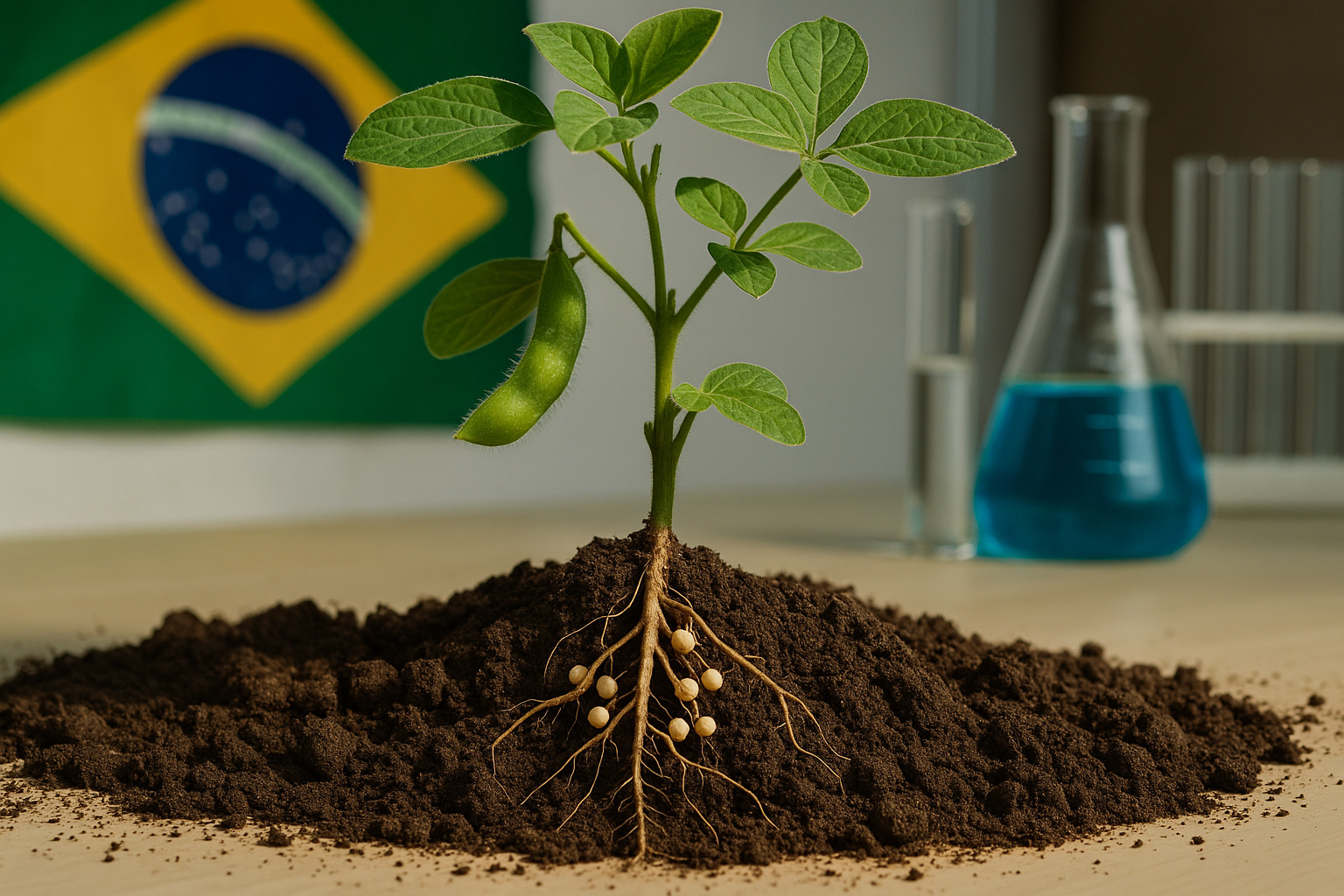
Researches of the Naturalized Brazilian Agronomist Eliminated the Use of Chemical Fertilizers and Put the Country at the World Forefront of Agricultural Biotechnology.
A scientific discovery with global impact forever changed Brazilian agriculture and positioned the country as a sustainable powerhouse in soybean production. The responsible party was Johanna Döbereiner, a researcher from Embrapa, whose studies on nitrogen-fixing bacteria generated savings of over R$ 10 billion per year, according to data from the Brazilian Agricultural Research Corporation.
Since the 1950s, her research broke patterns and challenged the dominant chemical model. While developed nations relied on fertilizers, Brazil followed an alternative and innovative path: it invested in natural biotechnology, reducing costs while simultaneously protecting the environment.
According to experts, this strategic choice transformed the country into a global reference in sustainable agricultural productivity, consolidating an unprecedented scientific legacy.
-
China is testing a train that will operate at 400 km/h in daily service, which is 80 km/h faster than the French TGV, and uses carbon fiber, magnesium alloys, and more than 4,000 sensors to become the fastest commercial train on the planet.

-
Forget about having an air fryer, electric oven, and steam pot taking up space in your kitchen because a 30-liter smart oven combines all these functions, automatically selects the ideal temperature, and even turns off by itself when cooking is done.

-
Engineers rewrote all the apps from scratch and bet everything on a buttonless screen: now the creator of the iPhone says that Apple needs to make the same revolution again because of AI.

-
Researchers in the U.S. have created a flying robot that transforms into a land vehicle while still in the air. The technology, based on aerodynamic transition, converts landing into a scene worthy of Transformers and redefines mobility between sky and ground.


Scientific Revolution That Transformed Brazilian Agriculture
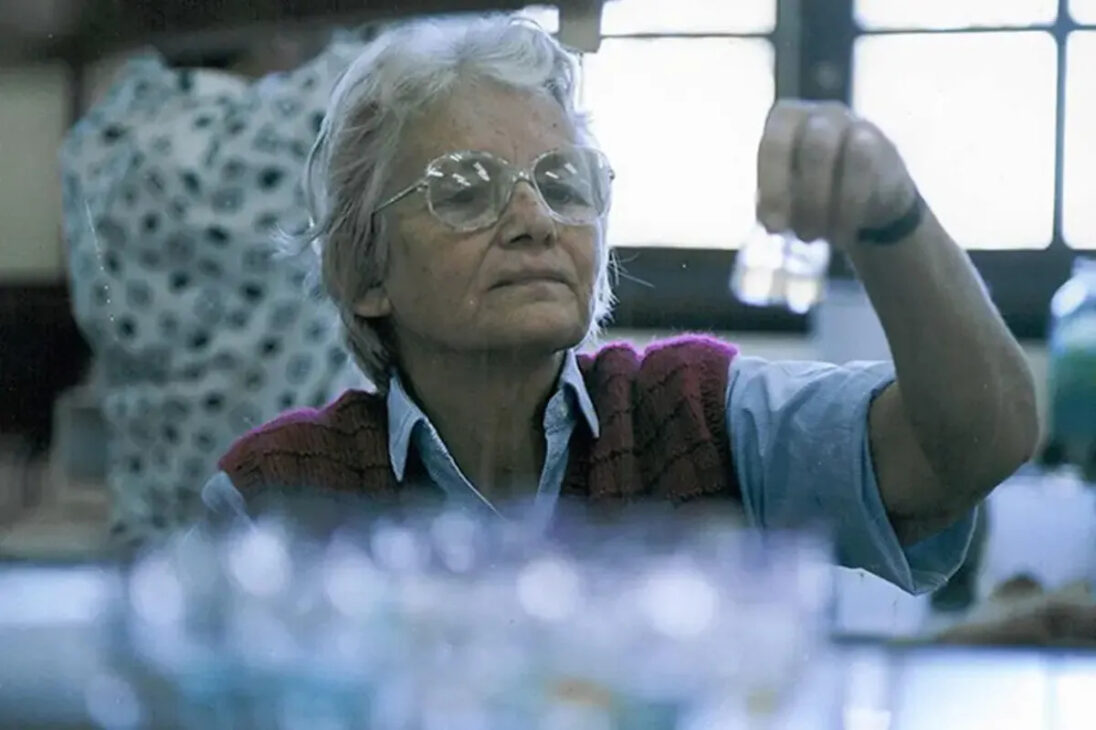
The advancement began in 1950, when Johanna started studies on nitrogen-fixing bacteria (NFB) — microorganisms that live in plant roots and convert nitrogen from the air into essential nutrients. This process, known as biological nitrogen fixation (BNF), made it possible to cultivate soybeans without industrial fertilizers.
In practice, the seeds are inoculated with specific bacteria, such as Rhizobium and Bradyrhizobium, which form nodules in the roots and act as “natural power plants” for fertilization. According to Embrapa Agrobiology, in Seropédica (RJ), this technique completely eliminated the use of nitrogen fertilizers since 1964. Additionally, it provided a savings equivalent to US$ 2 billion per year and consolidated Brazil as a leader in sustainable tropical agriculture.
From War-Devastated Europe to Brazil
Born on November 28, 1924, in the former Czechoslovakia, Johanna faced the consequences of World War II. The daughter of chemist Paul Kubelka and Margarethe Kubelka, she lived through political persecution after her parents helped Jews escape the Nazi regime. Her mother died in a concentration camp in 1945, and her father was imprisoned.
Despite the losses, Johanna moved forward. In 1947, she enrolled at the University of Munich, where she met veterinarian Jürgen Döbereiner. She graduated in 1950 and that same year immigrated to Brazil, invited by her father, who was already settled in the country.
She was soon hired by the National Agricultural Research Service, a precursor to Embrapa, and began her research on tropical soils. While observing grasses that remained green without fertilization, she identified bacteria that thrived in acidic soils, typical of Brazilian territory. This finding led to the discovery of the species Beijerinckia fluminensis in Rio de Janeiro and paved the way for the scientific revolution that would mark her career.
Biotechnological Advancement and Global Recognition
During the 1960s, Johanna joined the National Soybean Commission, created to increase the productivity of the legume. While most researchers advocated for the use of chemical fertilizers, she proved that bacteria could completely replace nitrogen fertilizer.
The result was a profound transformation in Brazilian agriculture. Soybeans began to grow in a self-sustainable manner, with lower cost and environmental impact. This advancement consolidated the country as a world leader in biological agriculture and a symbol of sustainable innovation.
Over the course of her five-decade career, Johanna published more than 500 scientific articles, described nine new species of diazotrophic bacteria, and mentored dozens of researchers from Embrapa and Brazilian universities. In 1997, according to Faperj, she was nominated for the Nobel Prize in Chemistry for her contribution to tropical agriculture. Additionally, species such as Gluconacetobacter johannae and Azospirillum doebereinerae were named in her honor.
Scientific Legacy and Lasting Economic Impact
Naturalized as a Brazilian in 1956, Johanna stated in an interview with O Globo in 1979 that she “would not trade Brazil for any other country.” Even diagnosed with Alzheimer’s in the 1990s, she continued working at Embrapa Agrobiology, remaining true to science until the last months of her life.
In 1996, she faced the loss of her son Lorenz, murdered in São Paulo, but did not abandon her work. She passed away on October 5, 2000, at the age of 75, due to bronchopneumonia.
According to Embrapa, her discoveries continue to guarantee billions in annual savings, replacing millions of tons of fertilizers and strengthening Brazil’s role as a sustainable agricultural powerhouse.
More than two decades after her death, the impact of her research continues to grow. Biological nitrogen fixation has become essential for balancing production, economy, and environmental preservation.
After all, how did a woman who fled from war manage to transform the agriculture of an entire country and turn it into a global benchmark for sustainability?






-

Uma pessoa reagiu a isso.