





 Portuguese
  English
  Spanish
  3 min of reading
  0 comments



Greenland Ice Study Showed That Hydrogen in the Atmosphere Changed More Than Previously Thought Over the Centuries, Reinforcing the Warning About Its Indirect Effects on Global Warming
The hydrogen present in the atmosphere has increased significantly since the beginning of the industrial era. The estimated rise of 60 percent reinforces how the burning of fossil fuels has altered the composition of the air and increased pressures on the climate.
Even though it is not a classic greenhouse gas, this element can indirectly warm the planet. This occurs because it interferes with chemical reactions that help remove methane, one of the gases most associated with global warming.
Greenland Ice Preserved a Record of 1100 Years
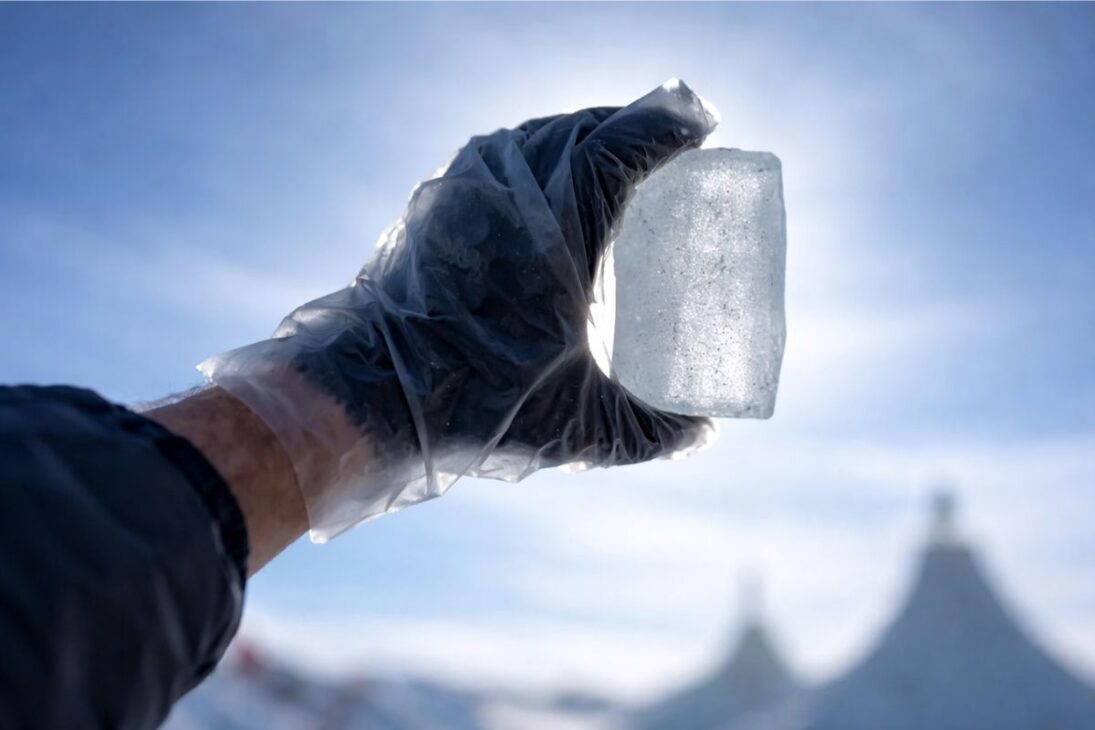
The historical reconstruction was made from ice cores taken in Greenland in 2024. The difference was the immediate analysis of the samples still in the field, before the hydrogen escaped from the material.
-
In Mexico, a 3,000-year-old Maya site with the dimensions of an entire city may have been built as a colossal map of the cosmos, created to represent the order of the universe and reveal how this people organized space, time, and rituals.

-
Japan wants to build a solar ring of 10,900 kilometers on the Moon to continuously send energy to Earth.
-
Weighing almost 1 ton, with temperatures of up to 3,000°C, the ability to launch 10,000 fragments within a radius of 1 km, capable of penetrating concrete and melting steel, Turkey’s terrifying bomb emerges as one of the most destructive non-nuclear weapons ever presented.

-
After a submarine disappeared beneath the “Doomsday Glacier,” scientists announce a new monstrous machine capable of operating at 3,000 meters depth to return to the heart of the ice and investigate a threat that could raise sea levels worldwide.
This care changed the scope of the measurement. Instead of a series of about 100 years, the researchers managed to assemble a history of 1100 years, opening a new window to understand slow and profound changes in the atmosphere.
Concentration Rose from 280 to 530 Parts Per Billion
The data indicate that the concentration of hydrogen in the air rose from about 280 parts per billion in the early 19th century to something near 530 parts per billion today. This jump parallels the expansion of fossil fuel and biomass burning over the last two centuries.
In practice, this advancement shows that human impact on the atmosphere is not limited to carbon dioxide. Other components have also increased and begun to influence the planet’s chemical balance.
Decrease of 16 Percent in the Little Ice Age Caught Attention
Looking back, scientists found a decrease of 16 percent during the so-called Little Ice Age, a period of lower temperatures between the 16th and 19th centuries. The decline was stronger than expected.
The reduction of natural wildfires does not alone explain everything. This suggests that natural processes related to hydrogen may respond to climate in a more sensitive manner than previously thought, which increases concerns about future changes.
According to New Scientist, British Science and Technology Magazine, Hydrogen Competes for Reactions with Hydroxyl Radicals and Reduces Methane Removal
When it increases in the atmosphere, hydrogen begins to compete with methane for molecules that help clean the air. With fewer of these molecules available to remove methane, the warming effect of this gas can last longer.
The presented estimate suggests that hydrogen already accounts for something near 2 percent of the warming caused by human activities. It may seem small, but it gains weight when added to other factors that push global temperatures up.
Hydrogen Fuel Advancement Becomes Central to the Debate
This scenario also impacts the discussion about using hydrogen as an energy alternative. Releases into the atmosphere can amplify the effect of methane, especially at a time when this gas has been rising since 2007 due to fossil fuel production, agriculture, and warming of wetlands and permafrost.
This outcome does not diminish the value of hydrogen as a cleaner option than fossil fuels. But it reinforces the idea of careful use, especially in sectors where direct electrification still cannot replace current consumption.
The Warning Does Not Derail the Transition, but Changes the Climate Calculation
The discovery reinforces that the energy transition needs to look beyond the most recognized emissions. The increase in atmospheric hydrogen shows that new solutions also carry side effects that need to be measured accurately.
In the end, the message is clear. Switching from fossil sources remains essential, but ignoring leaks and reactions in the atmosphere can be costly and changes the strategic reading.








-

3 pessoas reagiram a isso.