





 Portuguese
  English
  Spanish
  5 min of reading
  12 comments


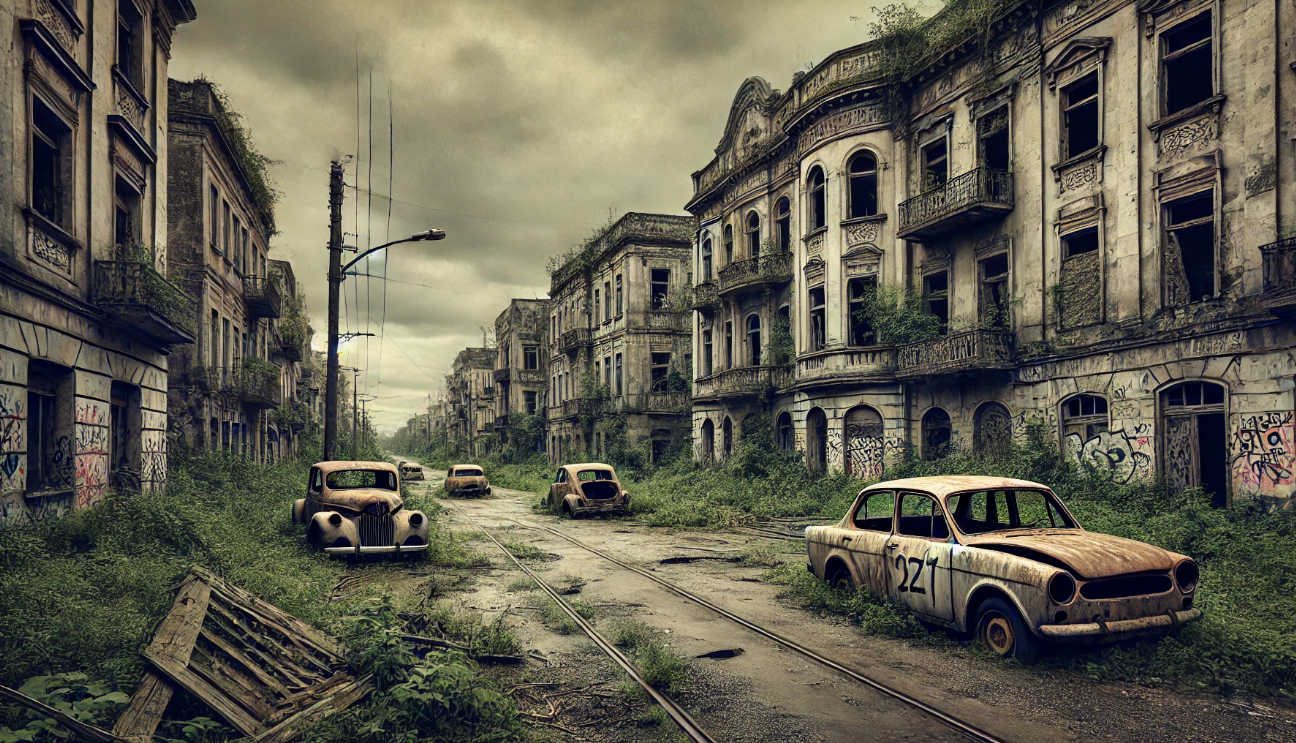


Researchers Point Out That An Unexpected Animal Could Replace Humans As The Dominant Species On The Planet In A Distant Future. Find Out What It Is And Why.
The idea of a world without humans evokes a mix of discomfort. We are a species that has left deep marks on the planet, from the exploitation of natural resources to the impact on climate change.
But what if one day we disappeared? Who or what would take on the role of the dominant species on Earth?
This question is explored by Professor Tim Coulson from the University of Oxford in his book The Universal History of Us.
-
Airbus and Mercedes take the G-Class to the skies: the ACH145 helicopter priced at R$ 78 million debuts in São Paulo, unit goes to Brazilian, AMG cabin, 5-blade rotor, and a 2-year wait.

-
New material could change everything: it is the thickness of an atom, 200 times stronger than steel, and 100,000 times thinner than a human hair.

-
A new study published in Nature reveals that the SLIT3 protein can increase calorie burning by activating brown fat in the body, functioning as a kind of “biological switch.”

-
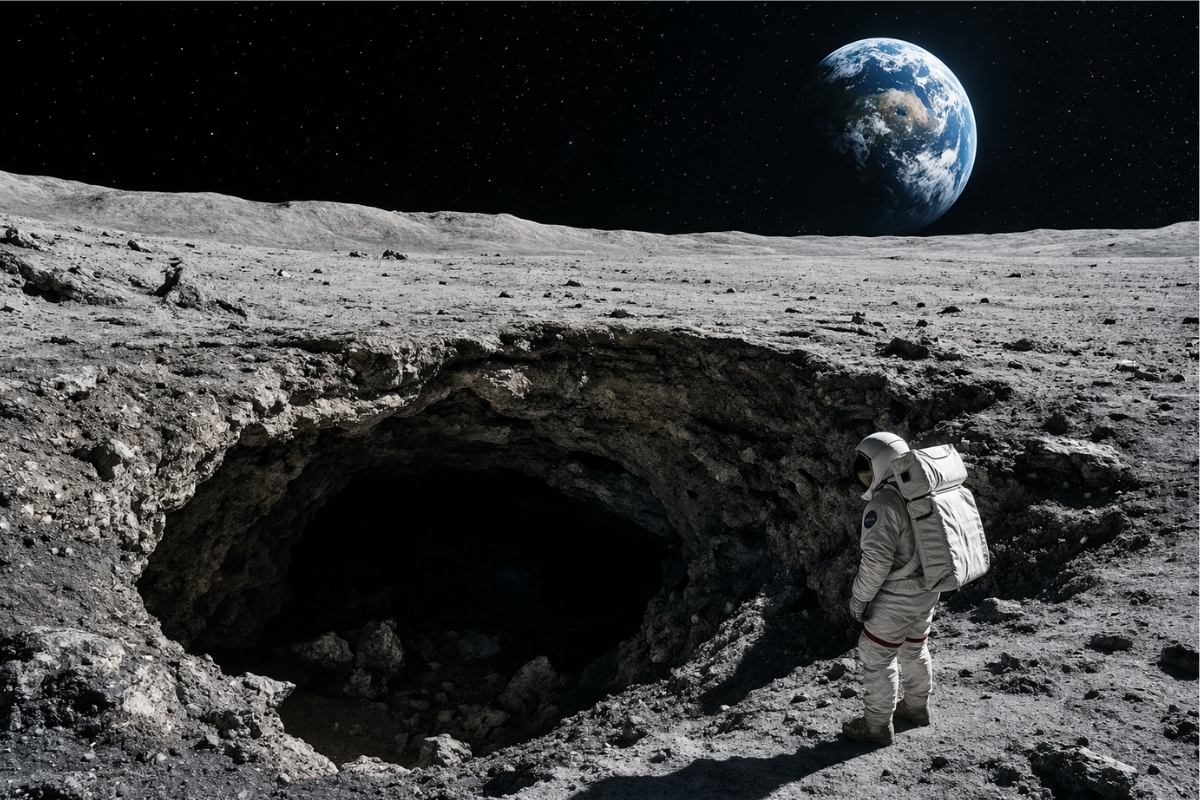
New signals detected by NASA suggest that the Moon may hide accessible underground cavities, after data from Mini-RF indicated a conduit over 60 meters beneath a lunar pit.

The biologist and evolution expert presents intriguing reflections on how life could evolve without human presence. He questions the limits of evolution and suggests surprising possibilities about the future of biodiversity.
A Planet Without Humans
The history of Earth teaches us that no species is eternal. Since the emergence of life billions of years ago, the planet has seen countless forms of life rise and fall.
Mass extinctions, like the one that wiped out the dinosaurs 66 million years ago, created opportunities for new groups of animals to thrive.
Mammals, including humans, took advantage of this chance. But, just as it happened in the past, our extinction could also open doors for other species.
For Coulson, evolution is an unrelenting process that spares no one. “Extinction is the fate of all species, including humans, although we hope our end is far in the future“, he states.
This idea, although unsettling, reminds us of the fragility of our position in the natural world.
Evolution, the scientist explains, occurs through genetic mutations, which create variations among individuals. Most of these mutations are harmful, but some offer advantages, such as greater resistance to predators or increased reproductive capacity.
These advantages are passed on to the next generations, slowly shaping species over time.
What Would Come After Us?
With the disappearance of humans, Earth’s ecosystems could reorganize. Animals that currently occupy secondary niches would have the chance to adapt and thrive.
But who would be the next dominants of the planet? Many believe that primates, close relatives of humans, could take on this role.
Primates possess complex social behaviors and advanced cognitive abilities. They hunt in groups, care for their young, and exhibit traits of cooperation reminiscent of early human societies.
However, Coulson believes that these same characteristics might limit their ability to adapt in a drastically altered world.
“The social networks that primates depend on are highly sensitive to environmental changes“, explains Coulson. “If ecosystems are severely affected, these species may not be able to adapt quickly enough.”
The Octopus: A Surprising Candidate
Among the candidates that Coulson suggests as potential successors to humans, one of the most surprising is the octopus.
These marine creatures, known for their intelligence and remarkable abilities, could be the next dominants of the planet.
Octopuses have a decentralized nervous system, with two-thirds of their neurons located in their arms. This unique structure allows them to perform complex tasks, such as manipulating objects, opening jars, and even using tools.
Additionally, they demonstrate creativity and curiosity, characteristics associated with advanced intelligence.
Coulson recounts fascinating cases showing the adaptability of octopuses. “In some research centers, octopuses have been observed escaping their tanks at night to explore other aquariums or even hunt prey“, he shares. This behavior suggests a high degree of planning and problem-solving.
The Limitations of Octopuses
Despite their abilities, octopuses face significant challenges. They are aquatic creatures, and their lack of a skeleton makes them vulnerable in terrestrial environments.
Furthermore, their relatively short lifespan limits the time available to learn and transmit behaviors.
However, Coulson argues that evolution can overcome these barriers. “It is possible that, over millions of years, octopuses will develop adaptations to live outside of water“, he suggests.
“With advanced respiratory systems, they could explore new habitats and even hunt terrestrial mammals.“
This idea may seem far-fetched, but it is consistent with the patterns of evolution. After all, the ancestors of all modern vertebrates were aquatic creatures that eventually adapted to life on land.
A World Dominated by Octopuses
If octopuses were to achieve an intelligence level comparable to that of humans, what would the planet look like under their dominion?
Coulson imagines fascinating scenarios, such as underwater cities built with marine materials and technologies adapted to the aquatic environment. He also considers the possibility of octopuses developing tools to explore land.
“Octopuses could create breathing apparatuses to explore the terrestrial surface“, Coulson speculates. “They could build organized societies, with communication systems based on colors and luminous patterns.“
Although these ideas are speculative, they remind us of how evolution can lead life down unexpected paths.
Few could have predicted that the small mammals coexisting with dinosaurs would become the ancestors of humans.
The Unpredictability of Evolution
Coulson emphasizes that the future of life on Earth is shaped by numerous variables, many of which are impossible to predict. Catastrophic events, such as climate change or asteroid impacts, can drastically alter the course of evolution.
Moreover, genetic mutations and population bottlenecks can produce outcomes that seem improbable or even impossible at first glance.
The scientist points out that octopuses are just one of many possibilities. Other species, such as birds or rodents, could also evolve to occupy dominant niches.
The future of life on Earth will depend on the environmental conditions and evolutionary pressures that emerge after humans disappear.
Lessons from a Future Without Humans
While Coulson does not claim that octopuses will become the next dominants of the planet, his hypothesis prompts us to reflect on our own legacy.
Humanity has shaped the world in profound ways, but we are just a small part of the long history of life on Earth.
Coulson’s book reminds us that evolution is an ongoing process, full of surprises. Species emerge, adapt, and disappear, while life finds new ways to thrive.
Thinking about the future of the planet without humans is not just an exercise in imagination, but an opportunity to appreciate the complexity and resilience of nature.
Meanwhile, we continue as the protagonists of the evolutionary story of Earth – at least for now.








Nosso Deus trata todos os dias da salvação do serviço humano. Você é um cientista não crê. E saiba que Deus dá aos simples a sabedoria que nessecitam. E o princípio da sabedoria é mostrar temor de Deus nosso criador eterno. Faça o homem o que fizer diga o que disser Deus e Jesus Cristo não mudam. Salve sua alma porque o corpo está condenado por esta causa desencarnados. Por mais que você aprenda algo neste mundo nunca se esqueça daquele que sente a maior alegria na sua salvação e de todos mais que a aceitam com amor.
AS BARATAS SERAO NOSSAS SUBSTITUTAS..!!!! É FICARAM MUITO GRANDES COM GUERRAS QUIMICAS!!!????
Mentes delirantes falam cada coisa absurda em nome da “ciência”!