





 Portuguese
  English
  Spanish
  4 min of reading
  32 comments


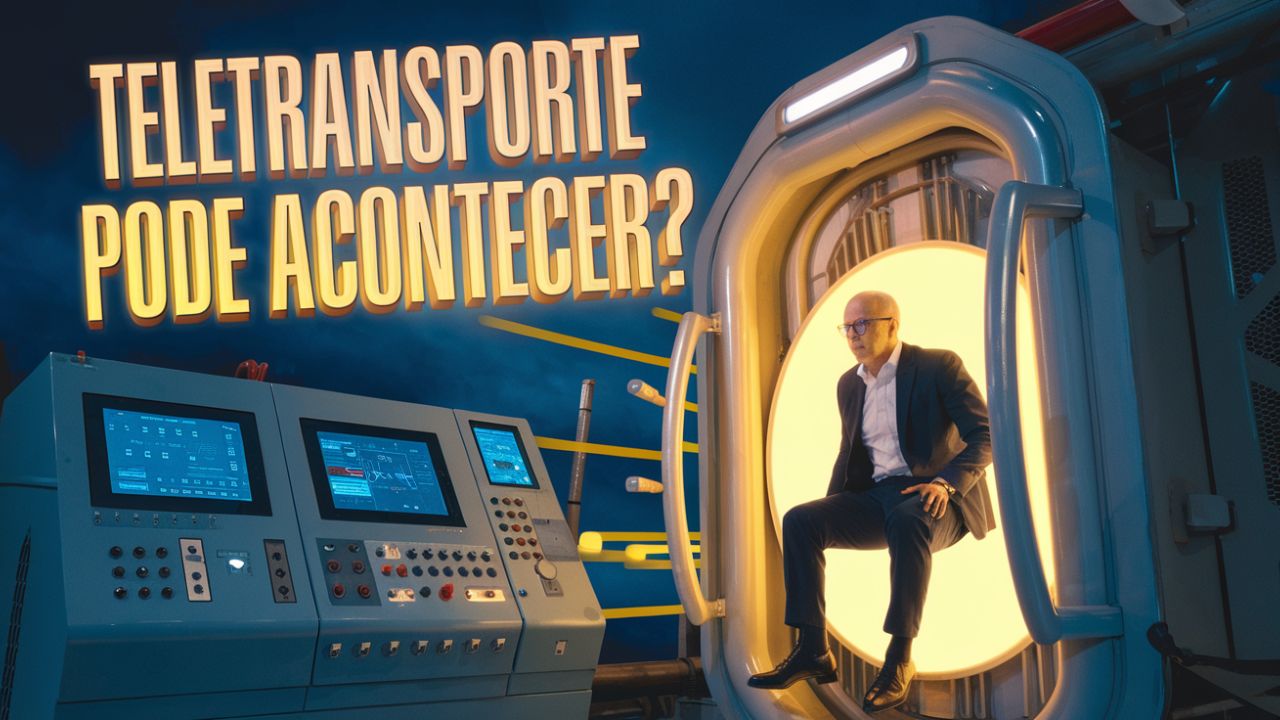


The Advances In Quantum Teleportation Have Already Allowed The Transportation Of Particles For Hundreds Of Kilometers, But The Challenge Of Recreating An Entire Human Being Involves Ethical, Philosophical, And Technical Issues Far From Being Solved.
Teleportation is an idea that has fascinated human imagination for generations. Who hasn’t dreamed of disappearing from one place and instantly reappearing in another? Popularized by science fiction, this concept is more than fantasy: it has bases in modern science, thanks to quantum mechanics. But will we ever see human beings being teleported as in the movies?
What Is Teleportation?
Teleportation, in its essence, is the act of transferring matter or information from one point to another without traversing the space in between. In science fiction, it is often depicted as an instantaneous process, but in real science, the story is a bit different.
Movies and series like Star Trek popularized the idea of machines that dematerialize a person in one location and recompose them in another. In practice, science is still far from achieving this. Quantum teleportation, for example, does not move physical matter, but rather information about the quantum states of particles.
-
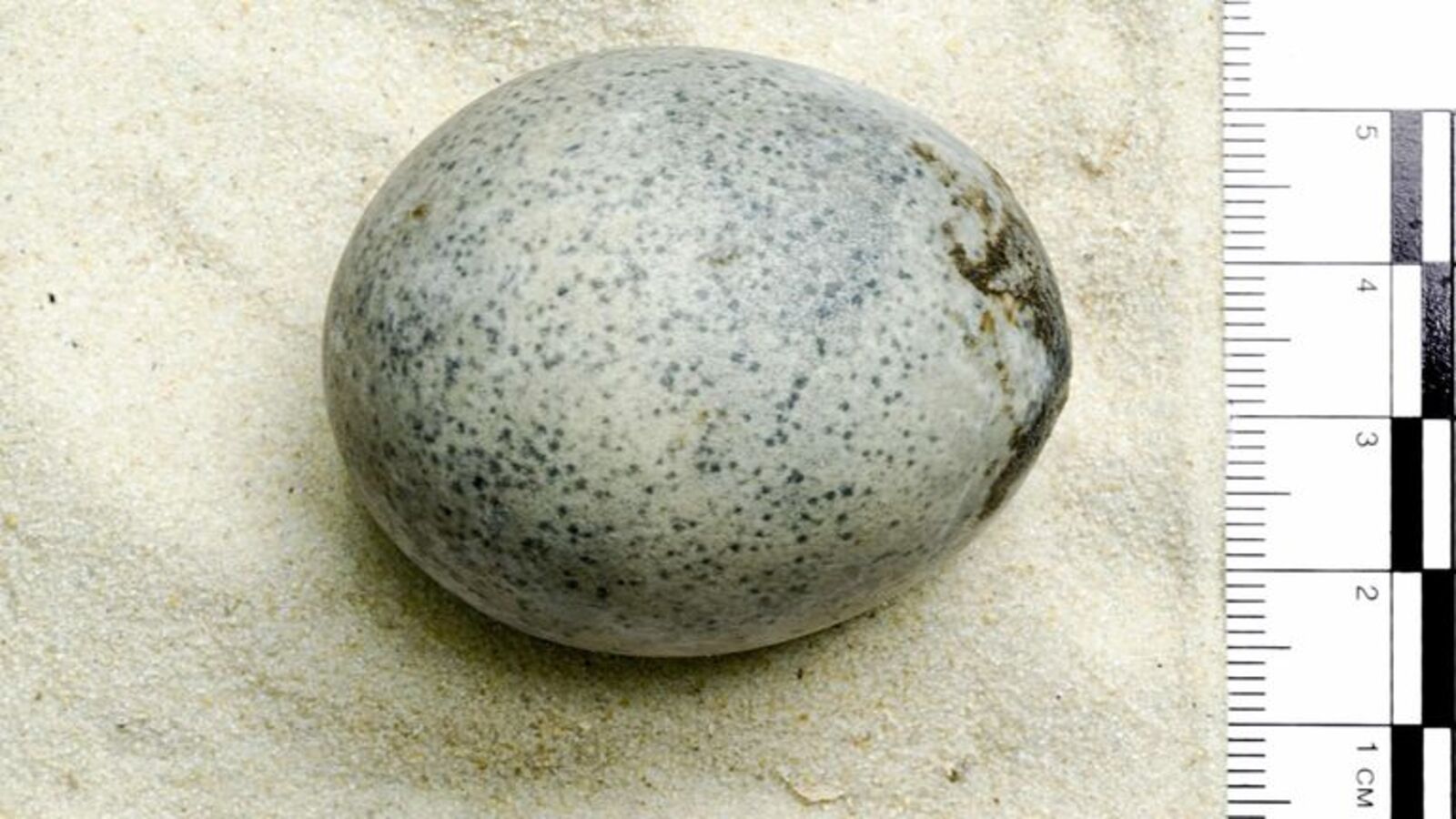
In a flooded well, archaeologists found a 1,700-year-old Roman egg that still contains clear and yolk intact inside the very thin shell.
-
Something is happening around the Earth: Inside the huge explosion of fireballs in 2026

-
A hot air bubble coming from Argentina expands over Brazil, causing thermometers to exceed 38 degrees with a thermal sensation of 40 degrees in late March, affecting 6 states at once.

-
The radish leaf that almost everyone throws away has more polyphenols, flavonoids, and fiber than the consumed root, and a 2025 study showed that the leaf contains compounds that protect the intestine, combat inflammation, and may inhibit the growth of cancer cells.

While physical teleportation would deal with atoms and molecules, quantum teleportation focuses on properties such as entanglement, a phenomenon described by Einstein as “spooky action at a distance.”
The Fundamentals Of Quantum Teleportation

Quantum teleportation is based on one of the most mysterious phenomena in physics: quantum entanglement. When two particles are entangled, the state of one instantaneously affects the state of the other, regardless of the distance.
In quantum mechanics, particles can be in multiple states at once, a concept known as superposition. By entangling them, these particles become interconnected, allowing information to be transferred without physical matter crossing space.
The first practical demonstration of quantum teleportation took place in 1998, with the teleportation of a photon over one meter. Since then, significant advances, such as the transfer of particles over urban and even spatial scales, have expanded our understanding of the phenomenon.
Scientific Advances
Experiments in quantum teleportation have become increasingly ambitious. Researchers have successfully transferred quantum states of particles over urban distances and even to satellites in space.
In 2017, Chinese scientists teleported a photon from Earth to a satellite more than 300 km away. This experiment was a watershed moment, showing that innovation can work on a cosmic scale.
Although impressive, these advances are still limited to simple particles. The teleportation of molecules or living cells would be the next big step, but we are far from achieving the complexity necessary to teleport a human being.
Is Human Teleportation Possible?
When we talk about teleporting a person, the challenges increase exponentially. After all, the human body is made up of trillions of atoms, each with unique properties that would need to be replicated with absolute precision.
One of the biggest obstacles is Heisenberg’s uncertainty principle, which prevents the exact measurement of all properties of a particle. It would require immense computational power to process and transfer the amount of data involved.
Even if it were possible to recreate a human body in another location, it would raise questions: would the teleported person be the same? If the process destroys the original to create a copy, can we consider that as continuity of identity?
Future Implications And Ethical Reflections
Despite the limitations, quantum teleportation has promising practical applications. It could revolutionize communication and data security, eliminating the risk of espionage with quantum encryption.
Imagine transmitting information instantaneously between continents or even planets. Quantum teleportation could enable almost perfect communication networks.
Before applying these technologies on a large scale, it is essential to discuss their ethical implications. Human teleportation, in particular, requires a global consensus on issues of identity, survival, and privacy.
Human teleportation is still a distant dream, but quantum advances bring us closer to a future that once seemed impossible. For now, we are left with questions: what defines who we are? And would we be willing to accept the implications of being reconstructed elsewhere? As science advances, the debate continues. After all, teleportation is not just about technology, but about our very essence as human beings.








Isso é impossível!!
Parem de Fantasiar e achar que podem tudo! Pois não podem!
Se contentem em haver carro.. e avião!
Isso já basta! E já é muita coisa!
Estou satisfeito em poder cruzar o oceano em algumas horas!! Tá ótimo!
Amo este assunto! Incrível… Difícil de imaginar, mas vamos chegar lá…
Teletransporte de objeto ok. De humanos impossível por pelo menos mais 3 mil anos.
Nao se teletransporta alma, mesmo que seu cérebro se rearranjasse do outro lado, nao seria vivo, nao seria sua consciência, e alma.