





 Portuguese
  English
  Spanish
  4 min of reading
  4 comments


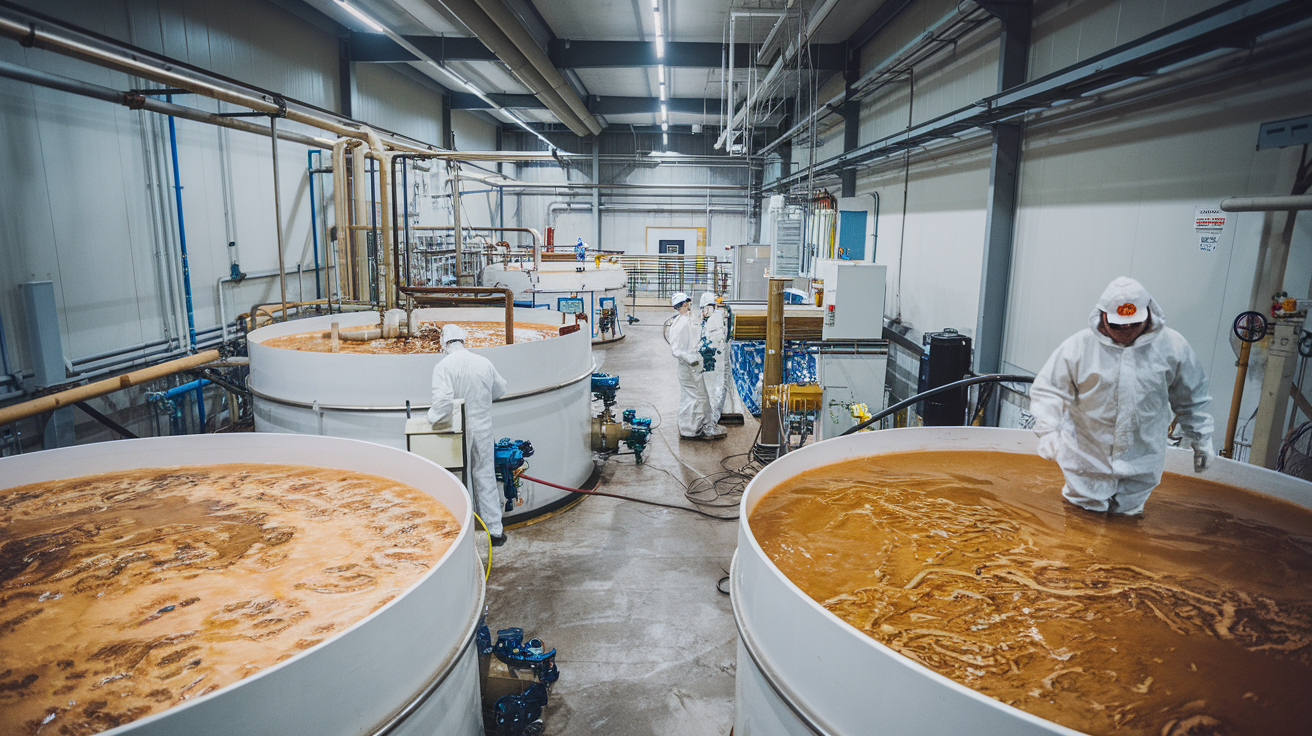


New Enzyme Discovered by Brazilian Scientists Increases Efficiency in Second-Generation Ethanol Production, Transforming Agricultural Waste, Such as Sugarcane and Corn Stalks, into Sustainable Biofuel
A promising discovery was announced by Brazilian scientists from the National Center for Energy and Materials Research (CNPEM), a social organization linked to the Ministry of Science, Technology, and Innovation (MCTI). This is an innovative new enzyme called CelOCE, which improves the conversion of biomass into second-generation ethanol. The enzyme has the ability to access cellulose present in agricultural waste, such as sugarcane, corn stalks, and other biomass sources, boosting biofuel production.
CelOCE stands out for its efficiency in breaking down cellulose, a component abundant in agricultural waste. Prior to this discovery, second-generation ethanol production faced challenges due to low efficiency in cellulose conversion, resulting in wasted raw materials. With this innovative new enzyme, it is possible to access cellulose more efficiently, using less raw material to produce the same amount of biofuels.
Impact of the Innovative Enzyme on Biomass Conversion to Second-Generation Ethanol
According to the research leader, Brazilian scientist Mário Murakami, the discovery of CelOCE represents a paradigm shift in how microbial life processes and metabolizes cellulose. “This is not just a scientific discovery, but a revolution for the bioeconomy, enabling a circular economy based on renewable biological sources,” Murakami emphasized.
-
China creates hypersonic engine that can make planes and missiles fly more than 6 times the speed of sound with less weight, more range, and without system change.

-
Mysterious object on Mars divides NASA and Harvard after Curiosity image reignites suspicions about what was really found on the planet.

-
Giant structures 14 meters beneath Egypt are revealed by satellites and expose a millennia-old secret buried in Buto.

-
Children have been making clay pieces for 15,000 years in Southwest Asia, and fingerprints preserved on 142 ornaments helped archaeologists prove this.

The benefits of CelOCE include greater efficiency in biofuel production, reduced raw material waste, lower need for new planting areas, and contributions to sustainability. As second-generation ethanol is a cleaner fuel, this innovation significantly contributes to reducing greenhouse gas emissions.
Murakami compared the discovery of CelOCE to the last major innovation in the field over 20 years ago, which resulted in a 10% increase in sugar release from biomass. “Our discovery provides an increase of over 20%, doubling the advancement achieved in the last technological revolution of the sector,” the scientist explained.
The new innovative enzyme could also be a determining factor for enabling the expansion of biorefineries in Brazil, making the production of biofuels, bioenergy, and biomaterials even more efficient. “These sugars released by the action of CelOCE can be bioconverted into ethanol, green gasoline, green diesel, aviation biofuel, and bio-kerosene,” Murakami added.
Differences Between First-Generation Ethanol and Second-Generation Ethanol in the Biofuel Sector
First-generation ethanol is obtained from the sucrose present in sugarcane juice. On the other hand, second-generation ethanol, also known as cellulosic ethanol, is produced from cellulose found in bagasse and the sugarcane stalks, as well as from other agricultural residues, such as corn stalks.
The great advantage of second-generation ethanol lies in its sustainability. As it is produced from waste that would normally be discarded, its production reduces environmental impact and optimizes the use of natural resources. With the discovery of CelOCE, Brazilian scientists have taken a crucial step towards making the production of this biofuel even more efficient and economically viable.
Moreover, the use of this innovative enzyme could strengthen Brazil’s position as a global leader in biofuel production, enhancing its competitiveness in the sector. With the growing demand for renewable energy sources and the need to reduce dependence on fossil fuels, advancements in biomass conversion to second-generation ethanol become a strategic factor for the economy and the environment.
The Future of Biofuel Production Driven by New Brazilian Technology
The discovery of CelOCE by Brazilian scientists reinforces Brazil’s potential as a global reference in bioenergy. The country is already one of the largest producers of ethanol in the world, and with this new technology, it can advance even further in sustainable biofuel production.
In the coming years, this innovative enzyme is expected to be widely used in the industry, optimizing the use of agricultural waste and increasing the efficiency of biomass conversion into second-generation ethanol. This innovation has the potential to attract new investments to the biofuel sector, strengthen the bioeconomy, and contribute to a more sustainable future.
With this new discovery, Brazilian scientists once again demonstrate the fundamental role of research and innovation in developing clean and renewable energy solutions. CelOCE may be the key to a new era in biofuel production, consolidating Brazil as a global reference in the energy transition towards a more sustainable and environmentally responsible model.
Source: Ministry of Science, Technology, and Innovation








É UMA DESCOBERTA REVOLUCIONÁRIA.
QUEM SABE VAI EXPANDIR PARA OUTRAS CULTURAS COMO AS OLEAGINOSAS.
QUEM SABE…
PARABÉNS PARA TODA A EQUIPE DE PESQUISADORES.
ESSE É UM EXCELENTE EXEMPLO DE COMO É IMPORTANTE INVESTIR EM PESQUISA.
E SÓ LEMBRANDO
UMA PESQUISA LEVA UM GRANDE TEMPO .
NÃO É COMO FAZER UMA PANELA DE ARROZ
Sempre achei que álcool obtido a partir da celulose um polissacarídeo fosse de terceira geração,o de amido um oligossacarideo fosse de segunda geração ,pois precisa de um agente sacarificante extra alfa amilase. Já o de sacarose e monos sacarideos fosse de primeira geração por sofre transformação direta em entanol.
Mais uma novidade e avanço da inteligência de cientistas brasileiros. Será que o governo vai dar apoio e incentivo para o avanço desta descoberta ?
Já dá meu caro! O CNPEM é vinculado ao Ministério da Ciência, Tecnologia e Inovação que junto as Universidades Públicas, injustamente e de forma criminosa chamadas de “antro de maconheiros” por determinado setor político-religioso-fundamentalista retrógrado insiste em criticar e sabotar a pesquisa científica nacional, lutam bravamente em criar inovações, forjar patentes, produzir inovações de valor agregado para deixarmos de sermos um atrasado exportador de produtos primários.