





 Portuguese
  English
  Spanish
  3 min of reading
  0 comments


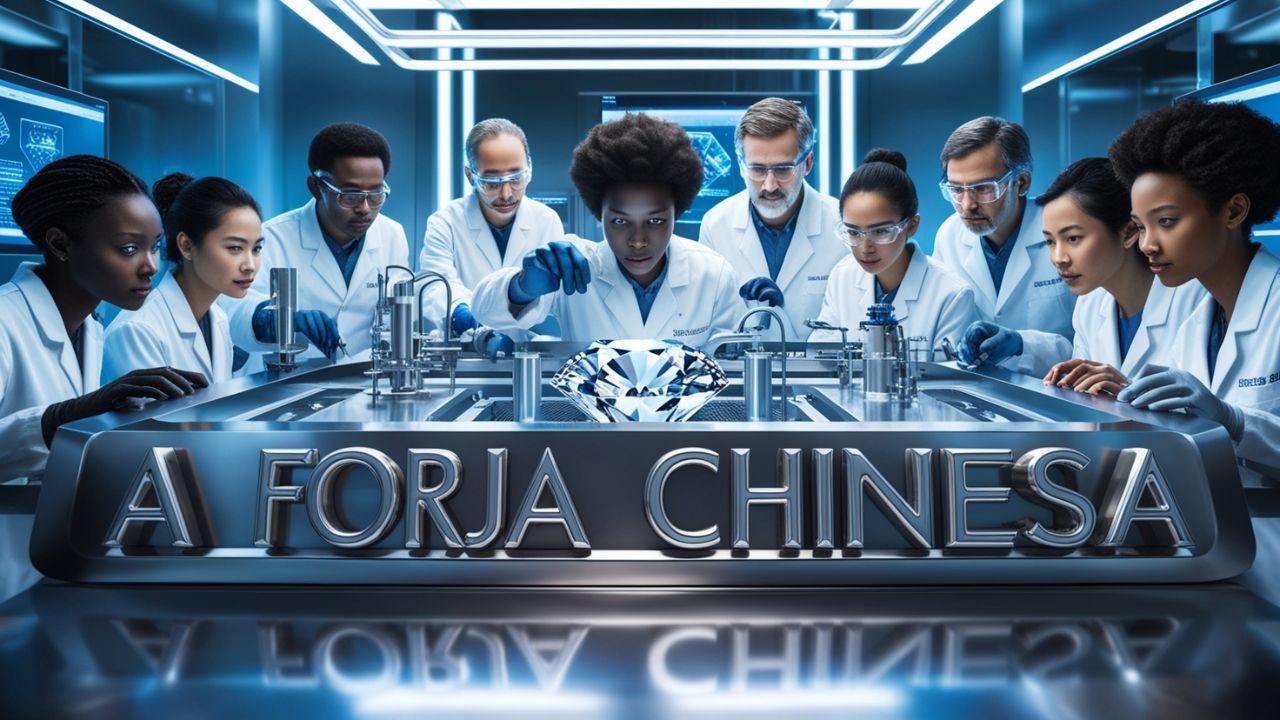
Chinese Researchers Synthesize A Rare Hexagonal Superdiamond, Surpassing The Hardness Of Natural Diamonds And Paving The Way For Revolutions In The Cutting, Polishing And Advanced Technology Industry!
Science has just made a giant leap in the world of ultrahard materials! Chinese scientists have discovered an innovative way to create a superdiamond in the lab, much more resistant than any known natural diamond. But what makes this discovery so impressive? And what impact could it have on the industry?
The Revolution Of Artificial Diamonds
Diamonds have always been synonymous with luxury and strength, but their use goes far beyond shiny jewelry. In industry, they are essential for cutting, polishing, and even in the production of electronic chips. Now, with the advancement of superdiamonds, these applications could reach a new level.
Unlike conventional diamonds, which have a cubic structure, the lab-created superdiamond has a hexagonal crystal structure. This differentiated shape makes it even more resistant, surpassing any natural diamond in hardness and purity.
-
Something is happening around the Earth: Inside the huge explosion of fireballs in 2026

-
A hot air bubble coming from Argentina expands over Brazil, causing thermometers to exceed 38 degrees with a thermal sensation of 40 degrees in late March, affecting 6 states at once.

-
The radish leaf that almost everyone throws away has more polyphenols, flavonoids, and fiber than the consumed root, and a 2025 study showed that the leaf contains compounds that protect the intestine, combat inflammation, and may inhibit the growth of cancer cells.

-
A planet that seemed to defy the laws of physics has intrigued scientists for decades, until the James Webb revealed what is really affecting Saturn’s rotation.


Traditional diamonds form over millions of years under high pressure and temperature inside the Earth. Synthetic diamonds, on the other hand, are produced in labs using processes that mimic these conditions. The difference with the superdiamond is that it not only replicates but exceeds the properties of natural diamonds, becoming a true game changer in the sector.
The Secret Behind The Superdiamond

Until recently, ultrahard diamonds could only be found in meteorite impact craters, making them extremely rare and limited. But now, Chinese scientists have managed to synthesize these treasures from graphite – a common and accessible material.
The superdiamond belongs to a rare class of diamonds called lonsdaleite, first discovered in 1967 in the Canyon Diablo meteorite in Arizona. The major innovation of the scientists was to produce this structure in a controlled manner, resulting in a material that is “well-crystallized and nearly pure.”
The Chinese team used an advanced high-pressure and temperature process to transform graphite into superdiamond. This approach not only allowed the synthetic creation of the material but also achieved an unprecedented level of purity.
Applications Of The Superdiamond In Industry
Now that scientists have found an efficient way to produce superdiamonds, the possibilities for application are immense.
Diamonds are already widely used for cutting and polishing extremely hard materials, but the superdiamond can elevate this process to a new level. Tools equipped with this material can last longer and perform even more precise cuts, reducing costs in the industry.
In addition to conventional applications, the superdiamond could be explored in the production of more efficient semiconductors and even in ultrahigh-strength coatings for high-performance equipment.







Seja o primeiro a reagir!