





 Portuguese
  English
  Spanish
  3 min of reading


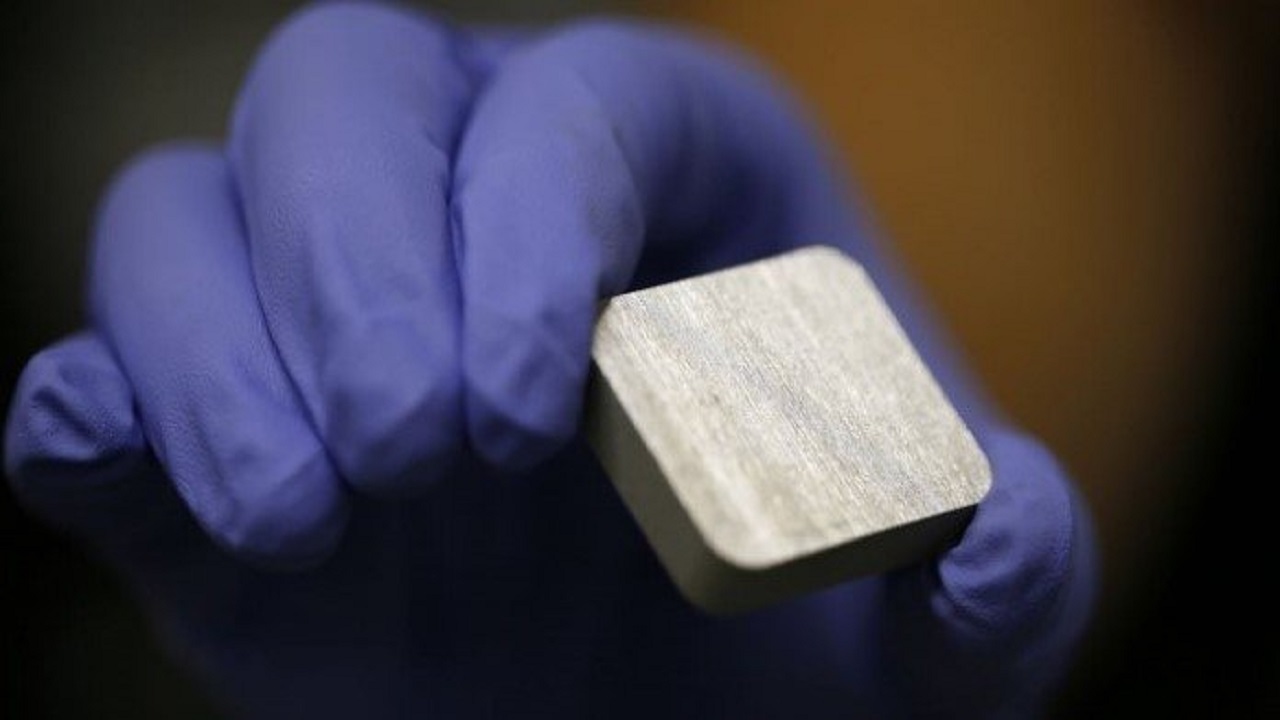
Scientists In Austria Develop Innovative Air Battery That Could End Lithium-Ion Batteries. Oxygen Batteries Are More Durable, Safe, And Cheaper.
Lithium-ion batteries are already present in various electronic devices and electric vehicles, being produced with great ease today. However, researchers have been developing a new technology that could revolutionize the battery market: the production of oxygen ion batteries. This innovation has the potential to make batteries more efficient and durable, as well as safer and more sustainable. In this article, we will explore how this new technology works and how it could impact our daily lives.
Air Batteries?


The innovative oxygen batteries can be developed without using expensive and rare chemical elements, and will be produced using only non-combustible materials, thus reducing the risk of explosions and fires, which is very common with lithium batteries.
The concept of the air battery was introduced by a trio of researchers from the Vienna University of Technology in Austria. According to Alexander Schmid, the researchers already have extensive experience with ceramic materials, which have been used for fuel cells for several years. This led them to investigate whether these materials could also be suitable for developing a battery.
-
An engineer designs a solar plane to fly on Mars at an altitude of 1,000 meters and a speed of 300 km/h, covering 16,000 kilometers in a Martian year, 900 times the distance traveled by the Ingenuity helicopter in three years on the planet before experiencing a rotor failure, and NASA is already funding the feasibility study.

-
A new phenomenon of contactless magnetic friction intrigues scientists and questions a theory that has been valid since the 17th century.
-
An impressive phenomenon in Northern Brazil causes rivers of different colors to flow side by side, revealing secrets about sediments, currents, and biodiversity.

-
While many schools are still struggling with the basics, a teacher in China went viral for having elementary school students build a two-stage rocket using plastic bottles, water, and pressurized air in a science class that caught the attention of the entire world.


The ceramic materials studied by the team are capable of releasing and absorbing doubly negatively charged oxygen ions (O²). When an electrical voltage is applied, the oxygen ions migrate from one ceramic material to another, from where they can be forced to migrate back again, thus generating an electric current. According to Professor Jurgen Fleig, the basic principle of oxygen batteries is actually very similar to that of lithium-ion batteries, however their materials have some essential advantages.
New Battery Features Longer Life
The oxygen ion battery concept has another significant advantage: its longevity. Schmid states that in various batteries there is the problem that, at some point, the charge carriers can no longer move, thus electricity can no longer be generated and the battery’s capacity is reduced. After many charging cycles, this can create a serious problem.
On the other hand, the oxygen ion battery can be regenerated without issues: If oxygen is lost due to side reactions, the loss can simply be compensated by the oxygen from the surrounding air.
As for the materials used in its construction, ceramics are non-flammable, practically eliminating fire accidents that repeatedly occur with lithium-ion batteries. Moreover, at least in theory, there is no need for rare elements, which are expensive or available only in limited areas of the world.
Challenges Faced By Researchers
It is important to mention that this air battery is not yet the long-awaited revolution in the field of batteries for portable devices and electric cars, which, although it has incremental improvements, has been stuck with the same technology for longer than everyone would like. This is because the new oxygen batteries achieve only about one-third of the energy density of lithium-ion batteries and only function properly at temperatures between 200 and 400ºC.
Thus, this is an extremely interesting technology for storing energy from intermittent sources, such as solar and wind, making it possible to power the electrical grid 24 hours a day. Currently, this area is dominated by flow batteries.
According to Schmid, if a whole warehouse full of energy storage modules is built, the lower energy density and the increase in operating temperature do not play a decisive role. However, the strengths of their battery would be particularly important, such as the long lifespan, the ability to produce large quantities of these materials without rare elements, and the fact that there is no fire risk with these batteries.






Seja o primeiro a reagir!