





 Portuguese
  English
  Spanish
  3 min of reading
  0 comments


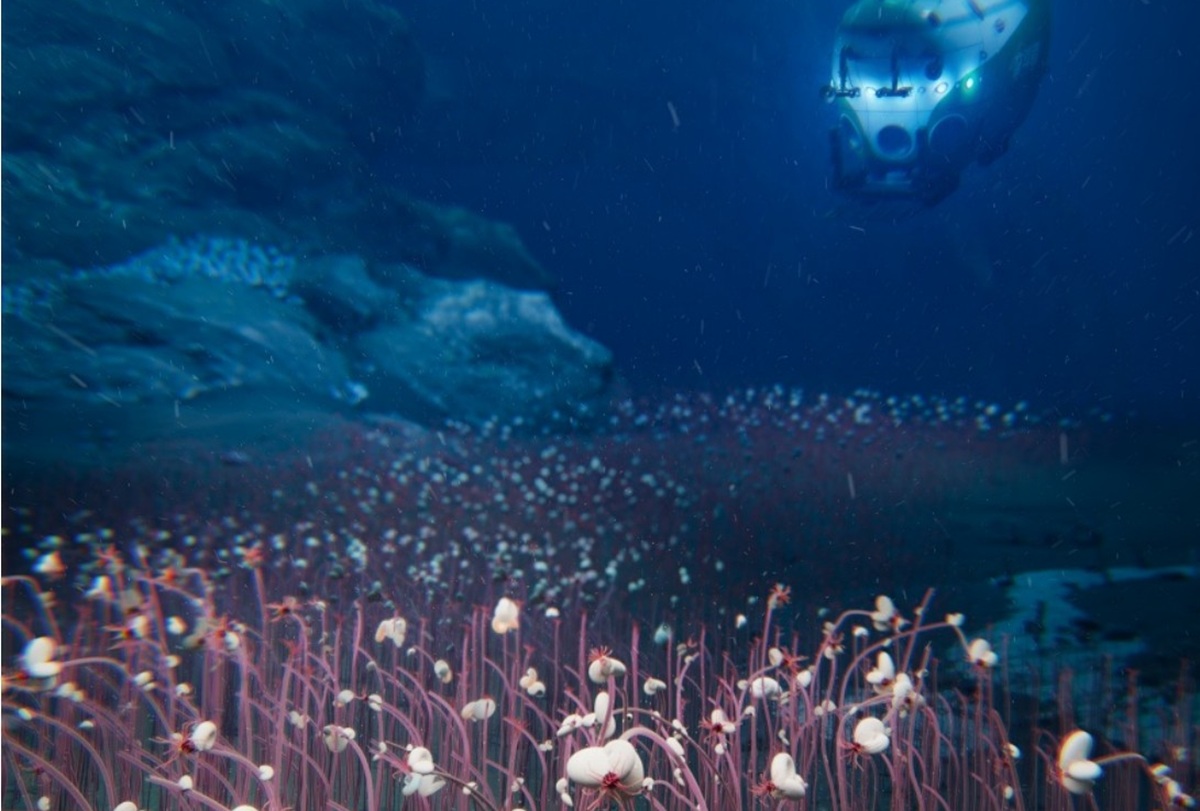
A Chinese Expedition Dived More Than 9 Thousand Meters Into the Pacific Ocean and Found Life Forms in One of the Most Extreme Environments on the Planet. Bacteria, Mussels, and Tubeworms Thrive Where Sunlight Never Reaches — Feeding on Methane and Surviving Under Intense Pressure.
A team from the Chinese Academy of Sciences made an impressive discovery on the floor of the Pacific Ocean.
Onboard a crewed submersible, scientists explored oceanic trenches in the northwest Pacific and recorded life forms at depths exceeding 9,400 meters.
The most important thing: this marks a new milestone in marine exploration, surpassing even the old record of vertebrates recorded at great depths, such as the snailfish seen at 8,370 meters in 2023, near Japan.
-
After decades of failed attempts, Brazil is once again looking to space with an orbital rocket measuring 12 meters, weighing 12 tons, costing R$ 189 million, and scheduled for launch in 2026, in a new race to finally achieve autonomous access to orbit.

-
The Earth will plunge into a few minutes of darkness in broad daylight in August 2026, when a total solar eclipse transforms the sky into one of the most impressive astronomical phenomena in recent years.

-
How the terraforming of Mars can transform the planet: artificial aerosols can increase the temperature by up to 35°C in 15 years, creating conditions for liquid water.
-
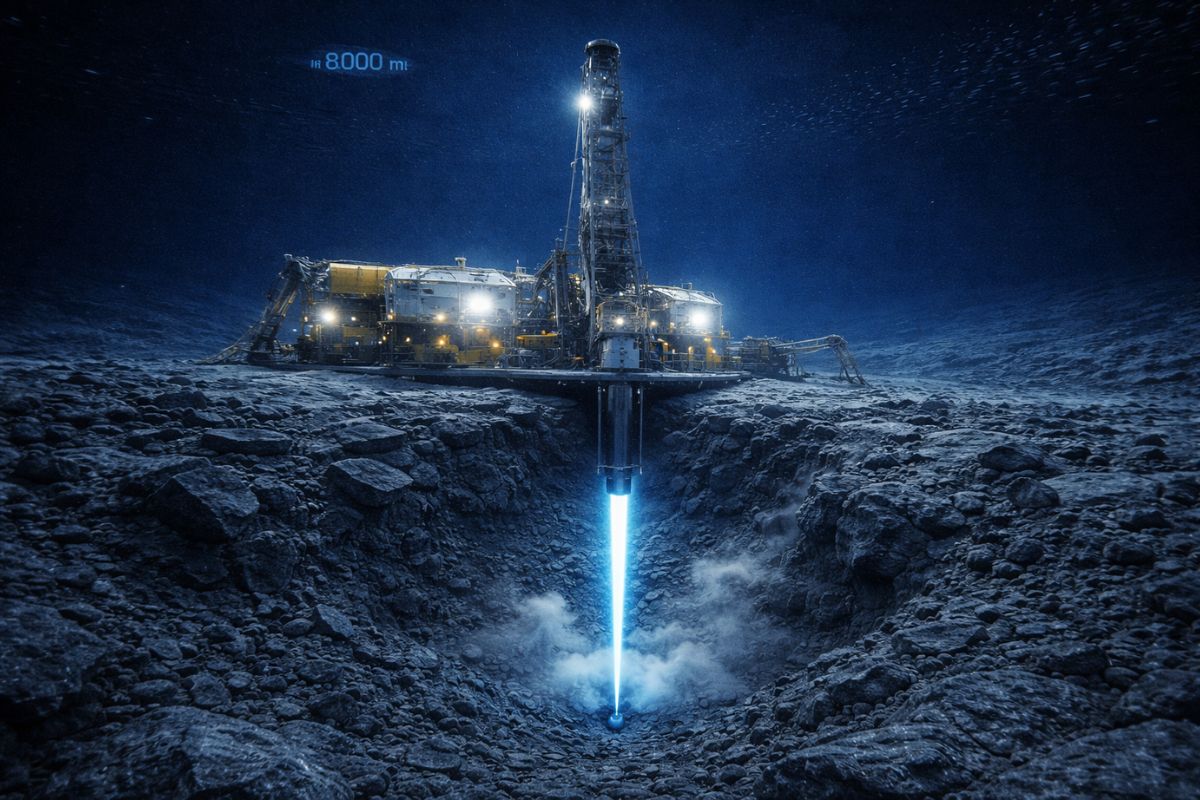
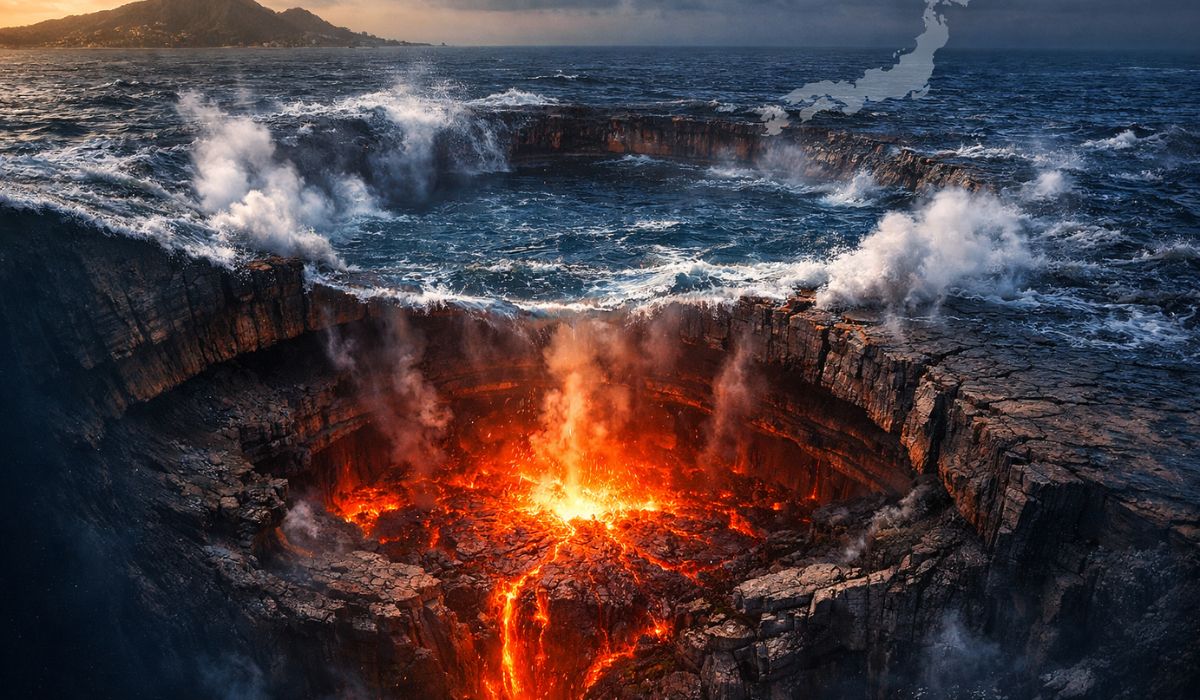
Scientists drilled nearly 8,000 meters into the ocean floor above the fault that caused the 2011 tsunami in Japan and discovered that a layer of clay 130 million years old was responsible for making the wave much worse than any model had predicted.

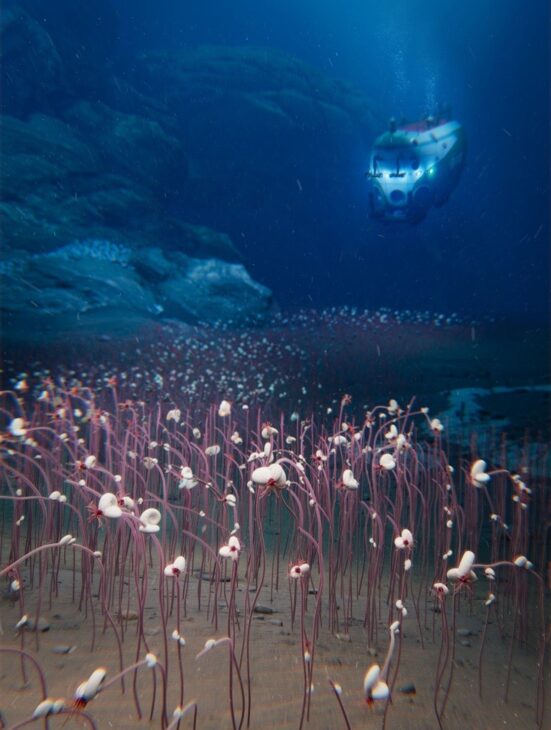
The captured images show everything from mussel beds to fields of tubeworms and mats of ice-like bacteria.
Life Where the Sun Never Comes
The so-called hadal trenches are located between 5,900 and 11,100 meters deep. Formed by subduction zones, where tectonic plates overlap, these regions are little explored.
Even so, scientists have always suspected that they could harbor life based not on photosynthesis, but on chemosynthesis.
This suspicion is now confirmed. Chinese researchers found unique biological communities in the Kuril-Kamchatka and Aleutian West Trenches.
These ecosystems thrive around methane and hydrogen sulfide leaks that escape through faults in the ocean floor.
Therefore, instead of solar light, these life forms survive by converting chemical compounds into energy.
The analysis of the collected material indicates that the methane present is generated by microorganisms that break down organic matter buried under deep layers of sediment.
Organisms Adapted to Extreme Pressure
According to researcher Xiaotong Peng, the mission opened a rare window into an unexplored world.
According to him, what the team found in the depths was truly remarkable.
Fields of tubeworms, colonies of mussels, and dense mats of bacteria were directly observed by the submersible’s cameras.
Moreover, Dr. Megran Du from the Deep Sea Science and Engineering Institute pointed out another important point.
The pressure in the trenches reaches extreme levels, which makes the adaptation of these beings even more surprising. Understanding how these organisms manage to survive there is one of the upcoming goals of the research group.
The team hopes to study the biochemical mechanisms that allow the conversion of compounds like methane into energy.
This could help better understand life forms in hostile environments — including outside Earth, on planets or moons with similar characteristics.
Mission Is Part of International Program
The study is part of the Global Hadal Exploration Program (GHEP), an international effort aimed at exploring the deepest points of the oceans.
With cutting-edge technology and extended missions, the project seeks to expand knowledge about biodiversity in hard-to-reach areas.
Recent discoveries challenge the idea that marine life can only exist up to a certain depth limit. For Dr.
Du, the view from the submersible window is not frightening but inspiring. She encourages her students to look and reflect on how much more there is to discover in the dark depths of the planet.







-

-

2 pessoas reagiram a isso.