





 Portuguese
  English
  Spanish
  3 min of reading
  2 comments


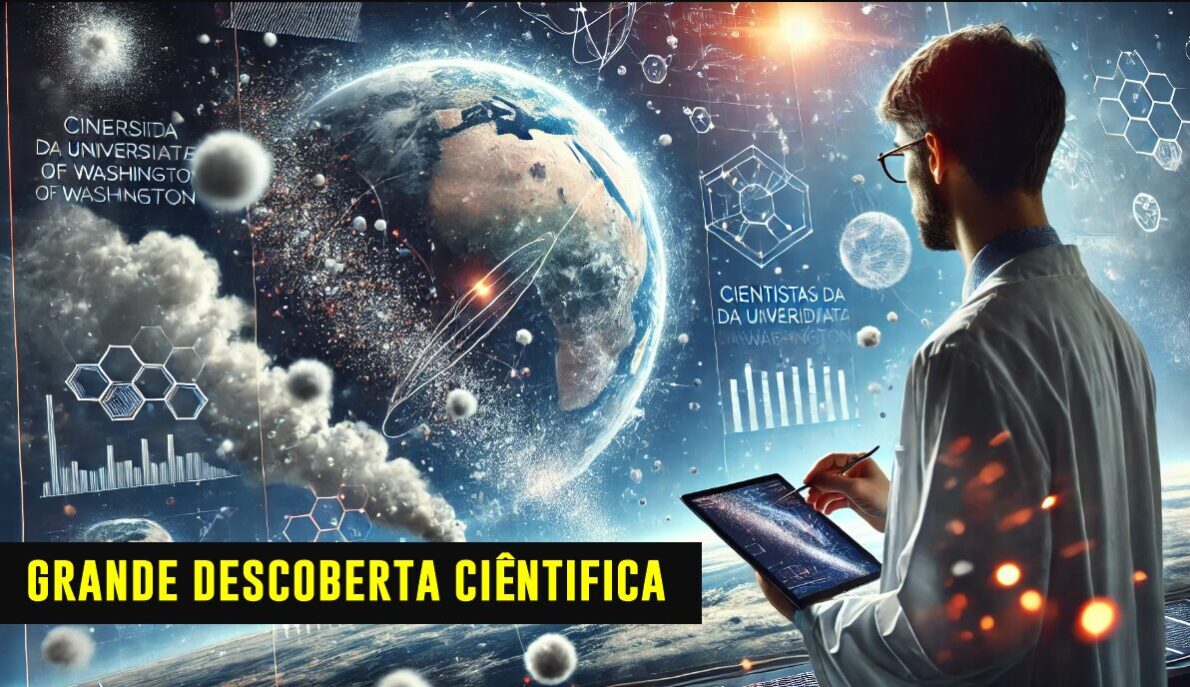


Researchers Discovered A New Process Of Particle Formation In Earth’s Atmosphere That Could Completely Change Current Climate Theories. The Mixture Between Stratospheric And Tropospheric Air Brings Promising Advances For Climate Modeling
Recently, an intriguing discovery shook the field of atmospheric science: researchers from the University of Washington in St. Louis found a new mechanism for particle formation in Earth’s atmosphere.
This discovery challenges traditional theories and could help improve climate models, providing a more accurate view of cloud formation and climate behavior in the future.
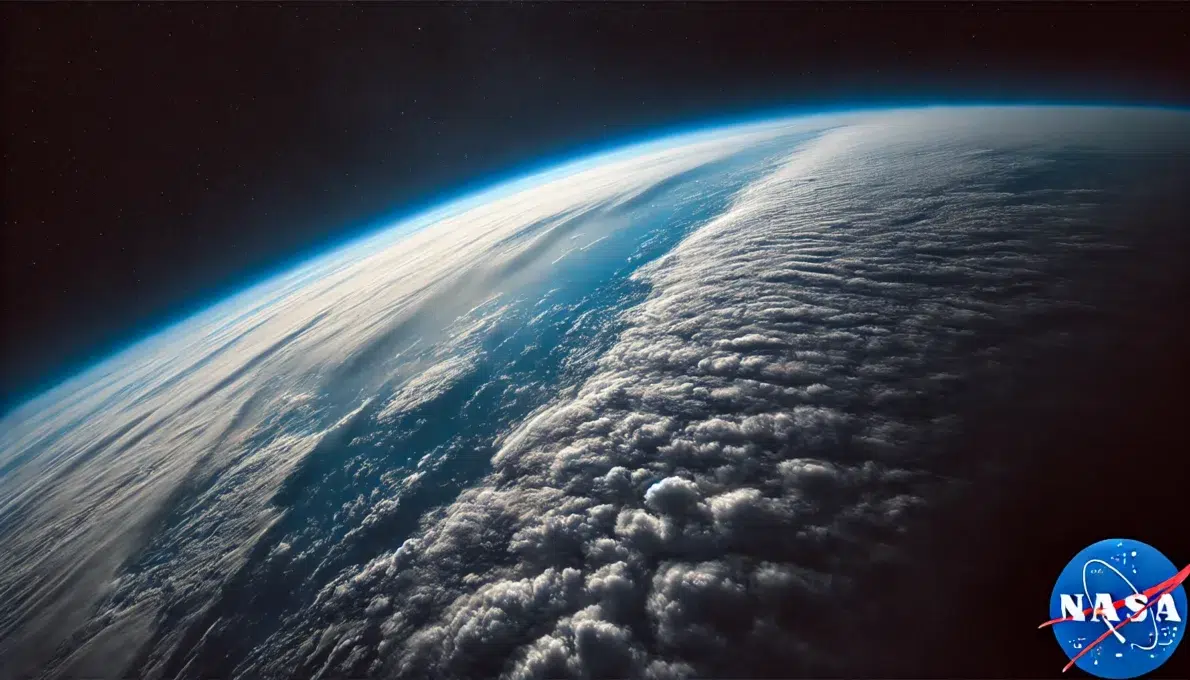
The Complexity Of Earth’s Atmospheric Particles
Earth’s atmosphere is a complex mixture of gases and particles in constant motion. These particles, while extremely small – generally less than 1% the thickness of a human hair – have a huge influence on the climate of the planet.
-
Scientists have created robots made with living cells that have their own nervous system, swim on their own, explore the environment, and self-organize without any genetic engineering, and now they want to do the same with human cells.

-
Students create a solar-powered ambulance that operates without a plug, without fuel, and still keeps medical equipment running in remote areas.

-
French “ghost” submarine lost in World War II reappears after more than 80 years on the seabed near the coast of Spain.

-
A simple stitch in wood with nylon thread can reduce adhesives, speed up production, and make sheets up to 4 times stronger and 14 times more difficult to break.


They act as seeds for cloud droplet formation, directly impacting reflectivity, precipitation amounts, and global climate. Understanding how these particles form and behave in the atmosphere is essential for predicting climate change.
The Revolutionary Discovery
The research team, led by Jian Wang, a professor and director of the Aerosol Science and Engineering Center at WashU, made a revolutionary discovery. Utilizing global data collected by NASA, the scientists noticed that the formation of new particles in Earth’s atmosphere does not predominantly occur in cloud outflow regions, as previously believed.
Prior understanding suggested that when clouds evaporate upon reaching the upper troposphere, the resulting air would be clean, allowing for the formation of new particles. However, Wang and his team found evidence that most new particles are not generated at these points. This unexpected revelation led to a closer examination of what was happening in the mixing of stratospheric and tropospheric air.
The Importance Of Stratosphere-Troposphere Mixing
The new research highlights a process that occurs when stratospheric air, rich in ozone, sinks into the troposphere, the layer closest to the Earth’s surface.
This interaction between stratospheric air and the more humid tropospheric air results in a heightened concentration of hydroxyl radicals (OH), an important oxidant that facilitates the formation of new particles.
The mixing phenomenon between these atmospheric layers is common worldwide, primarily occurring due to wavy jet streams. These streams, which are fast and strong air flows, cause stratospheric air to descend and mix with tropospheric air.
The high concentration of OH radicals created in this process makes the environment conducive to nucleation, leading to the formation of new particles.
This discovery has global implications, as this process occurs broadly, even in remote areas that are little affected by human pollution. “Although humans contribute their own particles in the form of air pollution, what we discovered is a natural process happening across the planet,” said Jiaoshi Zhang, the first author of the study and a research scientist in Wang’s lab.
Implications For Climate
An important aspect of this discovery is that stratospheric air could sink into the troposphere more frequently in the future, as climate change continues to affect Earth’s climate system. This means that the newly identified particle formation mechanism could play an even more significant role in the global climate, impacting how clouds form and consequently, climate behavior.
Including this process in climate models could significantly improve climate change predictions, enabling scientists to better simulate atmospheric particle behavior and their influences on future climates.
Wang and his team’s discovery represents an important advance in understanding Earth’s atmosphere. What started as an unexpected observation has transformed into a new understanding of the interaction between stratospheric and tropospheric air, challenging previous theories and opening new possibilities for climate research.
As scientists continue to investigate and quantify this newly discovered mechanism, the hope is that this knowledge can be used to improve climate predictions and help address the challenges of global warming.






O dia vai ser noite e a noite vai ser dia! A palavra não mente.. Ele há de voltar pra buscar seu povo! Acordem!
Quando Deus voltar só lamento quem não tem obras pra Deus não tem como ser eterno