





 English
  Francês
  Alemão
  Italiano
  Japonês
  Norueguês
  Portuguese
  Spanish
 3 min of reading


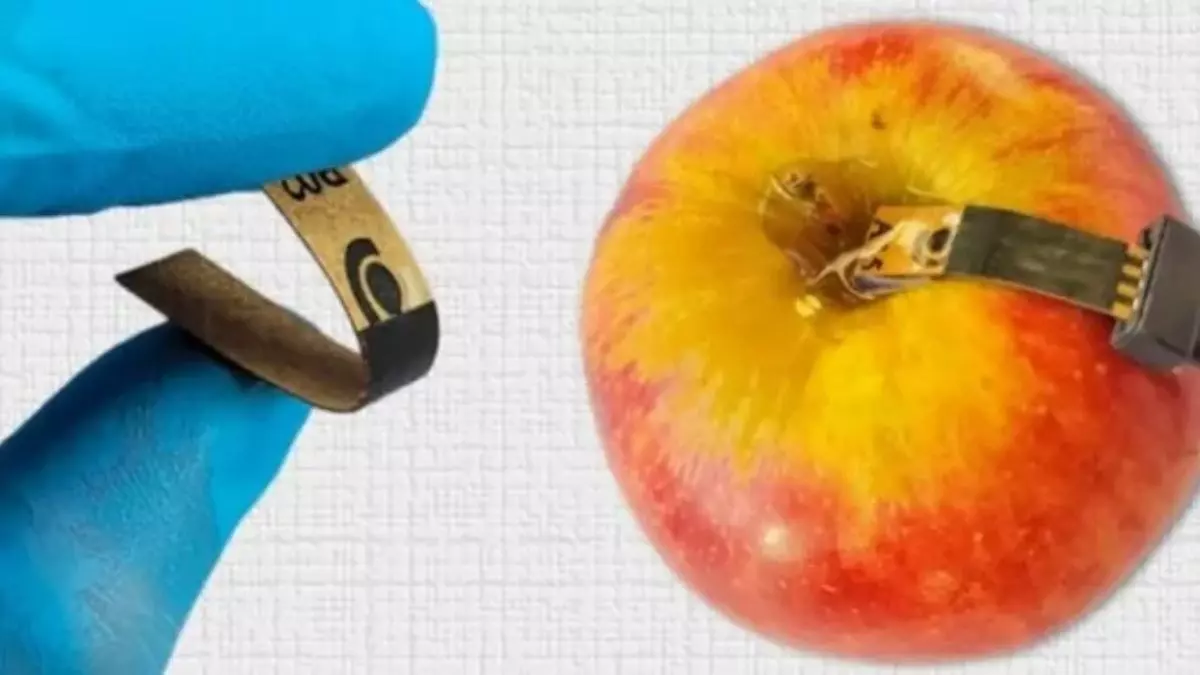
Treated Kraft Paper Is The Element Used For Pesticide Detection In Groundbreaking Technology
Researchers at the University of São Paulo (USP) developed an electrochemical kraft paper sensor capable of detecting pesticide presence in real time. Furthermore, the device is similar to glucose meters used by diabetics.
However, it was created through a technique that uses carbon conductive ink on a modified kraft paper strip. This strip underwent an electrochemical treatment in an acidic medium for the activation of carboxylic groups. The sensor can identify and quantify the amount of the fungicide carbendazim present in food samples within minutes.
Check Out More About The Risks And Insecurity Of Pesticides In Food With The Video Below


Operation Of The Sensor Developed By Researchers At The University Of São Paulo
Upon contact with a sample contaminated with carbendazim, the sensor induces an electrochemical oxidation reaction that allows the detection of the fungicide. Thus, the amount of carbendazim is measured via electric current.
-
350-year mystery may have been solved: remains of a soldier who inspired the hero of The Three Musketeers found beneath a church in the Netherlands.

-
NASA photographed a nearly perfect square with 3 km sides on Mars, 13 times larger than the Great Pyramid of Giza, but the official explanation is natural erosion; still, no one has explained why the four sides have almost identical lengths.

-
Starlink breaks the barrier of 10,000 satellites in orbit and takes its expansion to an unprecedented level, with a direct impact on global internet, technological competition, and the race for space.

-
Japan finds an alternative to oil amid rising prices by transforming ocean balance into electricity with a new technology that maintains efficiency even when the sea changes.


The device consists of three carbon electrodes and is immersed in an acidic solution for the activation of carboxylic groups. The result can be accessed through a mobile application. In this way, there is no need for complex procedures to verify the presence of pesticides.
Potential Use Of The Electrochemical Kraft Paper Sensor
The electrochemical kraft paper sensor has great sensitivity and can be used not only in agriculture and the food sector but also in other areas, such as healthcare. Moreover, the paper is a more flexible material than plastic or ceramic, which expands its usage in various applications.
The technique used by the researchers is faster, cheaper, and more reliable than conventional methods of pesticide detection in food. However, the device can be used by supermarkets, restaurants, and importers.
Benefits Of The Electrochemical Kraft Paper Sensor For Pesticide Detection
The electrochemical kraft paper sensor for pesticide detection brings several benefits compared to conventional methods of pesticide detection in food. In addition to being faster and cheaper, the device is highly sensitive and reliable. It allows real-time detection of the presence of pesticides in fruits and vegetables, which can ensure food safety for consumers.
Furthermore, the sensor is easy to use and can be applied in various fields. That is, it is not restricted only to agriculture and the food industry. Indeed, it can be applied in healthcare and other areas. With its innovative technology, USP researchers offer a new solution for pesticide detection in food. In this way, society has many benefits.
The Relationship Between Pesticide Use And Brazilian Agriculture
In recent years, Brazil has become one of the largest consumers of pesticides in the world. This condition is a consequence of the high demand for agricultural production in the country, which faces challenges such as lack of infrastructure, qualified labor, and financial resources.
Although the use of pesticides has been a solution found to increase productivity, it brings with it serious consequences, such as soil, water, and food contamination. Additionally, the improper use of these products can lead to health problems for rural workers and the general population.
It is important to emphasize that precision agriculture technology can be an alternative to reduce the dependence on pesticides in Brazilian agricultural production. By using techniques such as mapping planting areas, monitoring the climate, and applying inputs more precisely, it is possible to reduce the amount of pesticides used without compromising productivity.





Seja o primeiro a reagir!