





 Portuguese
  English
  Spanish
  4 min of reading
  0 comments


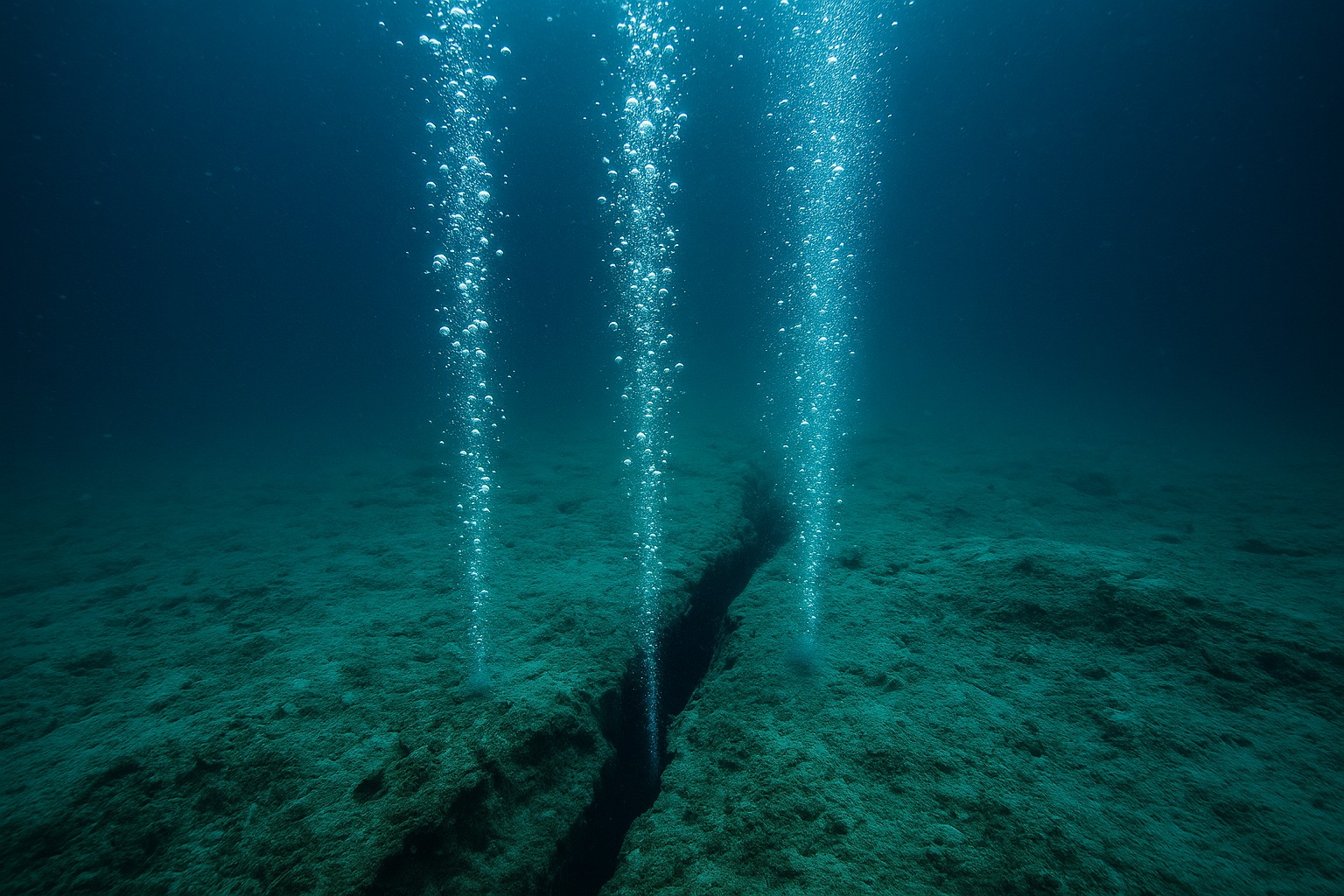
A Scientific Expedition Revealed Dozens Of New Methane Leaks Escaping From The Seafloor In Antarctica. The Finding Surprises The Scientific Community And Suggests That Polar Thawing May Be Releasing Increasing Volumes Of This Potent Greenhouse Gas
Methane, one of the main contributors to global warming on the planet, is escaping in large quantities from cracks in the seabed of Antarctica. As the region warms, new leaks are being discovered at a “surprising” speed, according to scientists.
The phenomenon raises fears that current predictions about the progress of climate change may be underestimated.
Millennium Reservoirs At Risk
Enormous volumes of methane have accumulated for millennia in reservoirs beneath the seabed in various parts of the planet.
-
Scientists use artificial intelligence to create nearly indestructible steel that does not rust and could change the way industrial energy and oil parts are produced.
-
Instead of buying new electric trucks, India is removing the diesel engines from old vehicles and installing electric propulsion for 40% of the price, and this simple idea could be the solution that polluted megacities around the world have been waiting for.

-
Circles in the Sahara plantations: ISS reveals Sharq El Owainat, in Egypt, irrigated by a center pivot with water from the Nubian Sandstone Aquifer, growing between 1998 and 2019, 290 km from the nearest city.
-
40% still call it a fraud: Soviets monitored Apollo, mirrors on the Moon still return lasers today and rocks confirm it; in 2026, 4 astronauts will return to lunar orbit and the race restarts against China.
This invisible and highly polluting gas can escape through fissures and emerge as bubbles that rise to the ocean’s surface.
Little is known, however, about how these leaks function, their quantity, and how much methane actually reaches the atmosphere.
Part of it is consumed by microbes that live on the seabed and feed on the gas itself.
Understanding this process is crucial because methane retains about 80 times more heat than carbon dioxide during its first 20 years in the atmosphere, making it one of the most potent greenhouse gases known.
Researches Reveal New Leaks
The leaks in Antarctica are among the least understood on the planet. For this reason, an international team of scientists initiated a study expedition in the Ross Sea, a bay of the Southern Ocean.
They used acoustic surveys, remotely operated vehicles, and divers to collect samples at sites with depths varying between 5 and 240 meters.
The results surprised the researchers: over 40 new methane leaks were identified in the shallow waters of the Ross Sea, according to a study published in the journal Nature Communications.
Many of these leaks appeared in locations that had already been studied previously, suggesting that they are recent.
According to the report, this may represent a “fundamental shift” in the behavior of methane released in the region.
A Phenomenon That May Be Spreading
According to Sarah Seabrook, a marine scientist at Earth Sciences New Zealand and author of the study, methane leaks are relatively common in other parts of the world.
However, in Antarctica, there was previously only one confirmed active leak on record.
“Something that was thought to be rare now appears to be spreading,” Seabrook stated in an interview with CNN.
She mentioned that each discovery provoked an “immediate excitement,” quickly replaced by “anxiety and concern.” The reason is the fear that these new leaks could accelerate global warming.
Methane: Possible Impacts And Questions
Scientists fear that methane may escape rapidly into the atmosphere, becoming a source of pollution not included in current climate change predictions.
Moreover, it could generate cascading impacts on marine life, altering ecosystems that are still poorly studied.
It is still unclear why these leaks are occurring. One hypothesis is that they may be directly linked to climate change.
In the Arctic, similar phenomena have already been observed. According to Seabrook, the increase in subterranean methane release in that region is associated with rising temperatures, changes in sea level, and the gradual uplift of land after the melting of glaciers from the last Ice Age.
These factors, the scientist asserts, can create a dangerous feedback cycle: warming accelerates methane leaks, which in turn further intensify warming.
Next Steps
A new scientific mission is scheduled for next week. The researchers will return to Antarctica for two months to study the leaks discovered in more detail.
“Methane is a true unknown — it is rising in the atmosphere and we do not know why,” declared Andrew Thurber, a marine biology professor at the University of California, Santa Barbara, and co-author of the study.
Thurber emphasized that the situation is especially concerning in Antarctica, where there are vast subterranean reservoirs of methane.
“If we continue to heat the planet, these leaks could turn from a natural laboratory to an epicenter of danger,” he warned.
For the scientist, studying the phenomenon is essential, but it requires caution. “They are like a dangerous animal. It is incredible to observe and understand them, but it is necessary to know what they can do if provoked or underestimated,” he concluded.
With information from CNN.








-

-

-

3 pessoas reagiram a isso.