





 Portuguese
  English
  Spanish
  4 min of reading
  1 comment


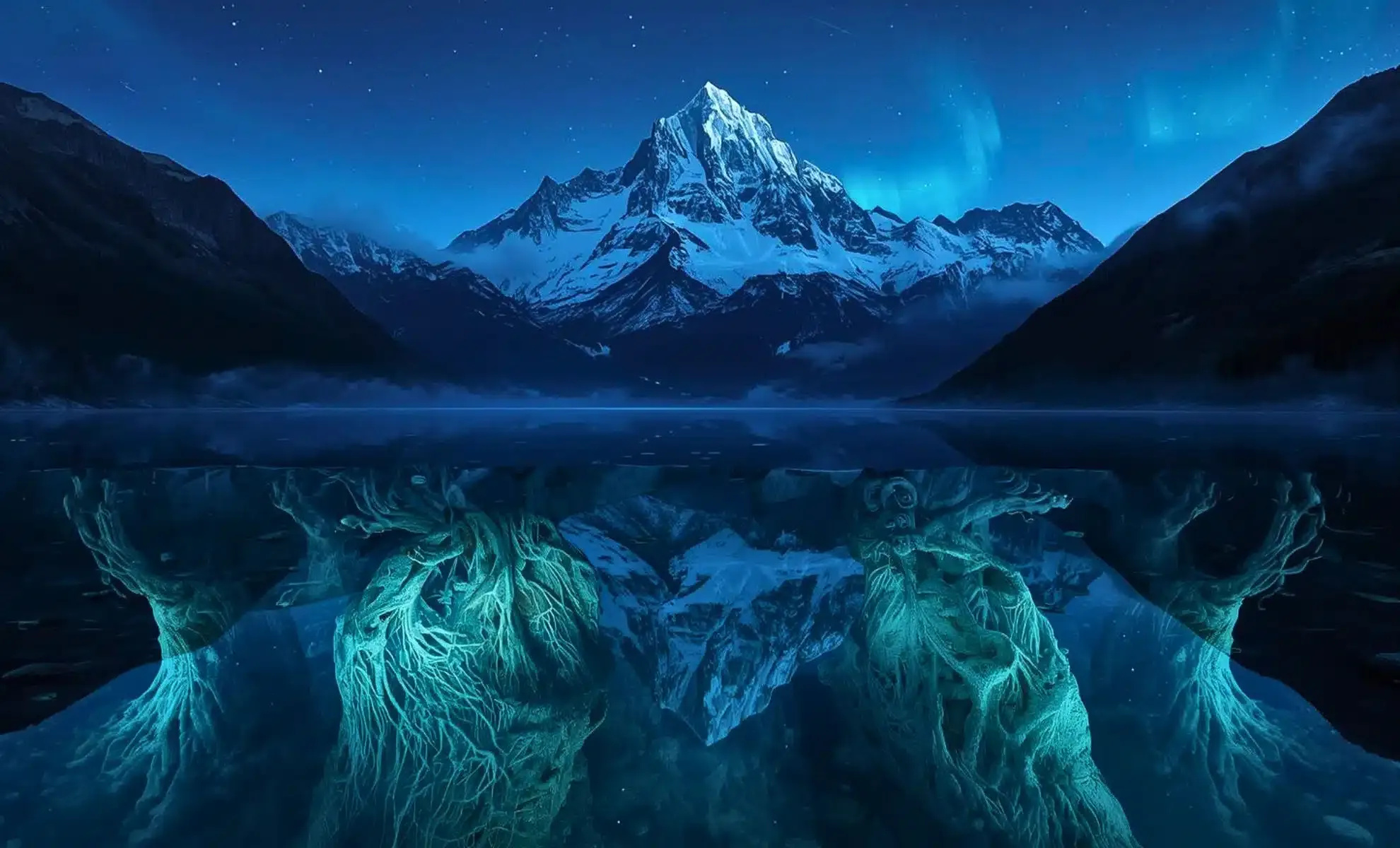


Giant Structures Detected at the Core-Mantle Boundary, Up to 1,000 km Tall and 3% to 9% of Earth’s Volume, May Remain from Theia, the Hypothetical Planet Involved in the Collision That Formed the Moon 4.5 Billion Years Ago, According to Recent Seismic Studies and Geophysical Modeling
Scientists have identified two giant structures beneath Africa and the Pacific Ocean, each thousands of kilometers wide, located at the boundary between the core and the mantle, whose distinct composition may indicate remnants of Theia, a hypothetical planet involved in the collision that formed the Moon 4.5 billion years ago.
The formations are positioned deep inside the planet, at the boundary with the molten core, and were detected through the anomalous behavior of seismic waves generated by global earthquakes, which slow down as they pass through these specific regions.
Known as Large Low Shear Velocity Provinces, or LLSVPs, these masses exhibit different physical properties from the surrounding mantle, suggesting not only elevated temperatures but also higher density and distinct chemical composition.
-
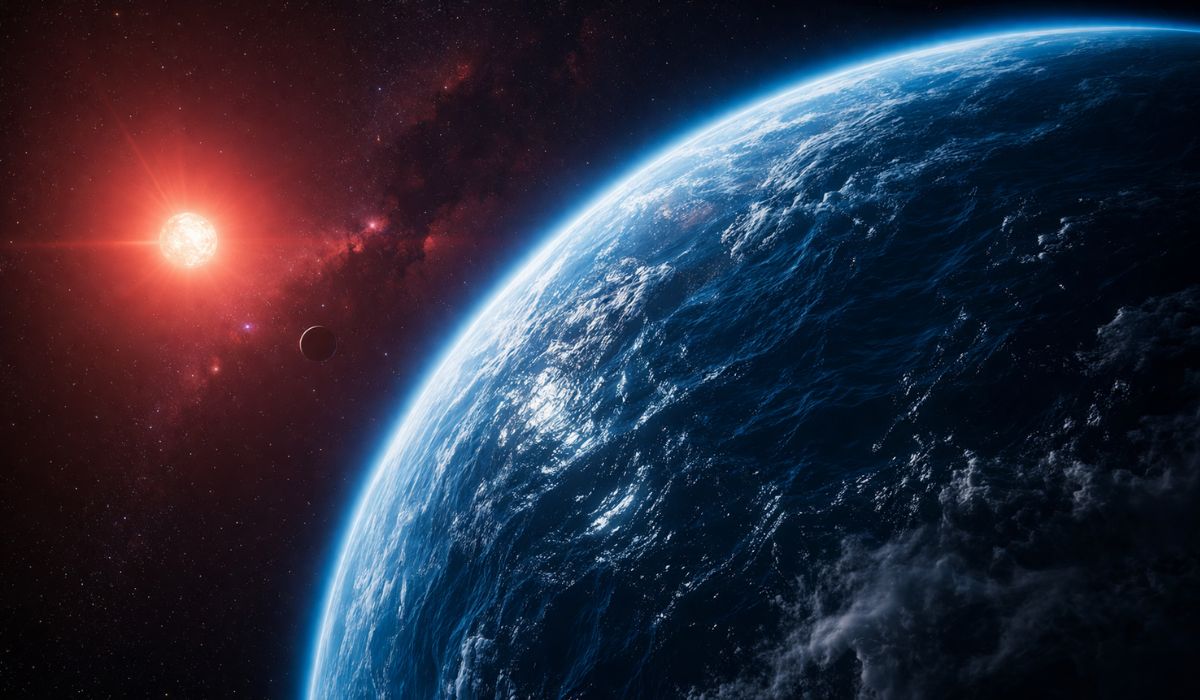
Worlds covered by water, atmospheres filled with hydrogen, and the possibility of life beyond Earth: ocean planets are rewriting the map of cosmic search and forcing scientists to rethink where to look.
-
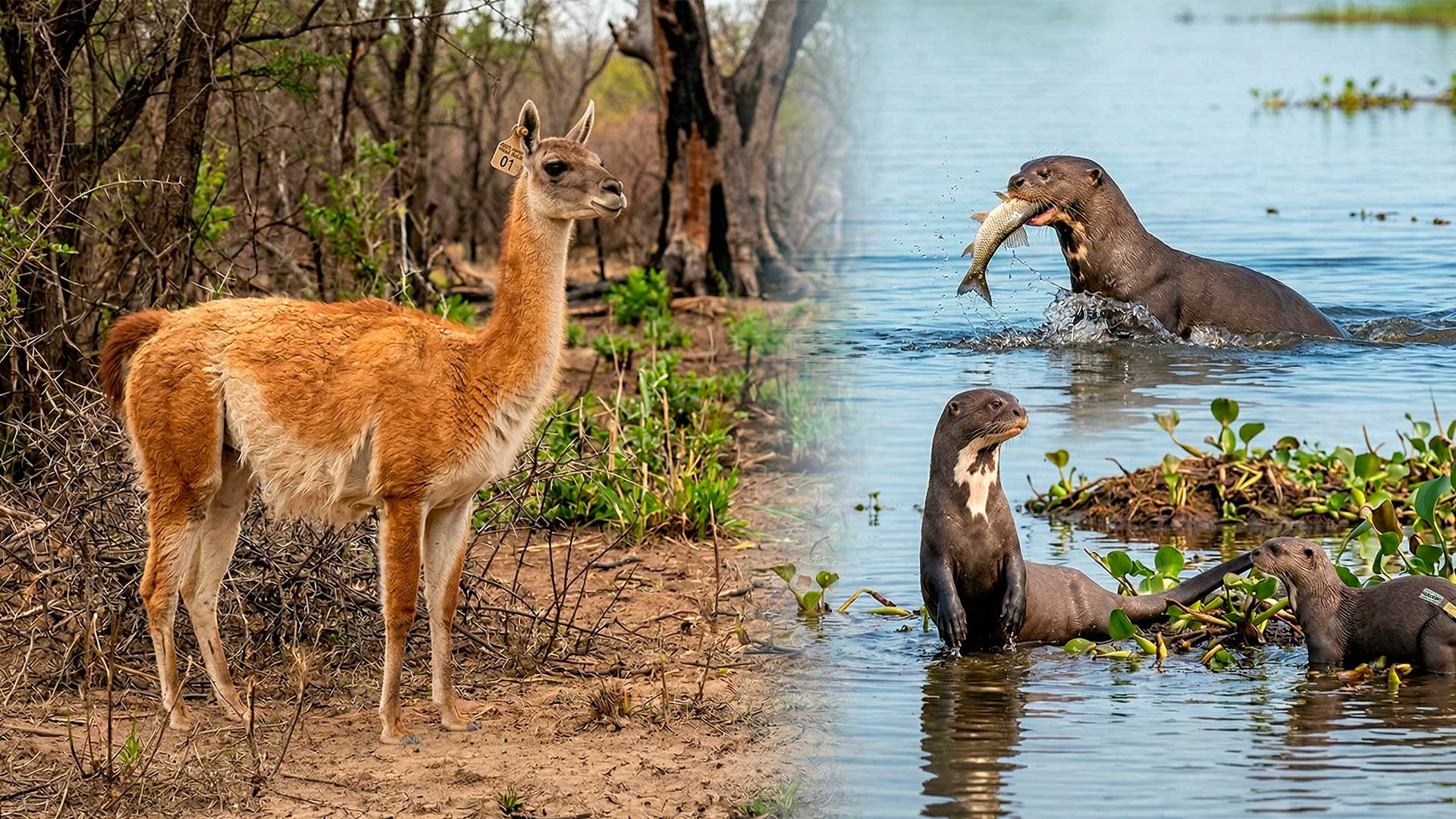
Argentina achieves the unimaginable after more than 110 years and reintroduces the largest native herbivore of South America to the Chaco to restore a lost link in nature.
-
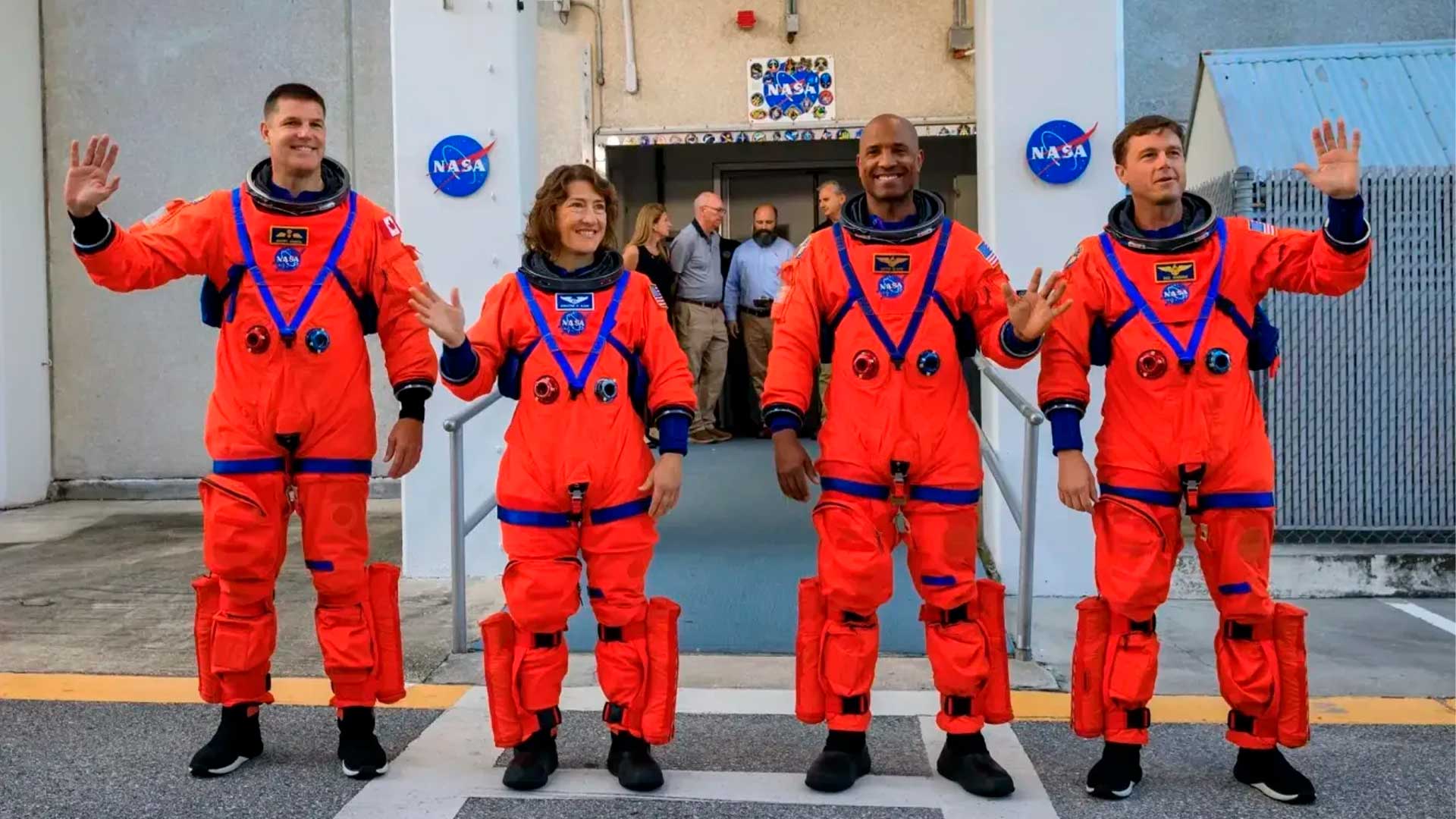
Returning to the Moon now costs a billion-dollar bill and reignites the competition between the USA and China for science, technology, and rare minerals on lunar soil.
-
While the world looks at oil, the war with Iran is already disrupting helium supply from Qatar, affecting car and iPhone chips, threatening AI expansion, and putting pressure on aluminum packaging at the highest value in four years.


The seismic waves revealed two colossal regions, one beneath the African continent and another beneath the Pacific, indicating that these structures are not small local anomalies but massive and persistent components of Earth’s internal dynamics.
Seismic Waves Reveal Sharp Boundaries Inside the Planet
The identification of the LLSVPs was made possible by seismic tomography, a technique that analyzes the propagation of seismic waves through different internal materials, allowing the mapping of density and composition variations throughout the Earth’s mantle.
The data show that the waves significantly decrease in speed when crossing these regions, behavior that is incompatible with simple thermal variations, reinforcing the hypothesis that they are chemically differentiated structures.
The structure located beneath Africa, called Tuzo, rises between 800 and 1,000 kilometers above the core-mantle boundary, approximately equivalent to stacking about 90 Mount Everests in continuous vertical height.
Together, the two LLSVPs may represent between 3% and 9% of the entire volume of the planet, a significant proportion considering that they remain completely hidden and inaccessible to direct observation.
A study published in the Geophysical Journal International analyzed seismic waves reflected from the core and confirmed that the boundaries of these structures are abrupt, not gradual, reinforcing the interpretation that they have distinct composition.
Hypothesis Links Structures to Planet That Collided with Primitive Earth
The association between the LLSVPs and the hypothetical planet Theia emerged from geophysical simulations combined with isotopic evidence observed in the Earth-Moon system, especially in oxygen ratios.
A 2021 study published in Nature Communications simulated scenarios where Theia’s material, about 2% denser than the Earth’s mantle, would survive the impact and settle in the lower mantle.
The models indicated that this remnant mass would distribute in regions similar in shape, size, and location to the current LLSVPs identified beneath Africa and the Pacific.
The giant impact hypothesis proposes that a body the size of Mars collided with Earth about 4.5 billion years ago, resulting in the ejection of debris that formed the Moon.
However, part of Theia’s material may not have been expelled, remaining incorporated in the planet’s interior and migrating slowly to the lower mantle, where it has been preserved over billions of years.
The isotopic similarity between Earth and the Moon reinforces this scenario, suggesting intense mixing of materials during the impact, with fragments of the colliding planet preserved both in the satellite and in Earth’s interior.
Deep Structures May Influence Volcanism and Tectonics
The LLSVPs are not merely passive records of ancient events, but appear to play an active role in the planet’s internal dynamics, influencing processes that manifest on the surface.
Located near the core-mantle boundary, these structures are associated with the formation of mantle plumes, columns of hot and less dense rock that rise toward the crust.
These plumes feed hot spot volcanoes, such as those observed in Hawaii and Iceland, whose position correlates with the edges of the low shear wave speed provinces.
An article from 2020 in the journal Progress in Earth and Planetary Science analyzed how thermochemical structures in the mantle can persist for billions of years without completely mixing with their surroundings.
According to the study, density contrasts and convection patterns allow these anomalies to concentrate heat at their margins, favoring the formation of superplumes and volcanic chains.
In the African case, the so-called African Patch has been associated with continental rifting processes and large-scale tectonic reorganization, influencing surface evolution over geological time.
Technical Limitations Keep Mystery about Exact Composition
Despite advancements in seismic imaging, there is currently no direct way to sample or physically observe these deep structures, which keeps uncertainties about their definitive origin.
The deepest human drilling attempt, the Kola Superdeep Borehole, reached about 12 kilometers, which represents only 0.2% of the distance to the core-mantle boundary.
All available knowledge about the LLSVPs derives from indirect methods, such as seismic analyses, gravitational models, and computational simulations of mantle dynamics, which limits definitive conclusions.
Alternative explanations are still under discussion, including the possibility that these structures are formed by subducted oceanic crust accumulated over billions of years in the lower mantle.
Other researchers suggest that they represent primordial heterogeneities, chemical remnants of the ancient magma ocean that covered the Earth in its early formation stages.
Still, the model associated with Theia stands out for integrating seismic behavior, elevated density, and the observed isotopic parallels, remaining one of the most comprehensive hypotheses accepted thus far.







Hipóteses hipotéticas, mas, q fazem algum sentido espacial.😹👍