Portuguese
  Spanish


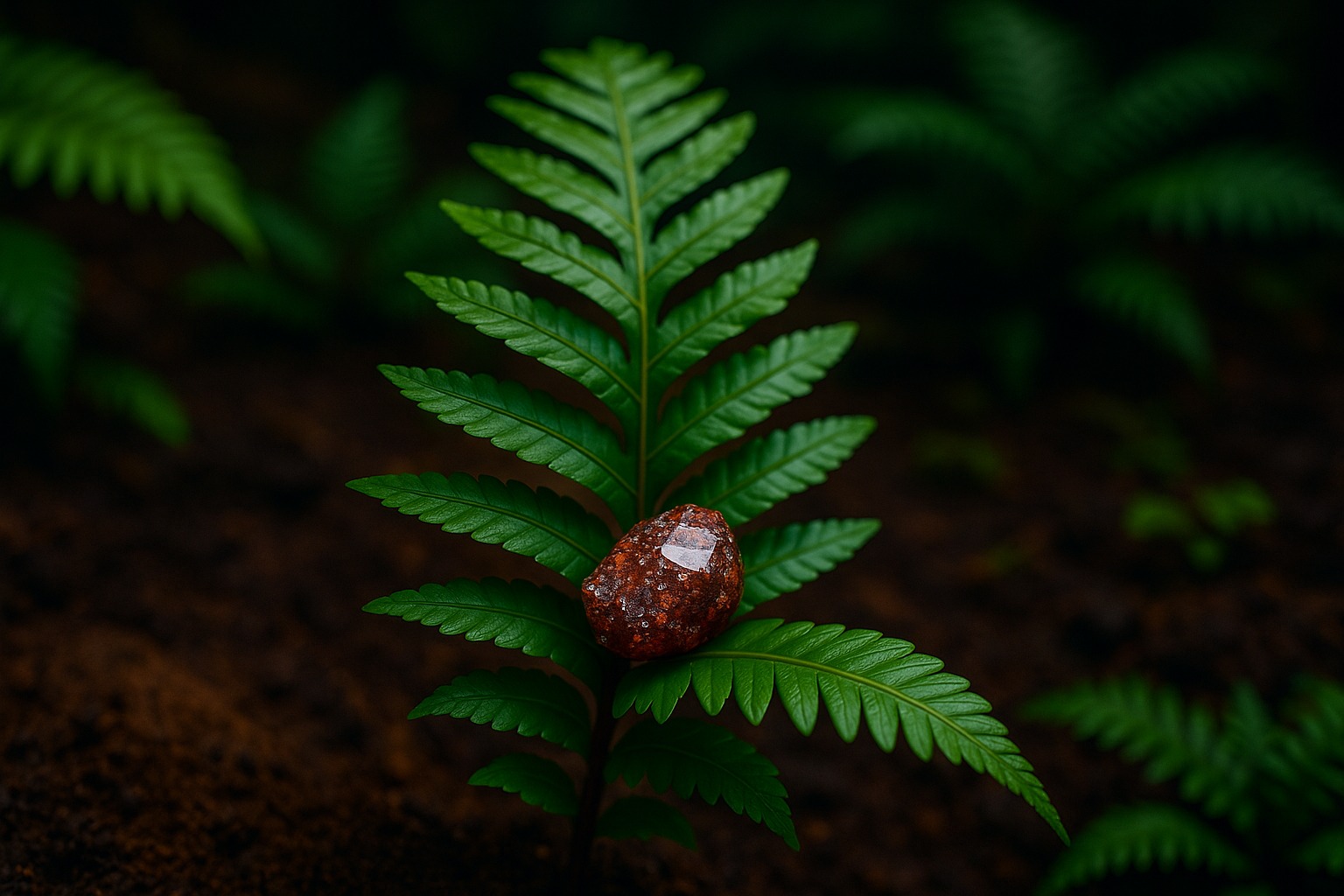


Chinese And North American Research Team Identifies Nanoscale Monazite In The Tissues Of A Fern, Proving That Plants Can Form High-Value Technological Minerals In Natural Conditions.
A team of scientists led by China made a groundbreaking discovery by identifying a naturally formed mineral that contains rare earth elements (REE) within a living plant.
The researchers found nanoscale monazite, a valuable mineral, crystallized in the tissues of a perennial fern called Blechnum orientale.
According to a statement from the Guangzhou Institute of Geochemistry, this discovery “opens new possibilities for the direct recovery of functional materials from rare earth elements.”
-
Brazilian Startup Converts Tucumã Seeds into Bioplastic for Bicycle Pedals, Cups, and Construction Materials

-
NASA Captures Rare Encounter of South Korean “Surfboard” Spacecraft Crossing Lunar Orbit at Over 11,000 km/h

-
Germany Opens World’s Largest Smart Power Semiconductor Factory with €5 Billion Investment, Creating 1,000 Jobs and Doubling Capacity for AI and Energy Needs

-
Kazakhstan’s Torysh Valley Holds Thousands of Giant Stone Spheres, Intriguing Scientists with Ancient Oceanic “Cannonballs”

The scientists stated that the discovery clarifies the enrichment and sequestration of REE during chemical and biological weathering, as well as creating unprecedented pathways for the direct recovery of these high-value technological materials.
Formation Under Environmental Conditions
Monazite is a phosphate mineral rich in elements such as cerium, lanthanum, and neodymium, which are all essential for modern technology.
The mineral is valued for its mechanical, physical, and thermal properties, having a high melting point and resistance to corrosion and radiation.
Therefore, it is widely used in coatings, lasers, light emitters, ionic conductors, and in the management of radioactive waste.
What makes the discovery unique is the way the mineral forms. Typically, monazite forms geologically under high pressure and temperatures of hundreds of degrees Fahrenheit.
However, the scientists observed that plants can facilitate its mineralization under environmental conditions of the Earth’s surface.
This biological process demonstrates the feasibility of phytomining, as published in the journal Environmental Science & Technology.
Phytomining And Sustainability
Phytomining is an ecological strategy that uses “hyperaccumulator” plants to extract metals from the soil. These plants concentrate heavy metals in their tissues at levels hundreds to thousands of times higher than the surrounding soil.
The technique involves cultivating these plants in metal-rich soils and then recovering the desired elements from the harvested biomass.
The researchers highlighted that this approach reduces reliance on conventional mining, mitigating environmental and geopolitical risks.
Mechanism Of Mineral Formation
The study, developed in collaboration between the Guangzhou Institute of Geochemistry and Virginia Tech, detailed the mechanism behind the formation of monazite.
The team collected plant and soil samples from rare earth deposits in Guangzhou and found that the elements were more concentrated in the fern fronds.
The minerals crystallize in the extracellular tissues of the plant, outside the cells, as a way to prevent the entry of non-nutritive elements and serve as a detoxification method.
The researchers described the process as a “self-organized non-equilibrium system,” comparable to a “chemical garden.”
According to the article, this is the first record of rare earth elements crystallizing in mineral form within a hyperaccumulator.
The Guangzhou Institute of Geochemistry stated that the study opens a new avenue for the sustainable use of these resources, potentially resulting in a green circular model of simultaneous remediation and recycling.